Yes — you can use StartMail for informational interviews, and for many privacy-conscious job seekers it is a good option. It gives you a stable, separate inbox without forcing you to use your everyday personal address or your employer’s email.
It is usually a better fit than a disposable inbox when follow-up matters. Informational interviews often turn into thank-you notes, introductions, or future opportunities, so privacy matters, but reply reliability matters just as much.
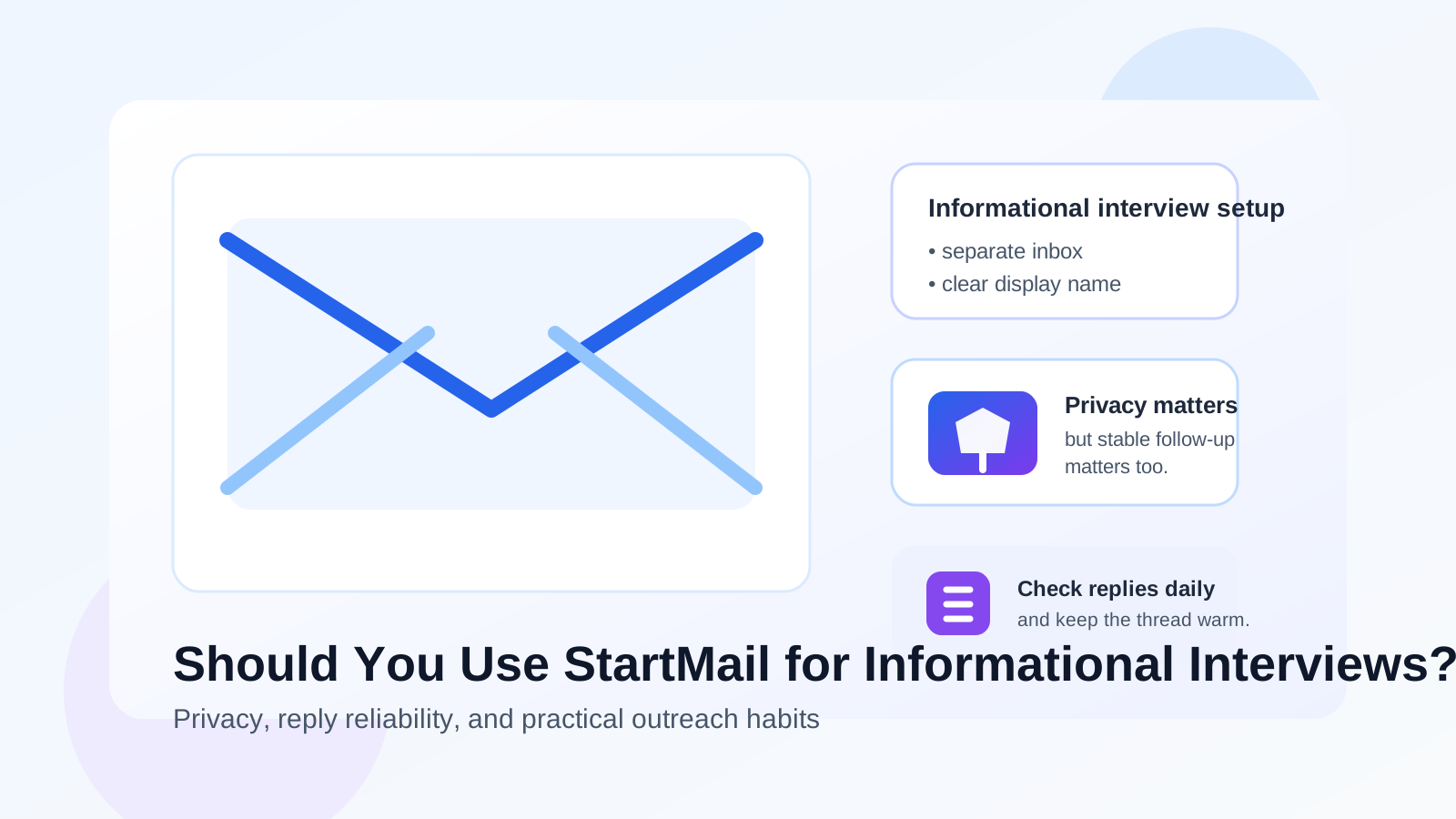
Why StartMail can make sense for informational interviews
Informational interviews sit in an awkward middle ground. They are not as formal as a job application, but they are still professional outreach. You may be contacting someone you admire, a second-degree connection, a recruiter-turned-alumni mentor, or a person in a role you hope to grow into. In that situation, many people want two things at once: a credible email address and a bit more privacy than their main inbox gives them.
That is where StartMail can work well. A privacy-focused email provider can help you keep outreach separate from newsletters, shopping receipts, old social accounts, and years of personal history. It also helps if you do not want your current work address tied to exploratory career conversations, especially when you are reaching out quietly or while still employed.
For many people, the strongest argument for StartMail is not that it looks flashy. It is that it gives you a cleaner boundary. You can keep networking-related messages in one place, respond thoughtfully, and reduce the chance of missing a useful reply in a crowded personal inbox.
What StartMail does well in this context
1. It creates separation without looking disposable
A true temporary email address can be fine for one-off signups, gated downloads, or low-trust forms. Informational interviews are different. You are trying to start a real conversation with a real person. StartMail gives you more privacy without sending the same signal as a throwaway inbox.
That distinction matters. If someone agrees to chat with you about their career path, you want your email setup to feel deliberate and dependable. A stable inbox suggests that you can continue the conversation, send a thank-you note, and still receive a reply a week later.
2. It helps you avoid mixing job-search outreach with daily life
Informational interview outreach can generate more back-and-forth than people expect. You may send an introduction, follow up after a few days, receive a reply, coordinate scheduling, send a thank-you note, and then reconnect later when a relevant role opens. Keeping that entire thread in a separate inbox can make your communication calmer and easier to manage.
This is especially useful if your main personal inbox is already noisy. A crowded inbox increases the odds that you miss a scheduling message or forget to answer a thoughtful response. A dedicated networking inbox keeps the signal-to-noise ratio much cleaner.
3. It reduces pressure to use your work email
Using a work address for informational interviews often feels convenient at first because it already looks professional. But it can also create obvious problems. Your employer may own the account, messages may be searchable in corporate systems, and the address can reveal more about your current role than you want to share. StartMail avoids that without forcing you into a visibly temporary option.
Where StartMail can create friction
StartMail is not a perfect choice for every situation. The biggest risk is not technical. It is practical: some people recognize Gmail or Outlook instantly, while a less common provider may look unfamiliar for a second.
That usually is not a serious problem if the rest of your outreach looks normal. A clear real-name display, a thoughtful subject line, a short and respectful message, and a complete signature all do far more for trust than the provider name alone. Still, if you email someone very busy, very traditional, or very skeptical, unfamiliarity can add a tiny bit of friction.
Another issue is discipline. A separate inbox only helps if you actually check it. If you send networking emails from StartMail but only remember to open the inbox every few days, you may lose the main benefit of informational interviews: timing. Good replies often deserve a prompt, thoughtful response.
How StartMail compares with other common options
StartMail vs. your everyday personal email
Your regular personal inbox may be fine if it already looks professional and you manage it well. But many people prefer not to use the same address for banking alerts, family threads, online shopping, newsletters, and career outreach. StartMail gives you a cleaner boundary and makes it easier to stay organized.
StartMail vs. your work email
For most people, StartMail is safer than a work address for exploratory career conversations. A work account can create visibility and ownership issues that simply are not worth it for informal networking. Unless you are explicitly representing your employer in a legitimate professional capacity, a private account is usually better.
StartMail vs. Gmail or Outlook
Gmail and Outlook win on familiarity. StartMail can win on separation and privacy. If your goal is to blend into the most common inbox landscape possible, a mainstream provider may feel simpler. If your goal is to keep informational-interview outreach compartmentalized without looking disposable, StartMail is a reasonable middle ground.
StartMail vs. a temporary inbox
For actual informational interviews, StartMail is usually the better choice. A temporary inbox can expire, feel low-commitment, or break the conversation if you need to revisit a message later. Tools like Anonibox can still be useful for low-trust signups, vendor downloads, or one-time access where you do not want long-term email exposure. But once the goal is relationship-building, a stable inbox is the smarter option.
Best practices if you use StartMail for informational interviews
Use your real name
Your display name should look like a real professional person, not a privacy experiment. If the person receiving your message has to wonder who you are, you have already made the interaction harder than it needed to be.
Write a normal signature
Include your name, a short identifier if relevant, and maybe a LinkedIn link or portfolio if it genuinely helps establish context. Keep it simple. You do not need a giant banner or a marketing-style footer.
Check the inbox every day during active outreach
People who agree to informational interviews are doing you a favor. If they answer, respond promptly and make scheduling easy. A separate inbox only works if it stays active.
Keep your subject lines plain and human
Something like “Quick informational interview request from a fellow product analyst” is clearer than vague lines such as “Opportunity to connect” or “Hello.” Clear subject lines improve response odds more than overthinking the provider itself.
Do not overuse aliases unless you can manage them
If you use aliases for organization, keep the system simple. You do not want to forget which address you used with which person. For most job seekers, one stable address for networking is easier than a maze of aliases.
When StartMail is probably a strong choice
- You want a dedicated inbox for networking and career exploration.
- You do not want to use your current employer’s email for private outreach.
- Your main personal inbox is cluttered and easy to miss replies in.
- You care about separating different parts of your digital life.
- You plan to stay consistent and monitor the inbox closely.
When another option may be better
- You already have a polished personal email that you use reliably every day.
- You know the recipient is extremely traditional and you want maximum mainstream familiarity.
- You are not likely to monitor a second inbox consistently.
- Your outreach depends heavily on fast back-and-forth and you know your main inbox is where you respond fastest.
A simple checklist before you send the first message
- Does the address look professional?
- Is your display name your real name?
- Will you check this inbox daily?
- Does your signature make it easy to understand who you are?
- Are you using a stable inbox rather than an expiring temporary one for the actual conversation?
Final answer
StartMail can be a smart choice for informational interviews if you want more privacy and cleaner separation than your everyday personal or work email provides. It is usually credible enough for professional outreach, and it works especially well when you treat it like a real long-term inbox rather than a disposable shortcut.
The key is to pair privacy with reliability. Use a real name, write thoughtful outreach, check replies consistently, and keep the conversation easy for the other person. If you do that, StartMail can support exactly what informational interviews are supposed to do: help you build genuine, low-pressure professional relationships without oversharing your main contact identity.