Yes — Hushmail can be a strong option for informational interviews if you want a separate, stable inbox that feels more private than your oldest personal address.
It is usually a better fit than a temporary email for informational interviews because follow-up can happen days or weeks later, but it only helps if the address looks professional and you actually monitor it.
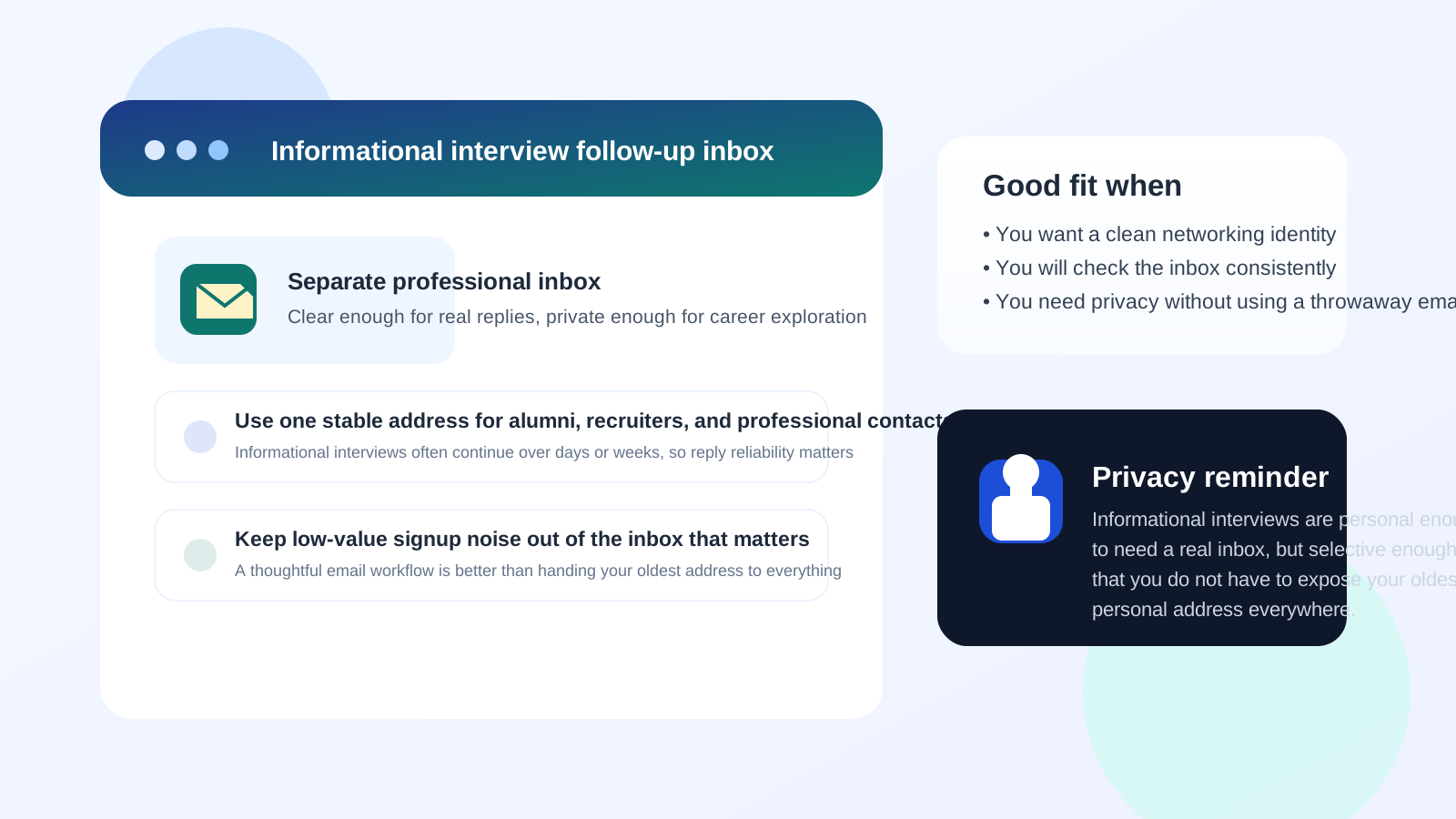
Why this question matters
Informational interviews sit in an unusual middle ground. They are not as formal as job interviews, but they are also more personal and relationship-driven than signing up for a webinar or downloading a guide. You are often reaching out to alumni, industry peers, mentors, hiring managers, or people a few steps away from real opportunities. That means the email address you use matters more than people assume.
If you use your oldest personal inbox for everything, informational interview messages can get buried under newsletters, shopping receipts, social alerts, and random signups. If you use a fully disposable inbox, you risk missing thoughtful follow-up or making yourself look temporary and hard to reach. That is why people end up asking whether Hushmail is a smarter middle ground.
The real issue is not whether a provider sounds fancy. It is whether the inbox gives you enough privacy, enough stability, and enough professionalism for conversations that may turn into referrals, introductions, or future interviews.
Short answer: Hushmail can work very well if you want a dedicated networking inbox
For informational interviews, a separate long-term inbox is often more useful than either extreme. You do not have to expose the main address you have used for years, and you also do not have to gamble on a throwaway inbox that may not fit serious follow-up. Hushmail can make sense if you want one dedicated lane for career conversations that feels deliberate and easy to manage.
That matters because informational interviews are rarely one-message conversations. Someone may reply after a few days. They may suggest a better contact, ask you to send a resume later, or reconnect after a role opens up. A stable inbox is part of showing that you are serious, organized, and worth replying to again.
What Hushmail can do well in this situation
1. It gives you separation without feeling disposable
A separate inbox can be a real advantage when you are reaching out to people you do not know well yet. It lets you keep networking and job-search communication away from your everyday personal life. That can make follow-up cleaner and reduce the chance that a useful reply disappears in unrelated inbox noise.
At the same time, Hushmail is not the same thing as a temporary inbox. Informational interviews often create low-volume but high-value communication. You want to protect your attention, not make yourself unreachable.
2. It can make your networking workflow more intentional
When you keep informational interview outreach in a dedicated inbox, you naturally build better habits around it. You notice who replied, which conversations need a thank-you note, and when someone offered a helpful introduction. That kind of clarity is hard to maintain if everything is mixed into one overloaded personal account.
A dedicated inbox also makes it easier to spot patterns. Maybe one kind of outreach is getting better responses. Maybe certain alumni contacts reply faster than recruiter-style cold messages. A separate communication lane helps you see that more clearly.
3. It protects your oldest personal address from unnecessary spread
Your long-term personal email often has years of digital baggage attached to it. It may be tied to shopping accounts, family communication, subscription lists, and countless old signups. Not every networking interaction needs access to that same address.
Using a separate inbox for informational interviews gives you more control over where your most persistent personal address circulates. That does not mean secrecy for its own sake. It means being selective about which relationships get your most established contact point.
Where Hushmail can create friction
1. A separate inbox still has to look professional
The provider alone does not create trust. What usually matters more is the actual address format. If the address includes old nicknames, random numbers, or something hard to say aloud, the networking value drops fast. Informational interviews are personal enough that details like clarity and readability matter.
If you use Hushmail for this purpose, treat it like a professional contact address. Keep it simple, human, and easy to type correctly after hearing it once.
2. It only helps if you monitor it consistently
This is the biggest failure point with any separate inbox. People create a dedicated address, feel clever for having a cleaner system, and then forget to check it during the week when replies actually arrive. Informational interviews depend heavily on timing. A slow reply is not always fatal, but repeated delays make it harder to build momentum.
If you are going to use a separate inbox, it needs to be part of your real routine. Otherwise, the inbox becomes a barrier instead of a benefit.
3. It is not the right tool for every low-stakes interaction
Informational interviews deserve a real inbox, but not every adjacent signup does. Maybe you are also registering for a virtual panel, downloading a networking-event toolkit, or claiming a one-off employer guide. Those low-value actions do not always need the same inbox you use for person-to-person career conversations.
That is where a lighter tool like Anonibox can be more useful. For disposable access, promo downloads, or low-trust forms, a temporary inbox can reduce clutter. For real informational interview follow-up, a stable address is usually the safer choice.
When Hushmail is a good fit for informational interviews
- You want one dedicated inbox for networking and exploratory career conversations.
- You do not want every outreach message tied to your oldest personal email address.
- You expect replies to arrive over time, not just the same day.
- You can check the inbox regularly and reply without friction.
- You want a setup that feels more intentional than using a random personal address everywhere.
In those cases, Hushmail can make a lot of sense. It gives you a middle path between “use the same personal account for everything” and “use a throwaway inbox that may not suit real relationship-building.”
When it may not be your best option
- You already have a clean job-search or networking inbox that you use consistently.
- You are likely to forget to check a second account.
- You are only using the address for one-time event signups rather than real conversations.
- You would end up splitting your outreach across too many different identities.
If that sounds like you, the better answer may be a simpler system rather than a new provider. A mediocre workflow with a new inbox is still a mediocre workflow.
Best practices if you do use Hushmail
Choose a clear address format
Use a name-based address that sounds like a real professional contact method. Informational interviews are about trust and ease. If someone wants to forward your note or suggest you to a colleague, a clean address helps.
Use the same identity across your outreach materials
Your email, LinkedIn profile, resume, and any follow-up message should feel consistent enough that people immediately connect them to the same person. Mismatch creates friction you do not need.
Check the inbox daily during active outreach
You do not need to hover over it all day, but you should be dependable. A quick morning and evening check is often enough to avoid missing momentum.
Keep your signature simple
Your full name, one relevant link such as LinkedIn or a portfolio, and maybe a phone number if you are comfortable sharing it later are enough. Informational interviews do not need a bloated signature block.
Separate real conversations from broad signup noise
If a contact is a real person and the conversation matters, use the stable inbox. If a form is just for a generic download or a low-trust resource you do not care much about later, use a lower-stakes workflow instead of feeding everything into the same address.
Common mistakes to avoid
- Using a separate inbox but checking it inconsistently.
- Using a provider change as a substitute for a thoughtful follow-up habit.
- Giving your serious networking inbox to every low-value form you encounter.
- Using an address that does not clearly map to your real name.
- Switching contact identities mid-conversation and making people guess where to reply.
Most email problems around informational interviews are workflow problems, not technology problems. The inbox should reduce friction, not add it.
A simple decision rule
If you would care about the reply arriving two weeks from now, use a stable inbox. If you would not care whether the message vanished after the initial interaction, a temporary inbox may be fine. Informational interviews almost always fall into the first category.
That is why Hushmail can be a good fit here. It gives you separation and control without pushing you into the disposable-email territory that is better reserved for low-stakes one-off access.
Final answer
Yes, you can use Hushmail for informational interviews, and for many people it is a smart option. It works best when you want a dedicated inbox for career conversations that stays more private than your oldest personal address while still feeling stable and professional enough for real follow-up.
The key is not just the provider. It is the overall workflow: a clean address, consistent identity, regular inbox checks, and good judgment about when to use a stable contact method versus a disposable one. If Hushmail helps you maintain that balance, it is a strong choice for informational interviews.