Yes, HEY Email can be a smart choice for networking events if you want a clean, separate inbox for real follow-up without exposing your oldest personal address everywhere.
It works best as a stable networking inbox you actually monitor, not as a throwaway mailbox for one-night-only event signups.
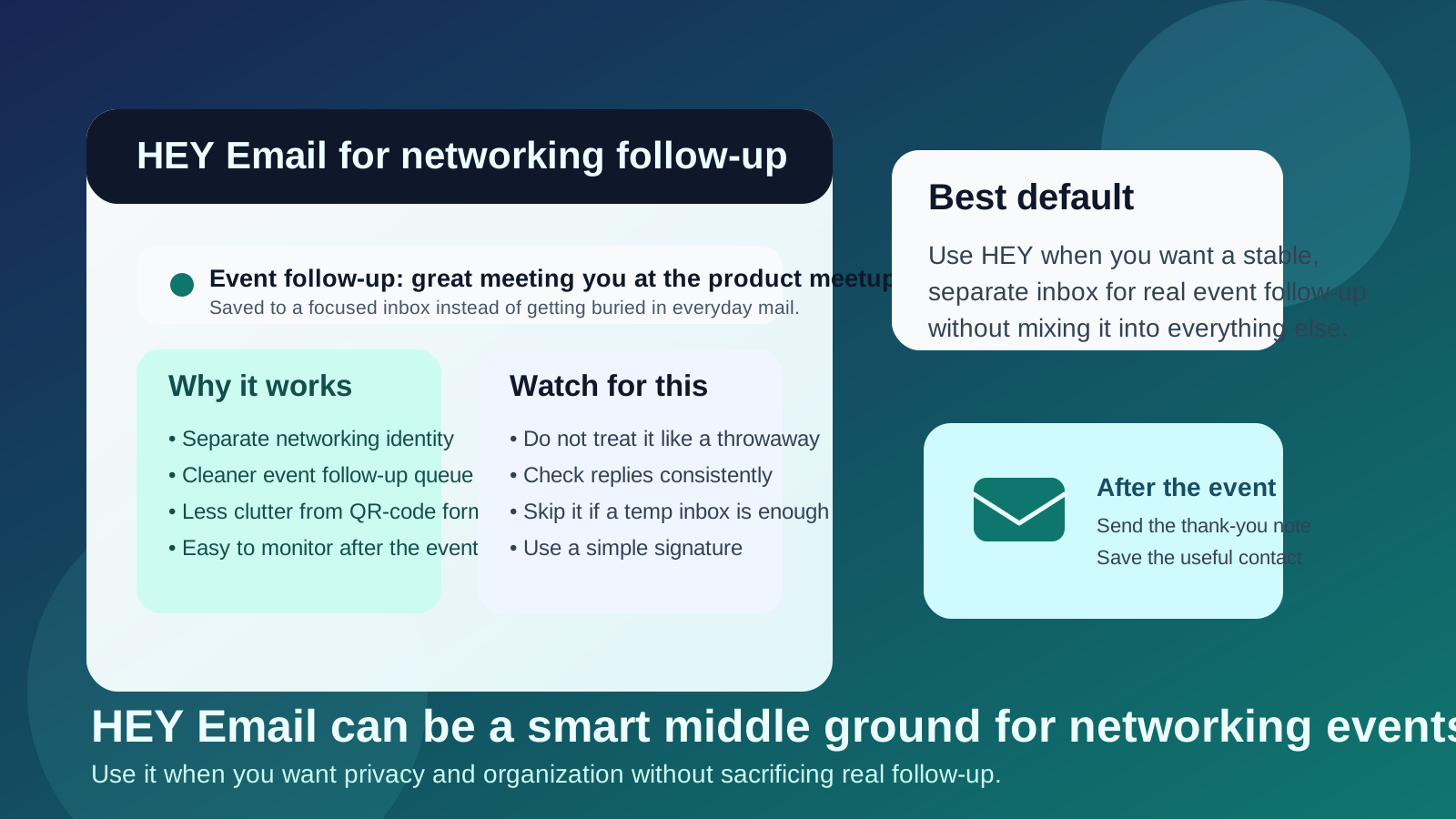
Why this question matters more at networking events than in a normal application
Networking events create a different kind of contact problem than a standard job application. At a normal company careers page, you usually share your email with one employer for one role. At a networking event, you might share it with founders, recruiters, booth staff, alumni, sponsors, newsletters, event apps, résumé drops, demo signups, and “stay in touch” forms in a single afternoon.
Some of those contacts turn into useful conversations. Some turn into weak leads that never go anywhere. Some turn into endless marketing mail. That is why the best email for networking events has to do two things at once: it has to support genuine professional follow-up, and it has to limit how much event noise spills into the rest of your digital life.
That is exactly why people ask whether HEY Email is a good fit. HEY is not a disposable address, but it is also not the same as handing over the oldest inbox you use for everything from banking alerts to family messages. For the right person, that middle ground is the point.
Short answer: HEY Email is usually a good middle-ground option
If you want a stable inbox that feels separate from your main identity, HEY Email can work very well for networking events. It gives you a dedicated place for introductions, thank-you notes, meeting follow-up, and occasional recruiter outreach without forcing every event connection into your primary personal inbox.
It is usually a better fit than a disposable inbox when you expect real people to reply later. It is also often a better fit than your everyday inbox if you want more control over clutter and better boundaries around your job search or industry networking.
The catch is simple: HEY only helps if you treat it like a real communications channel. If you rarely check it, forget to respond, or use it like a short-lived alias, you lose the very benefit that makes it useful.
What HEY Email gets right for networking events
1. It gives you separation without looking temporary
Networking contacts usually do not need a perfect custom-domain email address. They just need something professional enough to reply to. HEY can do that while still keeping your event networking separate from your oldest personal account.
That matters because event networking often creates a long tail. A founder may reply next week. A recruiter may send a role two months later. A speaker you met may answer your follow-up after they get through travel. HEY is stable enough for that kind of delayed contact in a way that throwaway inboxes usually are not.
2. It can protect your main inbox from event spillover
Networking events are full of signups that are half-useful and half-promotional. Even when the event itself is legitimate, the surrounding follow-up often includes sponsor mail, webinar invites, hiring newsletters, CRM sequences, and broad “let’s connect” campaigns.
Using HEY for networking events can make sense if your goal is not total anonymity, but inbox containment. You still want real replies. You just do not want every event-related contact mixed into your normal life.
3. It supports real relationship follow-up better than temporary email
This is the biggest reason HEY is often a better fit than a disposable inbox. Networking is not just about getting through a signup screen. It is about staying reachable after a useful conversation. If someone you met wants to send an article, introduce you to a colleague, or invite you to coffee next week, a stable inbox matters.
A temporary inbox works best when the main problem is spam control. A networking event is usually more nuanced than that. You need spam control, yes, but you also need continuity.
4. It encourages cleaner boundaries
A separate networking inbox can help you stay more organized. When you look at that inbox, you know what you are looking at: event contacts, follow-ups, introductions, and next steps. That is much easier to manage than trying to spot an important message between package notifications, promotional blasts, and personal mail.
When HEY Email is a particularly good fit
- You attend events regularly: meetups, industry conferences, startup nights, alumni events, or career mixers can generate a lot of low-to-medium volume follow-up.
- You want a stable networking identity: not a throwaway address, but not the inbox that runs the rest of your life either.
- You are exploring opportunities quietly: a separate inbox gives you more privacy and less overlap with work or family logistics.
- You know event forms create clutter: you want a buffer between event signups and your everyday inbox.
- You actually check the account: the setup only works if you monitor it consistently enough to reply.
When HEY Email is the wrong choice
You want something disposable
If your goal is pure spam shielding for one low-trust registration, HEY may be more inbox than you need. A temporary inbox is often a better fit for sketchier signups, broad vendor downloads, or event forms where you do not expect any meaningful relationship afterward.
This is where a tool like Anonibox can make more sense: it is useful when the main question is, “Can I get the confirmation link without feeding my real inbox into another marketing funnel?” That is a different use case from “I met someone I want to stay in touch with for the next few months.”
You barely monitor the account
A networking inbox only helps if it stays alive in practice. If you forget to check HEY for days at a time, you may miss the short follow-up window that makes networking useful in the first place.
You need a more obviously conventional work-style identity
Most people will not care which mainstream inbox provider you use, but some situations may still feel smoother with a custom domain or a very conventional personal address. If you are networking in a particularly formal industry and already have a polished professional address you trust, HEY is not automatically better.
You are using an employer-managed mailbox already
In some cases, people compare HEY against their work inbox and think the work account is simpler because it is always open. For private networking, that is often the wrong comparison. If the networking is even loosely tied to a job search, using a work-managed inbox can create unnecessary overlap, retention concerns, and visibility risks.
HEY Email vs your main personal inbox
Your main personal inbox is familiar and easy, but it comes with a downside: every event contact gets mixed into the rest of your life. That may be fine if you only attend one event every few months and you keep your personal inbox very clean.
For many people, though, the personal inbox is exactly where event follow-up gets lost. A clean separate inbox is often more valuable than the tiny convenience of using the address you already know by heart.
HEY Email vs a temporary or disposable inbox
This is where the decision usually becomes clear.
A temporary inbox is better when you do not trust the form, do not need long-term continuity, or mainly want to avoid clutter. HEY is better when the contact might matter later. Networking events frequently include both kinds of moments: some signups are noise, and some conversations are real opportunities.
That means the best overall workflow is often mixed. Use a temporary inbox for clearly spam-prone event forms if you do not expect real follow-up. Use HEY for the people, organizations, and event threads you actually want to hear from again.
Best practices if you use HEY Email for networking events
1. Treat it like a real professional inbox
Use a simple display name, write a short signature, and check it often enough to respond like a normal person. The point is controlled separation, not performative privacy.
2. Use it consistently across real event follow-up
If you hand out one address at the event, use the same address for your thank-you notes, resource sharing, and follow-up replies. Consistency makes you easier to remember and makes your own record-keeping cleaner.
3. Keep a fast post-event routine
After a networking event, sort the people and messages quickly. Send thank-you notes to the strongest contacts, archive weak noise, and save any real lead before it gets buried. A clean inbox helps, but habits matter too.
4. Separate low-trust forms from real conversations
Not every event interaction deserves the same channel. Sponsor giveaways, generic talent pools, and noisy registration add-ons do not need the same inbox treatment as the founder, hiring manager, or alum you had a meaningful conversation with.
5. Do not mistake organization for invisibility
HEY can help keep your life cleaner, but it is not magic anonymity. If you use your real name, send a résumé, link a LinkedIn profile, or continue the relationship, you are still building a real professional trail. That is normal. The benefit is control and organization, not invisibility.
A practical decision rule
If you expect the interaction to become a real professional conversation, HEY is often a good choice. If you mainly expect marketing follow-up or low-quality event spam, a temporary inbox is usually better. If you are comfortable blending everything into one personal inbox, you may not need either.
In other words:
- Real networking relationship: HEY can be a strong fit.
- Low-trust signup or promo funnel: temporary inbox often fits better.
- Minimal event activity and low clutter tolerance issues: main inbox may be enough.
Final answer
So, should you use HEY Email for networking events? In many cases, yes. It is a solid middle-ground option when you want a separate, stable inbox for genuine event follow-up without mixing every new contact into your oldest personal email account.
The best use case is not pretending the address is disposable. It is using HEY as a focused networking inbox you actually maintain. That gives you cleaner boundaries, less event-related clutter, and a better chance of staying responsive when a useful contact reaches back out.
If the event form feels spammy and you do not expect a real relationship, a temporary inbox may be the smarter tool. But if the goal is credible follow-up after real conversations, HEY is often a better long-term fit.