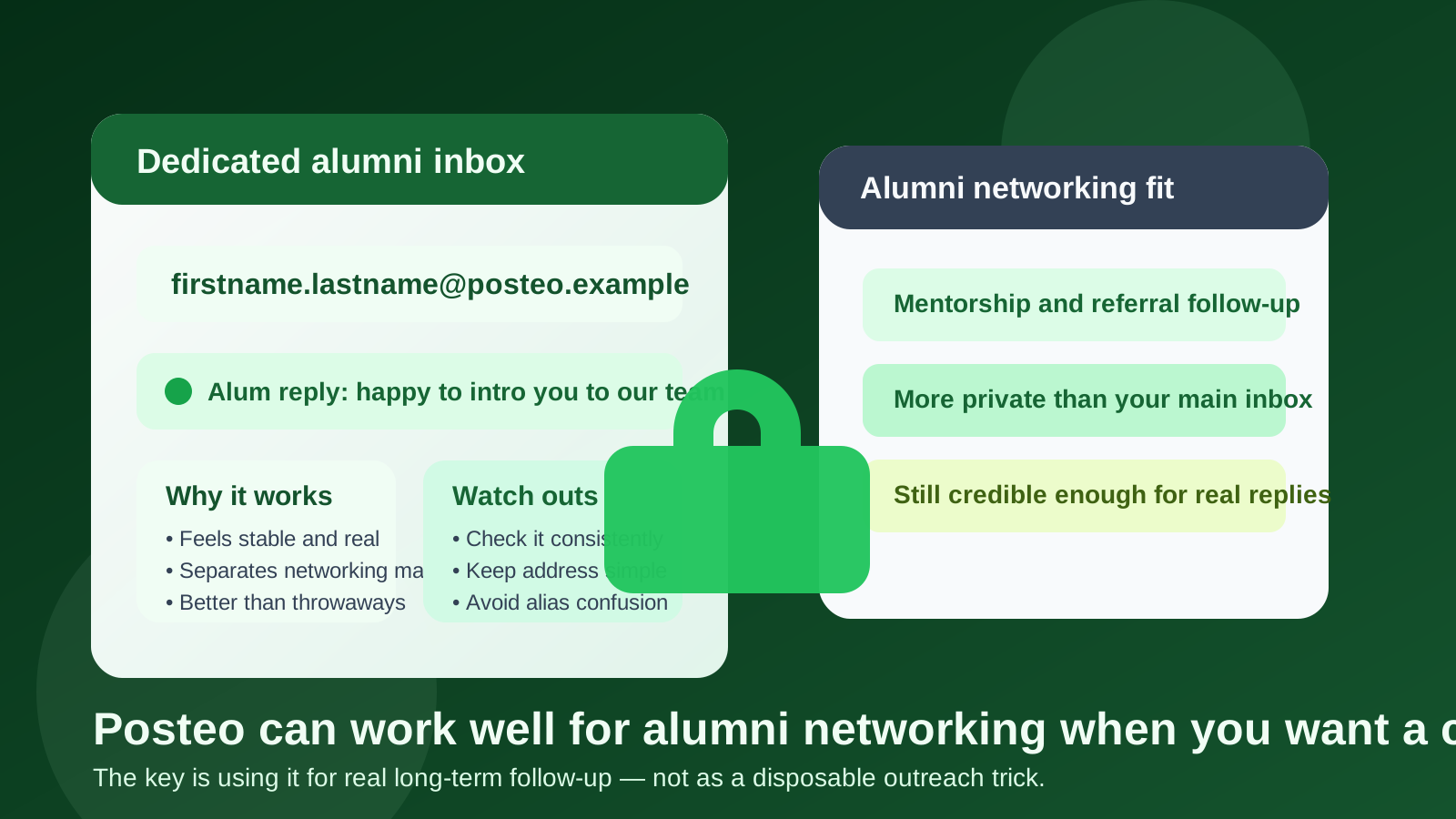
Yes — Posteo can be a good choice for alumni networking if you want a more private, less cluttered inbox that still feels stable enough for real conversations and long-tail follow-up.
It works best when you use it as a genuine relationship inbox you check consistently, not as a throwaway address for one-off outreach or event signups you may never revisit.
Why this question matters
Alumni networking is not the same as applying for a job through a form or grabbing a one-time coupon behind an email gate. You may message an alum for career advice, follow up after an alumni panel, ask for insight about a team or company, reconnect with an old classmate, or keep a mentor conversation going for months. In that kind of relationship-driven communication, your email choice does more than deliver a message. It shapes how easy you are to trust, reply to, and remember later.
That is why this question is worth asking. A provider like Posteo may appeal to privacy-conscious people who do not want to route every alumni conversation through their oldest personal inbox. But privacy alone is not enough. Alumni networking depends on continuity. If someone replies two weeks later, offers to introduce you a month from now, or comes back after an event season ends, the address needs to feel stable and monitored.
The best answer is usually not “use the most private inbox possible.” It is “use the inbox that gives you healthy separation without making you harder to reach.”
Short answer: Posteo can work well, but only if you treat it like a long-term inbox
For many people, Posteo sits in a useful middle ground. It can give you a cleaner, more intentional networking identity than a chaotic everyday inbox, and it can feel more trustworthy than a disposable or burner address. That combination is genuinely useful for alumni outreach.
Where people get into trouble is treating a privacy-friendly provider as if it were automatically a better networking tool just because it is less mainstream. It is only a strong choice if the address is simple, the inbox is easy to monitor, and you are prepared to keep using it for follow-up instead of abandoning it after the first few messages.
Why Posteo can be a strong fit for alumni networking
It gives you separation without looking temporary
One of the main problems with using your everyday inbox for alumni outreach is clutter. Alumni messages end up mixed with shopping receipts, personal threads, newsletters, old logins, and random signups. A dedicated provider can help you create a cleaner lane for networking. That makes it easier to notice when someone replies, follow up on time, and keep important conversations searchable.
At the same time, Posteo still looks like a real inbox. That matters. Alumni networking usually works better when your email feels stable enough for actual back-and-forth, not like a disposable shield you plan to discard next week.
It supports privacy-conscious outreach
Some people do not love using their main Gmail or Outlook account everywhere, especially when they are reaching out across alumni directories, chapter websites, event registrations, and conversations with people they have never met before. A separate inbox can reduce that feeling of overexposure. You keep some distance between your broader online life and your networking life, which can make follow-up easier to manage.
That does not mean you become anonymous, and it should not. Good alumni networking still depends on being a real person with a clear identity. The value is not invisibility. The value is cleaner boundaries.
It can feel more intentional than a generic backup account
There is a difference between “I made a random extra account years ago” and “I use a dedicated inbox for meaningful career and alumni conversations.” Alumni often notice signals of organization, even if they never say it directly. A clean address, a clear display name, and steady reply behavior can make your outreach feel more thoughtful.
It is better suited to delayed replies than a burner setup
Alumni replies can be slow. Someone may see your message after a conference trip, at the end of a busy week, or once recruiting slows down. That is normal. If your contact method is meant for relationship-building, you need an inbox you trust to still be there when the conversation reopens. That is one reason a stable provider usually beats a temporary inbox for direct alumni outreach.
When Posteo is probably a good choice
- You want a dedicated inbox for networking: keeping alumni messages separate can reduce clutter and help you stay responsive.
- You expect long-tail follow-up: mentoring, introductions, and alumni advice often unfold over weeks or months.
- You want more privacy than using your main account everywhere: a separate networking inbox can protect boundaries without looking evasive.
- You are comfortable checking the inbox consistently: reliability matters more than setup aesthetics.
- You want a more thoughtful alternative to a disposable address: for real people, stable contact usually works better than one-off privacy tactics.
If those points describe your situation, Posteo can be a sensible fit. It gives you more control than using your default everyday inbox while still supporting the kind of continuity alumni networking depends on.
When Posteo may not be the best choice
You rarely check it
This is the biggest practical failure mode. A separate inbox is only an advantage if you actually use it. If you check it once every ten days, miss replies, and forget which conversations are active, the privacy upside stops mattering. A plain personal inbox you monitor daily is better than a cleaner setup you ignore.
You make the address look complicated
Alumni networking works better when your address feels easy to trust. If you use a confusing alias, an over-clever handle, or something that looks like a spam dodge, you create friction that did not need to exist. Simple beats clever here.
You need maximum familiarity more than separation
Some alumni contacts are already busy and may respond fastest when everything about your message feels familiar and low-friction. A standard Gmail or Outlook address can help with that. Posteo is not inherently a problem, but if your current personal inbox is already clean and professional, switching may not provide enough extra value to matter.
You are using it like a shield instead of a communication tool
There is a difference between protecting your boundaries and signaling that you do not plan to stick around. If your whole setup feels engineered to avoid future contact, that can quietly work against the trust you want to build. Alumni outreach should feel intentional, not evasive.
Posteo vs Gmail, Outlook, work email, and temporary inboxes
Compared with Gmail or Outlook
Mainstream providers are familiar and easy. Most people instantly recognize them, and that can reduce hesitation. Posteo may offer cleaner separation and a more privacy-minded feel, but it also asks you to manage a less universal address. If your Gmail or Outlook account is already simple, professional, and not overloaded, staying with it may be perfectly fine. If it is messy or tied to too much of your digital life, a separate Posteo inbox can be an upgrade.
Compared with work email
For most people, a personal inbox is better than a work account for alumni networking that has any career angle. Your work address ties the conversation to your employer, not just to you. That can create visibility concerns and awkward boundary issues, especially if you are exploring roles, referrals, or industry conversations outside your current company. A separate personal inbox usually gives you more freedom and control.
Compared with a temporary or burner inbox
This is where the distinction matters most. A temporary inbox can be useful for low-trust alumni event registrations, newsletter-heavy chapter sites, or signups where you mainly want the confirmation email and nothing else. That is where something like Anonibox can be practical. But once you move into direct person-to-person outreach, stable follow-up matters more than disposable privacy. Alumni networking is about conversations that may reopen later, so a persistent inbox is usually the better choice.
How alumni networking differs from job applications
Job applications often move through systems. Alumni networking moves through people. That difference changes what matters about your email setup.
In a job application, a recruiter may just need a working inbox attached to a resume. In alumni networking, the other person is making a more personal judgment. They are deciding whether your message feels sincere, whether continuing the conversation will be easy, and whether you seem like someone worth helping. Your inbox does not determine that by itself, but it contributes to the overall impression.
A stable address helps because alumni conversations often involve:
- advice requests that lead to later follow-up,
- mentorship threads that resurface months later,
- referral conversations that move more slowly than expected,
- event follow-up after a chapter meetup or school panel,
- introductions to other alumni or colleagues.
That is why a dedicated but durable inbox makes sense. You want separation, but you also want continuity.
Best practices if you use Posteo for alumni networking
Use a simple, real-person address
Your name, or a clear variation of it, is usually the best format. Make it easy for people to recognize and reply without second-guessing whether the inbox is legitimate.
Set a clear display name
Do not make alumni guess who you are. Your display name should match the name you use in your email signature, LinkedIn profile, or introduction. Consistency lowers friction.
Check the inbox consistently
If alumni networking matters to you, treat the inbox like an active relationship channel. Delayed replies are normal. Missed replies are avoidable.
Test your workflow before doing outreach
Send yourself test messages, confirm replies land where you expect, and make sure your setup is boring in the best possible way. A polished outreach note loses value quickly if your inbox behavior is sloppy.
Do not overcomplicate your alias strategy
Separation is useful, but overengineering is not. If you build a maze of aliases and forwarding rules you barely understand, you increase the risk of losing track of real conversations. Simpler systems are easier to trust and maintain.
Keep one inbox for real alumni relationships
If you use temporary inboxes for low-stakes registrations, keep that separate from direct outreach. The inbox you use to message people should be the one you plan to keep.
Common mistakes to avoid
- Using a networking inbox you never check: the cleanest setup is still a failure if replies sit unread.
- Making the address too clever: memorable is good; gimmicky is not.
- Confusing privacy with distance: the goal is healthy boundaries, not making yourself hard to reach.
- Switching addresses mid-conversation: once a thread starts, stability matters.
- Using a temporary inbox for direct mentorship or referral outreach: that often signals the wrong thing.
Quick decision checklist
- Do I want a separate inbox for alumni conversations?
- Will I actually monitor this inbox several times a week?
- Is the address simple and easy to trust?
- Would this feel more organized than using my main personal account everywhere?
- Am I using this for real long-term follow-up rather than just signups?
If most of those answers are yes, Posteo can be a strong choice. If several are no, a standard personal inbox may serve you better.
Final answer
Yes — Posteo can work well for alumni networking because it gives you more privacy and separation than using your everyday inbox everywhere, while still feeling stable enough for real replies and long-term follow-up.
Just make sure you use it like a real communication channel: keep the address simple, check it regularly, and reserve temporary inboxes for low-stakes registrations rather than real alumni relationships. If you do that, Posteo can be a practical, human-friendly middle ground between total exposure and throwaway outreach.