Yes, HEY Email can work well for alumni networking if you want a dedicated inbox for outreach and you will actually check it consistently over time.
It is usually a better fit than a temporary inbox for real alumni conversations, but a plain Gmail or Outlook address may still be the easier choice if you want maximum familiarity and zero workflow friction.
Why people ask this in the first place
Alumni networking often starts casually and then turns into something more important later. You might send a short note to a graduate from your school, follow up after an alumni panel, ask for advice about a career pivot, or reconnect with someone who offered to make an introduction months ago. That means the inbox you use matters more than it does for a one-time signup.
HEY Email appeals to people who want a cleaner, more intentional workflow. It can separate networking from everyday inbox clutter, reduce distractions, and make follow-up easier to manage. At the same time, alumni networking is built on delayed replies, relationship continuity, and low-friction trust. If the address feels unfamiliar to recipients, or if you set up too many screening rules and forget to check the inbox, the organization benefit can turn into a communication problem.
So the real question is not whether HEY Email is “professional enough.” It is whether your HEY setup helps alumni contacts reach you, remember you, and feel comfortable replying when the conversation matters.
Short answer: HEY is a solid option if you want a dedicated networking inbox
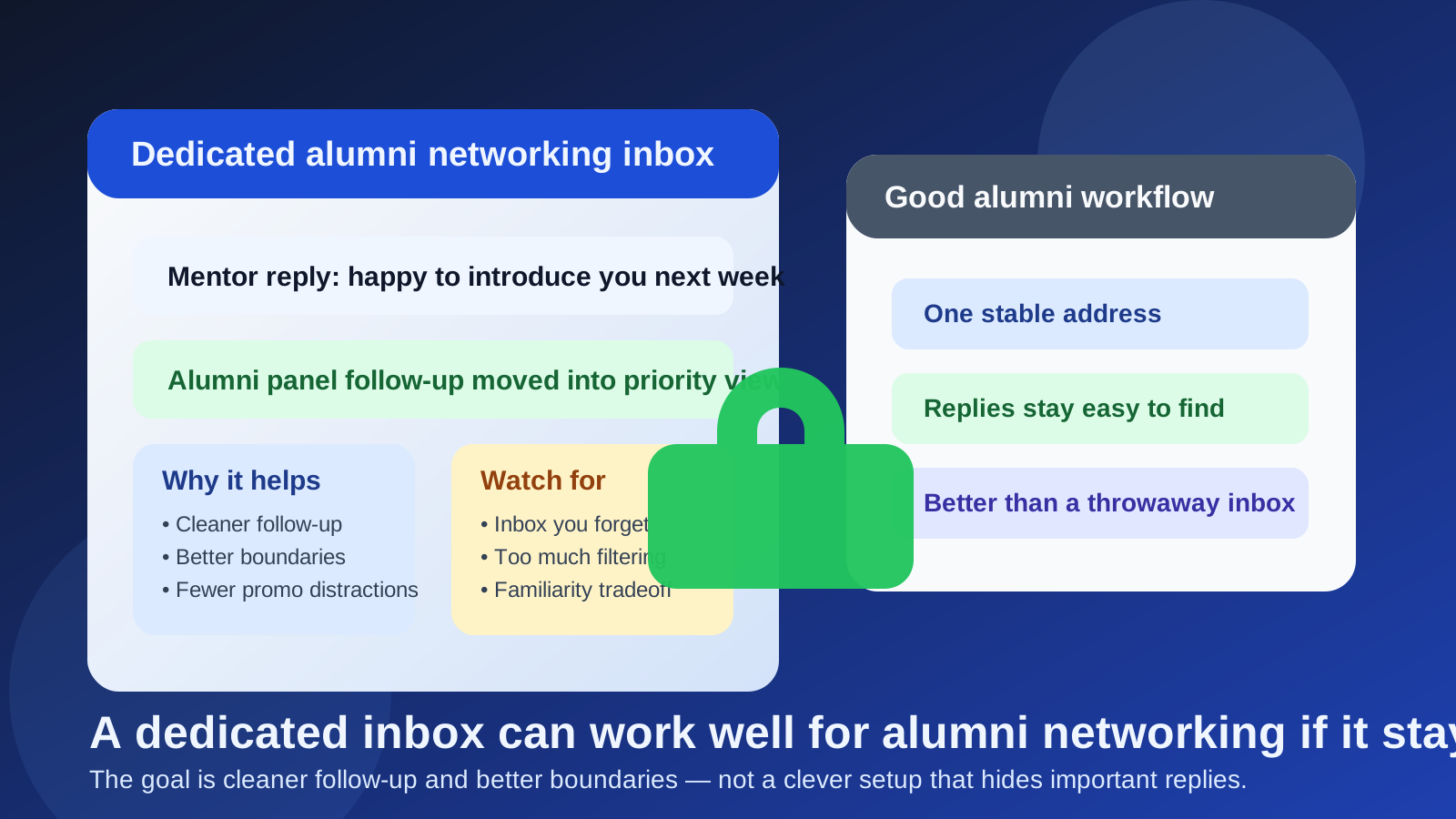
For many people, the answer is yes. HEY Email can be a strong choice for alumni networking because it gives you a stable address, better inbox boundaries, and a cleaner place to manage slow-moving conversations. That is especially useful if your main inbox is chaotic or tied too closely to work, old school signups, or personal noise.
But HEY is not automatically the best answer for everyone. If you already have a simple Gmail or Outlook address you trust and check constantly, switching just for alumni outreach may not add enough value. The best inbox is the one that stays organized and gets checked reliably.
What HEY Email does well for alumni networking
It creates separation from your everyday inbox
One of the biggest practical advantages of HEY for alumni outreach is boundary control. Alumni networking sits in a middle zone: it is not as formal as job applications, but it is more important than newsletters or casual event confirmations. A dedicated HEY inbox can keep those conversations from getting buried under receipts, promotions, and random personal mail.
If you are currently mixing alumni messages with shopping alerts, family group email, community updates, and every other inbox obligation, using HEY as a separate lane can make follow-up much easier.
It supports cleaner follow-up over time
Alumni networking rarely happens on a perfect schedule. Someone may reply in two hours, two weeks, or two months. A contact may say, “Circle back after graduation,” or “Reach out again when hiring opens.” Inboxes that are easier to scan and revisit help you keep those threads alive.
That is where a dedicated workflow can help. When networking mail is not competing with everything else, it becomes much easier to find the message, remember the context, and respond without sounding late or scattered.
It can reduce low-value clutter around events and directories
Alumni ecosystems often create more side mail than people expect. You sign up for a directory, a chapter event, a panel, a newsletter, a mentoring portal, or a campus platform, and suddenly your inbox fills with announcements that are not actually tied to the conversations you care about.
A separate HEY inbox can keep those ecosystem messages from spilling into your main personal or work account. That is useful if you want alumni outreach to stay active without letting every related mailing list take over your daily inbox.
It is more stable than school or work addresses
Alumni networking works best when you use a contact address that can stay with you. School addresses may expire or become lightly monitored after graduation. Work email is usually the wrong choice if your outreach has any career angle at all. A dedicated personal inbox is often a better long-term anchor, and HEY can fill that role well if you intend to keep using it.
Where HEY Email can be a weaker fit
Some people are more familiar with Gmail or Outlook
This is not a fatal issue, but it is real. Alumni contacts instantly recognize Gmail and Outlook. HEY is less universal. Most reasonable people will still reply if your message is good, but a less familiar address can add a tiny bit more hesitation or friction for some recipients. That matters more in cold outreach than it does in an existing conversation.
If your current mainstream inbox is already clean and professional, the familiarity advantage may outweigh the workflow advantage of switching.
If you do not check it consistently, it becomes a liability
A separate inbox only works when it stays active in your real habits. This is the most common failure mode: someone creates a special networking address, feels organized for a week, then starts checking it less often than their normal email. Alumni replies are often slow and easy to miss. Missing one thoughtful reply because you forgot to look is worse than dealing with a slightly messier mainstream inbox.
Too much filtering can hide useful mail
One reason people like dedicated inbox workflows is control. But control can become over-control. If you screen too aggressively, push everything into custom buckets, or assume an unfamiliar sender can wait, you risk slowing down exactly the conversations you wanted to protect. Alumni outreach depends on responsiveness more than clever inbox architecture.
It does not make you anonymous
HEY may help with organization and inbox boundaries, but it does not make you invisible. Alumni contacts still see your name, your message, your tone, and your address. If privacy is part of why you are considering HEY, think of it as a cleaner personal communication lane, not a guarantee of anonymity or insulation.
When HEY Email is a good choice for alumni networking
- You want a dedicated inbox for outreach, mentorship requests, and introductions.
- Your main personal inbox is noisy enough that important replies are easy to lose.
- You do not want to use your work email for career-adjacent alumni conversations.
- You want one stable address that can stay active well beyond graduation or job changes.
- You are disciplined enough to monitor the inbox regularly.
In those cases, HEY can be a very sensible option. It offers cleaner boundaries without looking disposable, and that is exactly what many people want from an alumni-networking address.
When a simpler inbox may be better
- You already have a straightforward Gmail or Outlook address that you manage well.
- You only contact a small number of alumni occasionally.
- You dislike juggling multiple inboxes.
- You are likely to forget a second account after the first burst of enthusiasm.
- You want the most familiar possible address for cold outreach.
There is no prize for making the workflow more elaborate than it needs to be. If your existing personal inbox is clean, professional, and monitored, staying there may be the smarter move.
HEY Email vs Gmail, Outlook, school accounts, and temporary inboxes
Compared with Gmail or Outlook
Gmail and Outlook win on familiarity. Almost nobody thinks twice about them, and they are easy to keep as your default identity. HEY can win on focus if you want a dedicated networking lane and better separation from daily noise. In other words, Gmail and Outlook are simpler; HEY can be cleaner.
Compared with a school email
A school email can work while you are enrolled, but it often becomes less reliable as time passes. If alumni networking is part of a longer career strategy, relying on a student address is risky. A dedicated personal inbox is usually a better long-term bet, whether that is HEY or another provider you control yourself.
Compared with work email
Work email is usually the wrong move for career-adjacent alumni outreach. It can blur personal and employer boundaries, and it may feel awkward if the conversation turns toward mentorship, referrals, or job-search advice. A separate personal inbox is usually safer and more flexible.
Compared with a temporary inbox
This is an important distinction. Temporary inboxes are useful when you want to avoid spam from alumni event registrations, old-school directories, downloads, or one-off platform signups. For that kind of intake, a temporary option like Anonibox can be practical. But once you are talking directly to real people — asking for advice, following up after a call, or keeping a referral conversation alive — a temporary inbox is usually the wrong tool. Alumni networking depends on delayed replies and continuity. A stable inbox like HEY is far better for that.
Best practices if you use HEY Email for alumni networking
Use one stable address for real conversations
Do not keep changing contact points once a conversation matters. If you use a disposable or alias-style address for signups, that is fine for low-stakes intake. But when you move into person-to-person alumni outreach, pick one stable inbox and keep the thread there.
Keep your display name simple and human
Your name should look like a real person, not a slogan or a side project. Alumni networking works better when you sound approachable and easy to place. Clarity beats cleverness.
Check the inbox on a real schedule
If HEY is your networking inbox, build a habit around it. Check it daily during active outreach periods. The point is not just to stay organized — it is to make sure useful replies do not sit unanswered while the conversation goes cold.
Do not let screening turn into avoidance
Inbox filtering is helpful only if it still surfaces what matters. If you start treating unfamiliar senders, follow-up chains, or event messages as low priority by default, you may accidentally suppress exactly the connections you were trying to build.
Separate event clutter from relationship threads
If you use alumni groups, webinars, directory platforms, or chapter newsletters, keep them from overwhelming your direct networking messages. That is one of the biggest reasons to use a dedicated inbox in the first place.
Common mistakes to avoid
Creating a special inbox and then forgetting it exists
This is the most common mistake by far. If you want a dedicated networking address, it has to become part of your normal rhythm.
Using an address that feels too experimental
The inbox should help you look reachable and organized, not like you are testing a new identity every month. Stability matters more than novelty.
Assuming inbox cleanliness matters more than response speed
A perfect filing system is less valuable than replying while the conversation is still warm. The whole point of a better inbox is to make timely follow-up easier.
Using the wrong tool for the stage
Temporary email tools are useful for spam-heavy signups. Dedicated personal inboxes are better for real relationships. Alumni networking often starts in one category and quickly becomes the other, so it helps to shift tools at the right time.
A quick decision checklist
- Do I want a separate inbox specifically for alumni outreach and follow-up?
- Will I check this inbox often enough to catch delayed replies?
- Is my current Gmail or Outlook address already clean enough that switching adds little value?
- Am I using this for real conversations rather than just event or directory signups?
- Will this setup make alumni networking easier, not just more elaborate?
If most of those answers point toward a dedicated workflow, HEY Email can be a smart choice. If not, a simple mainstream inbox may still be better.
Final answer
Yes, HEY Email can be a good choice for alumni networking, especially if you want a dedicated inbox that keeps outreach organized and separate from everyday mail. It is usually more appropriate than a temporary inbox for real person-to-person follow-up, and it can be more sustainable than school or work email for long-term networking.
Just make sure the setup stays practical. The best alumni-networking inbox is not the cleverest one. It is the one that feels trustworthy, stays easy to monitor, and makes it easier for helpful people to reach you again later.