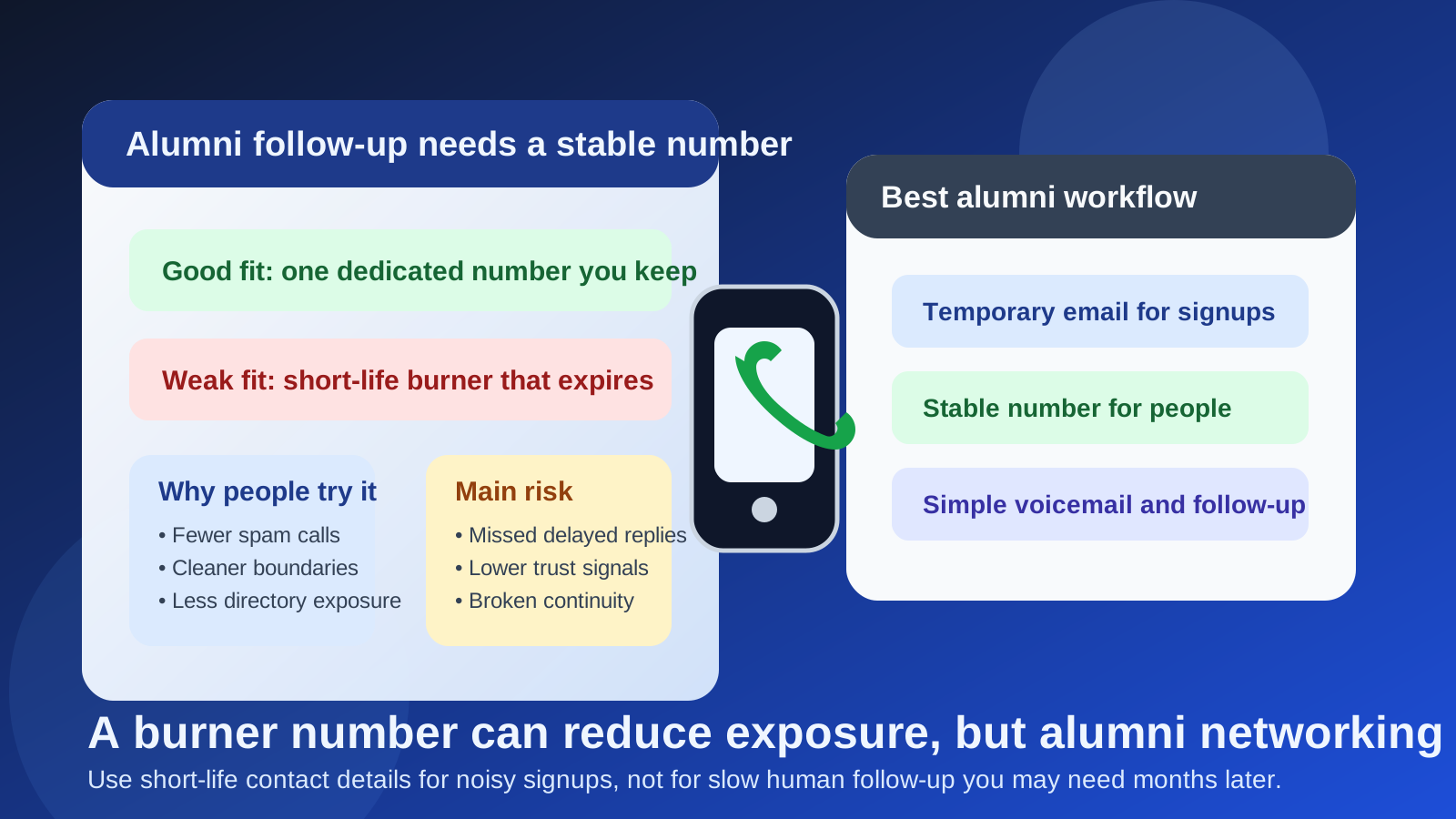
Usually, no — a burner phone number is rarely the best long-term choice for alumni networking because those conversations often depend on delayed follow-up, repeat introductions, and a contact method you can still access later.
A burner number can help in a few narrow situations, but for most people a stable separate number is better than a throwaway number that may look suspicious, expire too soon, or break the thread when an alumni contact finally replies.
Why this question comes up
Alumni networking sits in an awkward middle ground. It is personal enough that you may not want to hand out your main phone number widely, but professional enough that you still want to look reachable and trustworthy. If you are joining alumni directories, following up after school events, messaging graduates for advice, or quietly exploring career opportunities, it makes sense to want some privacy.
That is why people start thinking about burner numbers. In theory, a separate number seems ideal: less exposure, fewer random calls, and cleaner boundaries between your everyday life and networking outreach. The problem is that alumni networking is usually not a one-day transaction. Someone may reply next week, introduce you to a colleague next month, or text you back after an opening appears later in the semester or later in the year. A contact method that disappears too quickly can create more friction than protection.
So the real issue is not whether a burner number can receive a text. The real issue is whether it supports the kind of slow, relationship-based follow-up that alumni networking usually requires.
Short answer: a burner number can help briefly, but it is usually not the best main setup
If your goal is to protect your privacy during one-off exposure points, such as signing up for an alumni event, joining a networking list, or replying to a low-trust directory for the first time, a burner number can be useful. It limits how widely your primary number spreads and gives you a controlled contact lane.
But once you are dealing with real people rather than forms, you usually want something more stable. Alumni contacts often reach out later than expected. They may share your number with a trusted colleague, save you in their phone for future follow-up, or return to the thread when a relevant opportunity appears. If the number stops working, becomes poorly monitored, or feels too disposable, you lose continuity right when the relationship becomes valuable.
What a burner phone number does well
It limits immediate exposure
A burner number can reduce the amount of direct access strangers have to your personal line. That matters if you are registering for large alumni events, joining a public directory, or testing how a school-affiliated community handles your information. In those situations, you may prefer not to let your main number circulate before you know whether the platform is useful or noisy.
It can separate networking from daily life
Many people do not want career-adjacent texts mixed in with family messages, banking alerts, or daily logistics. A dedicated second number can make it easier to decide when you want to engage with alumni outreach and when you want to ignore it until you have time to respond thoughtfully.
It may reduce spam from low-quality directories or event organizers
Some alumni ecosystems are well run. Others are messy. If a directory, event signup, or mentoring portal looks like it may generate too much noise, a separate number can be a reasonable defensive move.
Those are real advantages. The catch is that they do not automatically make a short-life burner number the right tool for the whole alumni-networking workflow.
Where burner numbers tend to go wrong for alumni networking
Delayed replies are normal in alumni outreach
Unlike customer support or appointment reminders, alumni networking often moves slowly. A graduate may be traveling, busy, between projects, or simply not in the habit of replying fast. They may say, “Reach out again next month,” or “Text me after recruiting starts.” If your number stops working, gets abandoned, or becomes something you barely check, you can lose the relationship for a completely avoidable reason.
They can weaken trust if the setup feels temporary
Not every alumni contact will care what number you use, but people do notice stability. If someone is deciding whether to introduce you to a friend, pass along your information, or send you a role when it opens, a contact method that seems obviously temporary can create a small amount of hesitation. That does not mean you need to expose your personal life. It means your privacy setup should still look dependable.
They are easy to neglect
A special networking number only helps if it becomes part of your real communication habits. Many people create a second number, feel organized for a week, and then start checking it less often than their main phone. That is exactly when the benefit collapses. A less private setup that you monitor consistently is usually better than a more private setup you forget.
Continuity matters more than cleverness
Alumni networking is about follow-up, memory, and small signs of reliability. If the person who helped you at a reunion, on a panel, or in a mentoring conversation tries to reach you again later, they should not hit a dead end. A burner number that is too temporary creates a continuity problem that does not exist with a stable secondary number.
When a burner number may be reasonable
There are still a few cases where using a burner number makes sense.
- Large public event registrations: if you are signing up for alumni mixers, industry nights, or career panels and you do not yet trust the organizer’s list hygiene.
- Low-trust directories: if a directory asks for more personal contact detail than feels necessary and you want a buffer first.
- One-off exposure tests: if you are exploring a platform and want to see whether it generates useful contacts or just noise.
- Short early screening periods: if you want to keep your main number private until you confirm the people and groups involved are legitimate and relevant.
Even then, the smartest move is often to use the burner number only as a temporary intake layer. If a real alumni conversation starts, move to a stable number quickly instead of trying to keep the entire relationship on a contact method you do not plan to keep long term.
Why a stable separate number is usually better
For most alumni networking, the sweet spot is not your main personal number and not a short-life burner. It is a separate number that you control, keep active, and check consistently.
That setup gives you most of the privacy benefit people want from a burner number without the follow-up problems. You can still separate networking messages from your daily life. You can still retire the number later if it becomes noisy. But you do not risk losing a useful connection because the line expired, changed, or felt too disposable.
This is also where the distinction between a burner number and a second number matters. A second number can be stable. A burner number is often treated as disposable. For alumni networking, stability usually wins.
Burner number vs separate number vs Google Voice vs personal number
Burner number
Best for short-lived exposure control. Weakest option for long-term alumni relationships.
Separate stable number
Usually the best overall answer. It gives you privacy, boundaries, and continuity at the same time.
Google Voice or another long-term virtual number
This can be a strong middle ground if it is supported in your region and you are comfortable using it. It is usually better for alumni networking than a throwaway burner because you can keep it active and accessible over time.
Main personal number
Still a valid option if you want the simplest setup and you are comfortable sharing it. For some people, convenience wins. For others, boundaries matter enough that a separate stable line is worth it.
A practical alumni-networking privacy workflow
Use temporary tools for noisy signups, not for real human follow-up
This is the cleanest rule. If you are registering for mailing lists, event forms, or alumni portals that may generate spam, temporary tools can help you control exposure. For example, a temporary inbox from Anonibox can be useful for low-stakes email intake when you are testing whether an event or directory is worth your attention.
But once a real person is involved, you usually want durable contact details. That means a stable email and a stable number. Temporary inboxes and burner numbers are best for noise control at the edge, not for preserving relationship continuity in the middle of an actual conversation.
Set up the number like you intend to keep it
If you use a separate number for alumni networking, make it feel real. Set a simple voicemail. Keep notifications sane. Use a contact name and texting style that feel normal and professional. You do not need to sound corporate. You just need to sound reachable.
Check it on a real schedule
During active networking periods, check the number daily. Slow replies are common, but dead silence from your side can still cool the conversation. Reliability matters more than having the most private setup on paper.
Move good contacts into your long-term system
If an alumni conversation becomes meaningful, save the person, add context, and keep the thread easy to revisit. Networking gets easier when you can remember where you met, what you discussed, and when to follow up next.
Red flags and mistakes to avoid
- Using an expiring number for a conversation you hope will lead somewhere.
- Assuming privacy matters more than reachability. For alumni networking, both matter.
- Making your setup so complicated that you miss replies.
- Switching contact methods too often. Every handoff adds friction.
- Using a number you are slightly embarrassed to explain or rely on. If it feels sketchy to you, it may feel sketchy to them.
Quick decision checklist
- Am I trying to protect against spammy exposure, or am I building real relationships?
- Will I still have access to this number in a month or two?
- Can I check it reliably during active networking periods?
- Would a stable second number solve the problem better than a disposable one?
- Am I using temporary tools only for intake, not for ongoing person-to-person follow-up?
If you mostly care about early exposure control, a burner number can be useful briefly. If you care about successful alumni networking, a stable separate number is usually the better answer.
Final answer
A burner phone number can help you reduce exposure during alumni event registrations, low-trust directories, or other noisy intake points, but it is usually not the best primary contact method for alumni networking itself.
Most alumni networking works better with a number you can keep, monitor, and trust over time. If privacy matters, use a stable separate number instead of a short-life burner, and pair it with a thoughtful email strategy so you stay protected without making yourself hard to reach when the relationship finally starts to pay off.