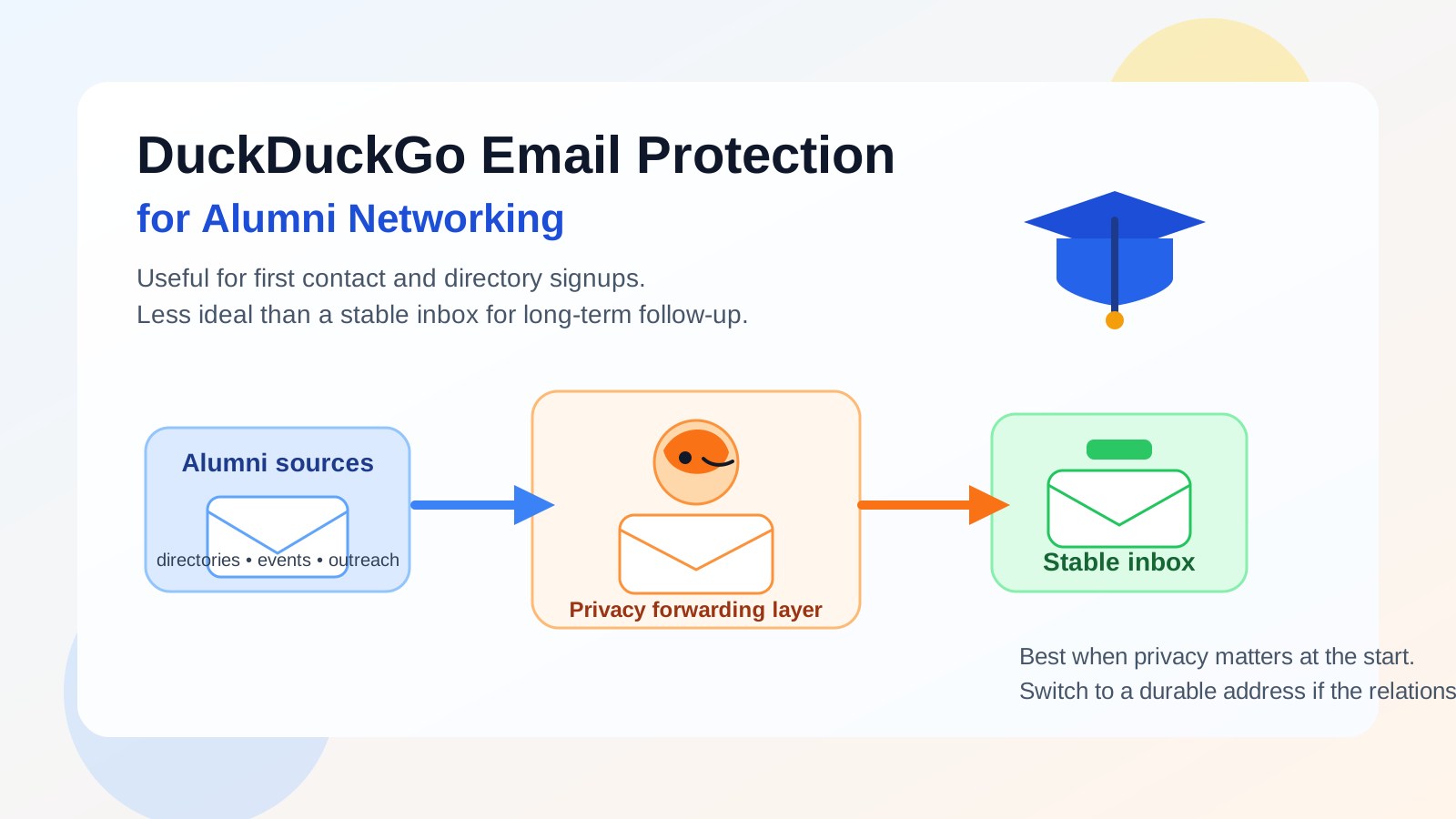
Yes — DuckDuckGo Email Protection can be useful for alumni networking when you want to protect your primary inbox during first outreach, directory signups, or event registrations.
But it is usually best as a screening layer in front of a stable email account, not as the only identity you rely on for long-term alumni relationships.
Why this question matters more than it seems
Alumni networking sits in an awkward middle ground. It is not as disposable as signing up for a coupon or a one-off download, but it is not always as formal as applying to a job through a company hiring portal either. One message to a former classmate, fellow alum, or university mentor can turn into a coffee chat, a referral, an introduction, an event invitation, or a follow-up thread that matters months later.
That makes your email choice more important than people first assume. You want enough privacy to avoid handing your everyday inbox to every alumni directory, mailing list, reunion form, or campus event page. At the same time, you also want enough stability that a useful contact can still reach you long after the first exchange.
DuckDuckGo Email Protection is appealing because it seems to offer a middle path. It adds distance between your primary inbox and the outside world. The catch is that privacy and long-term reachability are not the same thing. Alumni networking needs both.
What DuckDuckGo Email Protection is good at
At a practical level, DuckDuckGo Email Protection helps by masking your main email address behind a forwarding layer. That can be genuinely useful when you want to reduce direct exposure without creating a whole new mailbox from scratch.
- It protects your everyday address from broad distribution. If an alumni directory, chapter mailing list, or event form starts generating more email than expected, your primary address was not shared as directly.
- It gives you a privacy buffer during early contact. That is useful when you are testing a new alumni group, regional chapter, or networking community and do not yet know how active or noisy it will be.
- It can help you keep networking experiments lower risk. If you are reaching out to several alumni communities at once, a masked address can reduce the feeling that your oldest personal inbox is now floating everywhere.
- It is easier than juggling many separate inboxes. For people who want some privacy without maintaining another full email account, that convenience matters.
Those are real advantages. The mistake is assuming those advantages automatically make it the best long-term address for every alumni interaction.
When it makes sense for alumni networking
1. Signing up for alumni directories you do not fully trust yet
Some alumni portals are polished and professionally maintained. Others feel outdated, cluttered, or heavily tied to newsletters, fundraising campaigns, and event promotion. If you are not sure how carefully a directory handles contact data, using a masked forwarding address is a reasonable first step.
2. Registering for reunions, panels, mixers, and webinars
Event registrations are one of the cleanest use cases. You want confirmations, schedule updates, and access details, but you may not want every event organizer or campus office to have permanent direct access to your everyday inbox. A forwarding layer helps you receive the information without immediately committing your main address.
3. Making first contact in low-context situations
If you found someone through a broad alumni directory or a public networking page, you may want a little distance at the beginning. That does not mean you distrust the individual. It just means you do not yet know how the surrounding platform behaves, whether your message might be shared internally, or whether the interaction will turn into a meaningful relationship at all.
4. Keeping your main inbox cleaner during an active networking push
If you are contacting many alumni in a short period, even legitimate replies can create clutter when mixed with receipts, family email, work threads, and everything else in your personal inbox. A privacy layer can help you control exposure while you figure out which conversations deserve deeper follow-up.
Where DuckDuckGo Email Protection can fall short
It does not solve the long-term continuity problem
The biggest risk in alumni networking is not usually spam. It is losing a real opportunity because your contact setup was optimized for short-term privacy instead of long-term reliability. Alumni relationships often move slowly. Someone may reply weeks later, remember you after an event, or come back months later with a warm introduction.
If the address you used feels temporary to you, the relationship can inherit that fragility. That is fine for low-stakes signups. It is less fine when a person is saving your address because they may want to contact you again later.
Forwarding is not the same as having a stable networking identity
A forwarding layer is useful, but it is still a layer. For ongoing alumni relationships, a dedicated email account you control directly often feels simpler and more deliberate. It is easier to keep organized, easier to explain, and easier to treat as part of your professional networking workflow rather than as a protective wrapper you may change later.
It can encourage a “temporary mindset”
Tools built around privacy are often used with a short-term mindset, even when they technically can stay active longer. That mindset is the real danger. If you treat every alumni interaction like a disposable signup, you may miss the fact that networking value comes from continuity, not just first contact.
It does not eliminate clutter by itself
Even if your real address stays hidden, forwarded email still lands somewhere. If that destination inbox is already overloaded, the alias may protect privacy without improving organization much. In other words, DuckDuckGo Email Protection can reduce exposure, but it does not automatically create a better follow-up system.
When a separate long-term email is the better choice
If alumni networking is becoming a serious part of your career strategy, a separate but stable email account is often the better answer. That is especially true if you are building ongoing relationships, scheduling informational chats, following up after introductions, or staying in touch with alumni over time.
A dedicated networking inbox gives you a few things a forwarding layer does not fully replace:
- Consistency: people can save one real address and keep using it.
- Organization: labels, folders, stars, filters, and calendar invites can live in one place.
- Professional continuity: the address feels like part of your long-term networking identity, not just a privacy shield.
- Better habit formation: you are more likely to monitor a dedicated account intentionally than a forwarding setup you created casually.
If the relationship is likely to matter beyond a first exchange, stable usually beats clever.
When a temporary inbox is better than any forwarding alias
There are also cases where even DuckDuckGo Email Protection is more than you need. If you are dealing with a one-off alumni event signup, a questionable directory, or a low-trust form where you only need a confirmation email and do not expect any ongoing relationship, a temporary inbox can be the cleaner tool.
That is where a service like Anonibox fits naturally. If the goal is simply to receive one verification message or RSVP confirmation without connecting that interaction to your main inbox at all, a temporary inbox may be more appropriate than a forwarding alias. The key is to match the tool to the job: temporary inboxes for disposable interactions, forwarding aliases for privacy layering, and stable accounts for real long-term relationships.
Best practices if you decide to use DuckDuckGo Email Protection
Use it for screening, not as a substitute for follow-up discipline
Think of it as a first-contact privacy layer. If an alumni conversation becomes active and valuable, consider whether moving to a stable networking address would make the relationship easier to manage over time.
Keep track of where you used it
If you join several alumni groups, attend multiple events, or respond to many directory listings, make a simple note of which address or alias was used where. That helps when you want to understand which channel produced useful replies and which one mostly produced noise.
Do not disappear behind the tool
Privacy is helpful, but reachability still matters. Make sure the inbox behind the forwarding layer is one you actually monitor. A protected address is not useful if responses sit unread for days while alumni contacts move on.
Switch tools when the relationship changes
The best contact method at the start is not always the best method six months later. If a former student, mentor, or alum becomes a meaningful professional connection, it can be reasonable to shift toward a stable dedicated email for future correspondence.
A quick decision checklist
- Is this a one-off signup, or do I expect an ongoing relationship?
- Am I protecting my inbox from a noisy platform, or am I building a real long-term contact path?
- Will I reliably monitor the inbox behind the forwarding setup?
- Would a dedicated networking email serve me better after the first exchange?
- If this source is truly low-trust, would a temporary inbox be the cleaner option?
Final answer
Yes, DuckDuckGo Email Protection can be a smart choice for alumni networking when you want to protect your main inbox during early outreach, directory signups, or event registration. It is a practical privacy layer for the beginning of the relationship.
But it is usually not the best stand-alone answer for long-term alumni follow-up. When the relationship starts to matter, a stable dedicated email account is often the better tool because it is easier to manage, easier to keep active, and easier for people to trust over time. Use privacy tools to reduce exposure, but do not let them quietly make you harder to reach when the networking actually starts working.