Yes — DuckDuckGo Email Protection can work for informational interviews if it forwards into an inbox you check consistently and you keep the alias active long enough for every reply, introduction, and thank-you note.
But because informational interviews often turn into slower, longer email threads, a stable dedicated address is usually safer than relying only on a forwarding alias when the relationship might matter weeks or months later.
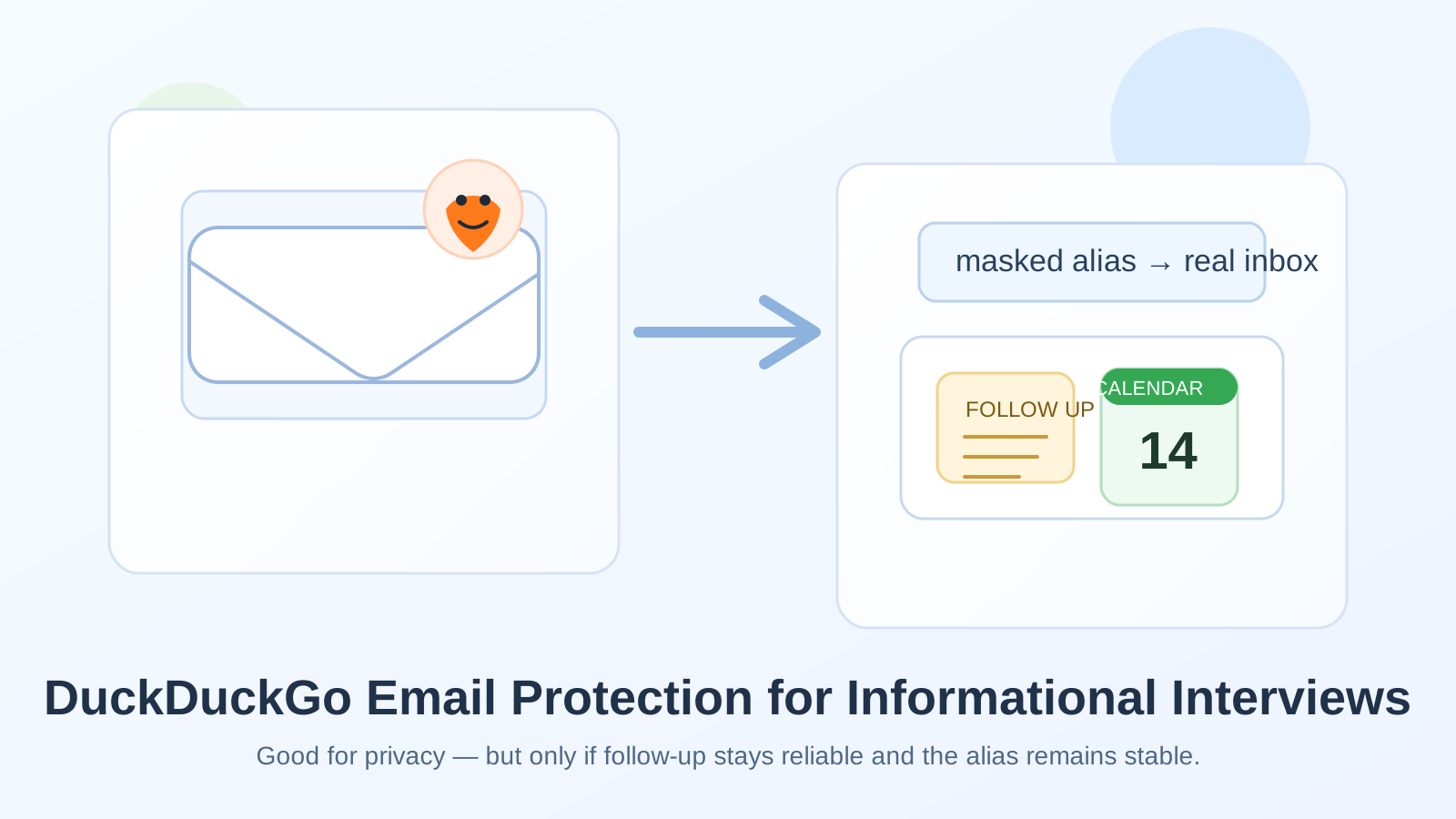
Why this question comes up in the first place
Informational interviews sit in an awkward middle ground. They are not as disposable as one-time signups, but they are not always as formal as a full interview loop either. You may be reaching out to alumni, second-degree connections, people in your field, former colleagues, or someone a friend introduced you to over email. In that context, privacy still matters. Plenty of job seekers do not want to hand their oldest personal inbox to every new contact, especially if they are networking widely.
DuckDuckGo Email Protection is appealing because it gives you a masked address instead of exposing your real inbox directly. That can reduce spam, limit random list-building, and make outreach feel more controlled. If you are contacting several people during a career transition, that layer of distance can feel smart.
The problem is not the privacy idea. The problem is that informational interviews are usually more relationship-driven than people expect. A quick coffee chat can turn into a referral six weeks later. A short reply can become an introduction to two more people. A thank-you note can reopen the conversation months down the line. That is why this topic needs a more careful answer than a simple yes or no.
What DuckDuckGo Email Protection does well for informational interviews
It keeps your primary inbox less exposed
If you are messaging people you do not know well yet, a masked address gives you useful separation. That is especially valuable when you are contacting large alumni groups, public directories, networking communities, or people you found through broad outreach rather than a trusted warm introduction.
It can reduce long-term clutter
Not every networking contact becomes meaningful. Some people never reply. Some send one polite note and disappear. Some may add you to newsletters or group announcements you did not really want. A forwarding alias helps protect the inbox you use for everything else.
It gives you more control during early outreach
Early-stage networking is when privacy tools make the most sense. If you are testing message templates, exploring a new industry, or contacting a wide set of people to learn which conversations are worth pursuing, an alias can be a reasonable filter between your main email identity and the outside world.
Why informational interviews are different from ordinary signups
The biggest mistake is treating informational interviews like account registrations. A temporary or masked address is perfect when the only thing you need is a confirmation link or a one-off response. Informational interviews are different because they often depend on continuity.
- Threads can stretch over time: someone may reply next week, not in the next five minutes.
- Follow-up matters: a thank-you note, a resource list, or a second question may be part of the conversation.
- Introductions branch outward: one contact may CC another person or send you elsewhere.
- Trust builds gradually: a stable, professional contact address can make you easier to remember and re-contact.
That does not mean a masked address is automatically wrong. It means reliability matters more here than it does in short-lived inbox use cases.
Where a forwarding alias can create friction
Longer conversations are easier to lose track of
Informational interview emails are often less structured than recruiter workflows. They may not come from a hiring platform with predictable formatting. Instead, they show up as informal replies, forwarded introductions, or short personal notes sent from whatever inbox the other person uses. If your alias forwards into a crowded mailbox, those messages can disappear more easily than a scheduled interview invite from a recruiting system.
You may forget which address you used
This sounds minor, but it causes real confusion. If you reach out through a masked address and later reply from your primary inbox, the conversation can become harder to follow. The other person may not immediately connect the addresses. Worse, you may create an inconsistent thread right when you are trying to look organized and thoughtful.
Alias management can become another mental task
Networking already involves note-taking, follow-ups, calendar coordination, and remembering who introduced whom. If you add an extra alias layer, you are also taking on another piece of operational overhead: keeping the address active, remembering where it forwards, and making sure you still recognize incoming replies when they land.
It can be the wrong tool for a conversation you want to keep
If the real goal is a durable professional relationship, a disposable mindset can work against you. Informational interviews are often valuable precisely because they may lead to future contact. If you expect the person could become a mentor, referrer, or repeat connection, a stable dedicated address usually fits better than a privacy layer designed mainly to reduce exposure.
When DuckDuckGo Email Protection makes the most sense
Using it is most reasonable when the networking is still exploratory and the relationship is not yet established.
- You are doing broad cold outreach and want some distance from your primary inbox.
- You are contacting people through public alumni directories or open networking communities.
- You plan to monitor the destination inbox closely and keep the alias stable for the full conversation.
- You are comfortable moving the conversation to a more permanent address later if the relationship becomes ongoing.
In those situations, the privacy trade-off can be worth it. You are still reachable, but you are not exposing your oldest inbox to everyone immediately.
When a dedicated separate email is the better choice
If you expect the conversation to matter beyond a single exchange, a dedicated long-term networking inbox is usually the better tool. That could be a clean Gmail account, a separate custom-domain address, or another stable inbox you use only for career conversations. The key is that it is persistent, professional, and easy to monitor.
This is often the best option when:
- You are speaking with alumni in your target field and want to stay in touch.
- You expect referrals or introductions after the initial conversation.
- You are collecting advice from a small set of high-value contacts rather than sending mass outreach.
- You want the contact to be able to find your old thread months later without confusion.
If you like privacy but want more stability than a forwarding alias alone, a separate persistent inbox gives you a better balance. That is also where a tool like Anonibox fits naturally: temporary inboxes are great for one-off signups, gated downloads, and low-trust forms, while relationship-based career conversations usually deserve something more durable.
Best practices if you decide to use it anyway
Keep the forwarding destination boring and reliable
The masked address only helps if the real inbox behind it is one you check every day. Do not forward important networking replies into an account you rarely open, a mailbox packed with promotions, or an inbox you only remember when something goes wrong.
Do not switch addresses mid-thread unless you explain it clearly
If you start the conversation with one address and later want to move to another, tell the person plainly. A simple note is enough: “I use this inbox for outreach, but here is my long-term address in case it is easier for future follow-up.” That preserves trust instead of creating confusion.
Save names, context, and follow-up notes immediately
Privacy tools are not a substitute for organization. After every informational interview, write down who the person is, what you discussed, whether they offered introductions, and when you should follow up. The biggest risk is often not the alias itself but forgetting the relationship details.
Use a professional signature
If your masked address still lands in a normal inbox thread, your signature and writing quality matter. Include your name, a concise role or career direction if relevant, and only the contact details you actually want to share. That helps the exchange feel intentional rather than disposable.
Reassess after the first good conversation
If someone responds thoughtfully, offers help, or seems likely to remain part of your network, consider moving the relationship onto a stable dedicated inbox. Privacy is important, but you do not need to keep every valuable contact behind the same buffer forever.
A simple decision framework
Before you use DuckDuckGo Email Protection for informational interviews, ask yourself:
- Is this broad outreach, or is this someone I genuinely hope to know long term?
- Will I monitor the destination inbox closely for the next several weeks?
- Would I feel comfortable if this thread turned into a referral or ongoing mentorship conversation?
- Am I using the alias for privacy, or because I have not set up a better dedicated networking inbox yet?
If the conversation is low-stakes and exploratory, the alias can be fine. If the contact is high-value and the relationship might continue, a stable separate email usually wins.
Final answer
DuckDuckGo Email Protection can be a reasonable choice for informational interviews, but it is not the best default for every networking conversation. It works best when you want privacy during early outreach and you are disciplined about monitoring the forwarding destination and keeping the alias active.
For longer-term professional relationships, a dedicated persistent email is usually the better option. Informational interviews often matter because they lead somewhere later, and a contact method that is easy to recognize, easy to revisit, and easy to keep alive is often more useful than maximum distance from your real inbox.
In short: use DuckDuckGo Email Protection if you want a privacy buffer for exploratory outreach, but switch to — or start with — a stable separate inbox when follow-up reliability and long-term relationship-building matter more than keeping one extra layer between you and the conversation.