Usually yes. A separate email for internship applications helps you protect your main inbox, stay organized, and keep recruiter follow-up from getting lost in everyday mail.
For most students and early-career applicants, a separate inbox is the best middle ground: more reliable than a temporary address, less invasive than using the personal email tied to everything else in your life.
Why this matters more for internships than people expect
Internship applications look simple from the outside. You upload a resume, answer a few questions, maybe attach a portfolio, and move on. In reality, each application can create a long tail of email: confirmation messages, applicant portal logins, assessment links, event invites, recruiter follow-ups, campus-program announcements, talent-network campaigns, and automated alerts for “similar roles.”
If all of that lands in the same inbox you use for class updates, bills, travel, shopping, family messages, and personal accounts, important internship emails become much easier to miss. That is the main reason a separate email helps. It gives your search a clean lane of its own.
It also gives you more privacy. Every time you apply through a job board, third-party form, startup portal, or campus platform, your address can spread farther than you intended. A separate inbox does not make you anonymous, but it does reduce how widely your main long-term email gets exposed during the search.
Short answer: yes, a separate email is usually the smart default
If you are applying to more than a handful of internships, using a separate email is usually worth it. It improves organization, cuts down on inbox clutter, and makes it easier to treat your internship search like a project instead of a pile of scattered notifications.
The key point is that separate does not have to mean throwaway. For serious applications, you usually want an address you control for weeks or months. That makes a stable separate inbox or alias a better fit than a disposable address once real employers start replying.
What a separate email actually helps with
1. It keeps important replies visible
Internship hiring often moves faster than full-time hiring. A recruiter might send an interview request, a coding test, or a deadline update with little notice. When those messages are buried in a crowded everyday inbox, the risk is not theoretical. People really do miss them.
A separate inbox gives you a simple filter: if a message arrives there, it is probably related to your search. That makes triage much easier.
2. It limits how far your main address travels
Many internship applications run through applicant tracking systems, job boards, outsourced screening tools, and campus recruiting platforms. Even when the opportunity is legitimate, the email you submit may later be used for reminders, recruiting blasts, newsletters, or unrelated openings. A separate inbox creates distance between that ecosystem and the address you use for everything else.
3. It makes follow-up easier to manage
Once you are juggling multiple applications, organization starts to matter. A separate inbox makes it easier to label messages by company, save interview details, find assessment links, and notice which applications are still active. That is especially helpful when the same week includes finals, part-time work, or other deadlines.
4. It gives you a cleaner exit later
Internship search mail does not always stop when the season ends. A dedicated inbox or alias is much easier to mute, filter, or retire once you no longer want that traffic. Cleaning up a side inbox is simpler than untangling months of job-search noise from the personal account you still use every day.
Why a separate email is usually better than a temporary email for real internship applications
A temporary inbox can still be useful at the very top of the funnel. If you are testing a low-trust internship board, joining a talent network just to see what it sends, or browsing unfamiliar signup flows, a temporary option like temporary email for internship applications can help shield your main inbox early on.
But serious internship applications usually need more stability than a disposable address provides. A real employer may contact you days or weeks later. They may send interview instructions, forms, calendar invites, or status updates long after the first application. That is where a separate long-term inbox wins. It gives you separation without sacrificing reliability.
The same logic applies if you are considering a burner-style setup. A burner email for internship applications can sound attractive for privacy, but for roles you genuinely care about, a controlled separate inbox is usually the safer choice.
What kind of separate email should you use?
There are a few good ways to create separation, and the best one depends on how active your internship search is.
A dedicated mailbox
This is the cleanest option if you expect a high-volume search. You create a full second inbox used only for internships, early-career recruiting, and related follow-up. It is easy to monitor and easy to keep organized.
An email alias
If you do not want to manage a separate login, an alias can work well. It keeps your applications distinct while still flowing into a system you control. The main requirement is reliability. You want something stable enough for interviews, assessments, and offer-related communication if an internship goes well.
A separate Gmail or similar provider account
This is a practical middle ground for many students and early-career applicants. It is easy to set up, easy to access from multiple devices, and familiar enough that you are unlikely to miss important messages because the workflow is confusing.
What should you avoid?
Do not use your work email
If you already have a campus job or another employer, using a work-managed address for internship applications is usually a bad idea. It creates privacy issues, can expose your search activity, and may stop working the moment your role changes.
Be cautious with school email as your only internship address
A college address can look credible in some contexts, but it also has limitations. Graduation, program changes, and mailbox policies can affect how long you keep access. That is why many applicants prefer a separate personal inbox they control long term, even if they still read messages from their school account.
Do not rely on a disposable address for later-stage communication
Temporary email is best for exploration, not for the full lifecycle of a serious application. Once a company is sending real next steps, stability matters more than inbox shielding.
When a separate email is especially useful for internships
- You are applying to a lot of internships at once.
- You are using multiple job boards, campus systems, and company career pages.
- You want to protect your main inbox from recruiting spam and long-tail follow-up.
- You are worried about missing interview requests in a crowded personal inbox.
- You want cleaner records for networking, applications, and recruiter conversations.
In other words, if your search is active enough to create real message volume, a separate email is usually helpful.
When it may not matter as much
If you are only applying to one or two internships, directly through well-known employers, and you already keep your main inbox very organized, a separate address may be optional. It is still useful, but it is not always essential.
The more your search expands beyond a couple of trusted applications, though, the stronger the case becomes. Volume changes the equation fast.
A practical setup that works well
If you want the simplest version of this strategy, use a three-layer approach:
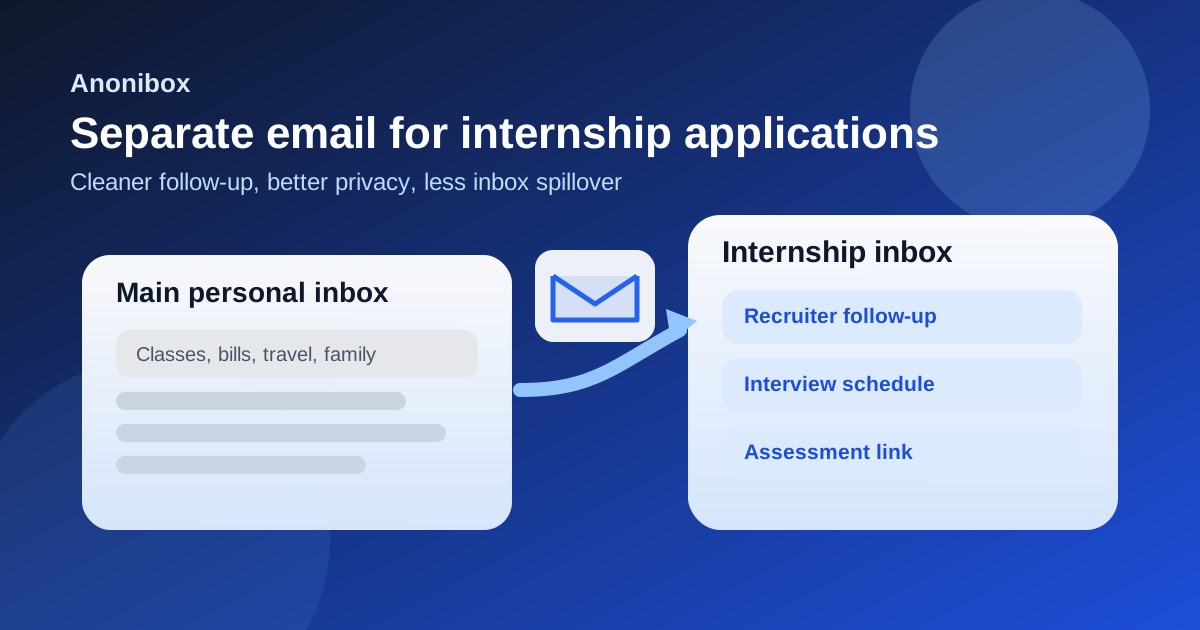
- Main personal inbox: reserved for everyday life and accounts you do not want mixed with recruiting traffic.
- Separate internship inbox: used for real applications, recruiter replies, interview scheduling, and offer-related communication.
- Temporary inbox when needed: used only for low-trust signups, one-off platform testing, or early exploratory forms where you do not yet want to share a stable address.
This gives you flexibility. You do not have to hand out your primary address everywhere, but you also do not risk losing important follow-up because everything sits in a short-lived mailbox.
How to make the separate inbox look professional
The address itself does not need to be fancy, but it should be easy to read and appropriate for professional contact. Use a simple name-based format if possible. Avoid joke handles, extra symbols, or anything that looks disposable even when it is not.
Then do the basics well:
- Turn on notifications or check it at set times every day.
- Create folders or labels for active companies.
- Star or pin anything involving interviews or assessments.
- Make sure your display name is your real name.
- Test that you can receive messages and open links on both phone and laptop.
The benefit of a separate inbox disappears if you rarely check it.
Common mistakes to avoid
- Creating the inbox and then ignoring it: separation only helps if the mailbox is actively monitored.
- Using too many different addresses: if every platform gets a different address, you may create confusion for yourself.
- Switching addresses mid-process without tracking it: keep a note of which companies have which contact details.
- Letting marketing messages bury recruiter replies again: filters and labels still matter, even in a separate inbox.
- Assuming a separate email solves every privacy risk: it helps, but you still need to watch for scam outreach, fake recruiters, and suspicious links.
A simple decision checklist
Ask yourself these questions before you start applying:
- Am I applying widely enough that internship email could get noisy?
- Do I want recruiter messages separated from school and personal mail?
- Will I need a stable address for weeks or months?
- Do I want a safer default than giving out my main long-term email everywhere?
If the answer to most of those is yes, a separate email is probably the right call.
Final answer
Yes, in most cases you should use a separate email for internship applications. It is one of the easiest ways to make your search more organized, reduce unwanted inbox spillover, and keep real recruiter communication easier to spot.
The best setup is usually a stable inbox or alias you control long term, with temporary email reserved for low-trust or early exploratory signups. That balance gives you better privacy than using your main address everywhere and better reliability than trying to run serious internship applications through disposable inboxes alone.
If you want less chaos and more control during internship season, this is one of the simplest workflow upgrades you can make.