Yes, you can use Proton Mail for internship applications if the address looks professional and you check it reliably.
It usually works best as a separate privacy-focused inbox for internship recruiting, but a mainstream Gmail or Outlook address may feel a little lower-friction in conservative or very fast-moving hiring pipelines.
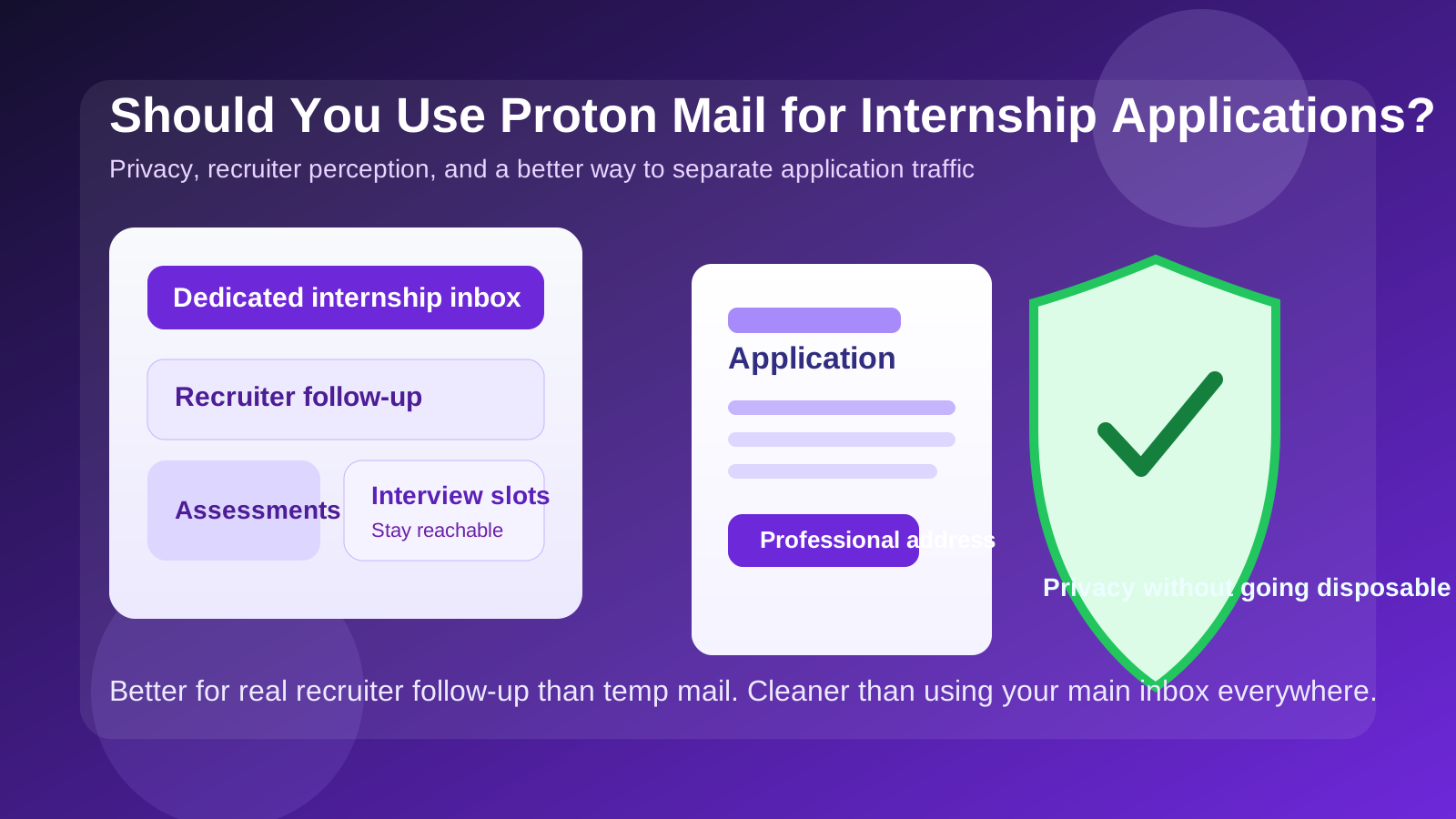
That is the real answer behind searches for whether you should use Proton Mail for internship applications. Most students and early-career applicants are not really asking whether Proton Mail is technically capable of sending email. They are asking whether recruiters will take it seriously, whether it helps protect privacy better than a school or personal inbox, and whether using it could create avoidable friction when interview requests, assessments, or offer details start moving quickly.
In most cases, Proton Mail is a perfectly workable choice. It is a real long-term email provider, not a disposable inbox. That matters because internship recruiting rarely ends with one confirmation message. A serious application can lead to coding tests, writing assignments, scheduling emails, recruiter follow-up, background paperwork, and even future full-time conversations. You need an address that stays available through the entire process.
The catch is not reliability in the abstract. The catch is presentation and habits. Proton Mail is less common than Gmail or Outlook, so the rest of your setup needs to feel clean, easy, and professional. If you do that, most recruiters will care far more about whether you respond quickly than about which provider sits behind your address.
Why this question matters for internship applications
Internship recruiting sits in an awkward middle ground. It is more serious than signing up for a newsletter or downloading a one-off guide, but it can also be noisier and less predictable than a focused full-time job search. Students often apply through school portals, company career sites, campus recruiting systems, third-party assessment platforms, and event QR codes all at once.
That creates two real problems. First, your email address can spread across a lot of systems quickly. Second, important follow-up can get buried under lower-value recruiting mail. The goal is not just to pick an email provider that works. The goal is to choose an inbox that keeps you reachable, organized, and comfortable with the amount of exposure your address will get.
That is where Proton Mail becomes interesting. It gives you more separation and privacy than dumping everything into your oldest personal inbox, while still giving you a stable mailbox that can handle real recruiting conversations over time.
Short answer: yes, but use it intentionally
If you want a dedicated internship inbox and you care about privacy, Proton Mail is a reasonable choice. It can help you keep recruiter traffic, campus recruiting messages, assessment links, and employer follow-up separate from the personal mailbox you use for everyday life.
Where people get into trouble is not the provider itself. The bigger mistakes are using an awkward username, checking the inbox inconsistently, or treating any privacy-first address as if it automatically solves organization problems. Internship hiring rewards speed and clarity. If Proton Mail helps you reply fast and keep everything in one place, it is doing its job. If it makes you slower or harder to reach, it is the wrong setup for you.
What recruiters usually care about
Recruiters and hiring coordinators usually care about simple signals, not email ideology. In practice, they are often asking themselves a few basic questions when they see your contact information:
- Does the address look professional and clearly tied to the candidate?
- Will this person actually see my message and reply quickly?
- Does anything about this inbox look disposable, temporary, or confusing?
- Will this address stay consistent across the application, interview, and follow-up process?
Proton Mail usually passes those tests just fine if the address uses your real name or a clean variation of it. It does not carry the same risk as a throwaway temp inbox because it is a normal persistent mailbox. The only mild downside is familiarity. Some recruiters are simply more used to seeing Gmail, Outlook, or school domains, especially in student recruiting. That does not make Proton Mail a bad choice. It just means you should remove every other source of friction.
Why Proton Mail can be a strong choice for internship applications
1. It gives you cleaner separation from your main inbox
Internship applications can generate far more email than people expect. One application can trigger a confirmation, a recruiter introduction, a coding assessment, a reminder, a campus recruiting event invite, and later a generic “other roles you may like” campaign. A dedicated Proton Mail inbox keeps that flow out of your main personal email, where it would otherwise mix with shopping receipts, bank alerts, travel bookings, class updates, and family messages.
That separation does not just feel tidier. It can make you materially better at responding on time because the signals are easier to spot.
2. It is more private than using your oldest personal address everywhere
Internship applicants often submit their email across employer sites, job boards, event forms, résumé databases, and third-party tools. Even when all of those systems are legitimate, that is still broad exposure. If you prefer not to spread your main personal address across every recruiting workflow, Proton Mail can be a sensible buffer.
You are still reachable, but you are not automatically tying the search to the same inbox you may have used for years of random accounts and low-value signups.
3. It is stable in a way temporary email is not
This is a big distinction. Temporary email can be useful for low-trust forms, gated downloads, or generic resources you do not care about later. Internship applications are not that. A recruiter may reply days or weeks after you apply. A hiring team may send a test link with a deadline. A promising thread may continue into later interviews.
That is why a stable inbox matters more than a disposable one. Proton Mail gives you privacy without sacrificing continuity, which makes it much better suited to real internship recruiting than a short-lived inbox.
4. It can still work well after the internship search
If an internship leads to a return offer, referral, or later full-time conversation, you will want an inbox you still control. That is one reason Proton Mail can be better than relying entirely on a school address. You are building a contact point that belongs to you, not to your university.
Where Proton Mail can create friction
It is less familiar than Gmail or Outlook
Most recruiters will not care. A few may notice it simply because it is less common. That mild unfamiliarity is usually not a dealbreaker, but it means the rest of your setup should look conventional. A clean name-based address helps a lot.
A weak username stands out more
If your address is something like your name or a straightforward variation, Proton Mail looks perfectly normal. If it is built around an old joke, gaming handle, or string of random numbers, the combination of a less common provider and a messy username can feel less polished than the same username might on a mainstream account. The easy fix is obvious: use a professional address.
You still have to monitor it like a serious recruiting inbox
Privacy-first does not mean set-and-forget. Internship timelines can move quickly, especially around first screens and interview scheduling. If you create a Proton Mail account but only remember to check it every few days, the organizational benefit disappears. Responsiveness matters more than branding.
Switching addresses mid-process can get messy
If you apply with Proton Mail, then reply from a school address, then later submit paperwork from a different personal address, you create unnecessary confusion. Once a conversation is real, consistency usually matters more than experimentation.
Proton Mail versus other internship email options
Proton Mail vs. Gmail
Gmail is usually the lower-friction default because it is familiar, easy to access, and widely accepted. Proton Mail is often stronger if your priority is privacy and separation from your main digital life. If you want the most conventional possible presentation, Gmail often wins. If you want a privacy-conscious dedicated inbox and you are willing to monitor it closely, Proton Mail is a strong alternative.
Proton Mail vs. Outlook
Outlook can feel slightly more conventional in corporate or enterprise recruiting environments, especially when a company already lives inside Microsoft tools. Proton Mail is more privacy-forward. Outlook may feel safer if your top priority is familiar presentation, while Proton Mail may feel better if your top priority is account separation and minimizing unnecessary exposure.
Proton Mail vs. college email
A school address can make sense if you check it consistently and it looks clean, but it still ties your recruiting process to an institution-managed mailbox. Students also vary in how long they keep access and how often they monitor campus mail outside the school term. Proton Mail gives you a personal long-term inbox you control directly, which can be safer if an internship search stretches across semesters or turns into future opportunities.
Proton Mail vs. work email
This one is simple: if you already have a job and you are applying for internships or other roles quietly, your work email is usually the worse choice. It ties the conversation to employer-managed systems and can reveal more context than you want. Proton Mail is much cleaner for private career exploration.
Proton Mail vs. temporary email
Temporary inboxes still have a place, but not as the main address for a real internship application. They can help with low-trust extras such as a generic career-content download, a one-time webinar signup, or a promotional mailing list you do not want mixed into your long-term inboxes. That is where Anonibox fits naturally.
But when a recruiter may need to reach you again next week, stability matters more than short-term shielding. Proton Mail is a much better choice for any message thread that could lead to a real opportunity.
When Proton Mail is a good choice
- You want a dedicated inbox for internships instead of mixing everything into your everyday personal email.
- You care about privacy and do not want your oldest main address spread across many recruiting tools.
- You need something more durable than temporary email.
- You want an inbox you still control after the semester, internship cycle, or graduation.
- You are willing to check it consistently and keep the address professional.
When something else may be better
- You already have a clean dedicated Gmail or Outlook address that works well and you do not need to change anything.
- You know the target employers are highly conservative and you want the most familiar-looking provider possible.
- You are not confident you will monitor a separate inbox carefully.
- Your Proton address is awkward enough that creating a fresh professional inbox elsewhere would be easier than trying to force it.
Best practices if you use Proton Mail for internship applications
Choose a simple professional address
Your name is usually the safest anchor. It does not need to be perfect or extremely branded. It just needs to look like a normal professional contact point.
Turn on notifications and check it daily
Do not assume you will remember to open a second inbox on your own. If internship applications are active, daily checks are the minimum. During interview-heavy periods, more frequent checks are often better.
Use the same address across the process
If you start with Proton Mail, use Proton Mail for the application, thank-you notes, interview coordination, and follow-up unless there is a strong reason to change. Consistency reduces confusion.
Keep attachments and notes organized outside the inbox too
Your email should not be the only place where application details live. Keep copies of your résumé versions, portfolio links, deadlines, and role notes somewhere you control so you are not reconstructing everything from one thread later.
Use disposable email only for low-trust extras
If you want to protect your long-term internship inbox from noisy signups, broad talent communities, or one-off resource downloads, using Anonibox for those lower-stakes touchpoints can make sense. Just do not use a temporary inbox for the application thread you genuinely care about.
A quick decision checklist
- Does the address look professional and easy to read?
- Will I check this inbox every day while applying?
- Am I using it for real recruiter follow-up rather than just low-trust signups?
- Would I still want this same address attached to future internship or full-time conversations?
- Would a dedicated Gmail or Outlook account be simpler for my situation, or is Proton Mail the better privacy balance for me?
If your answers are solid, Proton Mail is a credible choice.
Final answer
So, should you use Proton Mail for internship applications? Yes, you can — and for many students it is a smart option if privacy and inbox separation matter. It is stable enough for real recruiting, more privacy-conscious than broadcasting your oldest personal address everywhere, and safer than using a disposable inbox for conversations that may continue.
The main caveat is presentation and discipline. Use a professional address, monitor it closely, and stay consistent once an employer starts engaging. If you do that, Proton Mail can be a strong internship-application inbox. If you want the absolute lowest-friction mainstream choice, a clean dedicated Gmail or Outlook account may still be simpler. The best answer is the one that keeps you reachable, organized, and in control of your contact information.