Yes, a custom domain email for internship applications can be a smart choice if it is simple, professional, and reliable enough to catch every reply that matters.
The safest version is a clean address on a domain you control and actually monitor, not a clever setup that breaks forwarding or makes recruiters wonder whether the inbox is real.
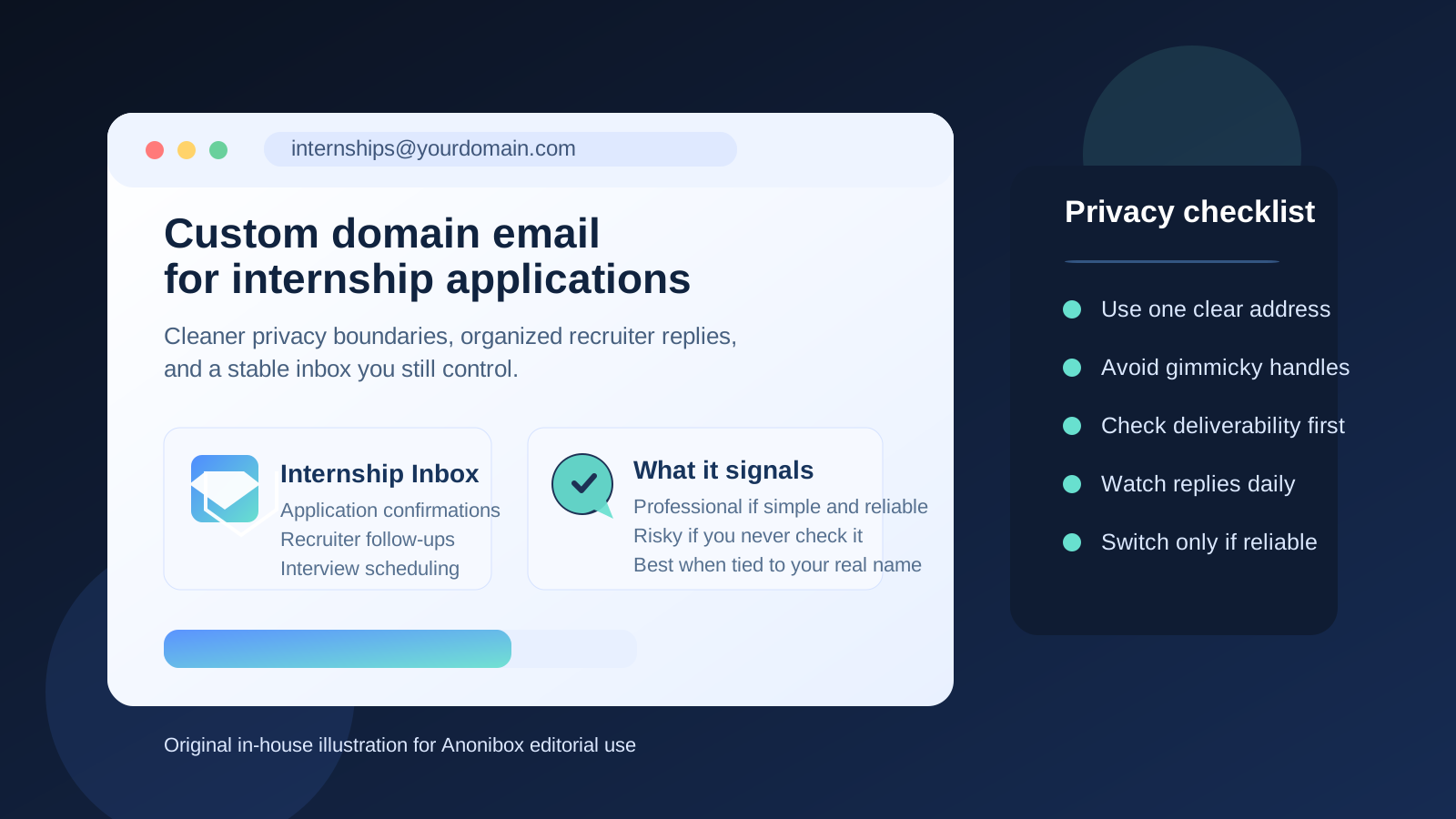
Why this question matters
Internship applications sit in an awkward middle ground between school and work. You want to look organized and credible, but you also may not want to use the same inbox for every campus job board, recruiter form, referral request, and follow-up thread. That tension is why custom domain email keeps coming up. It sounds polished, it gives you more control, and it can create a cleaner privacy boundary than your oldest personal inbox.
But internships also move quickly. One missed screening email, interview invitation, or assessment link can cost you a real opportunity. So the decision is not just about looking professional. It is about whether your setup helps you stay reachable without creating delivery risk.
Short answer: it can work well, but reliability matters more than branding
Most recruiters do not care whether your email is on Gmail, Outlook, iCloud Mail, or a custom domain. They care whether it looks normal, whether it delivers correctly, and whether you answer quickly. A custom domain can absolutely meet that standard.
Where people get tripped up is assuming a custom domain automatically looks better. It only helps if the address is easy to read, tied to your real name or a sensible variation, and backed by a mailbox you check consistently. If it feels gimmicky, complicated, or unstable, it becomes a liability rather than an advantage.
What a custom domain email can do for internship applications
It gives you a dedicated lane for internship traffic
Internship searches can create more inbox clutter than people expect. You might apply through company sites, school portals, startup job boards, LinkedIn Easy Apply flows, and recruiting events in the same week. A custom domain inbox can keep that traffic separate from family messages, shopping receipts, financial alerts, and older personal accounts.
It can look intentional and organized
A simple address such as firstname@yourdomain.com or careers@yourdomain.com can look clean and deliberate. It shows that you thought about how you present yourself online. That does not guarantee a recruiter will be impressed, but it usually will not hurt if the address is straightforward and professional.
It gives you more long-term control
Unlike a school account that may expire after graduation or a work address you do not fully control, a personal domain stays yours as long as you keep renewing it. That continuity can help if an internship process stretches over months, turns into a return offer conversation, or becomes a future networking contact.
It can help with privacy boundaries
If you do not want every application, recruiter, and hiring platform flowing into your main personal inbox, a custom domain can create a useful buffer. It keeps your internship search organized without forcing you into a clearly disposable address that may look temporary or unreliable.
When a custom domain email is a good fit
- You already own and maintain the domain. The mailbox is not experimental and you know it works.
- The address is simple. Your name or a clean personal variation is better than something overly branded or clever.
- You monitor it daily. Internship hiring often moves faster than people expect.
- You want separation without looking disposable. That is where a custom domain often works best.
- You may keep using the address beyond one application cycle. Stability matters more than novelty.
In those cases, a custom domain can be a strong middle-ground option. It offers more control than a mainstream personal inbox while still looking like a real, permanent contact channel.
When it may be a bad idea
Your setup is fragile
If your domain email depends on forwarding rules you have not tested, aggressive spam filtering, or a mailbox you rarely open, do not use it for active internship applications. Deliverability mistakes are easy to ignore until the one message that disappears is the one you needed.
The address looks too unusual
A custom domain works best when it looks boring in the best way possible. A clean personal identity is fine. A joke domain, crypto-sounding brand, edgy alias, or something hard to pronounce can create friction. Recruiters should not have to wonder whether the inbox belongs to a serious candidate.
You are using it as a vanity project instead of a communication tool
The point is not to show off that you own a domain. The point is to be reachable and organized. If your custom domain adds complexity without making your application process easier, a normal Gmail or Outlook address may be the better choice.
How recruiters are likely to read it
In most cases, recruiters will not spend much time analyzing your email provider. They are reviewing résumés, screening answers, timelines, and availability. A sensible custom domain usually lands in the same category as any other professional-looking address: acceptable.
What stands out more than the provider is the address format itself. Compare these examples:
- Good: alex@lastname.com
- Fine: alex.jobs@yourdomain.com
- Riskier: futureceo@hustleforge.net
- Bad for applications: anything that looks ironic, anonymous, or hard to trust
If the domain email supports your real professional identity, it usually works. If it makes the application feel less grounded, it probably is not helping.
Custom domain email vs other internship-application options
Compared with your college email
A college address can signal student status clearly, which may help in some internship contexts. But it can also become awkward if you graduate soon, transfer schools, or want a contact channel that stays yours beyond campus systems. A custom domain offers more continuity.
Compared with your main personal inbox
Your main personal address is often the simplest option, especially if it already looks professional. But if that inbox is cluttered, tied to older accounts, or exposed across too many services, a custom domain can give you cleaner separation and more control.
Compared with temporary or alias-based tools
Temporary inboxes and masked aliases can be useful earlier in the funnel when you are testing job boards, signing up for alerts, or protecting your main inbox from spam. Anonibox fits naturally in that stage. But for real internship applications, interview scheduling, and recruiter follow-up, a stable mailbox usually beats a disposable one. A custom domain can be that stable option if you maintain it properly.
Best practices if you decide to use one
Use a real-name format
Keep the local part and the domain easy to read. Your name, initials, or a simple career-focused variation works better than a brand experiment.
Test deliverability before you apply anywhere important
Send messages to and from Gmail, Outlook, and another mailbox you control. Make sure replies arrive, links do not get clipped, and nothing lands in spam without explanation.
Keep forwarding simple
If your custom domain forwards into another inbox, use the lightest setup that works reliably. The more complicated the chain, the more chances there are for a failure you do not notice in time.
Check the mailbox like it is your primary application inbox
That means daily at minimum during an active search. If you are in interview rounds, check more often. A polished address is useless if you only remember it every few days.
Renew the domain and hosting on time
This sounds obvious, but it matters. Internship timelines can stretch, and you do not want your contact address disappearing because a renewal lapsed at the wrong moment.
A quick decision checklist
- Does the address use your real name or a clear professional variation?
- Have you tested sending and receiving from major providers?
- Will you definitely monitor it throughout the application cycle?
- Is the domain stable enough to keep for months or years if needed?
- Would this look more trustworthy than your existing personal inbox, not less?
If most of those answers are yes, a custom domain email is probably a reasonable choice for internship applications.
Final answer
Yes, you can use a custom domain email for internship applications, and it can be a smart option when you want a cleaner privacy boundary and a more controlled inbox. The key is to treat it like a dependable communications tool, not a branding trick.
If the address is simple, professional, and reliably monitored, most recruiters will treat it like any other legitimate email. If the setup is fragile or the address looks strange, it can do more harm than good. For early exploration, alerts, or lower-trust signups, a tool like Anonibox can help you protect your main inbox first. But when a real internship opportunity is on the line, stability and responsiveness matter most.