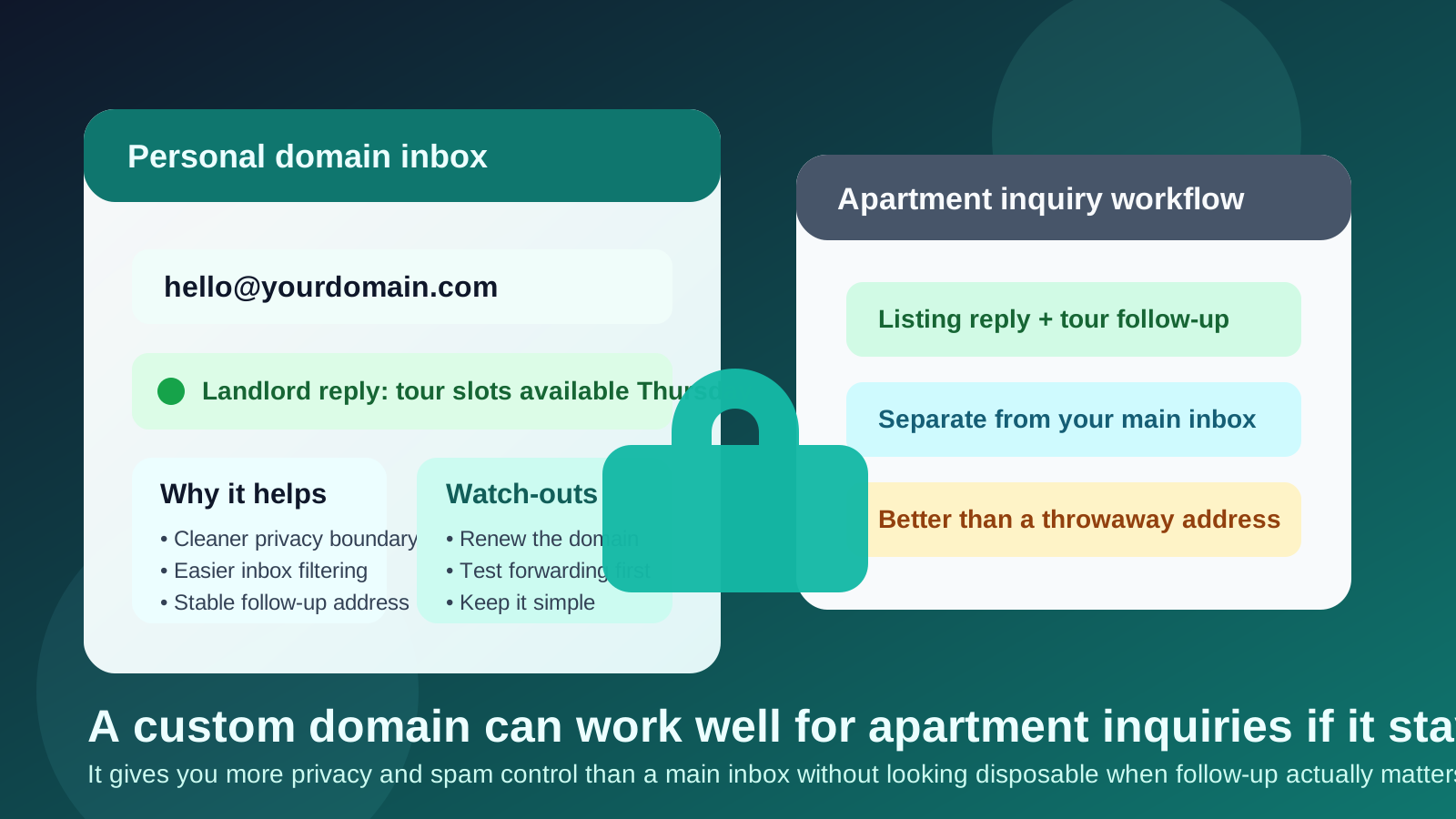
Yes, a custom domain email for apartment inquiries can be a smart choice if you want a cleaner privacy boundary and better spam control than your main personal inbox.
The best version is a simple address on a domain you actually keep and monitor, not an overcomplicated forwarding setup or a throwaway identity that may break when a landlord finally replies.
Why this question matters
Apartment hunting creates a weird mix of short-term urgency and long-tail follow-up. You might message ten listings in one evening, hear nothing for two days, then suddenly get four replies asking for availability, income details, or tour times. That is exactly the kind of situation where your contact setup starts to matter. If you use your main everyday inbox, you may expose a lot of personal history and invite weeks of extra spam. If you use a purely disposable inbox, you may miss the one message you actually needed.
A custom domain email sits in the middle. It can give you a dedicated inbox identity for rental searches without looking obviously temporary. It can also help you organize responses from brokers, landlords, property managers, listing platforms, and application portals in one place. But it is only a good idea if the setup is stable enough for real follow-up.
Short answer: good for privacy and organization, but only if it is reliable
Most landlords and property managers do not care whether your address is on Gmail, Outlook, or your own domain. What they care about is whether you respond, whether the messages deliver, and whether the address looks normal enough to trust. A custom domain can absolutely clear that bar.
Where people get into trouble is maintenance. Apartment replies are time-sensitive. If your forwarding breaks, your spam filtering is too aggressive, or you forget to check the mailbox, then the custom-domain setup becomes a liability. In that case, a plain personal inbox would have been better.
Why a custom domain email can work well for apartment inquiries
It creates a cleaner boundary around rental spam
Rental searches often generate more noise than people expect. Listing alerts, duplicate replies, automated follow-ups, screening vendors, and marketing emails can keep arriving after you have already found a place. A custom domain gives you a separate lane for that traffic. You are not mixing apartment messages with banking alerts, family mail, work conversations, or your oldest personal accounts.
It gives you more control over how addresses are routed
If you control the domain, you can create one clear address for apartment outreach and keep that channel separate from everything else. That can make filtering easier and let you retire or reroute the address later if the search starts attracting junk. You do not need a fancy setup for this benefit. Even one dedicated address can be enough.
It can look more intentional than a messy old inbox
A clean personal-domain address can look professional and easy to trust, especially if it is based on your real name. It does not scream “temporary email,” but it also does not force you to use the same personal inbox you have had since school. For people who care about boundaries, that middle ground is useful.
It works better than a throwaway inbox when conversations matter
Apartment inquiries are not just signups. They often turn into real threads: tour scheduling, application requests, proof-of-income follow-up, pet questions, roommate details, and move-in coordination. Those conversations may continue for days or weeks. A custom domain is usually much better for that than a disposable inbox you may abandon quickly.
When a custom domain is a bad fit
Your setup is fragile
If your domain forwarding has ever broken silently, or if you are the kind of person who forgets renewals and DNS changes, be honest with yourself. Apartment replies can come at awkward times, and some opportunities disappear fast. A setup that is even slightly unreliable can cost you viewings or application windows.
The domain looks too strange or gimmicky
A rental inquiry email should feel easy to read and easy to trust. If the domain name is a joke, a leftover side-project brand, or something that makes people pause, it may add friction for no benefit. A straightforward personal domain is much better than a clever one.
You are using a domain connected to your employer
Your work-managed domain is usually the wrong choice for apartment hunting. It mixes personal housing decisions with employer-controlled infrastructure and can expose more of your life than necessary. A personal domain you control is a different story. A company domain is not.
You do not actually want extra maintenance
There is nothing magical about a custom domain. If your current personal Gmail or Outlook address is already clean, professional, and easy to manage, a custom domain may be more complexity than benefit. Apartment hunting is stressful enough without adding infrastructure you do not enjoy maintaining.
Custom domain email vs other common options
Compared with your main personal inbox
Your main inbox is usually the simplest choice, and simplicity has real value. But it also means every listing response, marketing drip, and broker follow-up lands next to the rest of your life. If you want stronger separation, the custom-domain route is cleaner.
Compared with Gmail or Outlook used as a separate rental inbox
A separate Gmail or Outlook account is probably the easiest low-maintenance alternative. For many renters, that is the practical winner. A custom domain becomes more appealing when you want more control over identity, routing, and long-term separation, or when you prefer not to depend entirely on one mainstream provider address.
Compared with a temporary or burner inbox
This is where the distinction matters most. A disposable email can be helpful for low-stakes listing-site signups, one-off downloads, or situations where you mainly want to reduce inbox exposure. Anonibox fits that type of screening use well. But once you are dealing with a real landlord, broker, or property manager who may reply later with tour details or paperwork, a stable custom-domain inbox is usually the better tool.
Compared with an alias-only setup
Aliases can be great, especially if they route into a primary inbox you trust. But aliases still depend on the underlying system staying stable and visible to you. A custom domain can include aliases, but it should still anchor to one reliable mailbox you check regularly. Otherwise the flexibility turns into confusion.
Best situations for using a custom domain for apartment inquiries
- You want a dedicated address for rental searches without exposing your main inbox everywhere.
- You expect a lot of replies and want cleaner filtering for tours, applications, and follow-up.
- You already own and maintain a personal domain well.
- You prefer a stable contact identity that does not look temporary.
- You may continue using the same address for roommate outreach, moving vendors, or short-term housing searches later.
In those cases, a custom domain is not just reasonable. It can be one of the better setups available.
When you should keep it simpler
- You only plan to contact a handful of listings.
- You are already managing a separate personal inbox for life-admin tasks.
- You do not want to think about DNS, forwarding, or domain renewals at all.
- You have had delivery issues with self-managed email before.
If that sounds like you, a separate Gmail or Outlook account may be the smarter answer. Better simple and dependable than clever and fragile.
How to set up a custom domain email well for apartment hunting
1. Use a plain, readable address
Your name or a simple housing-specific variant is better than anything quirky. It should be easy to type on a phone and easy for a property manager to read quickly.
2. Test send and reply flow before you start messaging listings
Send messages from another inbox, reply back, and confirm everything lands where you expect. Do not assume the setup works because the mailbox exists. Delivery and reply handling matter more than theory.
3. Keep notifications on during the search
Apartment leads can go cold fast. If you choose a custom domain, make sure it is attached to an app or workflow you will actually notice. Otherwise you lose the time advantage that matters most.
4. Avoid making the address look like a business
You are trying to look organized, not like a corporate contact form. A personal domain is fine. A brand-heavy domain can make the interaction feel less human than it should.
5. Decide in advance how long you will keep using it
If the address is only for the search, think about whether you will keep it active for a few extra months in case old threads revive. People often underestimate how late application or lease-related messages can arrive.
Common mistakes
Using the domain like a disposable address
The whole point of a good custom-domain setup is that it gives you control without losing continuity. If you treat it like a burner and stop checking it halfway through the search, you lose the main advantage.
Overengineering filters
It is tempting to build lots of routing rules for platforms, neighborhoods, or brokers. That can be helpful, but it can also hide important replies in the wrong folder. During an active search, simple rules are often safer.
Assuming privacy means invisibility
A custom domain can reduce inbox exposure and help with boundaries, but it does not make housing searches risk-free. You still need normal caution with documents, deposits, suspicious links, and too-good-to-be-true listings.
Letting the address expire too soon
Lease conversations, deposit questions, move-in instructions, and utility coordination can all show up after the initial search. Do not shut the door on those messages the moment you sign somewhere.
Quick decision checklist
- Do I fully control this domain and trust it to stay active?
- Will I actually monitor this inbox every day during the search?
- Does the address look simple and normal to a landlord or broker?
- Do I want cleaner separation from my main personal inbox?
- Would this be more reliable than a disposable inbox for real follow-up?
If most of those answers are yes, a custom domain email is a strong option for apartment inquiries. If several are no, a separate mainstream inbox may be the safer move.
Final answer
Yes, you can absolutely use a custom domain email for apartment inquiries, and for many people it is a very sensible balance between privacy, organization, and credibility. It can protect your main inbox from rental spam while still giving landlords and property managers a stable way to reach you.
Just keep the setup boring and dependable. A simple address on a domain you control, paired with an inbox you actually check, is much better than a disposable address for real housing conversations. If reliability is not guaranteed, go simpler. If reliability is solid, a custom domain can work very well.