Telegram can work for internship applications, but it should not be your default first-contact channel.
Use it only after you verify the employer and need quick scheduling or follow-up, not for cold applications, identity documents, or anything that belongs in an official email trail.
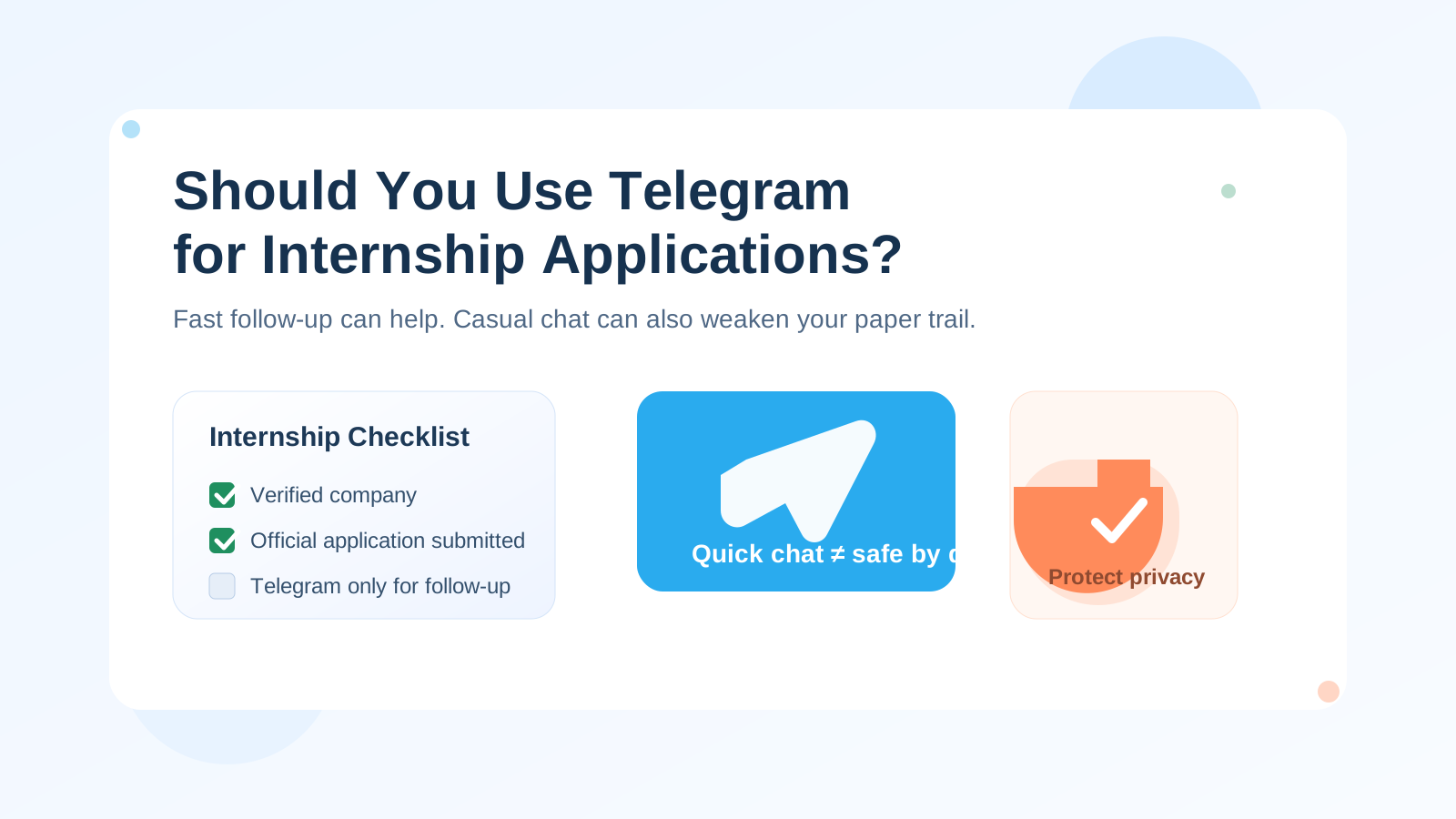
Internship recruiting often feels more casual than full-time hiring. A startup founder may message after a campus event, an alum may offer an introduction, or a recruiter may want to move quickly between class schedules and interview slots. Because of that informality, some conversations spill into chat apps that feel faster than email. Telegram is one of those tools: quick, familiar, and easy to use on any device.
That convenience is real, but so are the tradeoffs. Telegram can reduce friction, yet it can also weaken your paper trail, make impersonation easier, and push you into a less accountable channel before you know whether the opportunity is legitimate. The safest answer is not “never” and not “always.” It is to use Telegram selectively, with clear boundaries.
Short answer: yes, sometimes — but only after basic verification
If a real recruiter, hiring manager, or internship coordinator asks to use Telegram for scheduling or quick follow-up, it can be fine. If an unknown person wants to move your conversation to Telegram before you have confirmed the company, the role, and the application process, that is a reason to slow down.
In other words, Telegram is better as a support channel than as the foundation of your internship application. Your application itself should still live in places that preserve context and accountability: the employer’s careers page, a verified company email address, or a reputable hiring platform.
Why Telegram comes up in internship recruiting
Telegram is not a standard hiring platform, but it does appear in some internship-related situations:
- Startups and small teams: smaller employers sometimes default to chat apps because they move fast and do not have a polished recruiting workflow.
- International recruiting: some regions use Telegram more casually for business communication than others.
- Student communities: campus clubs, hackathon groups, or referral networks may already organize on Telegram.
- Last-minute logistics: a recruiter may want a quick way to confirm interview times, meeting rooms, or video links.
None of those cases automatically makes Telegram suspicious. The problem is that the same convenience that helps a legitimate employer also helps scammers, impersonators, and low-effort lead collectors.
What makes Telegram different from email?
Email still gives you a more durable and professional trail. You have sender domains, searchable threads, forwarding, labels, and a cleaner record of what was promised and when. Telegram is faster, but it is looser. Messages are easier to skim past, accounts can reveal less identity than a company email address, and the whole interaction can feel informal even when the stakes are not.
That matters during an internship search because you are often dealing with first-time career decisions, tight deadlines, and limited leverage. A casual communication channel can make a borderline opportunity feel more legitimate than it really is.
The biggest risks of using Telegram for internship applications
1. It is easy to move off the official record too early
If someone asks you to leave LinkedIn, a campus board, or a company careers page immediately and continue only on Telegram, you lose context fast. That shift makes it harder to confirm whether the person is actually connected to the company and whether the role exists in the form they described.
2. Telegram accounts can be easier to impersonate
A company email address gives you a domain to inspect. A Telegram account may just give you a display name, a handle, and a profile picture. That is not enough on its own. A scammer can copy a company logo, use a convincing title, and sound polished long enough to pressure you into sharing details you should keep private.
3. Your privacy settings may expose more than you expect
Telegram can protect your privacy better than some channels if you configure it carefully, but many people never review those settings. Depending on how your account is set up, you may expose your phone number, profile photo, last-seen status, or group activity more broadly than you intended. That may be acceptable with friends and communities, but it is a different story when you are talking to strangers about internships.
4. Files and links are easy to send, which raises security risk
Chat-based recruiting can normalize quick document sharing. That sounds efficient until someone sends a suspicious “application pack,” a zipped test assignment, or a link to an external form that collects far more information than a normal internship application should. A fast channel is useful, but it also lowers your guard if you are not careful.
5. Telegram is weak for formal records
If details change later, email is usually easier to reference. Offer terms, internship dates, supervisor names, and interview instructions are all better preserved in an official thread than in a moving chat window mixed with emoji reactions and quick back-and-forth messages.
When Telegram is usually fine
There are situations where Telegram can work without much trouble:
- You already applied through the employer’s official site.
- You verified the recruiter or manager independently through the company website, LinkedIn, or a known school connection.
- The chat is only for scheduling, reminders, or simple follow-up.
- You are not being asked to send sensitive documents, payment information, or login codes.
- The employer is clearly real, but their communication style is informal.
For example, if a startup founder you met at a university event says, “Send me your availability on Telegram and I’ll confirm the interview time,” that may be perfectly normal. If a stranger says, “We loved your résumé, move to Telegram now for immediate onboarding,” that is a different story entirely.
When you should avoid Telegram
Telegram is a poor default choice in these situations:
- Cold outreach from an unknown recruiter: especially if you never applied.
- Pressure to move off-platform immediately: real employers may prefer speed, but scammers prefer reduced visibility.
- Requests for sensitive information: passport scans, tax forms, bank details, or identity documents do not belong in a casual chat thread.
- Interview processes that exist only in chat: a real internship process may include chat follow-up, but it should not feel like a disappearing side conversation with no formal anchor.
- Too-good-to-be-true offers: high pay, vague duties, instant selection, or urgent requests are classic warning signs.
How to use Telegram more safely for internship applications
Verify the company before you move the conversation
Look up the employer independently. Check the company website, LinkedIn page, internship listing, and the recruiter’s identity. If the person contacting you cannot be tied to a real organization, stay on email or stop replying.
Keep your application in official channels
Even if Telegram becomes the quick follow-up tool, submit the real application through the company’s portal or by verified email. That preserves a clear record and reduces the chance that your candidacy depends on an untraceable chat thread.
Review your Telegram privacy settings
Before using Telegram for anything career-related, check who can see your phone number, profile photo, last seen status, and active groups. Tighten those settings so strangers do not learn more about you than they need to. Telegram can be relatively flexible here, but only if you actually use the controls.
Use a username carefully
A username can be more private than sharing a phone number directly, but it still becomes part of your professional footprint during the search. Avoid edgy handles, joke bios, or profile photos that clash with the way you want to appear in a recruiting context.
Do not send sensitive documents in chat unless you have fully verified the employer
Even then, ask whether there is a more formal upload path. Resume revisions are one thing. Government ID, banking details, and signed forms are another. The more sensitive the document, the stronger the case for using a secure and official process.
Be careful with links, attachments, and “test tasks”
Some internship scams use assignments, design tests, or coding exercises as the hook. Legitimate take-home tasks exist, of course, but if the sender is unverified or the files feel odd, slow down. Download only what you trust and verify the source first.
Keep your own record outside Telegram
Save important details elsewhere: the recruiter’s name, role, company, interview times, and any commitments made. If the chat becomes messy or disappears, you still have the facts you need.
A smart privacy setup: separate email first, chat second
For many students and early-career job seekers, the cleanest workflow is to keep the initial application in email and use chat only later if needed. A separate inbox helps you control spam, protect your main address, and keep recruiting activity organized. That is where a tool like Anonibox can fit naturally for early-stage internship searches, especially when you are testing low-commitment applications, student programs, event signups, or mailing-list-heavy startup funnels.
Then, if a legitimate employer wants faster coordination, you can decide whether Telegram makes sense for that one opportunity. That order matters. Separate email first. Optional chat second. Not the other way around.
Red flags that should make you stop replying
- The recruiter refuses to use a company email address.
- The internship has no clear company site, supervisor, or job description.
- You are pushed to install software or open unusual files before basic screening.
- You are told you have the internship almost immediately with little or no evaluation.
- You are asked to pay for equipment, training, visas, or processing fees.
- You are asked for verification codes, bank logins, or identity documents in chat.
Telegram is not the problem in every bad interaction, but it often becomes the place where bad interactions accelerate. Once the conversation is fast, informal, and off the main record, it gets easier for a scammer to manufacture urgency.
Quick checklist before you use Telegram for an internship lead
- Did I verify the company and the person contacting me?
- Did I already apply through an official path?
- Are we using Telegram only for logistics, not for the whole application?
- Have I locked down my Telegram privacy settings?
- Would I be comfortable if this chat were the only record of the conversation?
- Am I being asked for anything unusually sensitive or urgent?
Final answer
Yes, you can use Telegram for internship applications, but it should usually be a secondary channel after the employer and role are verified. It is useful for quick follow-up, scheduling, and casual coordination, especially with startups or informal recruiting situations.
What you should not do is treat Telegram like a substitute for a real application trail. Keep the official parts of the process in email or the employer’s portal, protect your account settings, and treat early pressure to move into Telegram as a signal to verify more, not less. That way, you stay responsive without giving up too much privacy or control.