Usually yes. A separate calendar for apartment applications can keep tour follow-ups, screening deadlines, and landlord calls organized without exposing your housing search on work or shared calendars.
The best option is a stable personal calendar you check every day, not a work calendar and not a throwaway setup you forget as soon as application timelines start moving.
Apartment applications create more scheduling noise than many renters expect. A single application can lead to tour confirmations, screening reminders, requests for pay stubs, co-applicant coordination, lease-review deadlines, and follow-up messages from multiple properties at once. If all of that lands in the same calendar you use for work meetings, family events, travel, and daily life, it becomes easy to miss something important or reveal more about your search than you intended.
That is why a lot of renters eventually ask whether they should use a separate calendar for apartment applications. In many cases, the answer is yes. A dedicated calendar does not make the process anonymous, and it does not replace good judgment, but it can give you cleaner organization, fewer accidental visibility problems, and a calmer way to manage a time-sensitive rental search.
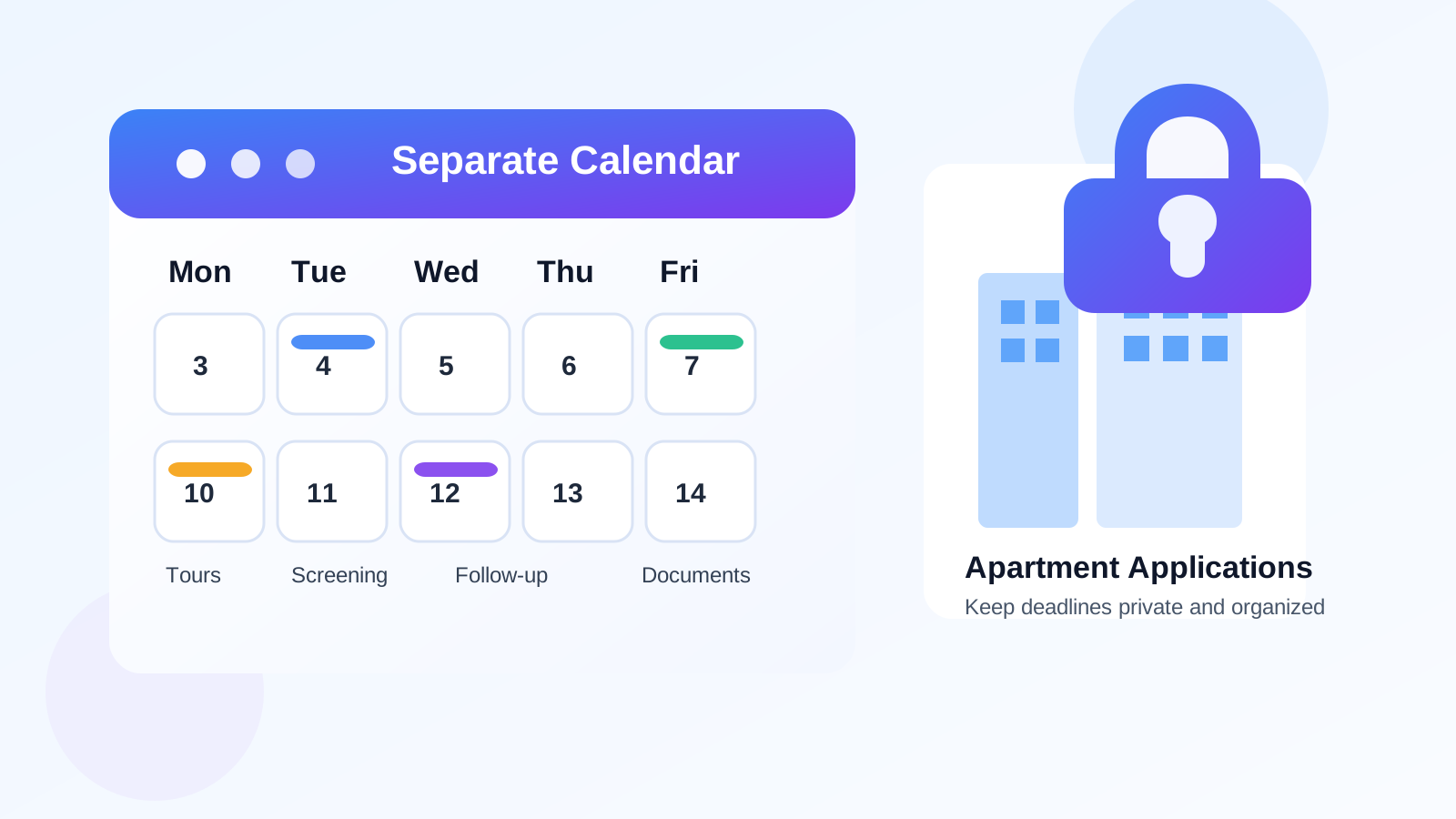
Why apartment applications create calendar clutter fast
People often focus on email first, and that makes sense. Apartment applications create confirmations, portal notices, and screening updates that can flood your inbox. But calendars matter almost as early. Even before you sign a lease, you may need to track:
- application submission dates
- tour appointments and self-guided access windows
- follow-up deadlines if a property says it will reply within a certain number of days
- tenant-screening steps or identity-verification appointments
- document deadlines for income proof, references, or guarantor paperwork
- move-in conversations, fee deadlines, and lease-review reminders
If you are applying to several apartments at once, those details pile up quickly. A separate calendar gives you one place to see the rental workflow without burying it inside everything else you have going on.
What counts as a separate calendar?
A separate calendar does not always mean creating a whole new digital life. In practice, most people use one of three setups:
- A dedicated sub-calendar inside a personal account: often the easiest option if you already use Google Calendar, Outlook, or another personal calendar every day.
- A separate personal account just for housing: useful if you want stronger separation from your normal reminders and household planning.
- A calendar paired with a separate apartment-search inbox: a good fit if you already keep rental messages separate from your everyday email.
The important detail is control. Your calendar should live in a personal environment you manage, not in a work account and not in a shared setup that exposes your apartment search to other people by default.
Why a separate calendar helps with apartment applications
1. It keeps deadlines from disappearing
Apartment applications move faster than many other administrative tasks. A property manager may ask for updated documents by tomorrow morning. A screening portal may send a same-day deadline. A landlord may hold a unit for only a short window while waiting for your response. When those reminders sit inside a crowded main calendar, they are easier to overlook. A separate calendar makes the rental process visible at a glance.
2. It reduces privacy leaks on shared devices and calendars
Not every privacy problem comes from the property itself. Some people share household calendars with a partner, family member, or roommate. Others have lock-screen previews, smart displays, desktop widgets, or synced tablets showing event titles automatically. If your main calendar is visible in those places, rental reminders can become more public than you want. A dedicated calendar lets you limit which devices sync, adjust notification previews, and keep event names less exposed.
3. It helps you avoid work-account exposure
If you are apartment hunting while employed, using a work calendar is usually a bad idea. Notifications, synced accounts, account logs, and visible meeting blocks can all leave traces inside systems your employer manages. Even if no one is watching closely, there is no upside to mixing your housing search into employer-controlled tools. A personal calendar is the safer default.
4. It works well with a privacy-minded apartment-search setup
A separate calendar fits naturally with other practical separation habits. Some renters use a separate email for apartment applications so leasing messages do not flood their main inbox. Some start with a temporary address for early listing experiments, then switch to a stable address for serious applications. Anonibox can make sense in that early, low-trust stage when you are testing listing sites or trying to cut down on spam. But once you are applying for a real unit, a stable inbox plus a dedicated calendar is usually the better combination.
When a separate calendar is especially useful
You will probably get the most value from a separate calendar if any of these sound familiar:
- You are applying to multiple apartments at once.
- You are coordinating with a partner, roommate, guarantor, or family member.
- You want to keep apartment-search reminders off work devices and work accounts.
- You share a main household calendar and do not want every viewing or deadline visible there.
- You keep missing follow-up windows because everything blends together.
- You are moving in a tight market where response times matter.
The busier and more competitive the search becomes, the more useful this separation usually is.
When it may be more than you need
A separate calendar is helpful, but it is not mandatory for every renter. If you are applying to one apartment, already use a private personal calendar, and are handling the process slowly and carefully, your existing setup may be enough. In that case, a dedicated sub-calendar inside your normal personal account may solve the problem without adding extra complexity.
The goal is not to turn apartment hunting into a ritual. The goal is to reduce avoidable mix-ups. If your current setup is already calm, private, and reliable, the benefit of a second calendar may be smaller.
The best setup for most renters
For most people, the best balance of privacy and convenience is a dedicated apartment-application calendar inside a personal account they already monitor regularly. That approach works well because:
- you can access it from your phone without involving work systems
- you can color-code rental tasks separately from normal life
- you can keep reminders, notes, and addresses in one place
- you can archive or hide the calendar once the search is over
If your search is especially sensitive, a completely separate personal account can make sense too. Just make sure it is still reliable enough that you will actually see reminder changes, new deadlines, and landlord follow-up.
How to set up a separate calendar for apartment applications
Use one clear calendar for the whole search
Name it something obvious like Apartment Search or Rental Applications. Do not create several overlapping calendars unless you enjoy creating a new kind of confusion.
Keep event titles useful but not overly revealing
You do not need to put every property name and address in the visible title if those titles may appear on a lock screen. Neutral labels such as “Application follow-up,” “Tour reminder,” or “Lease review deadline” often work better. Put the specific property details in the notes section if needed.
Track follow-up dates deliberately
If a landlord says they will reply in two business days, set a reminder for that exact window. If a screening portal gives you until tomorrow evening, put it on the calendar immediately. The point is to stop relying on memory when the market is moving fast.
Store the useful details inside the event
Add the property address, contact name, portal link, unit number, parking instructions, or document checklist to the event notes. That turns the calendar into a working dashboard instead of just a list of vague reminders.
Keep it off work-managed devices if possible
A separate calendar loses a lot of its privacy value if you sync it straight onto a work laptop or company-managed phone. If the device belongs to your employer, assume cached data and notifications may linger.
Do not over-notify yourself
Too many alerts create their own clutter. A better approach is one reminder with enough lead time to act and, when necessary, one closer to the deadline.
Common mistakes to avoid
- Using your work calendar “just this once”: one reminder can still leave a visible trace.
- Creating a calendar you never check: separation only helps if it stays reliable.
- Relying on temporary tools for serious application steps: temporary email can be useful earlier, but a real application usually deserves stable channels.
- Tracking only tours and not deadlines: applications create document and response windows too.
- Letting event titles expose too much: privacy leaks often come from previews, widgets, and shared screens.
A quick decision checklist
- Am I applying to enough apartments that reminders are getting messy?
- Do I want rental deadlines separate from work, family, or shared-household planning?
- Will I actually check a separate calendar consistently?
- Would a dedicated sub-calendar inside my personal account solve the problem without extra friction?
- Do I need to keep my apartment search more private from shared devices or visible notifications?
If most of those answers point to yes, a separate calendar is probably worth it.
Final answer
Yes, in most cases a separate calendar is a smart way to handle apartment applications. It keeps deadlines, tours, screening steps, and follow-ups organized while reducing the chance that your housing search spills into work systems or shared calendar spaces.
It is not mandatory for every renter, and it will not solve every privacy risk by itself. But if you are applying to multiple units or trying to keep the process organized and discreet, a dedicated calendar is one of the simplest upgrades you can make. Pair it with a stable application email, use temporary inboxes only where they make sense, and your apartment search will be much easier to manage.