Yes — in most cases, a separate email is a better choice than your main personal inbox for data broker removal services because you need a stable place for confirmations, support replies, and ongoing privacy updates without mixing them into everyday mail.
A disposable inbox can help during low-trust research, but if you actually plan to use a removal service, a separate long-term email usually works better than a throwaway address you may lose or stop checking.
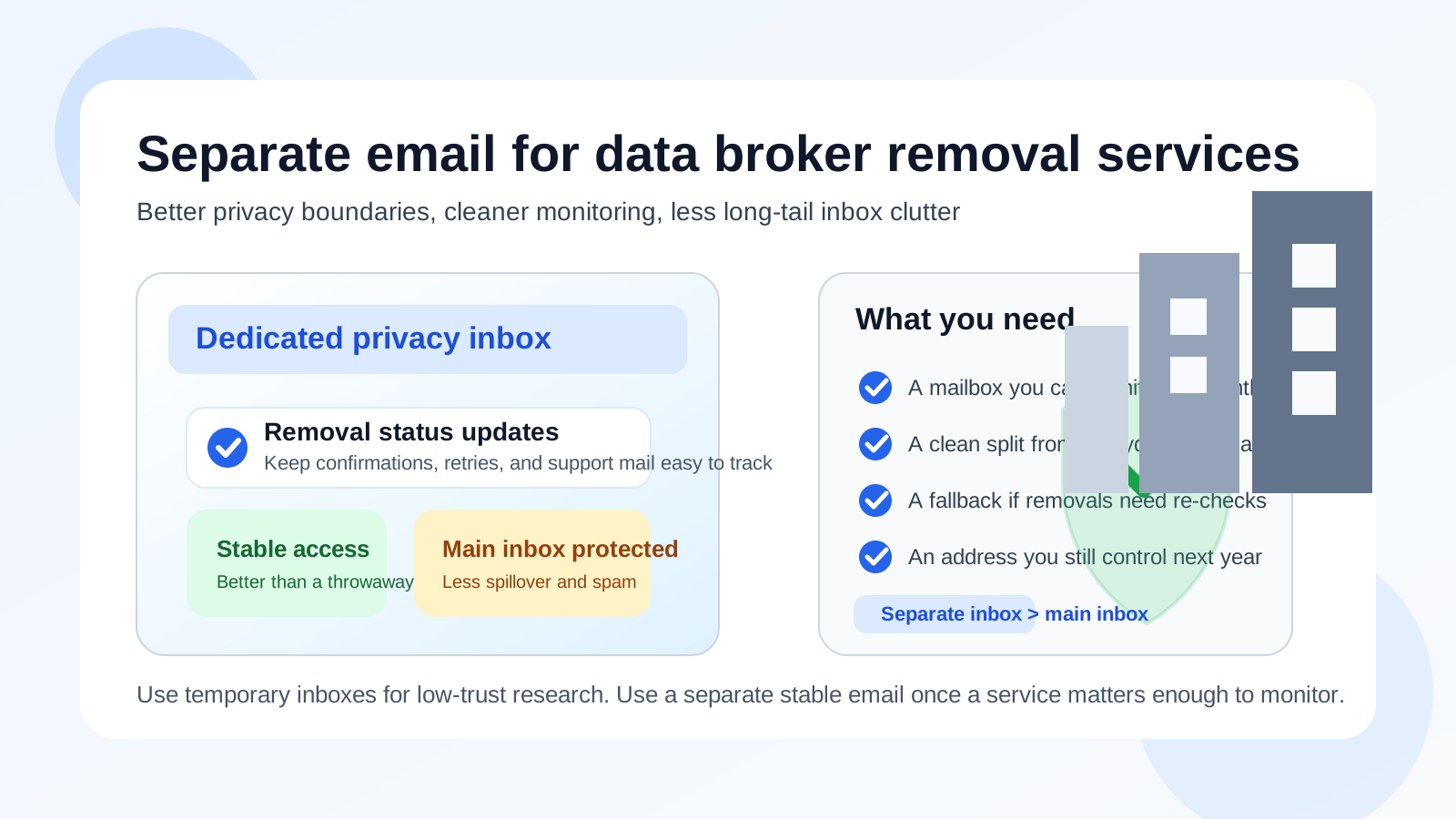
Why this question matters
Data broker removal is one of those privacy tasks that sounds simple from the outside and turns out to be annoyingly persistent in real life. You sign up because you want less exposure, fewer people-search listings, less spam, and less easy linkage between your name, address history, relatives, and contact details. But the services themselves often create a second problem: they need an email address for onboarding, confirmations, progress notices, support replies, billing reminders, and periodic re-checks.
If you use your main personal inbox, those messages can end up mixed with banking alerts, family mail, shopping receipts, work-related accounts, and everything else you actually care about. If you use a true throwaway inbox, you may reduce exposure at first but create a new problem later when you need access to a removal confirmation, a support thread, or a renewal-related decision. That is why a separate email is usually the cleanest middle path.
Short answer: usually yes
For most people, using a separate email for data broker removal services is a smart privacy move. It gives you better separation from your everyday inbox, makes it easier to track privacy-related messages in one place, and avoids turning your primary address into the default contact point for yet another service category.
The key word is separate, not temporary. Data broker removal is often an ongoing process, not a one-click signup. You may need that mailbox again weeks or months later.
Why a separate email makes sense here
1. It keeps privacy-management mail out of your main inbox
Your main personal inbox already holds too much. Even when a data broker removal service is legitimate and useful, its messages are rarely things you want mixed into your day-to-day mail forever. A separate inbox creates a boundary: privacy-maintenance mail stays in one place, and your normal inbox stays less cluttered.
2. It makes ongoing monitoring easier
Some removal services do not just send one welcome message and disappear. They may send account verification links, progress summaries, notices about records that need manual review, follow-up questions, renewal reminders, or alerts that a previously removed listing reappeared. Those messages matter. A dedicated inbox makes them easier to find when you actually need them.
3. It reduces unnecessary address exposure
Even if you trust the service, there is still a general privacy benefit to not handing your oldest, most central personal address to every company you try. A separate inbox limits how broadly your main address travels and makes it easier to change course later if you decide the service is not worth keeping.
4. It gives you cleaner records
Privacy work gets messy fast. If you ever need to compare services, check when you submitted something, find a confirmation email, or review what a vendor promised you, a separate inbox is simply easier to manage. Search results are cleaner. Folders make more sense. Important replies are less likely to get buried.
Why your main inbox is often the worse choice
Using your main inbox is not always catastrophic, but it is usually the lazier choice rather than the better one. The downside is not just spam. It is long-tail spillover. Once your main inbox becomes the home for privacy-service messages, it is harder to separate those records from everything else. If you test multiple services, compare options, or later decide to stop using one, your main address keeps carrying that history.
There is also a practical issue: privacy-related mail tends to look important when it arrives and irrelevant six weeks later, until the exact moment you need it again. A dedicated inbox preserves that thread without making your main account noisier all year.
Separate email vs temporary email
This is the distinction that matters most.
A temporary inbox is useful for low-trust research
If you are just comparing services, testing signup flows, downloading a gated guide, or seeing whether a vendor immediately drops you into a sales sequence, a disposable inbox can be useful. That is where a tool like Anonibox fits naturally: low-commitment research, early filtering, and protecting your real inbox from instant exposure.
A separate stable inbox is better for actual service use
Once you sign up for a real data broker removal workflow, continuity matters. You may need to read follow-up messages later, respond to support, confirm whether removals are still active, or review updates around billing and monitoring. A separate email that you actually keep is usually better than a short-lived inbox that solved only the first five minutes of the process.
So the question is not whether temporary email is ever useful. It is whether it is the best long-term mailbox for a service that may keep working in the background. Usually it is not.
Separate email vs burner email vs alias
Separate email
This is usually the safest default. It gives you a durable account you control, a clean inbox boundary, and enough stability for longer-term follow-up.
Burner email
A burner address can be fine if you are testing a questionable or very low-trust service and want maximum separation. But it becomes risky if you will need that inbox later for real account access or support history.
Email alias
An alias can work well if you already use a provider that lets you create and manage aliases cleanly. It gives you separation while still routing messages into a mailbox you already control. For many people, that is a great compromise between convenience and privacy.
If you already have a solid alias setup, it may be even better than opening a totally new standalone account. But if you do not, a separate dedicated inbox is still an easy, practical answer.
When a separate email is especially useful
- You plan to try more than one data broker removal service before deciding.
- You want a clear record of confirmations, removals, re-checks, and support tickets.
- You do not want your oldest personal inbox attached to yet another privacy-related service.
- You expect long-tail messages such as status updates or renewal reminders.
- You want to keep privacy maintenance separate from shopping, travel, family, and financial mail.
These are all common situations, which is why the separate-email approach is usually the most practical answer.
When you might not need a separate inbox
- You are using one highly trusted service and do not mind the extra mail.
- You already manage privacy-related messages well through an alias system in your main mailbox.
- You are only doing a quick one-time check and do not expect ongoing account use.
Even then, many people still prefer separation. It is not mandatory in every case. It is just usually the cleaner option.
Best practices if you use a separate email for data broker removal services
Pick a mailbox you will actually keep
Do not create a new address and forget about it in two weeks. If this inbox is going to hold confirmations, monitoring notices, and support replies, it needs to be something you can still access comfortably later.
Turn on basic organization from day one
Create a simple folder or label structure: onboarding, confirmations, support, renewals, and maybe one folder per vendor if you test multiple services. Future-you will be grateful.
Save important confirmations outside email too
If a service sends a particularly important status update, ticket number, or removal summary, save it somewhere else as well. Email search is good right up until the day you need something quickly and cannot remember which sender name used it.
Do not use a work or school email
Privacy maintenance is personal. A work or school account adds the wrong kind of dependency and may outlast your access or create visibility you do not want. A personal account you control is better.
Be careful with support requests
A separate inbox improves privacy boundaries, but it does not mean you should casually send more personal information than necessary. Stick to what the service actually needs, and verify that you are replying through a legitimate support channel.
Where Anonibox fits naturally
Anonibox makes the most sense during the early, low-trust stage: comparing vendors, testing signup friction, checking whether a service starts blasting you with sales follow-up, or exploring whether a company is worth further attention at all. That is a good use of temporary email.
But if you move from curiosity to actual use, a separate stable inbox is usually the better long-term home. That way you keep the privacy benefits of inbox separation without losing access to messages that may still matter later.
A simple decision checklist
- Will I need to monitor this service for weeks or months?
- Do I want privacy-related messages separated from everyday personal mail?
- Would I regret losing access to this inbox later?
- Do I need a clean record of confirmations, support, and renewal notices?
- Am I using a temporary inbox only because it is fast, even though I may need continuity?
If most of those answers point toward continuity, use a separate stable email. If they point toward one-time low-trust research only, temporary email may be enough for that stage.
Final answer
So, should you use a separate email for data broker removal services? Usually yes. It is often the best balance between privacy and practicality: better than exposing your main inbox everywhere, but more dependable than a throwaway address if the service needs follow-up, support, or recurring monitoring.
Use temporary inboxes when you are just researching or filtering options. Use a separate long-term email when you actually want the service to work for you over time. That gives you cleaner privacy boundaries without making the process harder to manage later.