No — your work email is usually a poor choice for data broker removal services. Your employer controls that mailbox, your access can disappear if your job changes, and privacy-service follow-up often needs to stay reachable on your terms.
If you need an account you can monitor over time, a separate personal inbox or stable alias is usually the better answer. Temporary email can still help during early research, but work email is rarely the right long-term home for personal privacy work.
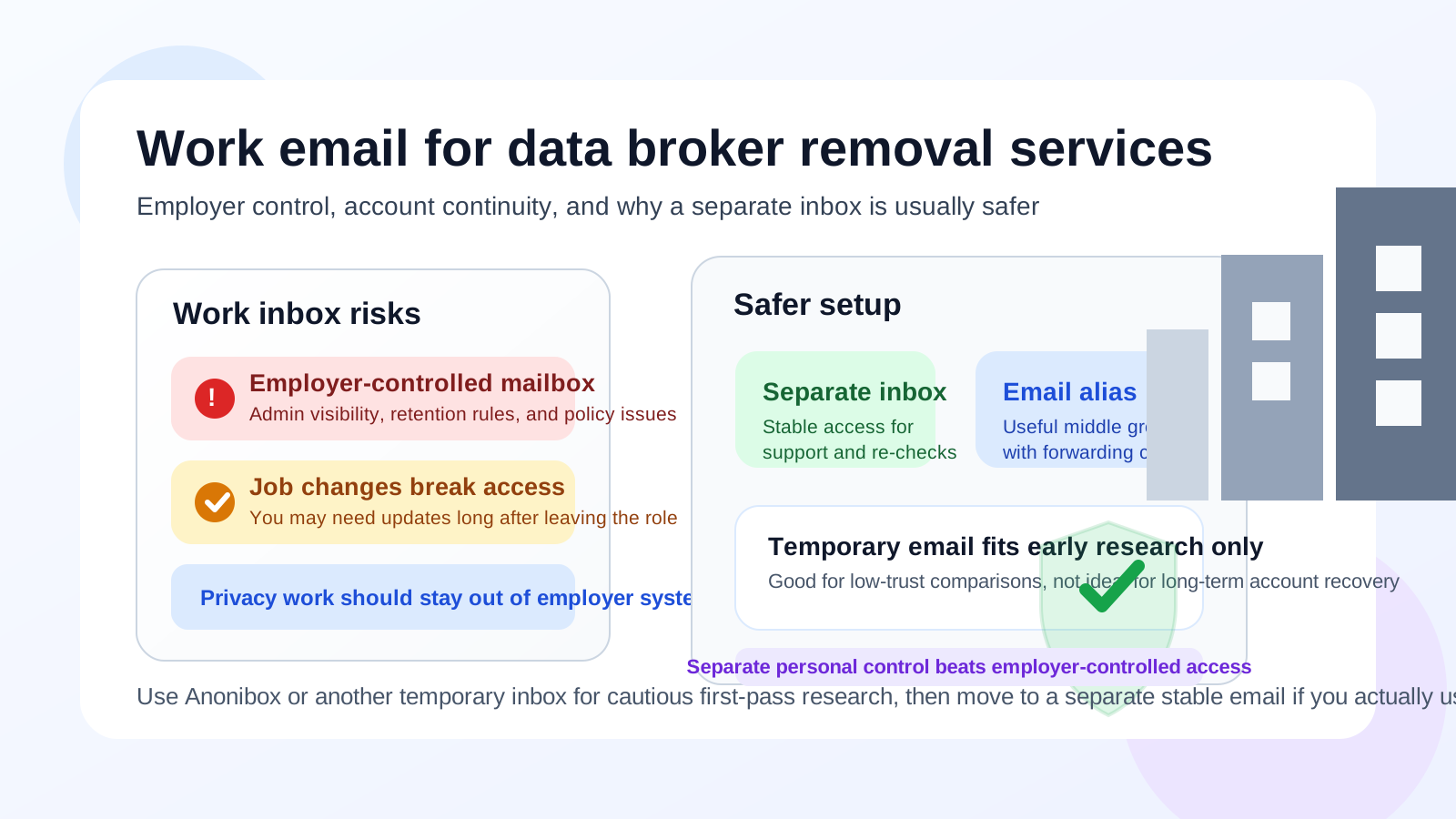
Why this question matters
Data broker removal sounds like a one-time cleanup task, but in practice it often becomes an ongoing workflow. You may sign up, verify your account, review scan results, contact support, compare providers, revisit removals later, and get renewal or re-check notices months down the line. That means the email address you use is not just a signup detail. It becomes part of the privacy system you are building.
That is why work email is such an awkward fit. People often consider it because it feels organized, reliable, and easy to monitor during the day. But those short-term conveniences hide bigger problems. Your employer may control the account, you may not keep access forever, and there is rarely a good reason to route personal privacy-management traffic through company systems.
Short answer: usually no
For most people, using a work email for data broker removal services is a bad default. Even if the provider itself is legitimate, the mailbox is still tied to an employer-controlled environment. A separate personal inbox or an email alias usually gives you better continuity, better privacy boundaries, and less risk if your job changes.
The only clear exception is when the service is being used for a company-managed purpose rather than a personal one. But for ordinary personal privacy cleanup, work email is usually the wrong account.
Why work email creates the wrong kind of dependency
1. Your employer controls the mailbox, not you
This is the biggest issue. A work email account is not truly yours, even if you log into it every day and nobody else normally reads your messages. Company accounts usually sit inside employer-owned systems with admin controls, retention policies, security tooling, and acceptable-use rules. That means your personal privacy-management messages may be stored, scanned, or retained in ways you do not fully control.
Even at very normal companies, work email exists for work. Personal privacy services are usually outside that purpose. Using the account anyway may not create immediate drama, but it is still a poor boundary decision.
2. You can lose access when your job changes
Data broker removal is not always finished in a weekend. If you change jobs, lose access, switch employers, or have your account deprovisioned quickly, you may lose contact with an account you still need. That can create real problems if a service later sends a renewal reminder, support response, security alert, or re-check notice.
Even if you can export mail before leaving, that is still extra friction you do not need. A mailbox tied to employment is a fragile place to anchor a personal privacy workflow.
3. It mixes personal privacy work into employer systems
Data broker removal is personal. It may relate to your home address, phone number, relatives, identity records, or concerns about spam and public exposure. None of that automatically becomes secret just because it exists, but it is still personal information. Running those conversations through company email creates a record inside systems built for employment, not for your private life.
That is not about paranoia. It is about choosing the correct container. The same reason you would not normally use your work inbox for housing searches, dating accounts, or personal legal paperwork applies here too.
4. Work email can make account recovery and continuity messier
If you ever need to reset the password, reply to support, confirm an action, or re-enter the account months later, you want a mailbox you can count on. Work email may feel stable in the moment, but its stability depends on an outside relationship. A separate personal inbox gives you far more control over recovery, forwarding, filters, and long-term access.
5. It can create visibility you do not actually want
Sometimes the risk is not that a specific person is snooping. It is that the mailbox exists inside a monitored environment with security software, device controls, or compliance rules that are perfectly normal for work. That is one more reason to keep personal privacy-maintenance traffic out of it when you can.
Why people are tempted to use work email anyway
The temptation is understandable. Work inboxes often have strong deliverability, easy search, good desktop access, and a predictable habit loop because people check them constantly. If you are overwhelmed by your personal inbox, using your work account can feel like a tidy operational shortcut.
But this is one of those cases where convenience points in the wrong direction. The better answer is not to borrow employer infrastructure for personal privacy work. The better answer is to create a separate system you control.
Better options than work email
A separate personal inbox
This is usually the simplest strong choice. A separate personal inbox keeps privacy-service mail away from your main everyday account while still giving you stable long-term access. You can organize it cleanly, keep confirmations easy to find, and preserve the account even if your job, city, or daily routines change.
An email alias
An alias can be an excellent middle ground if you already use a provider that supports aliasing well. It lets you reduce exposure of your main address while still receiving mail in a place you control. For data broker removal services, that balance often works better than either your work email or a throwaway inbox.
Temporary email for early research only
Temporary email still has a real role. If you are only checking whether a provider is worth your attention, comparing sales flows, or avoiding immediate marketing spam during low-trust research, a disposable inbox can help. That is where Anonibox fits naturally.
But once you actually create an account you may need to revisit, continuity starts to matter more than short-term anonymity. At that point, a separate stable email usually beats both temporary email and work email.
When work email might be acceptable
There are narrow edge cases where work email is not automatically absurd. For example, if a company privacy team is using a removal or reputation-monitoring vendor for business-owned executive profiles, brand exposure, or employee-facing security workflows, a company-controlled email could be appropriate because the task itself is company-managed.
That is very different from a normal person using a personal work mailbox for their own home-address exposure, spam reduction, or people-search opt-outs. Most readers asking this question mean the personal use case, and in that situation the answer is still usually no.
How to choose the right email instead
Pick something you control independently
Your best email for data broker removal services is one you keep whether or not your job changes. That makes a personal inbox or alias much safer than a work-managed account.
Favor stability over novelty
If you think you may need the account later, do not choose a mailbox just because it is disposable or clever. Choose one you can still reach next year.
Separate privacy work from daily clutter
If your main inbox is already overloaded, create a dedicated folder, label, or separate mailbox for privacy tasks. That solves the organization problem without dragging work email into the picture.
Keep the workflow boring
The best setup is usually the least dramatic one: separate personal inbox, strong password, simple filters, and a consistent record of confirmations and follow-up mail.
Best practices if you are signing up soon
- Use a separate personal inbox if you expect ongoing support, renewals, or monitoring.
- Use an alias if you want lower exposure without opening a full new mailbox.
- Use temporary email only for cautious early-stage comparison, not for an account you may need later.
- Avoid work or school email for personal privacy services whenever possible.
- Save especially important confirmations outside the inbox too.
These habits keep the privacy workflow manageable without tying it to employer infrastructure.
A quick decision checklist
- Will I still need this mailbox if I change jobs?
- Would I be comfortable having privacy-service traffic stored in employer systems?
- Am I using work email just because I check it more often?
- Would a separate personal inbox solve the same problem more cleanly?
- Do I need continuity for support, monitoring, or account recovery later?
If those questions make work email feel shaky, that is a sign it probably is.
Final answer
So, should you use your work email for data broker removal services? Usually no. It creates the wrong dependency, weakens your privacy boundaries, and can leave you stuck if your employer controls access to a mailbox you later need again.
A separate personal inbox or stable alias is usually the smarter long-term choice. If you are just testing providers and want to avoid early funnel spam, temporary email can help at the research stage. But for real ongoing privacy work, work email is rarely the best option.