Usually not as your default. Your main personal inbox can work for data broker removal services, but a separate inbox or stable alias is often the better choice because it limits exposure and makes privacy-related follow-up much easier to manage.
If you are only doing quick research, a temporary address can help at the very start. But if you plan to use a real data broker removal service, your best long-term option is usually a separate controlled email rather than your everyday personal inbox.
Why this question matters
Data broker removal sounds like a one-time privacy fix, but in practice it is usually an ongoing workflow. You might sign up to reduce how easily people-search sites, lead brokers, and marketing databases connect your name to your contact details. That is the goal. The catch is that the service itself now needs a way to contact you.
That means welcome emails, account verification links, progress reports, support replies, billing notices, renewal reminders, and sometimes re-check alerts if records come back or need manual review. If those messages all land in your oldest, busiest personal inbox, you gain convenience but lose some control. That is why so many privacy-conscious users pause before using their main address here.
Short answer: you can, but it usually is not the best default
Using your personal email for data broker removal services is not automatically wrong. If you trust the provider, only use one service, and do not mind those messages mixing into your normal inbox, it can be perfectly workable.
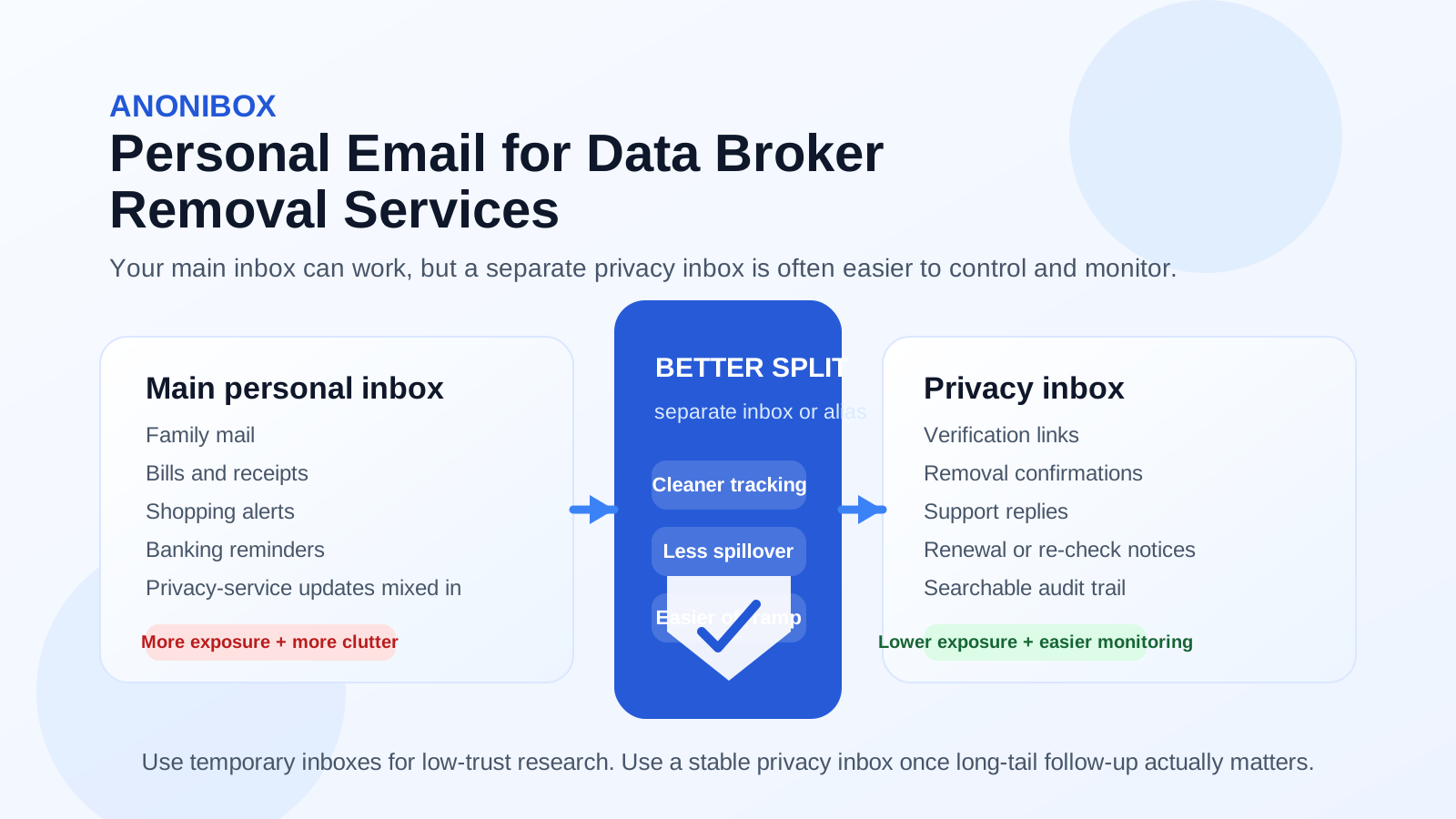
But for most people, it is not the cleanest choice. A separate inbox or alias creates a better boundary. It keeps privacy-maintenance mail out of your daily account, gives you a clearer record of what happened, and makes it easier to step back later if a service becomes noisy, disappointing, or unnecessary.
What you risk when you use your main personal inbox
1. More long-tail inbox clutter
The biggest downside is not always immediate spam. It is the slow drip of messages that keep arriving long after the original signup. A data broker removal service may seem quiet at first, then send monthly summaries, renewal prompts, product announcements, support follow-ups, or notices about new coverage. None of those are catastrophic, but together they become just another stream of mail inside an inbox that already handles your actual life.
2. More exposure for an address you probably use everywhere else
Your main personal email usually has history. It is tied to shopping accounts, bills, subscriptions, travel bookings, school logins, personal contacts, and maybe years of account recovery settings. The more services that receive it, the harder it becomes to control how broadly it circulates. Even when a provider is legitimate, reducing unnecessary exposure of your oldest personal address is still a reasonable privacy habit.
3. Harder tracking later
Privacy work is easy to forget until you need proof that something happened. Months later, you might want to know when you signed up, which service contacted you, whether they confirmed specific removals, or when a plan is set to renew. Those records are much easier to search when they live in a dedicated privacy inbox instead of being buried among grocery receipts and travel confirmations.
4. A messier exit if you stop using the service
If a provider turns out to be underwhelming, too expensive, or simply not worth keeping, it is easier to walk away when that relationship used a separate inbox or alias. With your main inbox, you cannot really “turn off” the relationship as neatly. The service may still sit inside your existing mail history, filters, and contact trail.
When your personal inbox is probably fine
There are still cases where using your main personal email is reasonable:
- You are using one provider you already trust.
- You are comfortable keeping privacy-service messages inside your regular inbox.
- You want the least setup work possible.
- You do not expect to compare several services or manage multiple accounts.
- You already have strong filtering and organization inside your personal mailbox.
If that sounds like you, using your personal email may be acceptable. The point is not that it is forbidden. The point is that it is rarely the most privacy-conscious or easiest-to-manage option.
Why a separate inbox is often better
A separate inbox gives you the cleanest boundary. It does not have to be mysterious or complicated. It just means your data broker removal account uses a mailbox that is not also the center of your daily personal life.
That helps in a few ways:
- Cleaner monitoring: confirmations, support replies, and re-check notices stay in one place.
- Lower exposure: your oldest personal address is not handed to one more service category.
- Easier comparison: if you test multiple providers, the records stay organized.
- Simpler off-ramp: if you stop using the service, you can retire or reduce attention on that inbox without affecting your main email life.
That is why separate-email advice keeps appearing in privacy workflows. It is not about paranoia. It is about better operational hygiene.
Where an email alias fits
An email alias is often an excellent middle ground. If you do not want the overhead of a completely separate mailbox, an alias can still protect your main address from direct exposure while preserving continuity. You stay reachable, but the service does not need your core inbox identity in its rawest form.
That is especially helpful for data broker removal because you may need account recovery, support threads, or later follow-up. A stable alias keeps those benefits while giving you more control than simply using your personal address everywhere.
Where temporary email fits
Temporary email can still be useful, but mostly at the research stage. If you are only checking a landing page, testing signup friction, or seeing whether a company starts blasting you with marketing messages, a disposable inbox can be helpful. That is where a tool like Anonibox makes sense: low-trust exploration without immediately tying your long-term inbox to every vendor you look at.
But once you are actually using a data broker removal service, a true temporary inbox often becomes too fragile. You may need future access to verification mail, support replies, renewal notices, or status updates. That is why temporary email is usually a filter for the first step, not the best home for the whole process.
How to decide between personal email, separate inbox, and alias
Use your personal email if:
- you value simplicity over extra privacy separation,
- you trust the provider,
- you do not expect much long-tail follow-up, and
- you are comfortable with those messages living in your everyday inbox.
Use a separate inbox if:
- you want the clearest privacy boundary,
- you may compare multiple providers,
- you want a dedicated archive of privacy-related mail, or
- you expect longer-term monitoring and renewal decisions.
Use an alias if:
- you want lower exposure without opening a whole new mailbox,
- you already use an alias-friendly provider, and
- you still want reliable access to future messages and account recovery.
Best practices if you do use your personal email
If you decide your personal inbox is still the right choice, a few habits can reduce the downside:
- Create filters or labels immediately so privacy-service mail does not disappear into the general stream.
- Save important confirmations elsewhere if you may need proof later.
- Watch for long-tail vendor mail so you notice when the relationship becomes noisier than expected.
- Avoid using a work or school account if the service is personal and long-lived.
- Review whether the convenience is still worth it after a month or two.
These steps do not make your main inbox private by magic, but they do make the trade-off easier to live with.
A quick checklist before you sign up
- Do I expect to need this mailbox again months from now?
- Would I rather keep privacy-service messages out of my normal daily inbox?
- Am I comparing several providers or just using one?
- Would an alias give me the continuity I need with less direct exposure?
- Am I choosing my personal inbox only because it is the fastest option right now?
If the last question is yes, that is often the clue that a separate inbox or alias is the smarter long-term move.
Final answer
So, should you use your personal email for data broker removal services? You can, but it usually is not the best default. Your main inbox is often too central to your life to hand out casually when a separate inbox or stable alias would give you better privacy boundaries and cleaner long-term tracking.
If you are only researching providers, temporary email can help at the start. If you are actually committing to a service, a separate inbox or alias is usually the better balance between privacy and practicality. That keeps your everyday inbox less exposed while still giving you reliable access to the updates that matter.