Usually yes. Google Voice can be a sensible choice for data broker removal services if you want a separate phone number for verification texts, support callbacks, and voicemail without exposing your main everyday line.
It works best when you treat it like a stable long-term contact channel rather than a throwaway number, and when you remember that some services may still prefer a traditional mobile number for certain verification flows.
That is the practical answer behind searches for Google Voice for data broker removal services. When people think about privacy-service signups, they often focus on email first. That makes sense, but phone numbers matter too. A removal service may ask for a number for account verification, support follow-up, billing questions, or urgent contact about a problem with your account. If you give out your primary personal number every time, you are widening the footprint of another persistent identifier.
For many people, Google Voice is a useful middle ground. It can create separation without making you unreachable. It can also be easier to manage than a fully disposable number, which matters because data broker removal is often not a one-click transaction. It can involve messages that show up days, weeks, or months later.
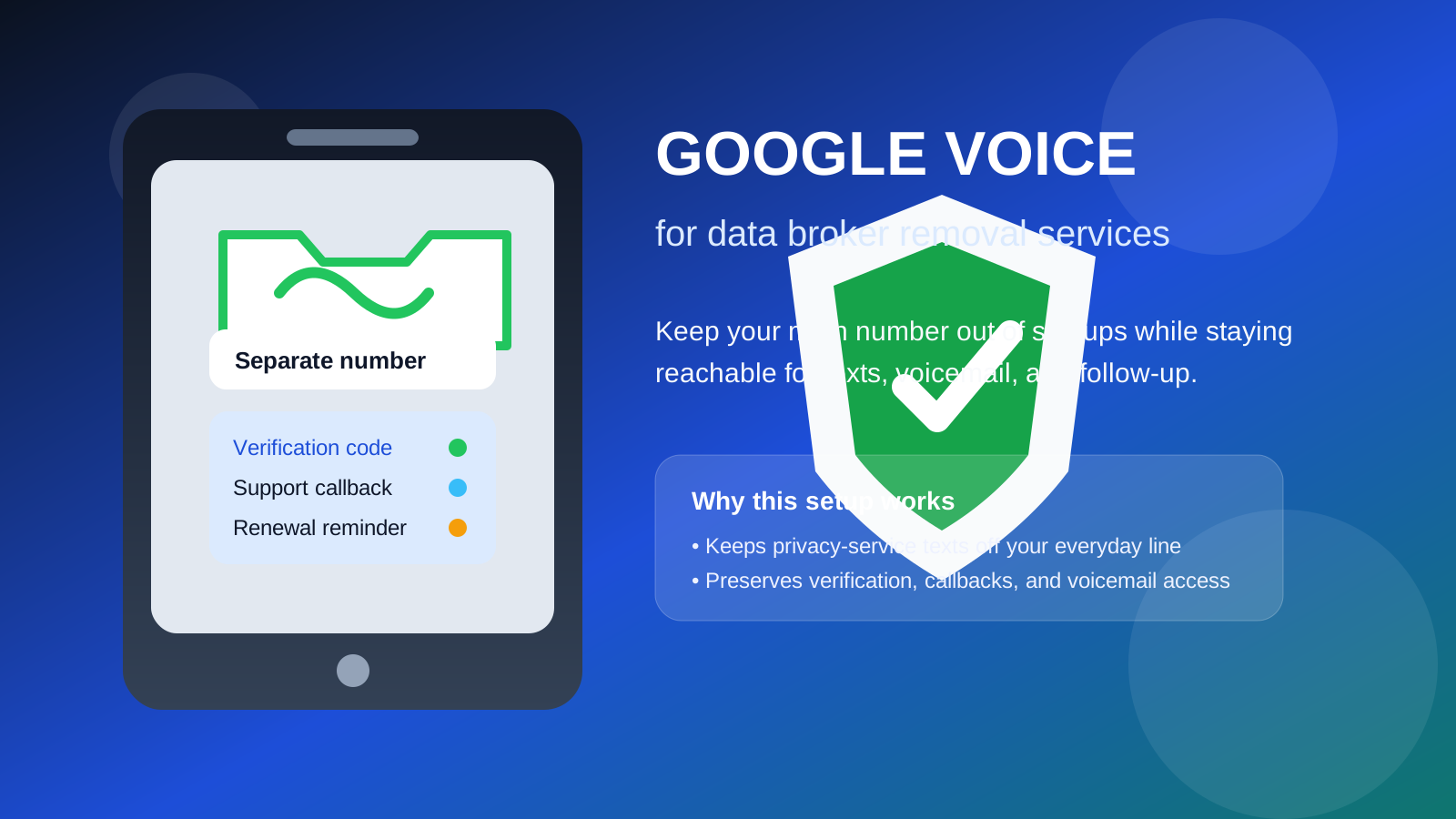
Why the phone-number question matters for data broker removal services
Data broker removal services are supposed to reduce the spread of your personal information, not casually extend it. That does not mean every service requesting a phone number is doing something wrong. Some use numbers for two-factor authentication, support callbacks, account-recovery workflows, or identity checks. The real issue is whether your main number should be the one tied to that relationship.
Phone numbers are sticky identifiers. They can live in support systems, billing tools, CRM records, text-message platforms, and account logs for a long time. Even if the service is legitimate, you may still prefer to keep your main line separate from another category of online accounts. That is what makes a secondary number attractive.
Short answer: Google Voice is often a practical middle ground
If the service only needs a reachable number and you want something more durable than a temporary line, Google Voice is often a reasonable choice. It is usually easier to monitor than a disposable number, and it helps keep privacy-service traffic away from the number your family, work, doctors, banks, and long-standing personal contacts already use.
The biggest advantage is that it gives you separation without forcing you into a totally disconnected workflow. You can still receive texts, voicemail, and missed-call notifications. That continuity matters because privacy-service accounts can generate follow-up over time.
Why Google Voice can work well here
1. It keeps your main personal number out of one more system
Your main number is usually attached to a huge amount of daily life already. Adding every privacy-related service to that same line may be convenient in the moment, but it increases the number of places where your most important number lives. Google Voice can give you a buffer. The provider gets a working contact method, but not the line you use everywhere else.
2. It supports ongoing follow-up better than a vanishing number
Data broker removal services are often framed like quick fixes, but the real process is rarely that clean. You may need to confirm a request, review a dashboard alert, answer a support question, or decide whether to renew later. A disposable number can break that continuity. Google Voice is more useful because it is designed to stay reachable over time.
This is the same reason a temporary inbox is often best only for early testing. A tool like Anonibox can be great when you are comparing sign-up flows or checking whether a provider immediately turns your email into marketing noise. Once you decide the account may matter long term, stable contact channels usually beat disposable ones.
3. It helps organize privacy-service traffic
A separate number gives you a cleaner way to notice which calls or texts belong to removal-service activity. That can be surprisingly useful when you are comparing multiple providers, watching for verification codes, or trying to remember which service asked you to respond. When everything lands on your main line, privacy admin blends into daily life more than it should.
4. Voicemail and call-screening features can reduce friction
Some people worry that using a separate number will make them harder to reach. In practice, the opposite can be true if you set it up well. A dedicated number can make it easier to separate legitimate callbacks from irrelevant noise. It can also give you a cleaner place for voicemail messages related to privacy services, rather than mixing them into work or personal call history.
5. It can be easier to retire later
If a provider turns out to be noisy, disappointing, or simply not worth keeping, retiring or de-emphasizing a dedicated number is much easier than cleaning up the fallout on your main line. That does not mean you should burn every relationship down immediately. It just means the exit path is cleaner when the number was separated from the start.
Where Google Voice can fall short
Some services may not love internet-routed numbers
This is one of the main caveats. Some websites and verification systems treat internet-routed or VoIP-style numbers differently from traditional mobile lines. That does not mean Google Voice is unusable. It just means you should not assume every service will accept it for every kind of text verification.
If a provider is strict about SMS verification or identity checks, you may still run into friction. For a privacy workflow, that is less a dealbreaker than something to test early before you depend on it.
It is still tied to another account ecosystem
Using Google Voice is not the same as becoming unreachable or invisible. You are still relying on an account setup that you need to monitor and maintain. If you abandon the Google account behind it or rarely check the number, the privacy benefit drops fast because the service can no longer reach you when it matters.
It is not a replacement for a good email setup
Most data broker removal services still run primarily through email. A phone number may be secondary, but the account itself often depends on email for dashboard access, receipts, confirmations, and support threads. So even if Google Voice is a good phone solution, you should still think about whether the email side should use your main inbox, a dedicated mailbox, an alias, or a temporary address during early evaluation.
Availability and setup may not suit everyone
Depending on where you are and how you manage your accounts, Google Voice may not be the simplest option. If it does not fit your region, workflow, or long-term maintenance habits, a different separate-number strategy may serve you better.
When Google Voice is a smart choice
- You want to protect your main number. A separate line reduces how often your everyday number gets shared.
- You still need long-term reachability. Verification, billing, support, and renewal messages may show up later.
- You are comparing more than one provider. A dedicated privacy number keeps those interactions easier to track.
- You want a middle ground between full exposure and full disposability. Google Voice often fits that gap well.
- You already use structured privacy habits. If you separate inboxes or browser profiles, a separate number is a natural extension of that approach.
When a different option may be better
- The service rejects your number for verification. If acceptance is inconsistent, a traditional secondary mobile line may be more dependable.
- You want zero dependence on another forwarding-style account layer. Some people prefer a direct secondary line they manage separately.
- You rarely check the number. A dedicated contact method only helps if you actually watch it.
- You need a setup that works in a different region or account context. Availability and workflow fit matter.
Google Voice vs a burner phone number for this use case
This is where people often choose the wrong tool. A burner number sounds privacy-friendly because it feels disposable. But the thing that makes it appealing can also make it weak. Data broker removal services can involve callbacks, notices, and account steps later on. If the number disappears too soon, you create a new problem for yourself.
Google Voice is better when the goal is stable separation. A short-term burner approach is better only when you are dealing with extremely low-trust first contact and you do not expect the relationship to matter later. For an account you may actually keep, reliability matters more than maximum disposability.
Google Voice vs your main personal number
Using your main number is not automatically wrong. If you deeply trust the provider, plan to keep the account for years, and do not mind that number being attached to the service, it may be fine. But that still comes with more long-term exposure than many privacy-conscious people want.
In most cases, the better question is not whether your personal number will work. It is whether you gain anything by using it when a separate number would work just as well. Usually, you do not.
Best practices if you decide to use Google Voice
1. Treat it like a real account, not a throwaway
If a service may still need to reach you months later, the number should stay active and monitored. Do not use a separate number you plan to forget immediately after signup.
2. Test text and voicemail behavior before you depend on it
Send yourself a test message, place a test call, and confirm you can reliably see the notifications. It is much better to discover a routing problem before a provider sends something important.
3. Pair it with a sensible email setup
Your phone strategy and email strategy should work together. If you are only evaluating a service, a temporary inbox may still make sense at the start. If you are committing to a provider, combine a stable separate number with a stable separate mailbox or alias workflow.
4. Save the messages that matter
Verification texts, support replies, callback numbers, and billing reminders are worth keeping easy to find. Privacy workflows become annoying when you have to reconstruct them from memory later.
5. Reassess once the provider relationship becomes long-term
The setup that works for signup week is not always the setup you want after a year. If a provider becomes part of your regular privacy routine, decide whether the number still fits or whether you want something even more dedicated.
Red flags to watch for
A separate number reduces exposure, but it should not blind you to a weak provider. Be cautious if a service:
- demands a phone number before you can review basic information,
- pushes aggressive sales calls early in the process,
- cannot clearly explain why the number is needed,
- asks for more personal details than feel justified for the stage you are in,
- creates a signup flow that feels sloppy or inconsistent.
If the service itself looks questionable, the safest move may be not signing up at all.
Final answer
Yes — you can use Google Voice for data broker removal services, and for many people it is a smart privacy-friendly compromise. It keeps your main phone number out of one more account relationship while still giving you a stable place for verification, callbacks, voicemail, and follow-up.
Just remember the trade-off. Google Voice is best when you need a separate number that stays usable over time. If a provider will not accept it for verification, or if you need a more traditional secondary line, another setup may be better. But when it fits the account and you actually maintain it, it is one of the cleaner ways to stay reachable without handing your primary phone number to yet another service.