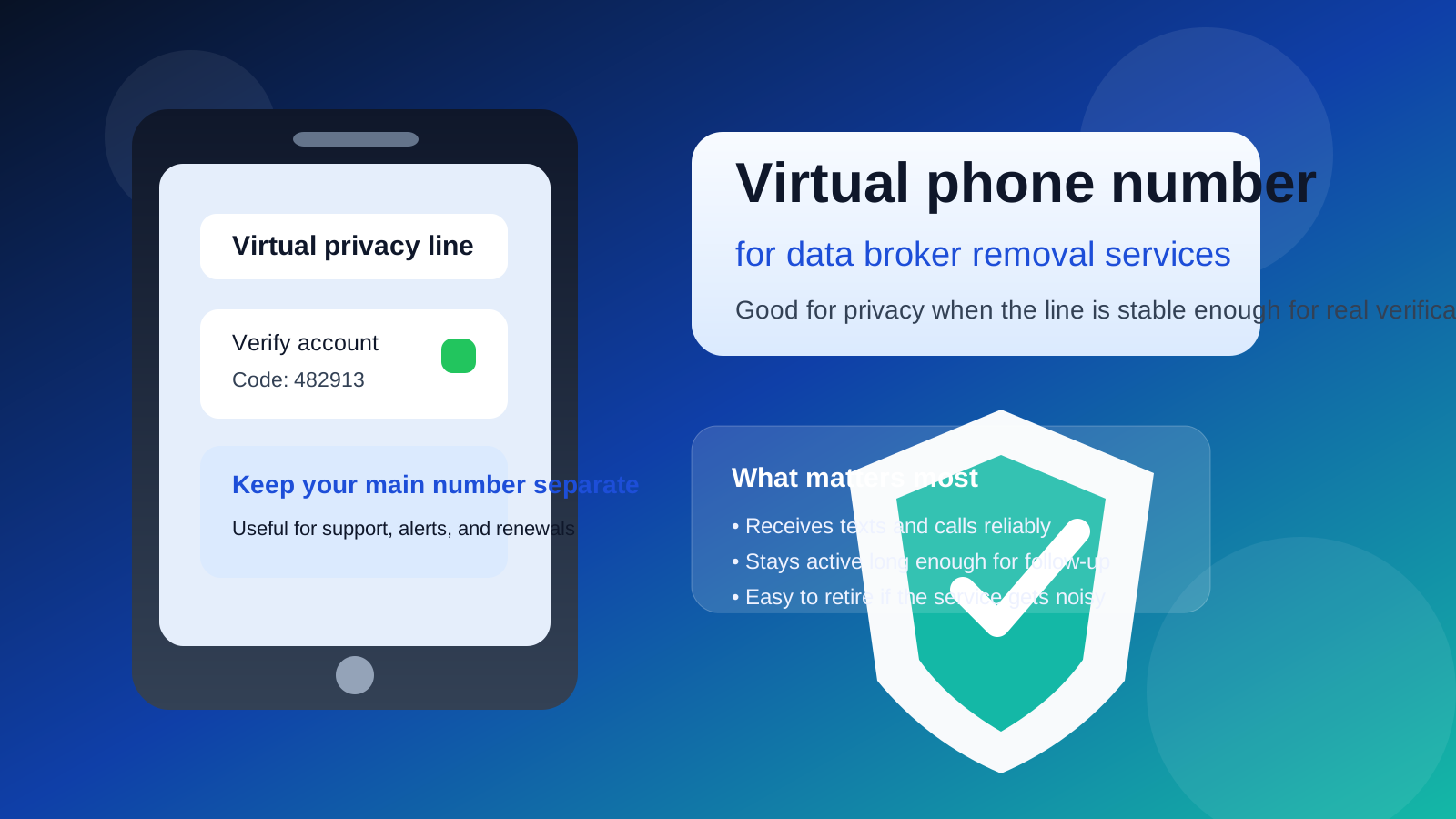
Usually yes — a virtual phone number can be a smart choice for data broker removal services if it is stable enough for verification texts, support calls, and account recovery.
It works best as a dedicated privacy line you actually monitor, not as a disposable number that expires, misses short codes, or disappears before the service is done with you.
That is the practical answer behind searches for virtual phone number for data broker removal services. People sign up for these services because they want less exposure around their personal data, not more. So it makes sense to pause when a provider asks for a phone number. The trick is not assuming the only options are your everyday mobile number or no number at all.
For many people, a virtual number sits in the middle. It can give you separation from your main line, make account-related messages easier to organize, and reduce the fallout if a service turns into an annoyance later. But it is only a good solution when the number behaves like a dependable contact method instead of a throwaway experiment.
Why this question matters
Data broker removal services often need more ongoing contact than people expect. Even if the sales page makes the process look simple, the real workflow may include signup verification, billing notices, support replies, renewal reminders, or questions about matching your records correctly. A phone number may be used for some of that, especially if a provider offers two-factor login, callbacks, or urgent account support.
The privacy tension is obvious. You are paying for a service that claims to reduce your exposure, yet giving out your main personal number creates another point of contact tied to your identity. A virtual number can reduce that tension because it lets you stay reachable without automatically extending your primary line into another vendor relationship.
Short answer: yes, often — if the virtual number is reliable
In many cases, yes, using a virtual phone number for data broker removal services is a sensible move. It gives you a controlled buffer between the service and your everyday number, while still letting you receive the messages that matter.
The keyword there is reliable. If the line cannot receive verification texts consistently, if you never check it, or if it might vanish before you need an account reset, it stops being a privacy tool and starts becoming a support problem.
Why a virtual number can be a strong fit
1. It protects your main phone number
Your main number is usually tied to family, friends, banking alerts, delivery accounts, work contacts, doctors, and years of old logins. It is one of the stickiest pieces of personal data most people have. Using a virtual number helps keep data-broker-removal traffic from attaching itself directly to that core identifier.
2. It gives you cleaner separation
Virtual numbers are useful because they can create a dedicated lane for a specific kind of activity. If a service sends a login code, a support callback, or a billing notice, you know exactly what context that message belongs to. That is easier to manage than mixing privacy-service traffic into your everyday calls and texts.
3. It is often easier to retire later
One reason separate contact channels are attractive is reversibility. If you stop trusting the provider, cancel the account, or decide the service is not worth continuing, a virtual number is usually easier to wind down than trying to clean your main personal line out of a relationship that no longer benefits you.
4. It pairs well with a broader privacy workflow
People who think carefully about privacy usually do not stop at one field on one signup form. They separate inboxes, isolate browser profiles, and keep account sprawl under control. A virtual number fits that pattern. If you are already using a separate inbox for research or early-stage signups, the number side of the workflow should be just as deliberate. Anonibox can make sense for the inbox side when you are evaluating low-trust services or testing early forms, while a stable virtual number helps once you need a longer-lived contact channel.
What makes a virtual number good enough for this use case?
Not all virtual numbers are equally practical. For data broker removal services, the best option is not the one that looks most disposable. It is the one that gives you privacy without sacrificing continuity.
A good virtual number should:
- Receive texts reliably, especially if the service uses one-time verification codes.
- Receive calls or voicemail if the provider uses callbacks or support escalations.
- Stay under your control for as long as the account matters.
- Be easy to monitor so you do not miss account activity.
- Be private enough to separate exposure without being so temporary that you lock yourself out later.
That is why the choice is less about whether a number is “virtual” and more about whether it behaves like a dependable long-term line.
How a virtual number differs from other options
Virtual number vs. your main personal number
Your main number is the most convenient option, but it also spreads a core identifier further than necessary. A virtual number adds friction in a good way: you still get the messages, but you do not have to give every privacy service the same number that follows you everywhere else online.
Virtual number vs. a generic separate second line
A virtual number can be your separate line. The advantage is flexibility. Depending on the service, it may be cheaper, easier to manage, and simpler to retire than adding a whole new physical mobile setup. If your only question is “Do I need a separate number?” a good virtual line is often the easiest answer.
Virtual number vs. a burner or temporary number
This is where people get into trouble. A burner-style number sounds privacy-friendly, but data broker removal is not always immediate. You may need that number again weeks or months later. If the line expires or gets recycled too quickly, you may create the exact headache you were trying to avoid. A virtual number is best when it behaves like a stable tool, not a vanishing trick.
Virtual number vs. a single provider-specific solution
Some people ask about one provider by name, such as Google Voice, because it is familiar. That can be fine, but the broader question is better: does the number you choose reliably handle the texts, calls, notifications, and account access patterns this service may require? The provider matters less than the practical behavior.
When using a virtual number makes the most sense
- You are testing multiple removal services. A virtual number keeps follow-up traffic separated while you compare options.
- You already protect your inbox carefully. Using a virtual line extends the same compartmentalization to phone contact.
- You have dealt with spam or aggressive follow-up before. A secondary line limits how much that damages your everyday number.
- You expect occasional support or renewal communication. Long-term reachability matters here more than one-time anonymity.
- You want a clean shutdown path. If the provider disappoints you later, a dedicated line is easier to retire.
When a virtual number can backfire
1. The service rejects certain verification flows
Some platforms handle virtual or VoIP-style numbers inconsistently. A number that works fine for normal texts may fail for certain automated short-code systems or extra-strict verification setups. If the service depends heavily on text-based account security, test this early.
2. You forget to monitor it
The privacy benefit disappears if the line becomes a dead mailbox. A dedicated number only helps when you still notice login alerts, support replies, or account changes in time to act.
3. The number is too temporary
If you are using a line that may disappear, get reclaimed, or stop forwarding correctly, you are building fragility into the account. That may be tolerable for a one-off coupon signup. It is much less acceptable for a privacy service you may need to revisit later.
4. You use a shared or low-trust number source
A public or semi-public number defeats the point. If the line is not truly under your control, it can create security and privacy problems instead of solving them.
Best practices if you use one
Choose stability over novelty
Do not optimize for the cleverest or most disposable setup. Optimize for a number that protects your main line while still letting you receive account-critical messages without drama.
Test the number before you commit it
Make sure it can receive texts, show missed calls, and deliver notifications in a way you will actually see. The right time to discover a broken setup is before the account depends on it.
Pair it with a deliberate email strategy
Phone privacy and inbox privacy work better together. If you are still researching providers, a temporary or separate inbox can help reduce early-stage clutter. Once you pick a service, keep the longer-term contact path stable enough for follow-up. The same logic applies to your phone number.
Save important account details
If the provider sends key messages to that number, document your login and recovery setup. Do not rely on memory if you are intentionally creating compartmentalized contact channels.
Reassess after the service proves itself
If the provider becomes a trusted long-term tool, you may decide your current setup is fine. If it becomes noisy or disappointing, your virtual number gives you a cleaner way to step away without dragging your main line into the fallout.
When your main number may still be fine
Using your main number is not automatically a mistake. If the provider is trustworthy, the account is important, and you prefer fewer moving parts, your main line may be an acceptable trade-off. Simplicity is a real benefit.
Still, it is worth asking whether convenience is pushing you into broader exposure than you actually want. For many people, the whole point of privacy tooling is creating reasonable boundaries. A virtual number is often one of the easiest boundaries to create.
Final answer
Yes — a virtual phone number is often a smart choice for data broker removal services, especially if you want a buffer between your main number and yet another privacy vendor account.
The best setup is not the most disposable one. It is a virtual number that stays reliable for verification, support, and future account access while remaining easy to separate or retire later. If you treat it like a stable privacy line instead of a vanishing burner, it can be one of the cleanest ways to protect your main number without making yourself unreachable.