Usually, no — not if you want to limit sales calls, follow-up texts, and long-lived lead sharing. For car dealership quotes, a separate number is usually safer than giving every dealer form your everyday personal line.
You can use your personal phone number for car dealership quotes when you trust the dealership and are comfortable taking real-time calls, but it is rarely the best default for broad quote shopping across multiple stores.
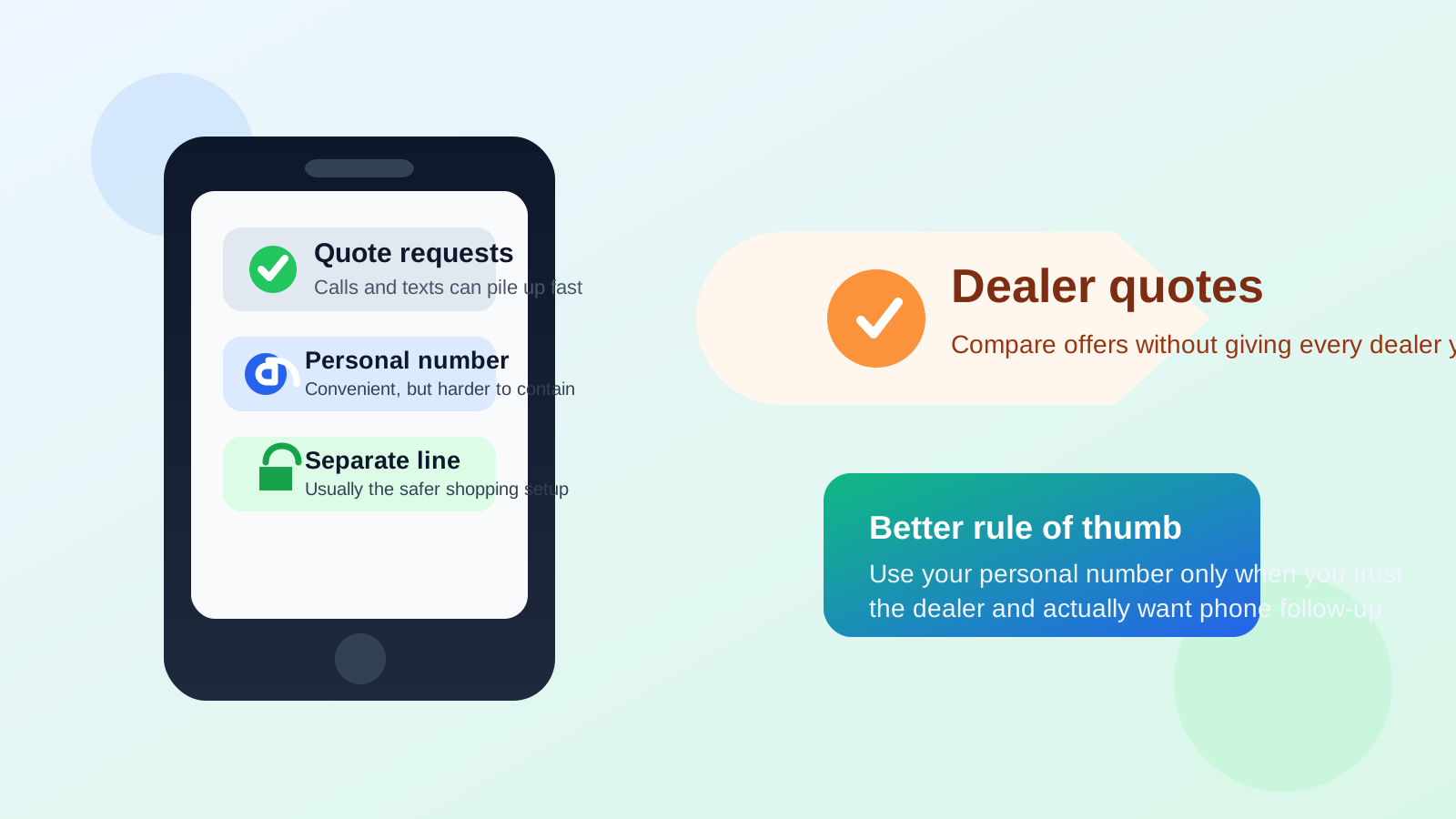
That is the practical answer behind searches for personal phone number for car dealership quotes. People ask because the quote process often looks harmless at first: one form, one vehicle, one price request. In reality, that one submission can trigger calls, text messages, appointment reminders, trade-in prompts, financing follow-up, and repeated “just checking in” outreach that lasts much longer than your interest in that specific car.
Using your personal number is not automatically wrong. Sometimes it is perfectly reasonable. But if you are sending requests to several dealerships, comparing prices quietly, or simply trying to avoid weeks of dealership follow-up on the same number you use for family, work, banking, and two-factor codes, a little separation usually pays off.
Why dealerships ask for a phone number in the first place
Dealership quote requests are usually built to move fast. Sales teams want to know whether you are serious, whether you have a trade-in, whether you need financing, and whether they can get you into a visit or a call today. A phone number helps them do that more quickly than an email-only exchange.
That does not mean every dealership is doing something shady. It means their systems are designed for fast follow-up, and a phone number is one of the easiest ways for them to keep the conversation moving. The privacy issue is not that a dealer wants contact information. The privacy issue is that you may be giving a very personal, durable number to more places than you intended.
Short answer: your personal number works, but it is rarely the best default
If you are contacting one local dealership you already know, your personal number may be fine. If you are deeper into the buying process and actually want a salesperson to call you back quickly, your personal number may even be the easiest option.
But if you are in the comparison stage, requesting multiple quotes, or using third-party listing sites and lead forms, your personal number is usually too exposed for the amount of control you get in return. A separate number gives you most of the convenience with much better boundaries.
What can go wrong when you use your personal phone number?
1. You may get far more follow-up than you expected
Dealer outreach does not always stop at one reply. Even after you receive the quote you wanted, you may keep getting callbacks, inventory alerts, appointment nudges, holiday promotions, or “manager approved a new price” messages. Some of those messages may be useful. Many are just noise.
2. Calls and texts can arrive at bad times
Your personal line is usually the number tied to everyday life. If dealers start calling while you are at work, with family, or handling something important, the quote process stops feeling neatly contained. It starts feeling like your shopping research has spilled into the rest of your life.
3. It becomes harder to tell useful outreach from junk
When your main number is already busy, dealer calls can blend into spam, robocalls, and unrelated unknown-number traffic. You may ignore something useful or answer something you would rather have screened first.
4. It can create a longer privacy trail than you wanted
Your personal phone number tends to stay personal for years. If you reuse it everywhere, it becomes much harder to separate short-term quote shopping from your long-term contact identity. That is not catastrophic, but it is rarely ideal.
When using your personal number is reasonable
There are situations where using your everyday number makes sense.
- You are contacting a single dealership you already trust.
- You already visited the store and want direct follow-up from one salesperson.
- You are close to buying and need quick coordination for a test drive, deposit, or pickup.
- You do not mind dealership calls and prefer a simple one-number workflow.
- The quote request is happening directly on the official dealer site, not a vague third-party lead form.
In these cases, convenience may outweigh the privacy downside. If you genuinely want fast live follow-up from a known dealer, your main line can be the easiest path.
When your personal number is the wrong choice
Using your personal number is a poor default if any of the following apply:
- You are sending quote requests to many dealerships at once.
- You mainly want written numbers first, not repeated calls.
- You are using marketplaces, aggregators, or unfamiliar quote forms.
- You want to compare stores quietly before anyone starts pushing for a visit.
- You already know you dislike long sales follow-up cycles.
This is the scenario where a separate number shines. You still get reachable, but you decide when dealership traffic gets access to your daily life.
Better alternatives than your personal phone number
A separate number you control
For most shoppers, this is the sweet spot. A separate line gives you continuity for serious quotes, test drives, and negotiation without mixing dealership traffic into your primary number forever. It is more durable than a throwaway number and easier to retire later if it turns noisy.
Google Voice or a similar managed number
If it is available where you live and fits your use case, a managed secondary number can be a practical option for quote shopping. It gives you a buffer, voicemail control, and easier screening. The main caution is reliability: if you plan to move from casual shopping into a real purchase, make sure you will keep checking it consistently.
A burner number for very early-stage comparison
A burner-style number can help when you are blasting out initial requests and want maximum separation. The downside is that it can become too disposable once a real negotiation starts. If a dealership finally sends the best out-the-door figure two days later, you do not want to miss it because you stopped watching the number.
What about email instead of phone?
If you mainly want quotes in writing, email is often the cleaner starting point. It creates a better paper trail, makes dealer comparisons easier, and gives you more time to evaluate responses without answering live calls.
That said, dealerships often push toward phone and text anyway. A smart setup is to separate both channels: use a dedicated quote-shopping number and a separate inbox for dealer follow-up. If you want to keep your primary inbox cleaner during early quote research, a temporary or segmented email workflow with Anonibox can help keep dealership messages away from your main address until you decide which store deserves real attention.
A practical workflow that keeps things organized
- Start with a separate email and separate number. This keeps quote traffic out of your personal channels on day one.
- Request written quotes first. Ask for the out-the-door price, fees, add-ons, and vehicle details in writing when possible.
- Screen who deserves a real conversation. Some dealers will be transparent. Others will dodge the actual number and just push for a visit.
- Promote only serious contenders. Once one or two dealerships become legitimate finalists, you can decide whether to keep using the separate line or move the conversation to your everyday number.
- Retire the channel later if needed. If the shopping process creates too much noise, a dedicated line is far easier to mute or phase out than your lifelong personal number.
Best practices if you do use your personal number anyway
Be selective about where you submit it
Prefer official dealer sites over vague lead forms. If a quote request page looks low-trust, overloaded with marketing language, or unclear about who will contact you, that is a reason to slow down.
Ask for written details too
If a salesperson calls, follow up by asking for the actual figures by text or email. That way you are not relying on memory when comparing offers.
Do not treat every incoming message as equally urgent
Dealerships often create urgency on purpose. A phone call does not automatically mean there is a uniquely good deal waiting. Slow the process down enough to evaluate the numbers clearly.
Watch for scammy behavior
Most dealership follow-up is just sales pressure, not fraud. Still, be cautious if someone avoids clear identification, pushes you off-platform immediately, or asks for unusually sensitive information before you have verified the dealership and the vehicle.
Red flags that mean your personal number definitely should not be the first choice
- The quote request comes from a third-party site you do not recognize.
- The listing seems vague or too good to be true.
- The seller cannot clearly tell you which dealership is involved.
- You are already getting pressured before you have basic written pricing.
- You only want broad market comparisons, not live conversations yet.
In those situations, using your main number gives away too much access too early.
So should you use your personal phone number for car dealership quotes?
Sometimes, yes — but only when you trust the dealership and actually want direct phone follow-up. For broad quote shopping, your personal number is usually too exposed for too little benefit.
The better default is a separate number that you control. It lets you compare dealerships, screen calls, keep texts organized, and protect your everyday line from turning into a long-running dealership contact channel. Pair that with a separate email workflow when needed, and the whole quote process becomes easier to manage.
If your goal is to get better price visibility without inviting weeks of noisy follow-up, your personal number should be the exception, not the starting point.