Text messages can be useful for car dealership quotes when you need quick follow-up, but they should not become the only place you compare pricing, fees, trade-in numbers, or financing details.
Usually, yes — for speed. But the safer setup is to use texts for quick coordination while keeping the real quote details in email or written documents, ideally on a separate number instead of your everyday personal line.
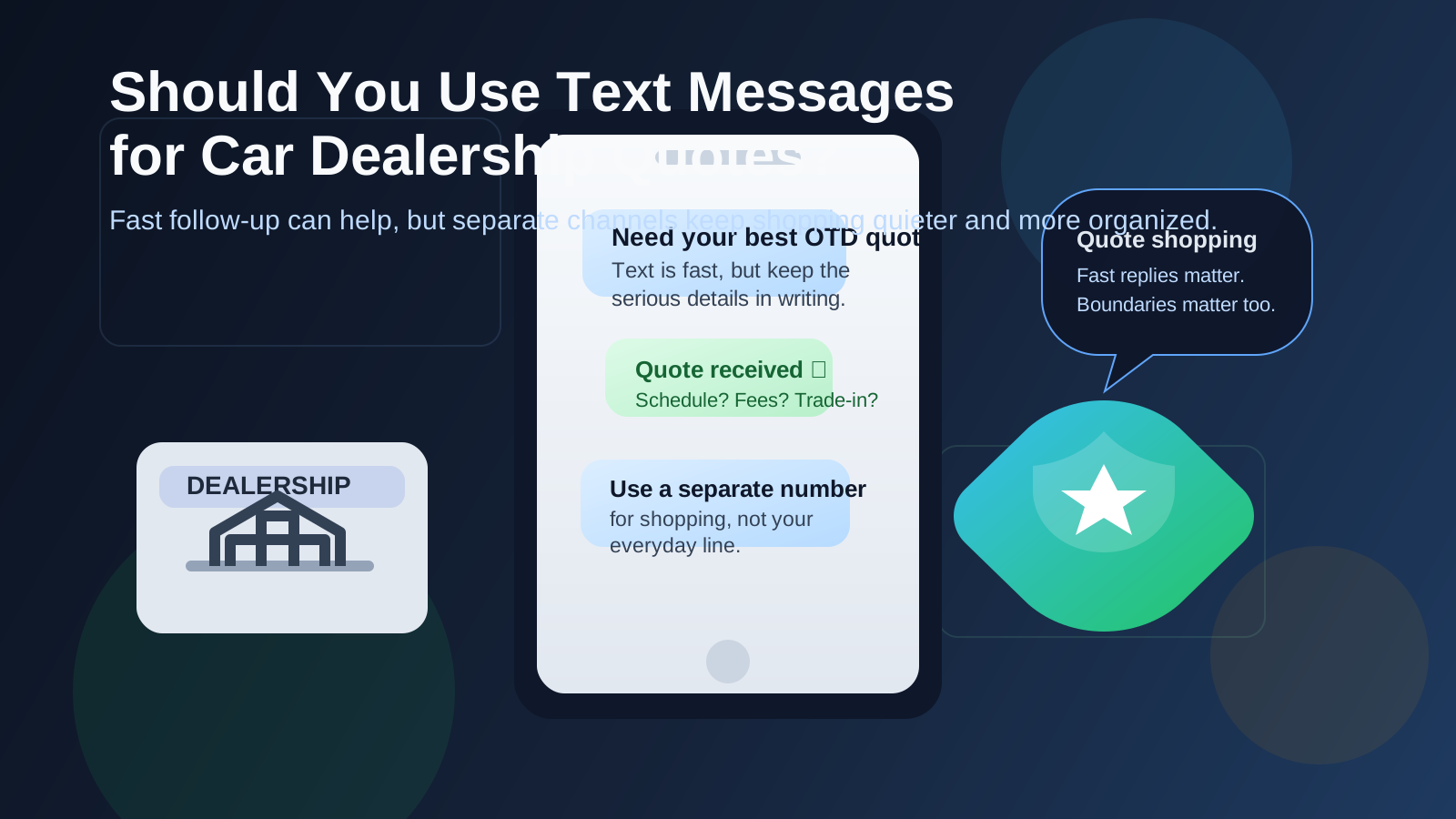
That is the practical answer behind searches for text messages for car dealership quotes. Dealers often prefer texting because it gets faster responses than email and feels less formal than a phone call. For shoppers, that can be convenient. It can also turn a simple price check into days or weeks of follow-up messages, appointment nudges, trade-in prompts, and “just checking in” sales outreach.
Texting is not automatically a bad idea. In fact, it can be one of the easiest ways to keep a quote request moving. The problem is not the existence of text messages. The problem is treating them like the whole workflow when you are trying to compare serious numbers across multiple dealerships. If you want cleaner records, better privacy, and less noise on your main phone, you need some boundaries.
Why dealerships push text messages so hard
Dealership sales teams are built around speed. The faster they respond, the better their chance of turning your quote request into a visit, a call, a deposit, or a financing conversation. Texting helps them do that because people usually see a text before they open an email.
From the dealership side, texting is efficient for:
- confirming that you are a real lead,
- asking when you want to come in,
- checking whether you have a trade-in,
- following up on financing questions, and
- trying to keep the conversation alive after the first quote request.
None of that is unusual. It just means the channel is designed to move the sale forward quickly, not necessarily to keep your comparison shopping quiet or neatly documented.
Short answer: use texts for speed, not for the whole decision
If you are requesting one quote from one dealership you already trust, texting may be perfectly fine. It is fast, easy, and good for basic back-and-forth.
But if you are sending requests to several dealerships, comparing out-the-door numbers, or trying to avoid turning your everyday phone into a long-running dealership lead source, text messages should be a supporting channel, not the entire system.
The smartest pattern is simple: let texts handle quick coordination, then pull the important details into email or another written format you can search and compare later.
What texting is actually good for during quote shopping
1. Fast first contact
Texting can be useful when a salesperson wants to confirm the vehicle, trim, stock number, or whether you are still shopping. A quick reply can keep the conversation moving without committing you to a call.
2. Scheduling and logistics
If you decide to take a call, book a test drive, or confirm when the dealer will send the written quote, text is a good lightweight channel. It works well for small timing questions.
3. Quick follow-up questions
Sometimes you only need a simple answer: whether a car is still available, whether the dealer adds mandatory accessories, or whether they can send the out-the-door figure by email. Text is fine for those short nudges.
4. Screening responsiveness
Texting can help you tell which stores are actually responsive. If one dealer ignores every question and another answers clearly, that tells you something about how the rest of the deal may go.
Where text messages start creating problems
1. The paper trail gets weak fast
A serious quote comparison usually includes more than one number. You may need the vehicle price, fees, incentives, taxes, add-ons, financing assumptions, trade-in discussion, and appointment promises. That gets messy in text threads, especially across multiple stores.
Email is usually better for keeping a clean record. You can search it, star it, forward it, and compare dealers side by side without scrolling through dozens of short messages.
2. Texts encourage pressure
Dealers often use urgency. “Can you come in today?” “Manager says this price only works now.” “Someone else is looking at the same vehicle.” Those messages are not always dishonest, but texting makes them feel more immediate than they would in a calmer written quote email.
3. Your main number can get noisy
If you use your everyday personal number for broad quote shopping, you may keep getting follow-up texts long after you stop caring about a specific vehicle. That is especially true if you submit forms on third-party listing sites or comparison tools in addition to dealer sites.
4. Important details can stay too vague
A text saying “we can work with you on price” is not the same as a real written quote. The same goes for “small dealer fee” or “easy financing.” Texting is great for momentum, but it is weak when the details actually matter.
When texting is usually fine
Text messages are usually reasonable when most of the following are true:
- you are dealing with a real dealership you can independently verify,
- the conversation is mostly logistical,
- you are still early in the shopping process,
- you are not sending sensitive documents by text, and
- you have another written channel for the serious numbers.
Examples include confirming a car is still available, asking whether the dealer can email the out-the-door breakdown, or setting a time for a quick call or visit.
When you should stop relying on text and switch channels
Texting should not carry the whole deal once the conversation becomes more detailed. Move the important parts into email or formal documents when:
- you need the full out-the-door quote in writing,
- you are comparing multiple dealerships,
- trade-in numbers start entering the conversation,
- financing terms or credit-related questions appear, or
- the salesperson keeps talking around the actual numbers.
A useful rule is this: if the detail matters enough to affect your decision, it matters enough to preserve outside a fast-moving text thread.
Should you use your main number or a separate number?
For most people, a separate number is the better default for dealership quote shopping. You still stay reachable, but you do not attach every lead form and every sales follow-up to the same number you use for family, work, banking, and account recovery.
A separate number helps because it lets you:
- screen dealership traffic more easily,
- keep quote shopping separate from daily life,
- reduce the annoyance of long-tail follow-up, and
- retire or mute the channel later if it gets too noisy.
If you already know you are requesting quotes from several stores, that separation is often worth setting up before the first form submission.
Text plus email is usually the strongest combination
Text works best when paired with a separate email strategy. Use text for quick coordination and use email for the quote itself, itemized fees, trade-in details, appointment confirmations, and any promises you may want to reference later.
If your goal is to compare dealerships without cluttering your primary inbox, a separate email workflow can help just as much as a separate number. That is where a tool like Anonibox can fit naturally: early-stage quote requests, price-shopping experiments, and lead-form submissions can stay segmented from your main inbox until you know which dealership actually deserves your long-term contact details.
That does not mean you should hide forever. It means you should control when a casual quote request becomes a serious relationship with a salesperson or store.
Best practices for using text messages on dealership quotes
Ask for the real numbers in writing
If a salesperson texts you first, reply with a clear request for the out-the-door figure by email or text in itemized form. You want the actual numbers, not just a promise to “beat any offer.”
Keep the text thread short and purposeful
Use texts for practical next steps: “Please send the full quote,” “Is this in stock?” or “What are the mandatory add-ons?” Long negotiating threads in text usually create confusion instead of clarity.
Label dealership contacts clearly
If several stores start messaging you, save the contacts with dealership names. Otherwise all the conversations blur together and comparison gets harder.
Do not share more than necessary by text
Text is a poor place for sensitive identity or financial information. If the process shifts toward credit applications or documentation, use the dealer’s verified secure workflow, not a casual SMS exchange.
Separate urgency from importance
A message that feels urgent is not automatically the best deal. Slow down enough to compare the actual quote, fees, and conditions before reacting to “come in today” pressure.
A quick checklist before you keep texting
- Can you verify the dealership independently?
- Are you using a number you can monitor without exposing your everyday line too broadly?
- Have you asked for the full quote in writing?
- Are you avoiding sensitive financial details over text?
- Do you have a clean place to compare offers later?
If the answer to several of those is no, texting is probably taking too large a role in the process.
Red flags in dealership quote texts
- the salesperson refuses to provide a written quote,
- you keep getting pressure to visit before seeing the numbers,
- fees or add-ons stay vague,
- the messages push you toward unverified links or unusual payment requests,
- the store identity is unclear, or
- the conversation feels more like lead chasing than quote transparency.
Most dealership texts are just sales follow-up, not scams. Still, vague identity, unusual links, and heavy pressure are signs to slow down and verify who you are dealing with.
Final answer
So, should you use text messages for car dealership quotes? Yes, often — but as a speed layer, not as the whole system.
Texting is useful for quick follow-up, availability checks, and scheduling. It is much weaker for preserving detailed quote comparisons, controlling sales pressure, and protecting your main phone number from long-tail follow-up. For most shoppers, the best setup is a separate number for quote shopping, email for the real quote details, and texts only for the short practical steps that truly benefit from speed.
That way you stay reachable, keep dealership shopping organized, and avoid turning one quote request into ongoing noise on your everyday contact channels.