An email alias can be a smart way to request car dealership quotes without giving every dealer lead form and follow-up sequence direct access to your main inbox.
Usually, yes — if the alias is stable, you can reply through it cleanly, and you switch to a more permanent setup once a dealership becomes a serious finalist.
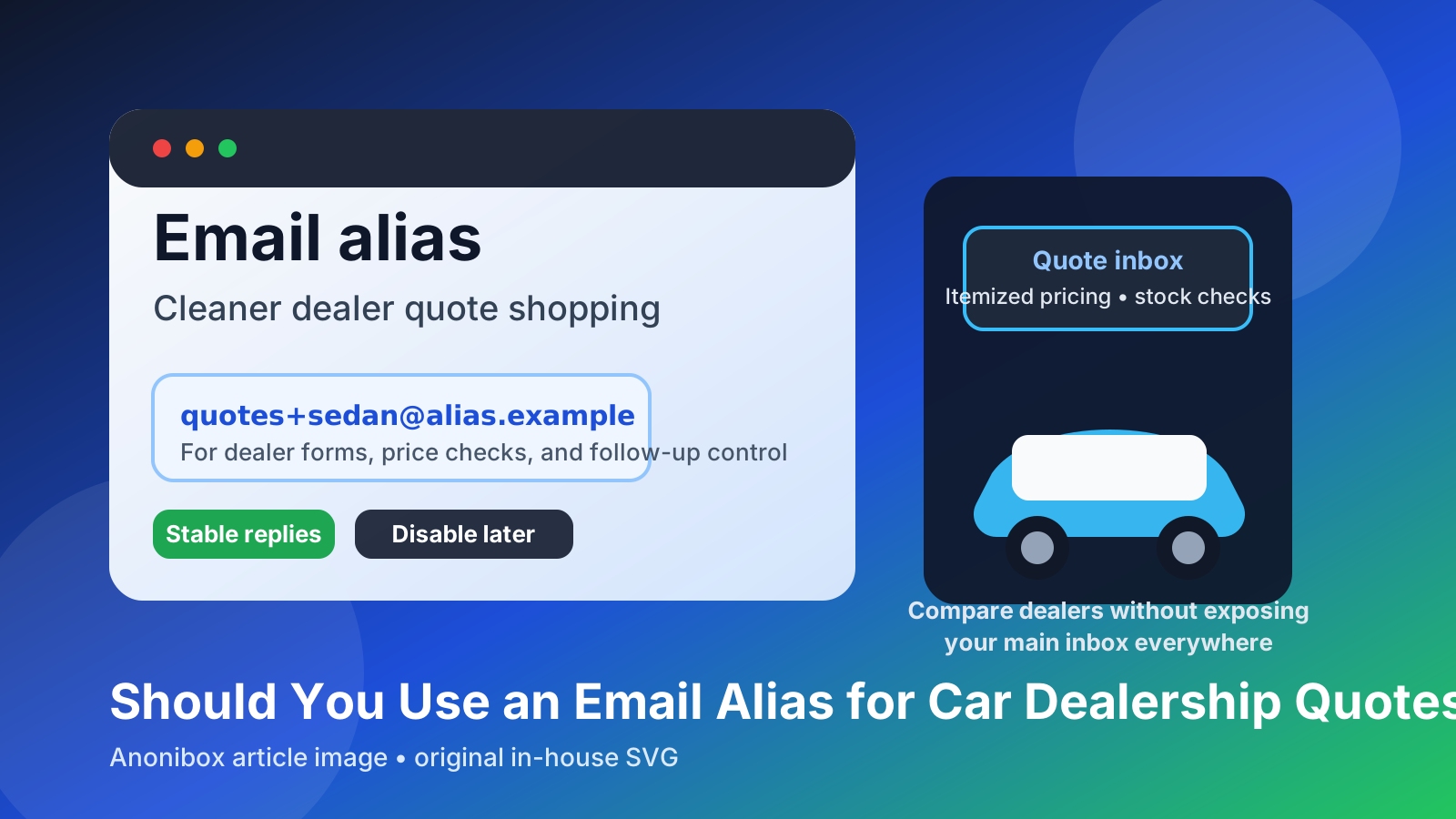
Car-shopping email gets noisy faster than most buyers expect. One request for an out-the-door quote can turn into inventory alerts, trade-in prompts, financing check-ins, weekend sale reminders, and long-tail follow-up from stores you have already ruled out. That does not automatically mean a dealership is doing something shady. It just means dealer lead systems are built to keep conversations moving, and your everyday inbox often takes the hit.
An alias sits in a useful middle position. It is more durable than a short-lived throwaway inbox, but it exposes less than handing out the same personal address you use for banking, family messages, account recovery, and everything else. For car dealership quotes, that middle ground is often exactly what you want.
What an email alias means in this context
An email alias is a secondary address that routes mail into an inbox you already control. To a dealership, it looks like an ordinary email address. On your side, it can act as a filter, a label, and a privacy buffer.
That makes it useful when you are comparing dealerships, responding to listing sites, or testing how serious a seller really is. Instead of spreading your long-term personal address everywhere on day one, you can use an alias that is dedicated to car shopping.
Why aliases fit dealership quote shopping so well
Dealership quotes often start in a messy zone: manufacturer forms, dealership websites, listing portals, trade-in tools, and third-party quote pages. Some of those sources are excellent. Some are just aggressive lead funnels. Either way, the early stage of car shopping is full of messages that may be helpful for a few days and annoying for the next three months.
An alias helps because it gives you three things at once:
- Less exposure: your long-term address does not need to land in every CRM or lead-routing system immediately.
- Better organization: quote replies, stock updates, and promotional follow-up stay easier to label and review.
- A cleaner exit later: if the search ends or a source becomes noisy, you can disable or retire the alias without changing your main inbox identity.
That is a practical improvement, not just a privacy ideal. When you are comparing multiple stores, small workflow improvements matter.
When an alias is better than using your personal email
Your main email address is usually attached to the rest of your life. It may have years of history behind it, plus connections to bills, travel, healthcare, school, and password resets. There is rarely much upside to extending that same address into every exploratory dealership form if an alias will do the job just as well.
An alias is especially helpful when:
- you are requesting quotes from several dealerships at once,
- you are still deciding between models or trims,
- you are using both dealer websites and third-party marketplaces,
- you want to track which source creates the most follow-up noise, or
- you simply do not want car-shopping messages mixed with the rest of your daily inbox.
If one dealership becomes the clear winner, you can always decide later whether to keep using the alias or move the conversation to a more permanent address. The point is that you do not have to grant that access too early.
Email alias vs temp email for car dealership quotes
These tools solve related problems, but they are not interchangeable.
A temporary inbox works well for the earliest stage: quick listing checks, one-off lead forms, or low-trust sources where you mainly want to see whether a quote request will generate anything useful. That is where a tool like Anonibox can fit naturally.
An email alias is usually better when you expect real replies, ongoing comparison, or follow-up that may matter over several days. You still get privacy and separation, but with much better continuity than a disposable inbox.
A simple rule helps:
- Use a temp inbox when you are still testing the waters.
- Use an alias when you want a stable reply path without exposing your main address.
- Use a full dedicated inbox when the search is long, shared with someone else, or generating heavy message volume.
Email alias vs a separate inbox
A separate email account gives you maximum separation, and sometimes that is the right answer. But it also means another login, another inbox to monitor, and another workflow to maintain.
An alias is lighter. If you already have a mailbox you trust, an alias can deliver many of the same privacy benefits with less overhead. For a lot of buyers, that is the sweet spot: enough separation to stay organized, without creating more account sprawl than the car search really needs.
That said, a full separate inbox may be better if you expect weeks of negotiation, want a shared mailbox with a spouse or partner, or plan to contact a large number of dealerships. An alias is strong, but it is not always the best choice for every search.
When using an alias makes the most sense
1. You want real written quotes, not just marketing emails
An alias works well when the communication matters enough that you need reliable replies, but not so much that you want every seller to have your core email identity.
2. You are contacting more than one dealership
The more stores you contact, the more useful separation becomes. An alias gives you a cleaner place to track who answered directly, who dodged the numbers, and who buried your quote request under generic follow-up.
3. You want to preserve flexibility
If the search ends quickly, an alias is easier to wind down than reclaiming a main inbox after weeks of dealer campaigns. If the search becomes serious, you can keep the alias or graduate to a dedicated long-term address.
4. You care about source tracking
Some people use one alias for dealership websites and another for marketplaces or quote tools. That makes it easier to see which channel generated the useful responses and which one mostly created noise.
When an alias may not be enough
An alias is not a magic shield. In some situations, a separate mailbox or a more permanent contact setup is better.
- Serious purchase stage: if you are exchanging buyer’s orders, appointment confirmations, or document-heavy follow-up, a full dedicated inbox may feel cleaner.
- Shared decision-making: if another person needs regular access to the messages, a separate account can be easier than forwarding everything through one alias setup.
- High-volume searches: if you are blasting quote requests across many stores, one alias forwarding into one inbox can still get crowded fast.
- Awkward reply handling: if your alias setup makes outbound replies clumsy or confusing, fix that before you rely on it for live negotiation.
The lesson is not that aliases are weak. It is that you should match the tool to the stage of the search.
Best practices if you use an email alias
- Make it look normal. A readable alias is better than something that screams throwaway.
- Test reply behavior before you need it. Make sure your responses appear the way you expect on the other side.
- Label by dealer or vehicle. Once replies start coming in, simple filters save a lot of time.
- Keep the important quotes. If a dealership finally sends a real breakdown, star it, archive it, or save it somewhere obvious.
- Use a separate phone strategy too. Email privacy helps, but dealership quote shopping often spills into calls and texts next.
- Disable or rotate the alias when the search is done. That exit path is one of the biggest advantages of using an alias in the first place.
A practical example
Imagine you are comparing the same SUV at four dealerships. You want the out-the-door price, whether the store adds mandatory accessories, whether the advertised vehicle is still available, and whether they will discuss trade-in numbers by email before a visit.
If you use your main personal address everywhere, those replies may soon be mixed with unrelated daily mail and followed by promotions you do not care about a week later. If you use a short-lived temp inbox, you may keep privacy but risk losing a useful written quote if the conversation continues.
An alias is the compromise. You stay reachable for real replies, preserve a workable paper trail, and keep the dealership search one step removed from your main inbox identity.
Red flags matter more than the email tool
An alias can improve your workflow, but it does not prove that a dealership or listing is trustworthy. Slow down when you see signs like:
- refusal to provide real numbers in writing,
- pressure to jump straight to a phone call without answering basic price questions,
- vague answers about fees or mandatory add-ons,
- unexpected links or attachments from domains that do not match the dealership, or
- follow-up that feels more like lead chasing than transparent quote handling.
Your email choice can reduce clutter and exposure, but it cannot replace judgment.
Quick checklist
- Do you want a stable reply path without exposing your main inbox?
- Will you monitor the alias consistently while the search is active?
- Can you reply cleanly through it?
- Do you have a plan for saving serious written quotes?
- Do you know when you would switch to a dedicated long-term account if the deal becomes real?
If the answer to most of those is yes, an alias is probably a strong fit.
Final answer
Yes — using an email alias for car dealership quotes is often a smart middle-ground choice. It gives you more control than handing out your personal inbox everywhere and more continuity than a disposable address.
For early and mid-stage quote shopping, that balance is hard to beat. You stay reachable for legitimate dealers, keep your comparison process cleaner, and preserve the option to shut the channel down later if the search gets noisy. Used that way, an alias is one of the simplest ways to make dealership quote shopping less intrusive without making it harder to buy the right car.