Yes — if you want real quote follow-up, you should usually give a phone number for car dealership quotes. But a separate stable number is often safer than handing every dealership your everyday personal line.
That approach lets you get callbacks, texted price details, and appointment updates without turning your main number into a long-term dealership lead channel.
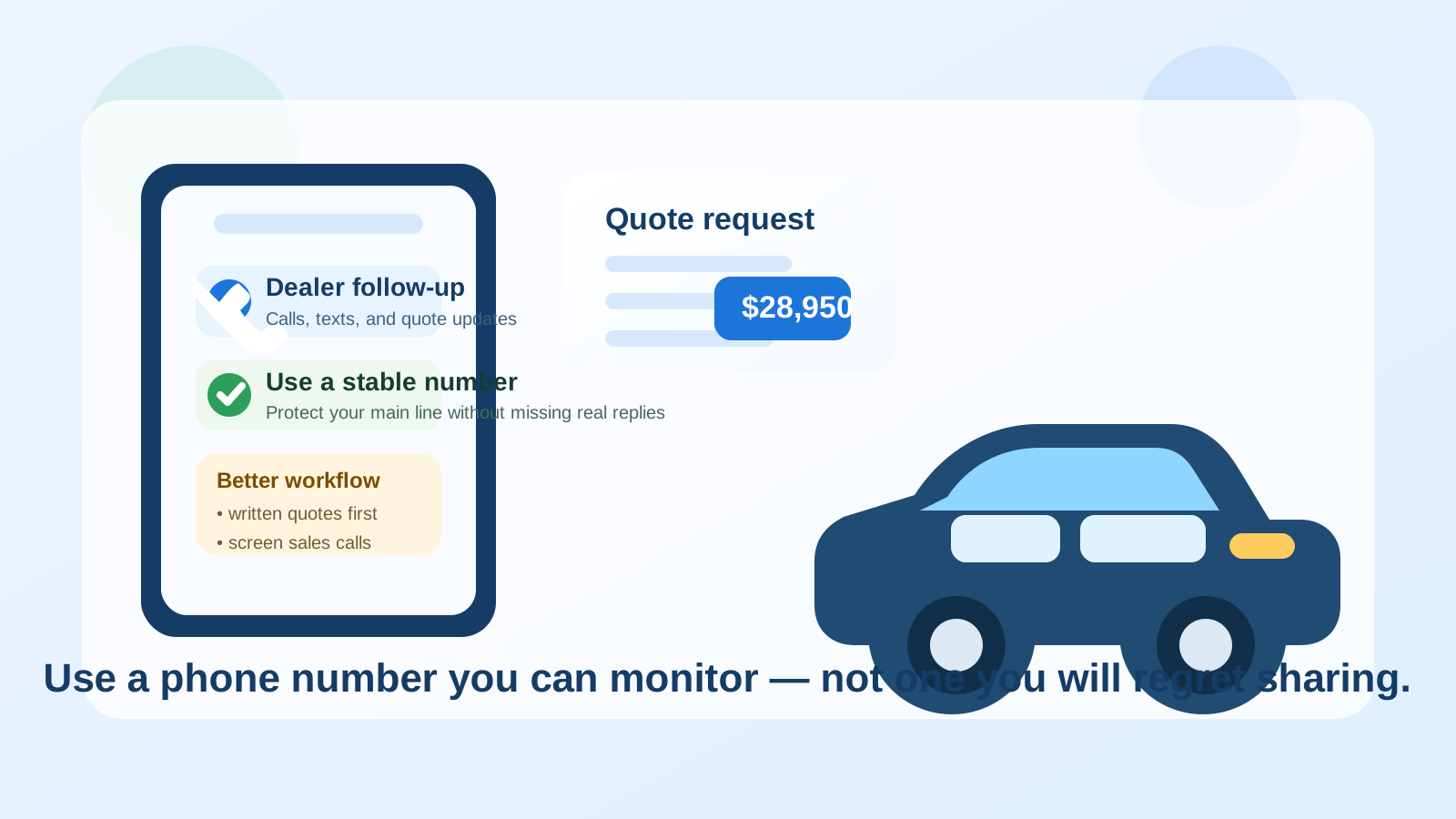
This question comes up because dealer quote forms look simple, but the contact trail they create is not. One request for an out-the-door price can turn into calls from sales staff, text reminders, financing prompts, inventory alerts, and follow-up messages that keep arriving after you already bought somewhere else. The issue is not that dealerships ask for a number. The issue is whether you want your primary personal number tied to every early-stage quote request you make.
For most shoppers, the right answer is not “never give a number” and it is not “give your main number to every form.” It is more practical than that: share a number when it improves a legitimate quote process, and use a number with better boundaries when you are still comparing stores, trimming spam risk, or trying to keep your car search from leaking into daily life.
Why dealerships ask for a phone number in the first place
Phone numbers are common on dealership quote forms because dealers want to move leads quickly. A phone call or text can do a few things faster than email:
- confirm that the vehicle is still the one you want,
- clarify trim, mileage, add-ons, or trade-in details,
- schedule a test drive or same-day visit,
- push a financing conversation forward, and
- keep the lead “warm” while the salesperson tries to close the sale.
That does not automatically mean anything shady is happening. It means the quote workflow is built for speed and follow-up. If you are contacting only one trusted local dealer and you want a fast response, sharing a phone number can be perfectly reasonable.
Why this matters more than it looks
Car-shopping contact forms often sit in the awkward middle ground between casual browsing and a real purchase. You may only want a written quote, but the dealership often sees the form as the start of an active sales conversation. That mismatch is where the privacy problem starts. You are asking for information; they are starting a follow-up sequence.
That is why shoppers who are just trying to compare pricing often end up with:
- same-day calls from multiple dealerships,
- text messages from individual salespeople,
- inventory alerts for similar vehicles,
- weekend sales promotions,
- trade-in prompts, and
- “just checking in” outreach long after the quote stopped being relevant.
If you use your main number everywhere, that traffic lands on the same line you rely on for family, work, doctors, banks, and two-factor codes. That is why people search this question in the first place.
Short answer: yes for real quote requests, but be thoughtful about which number you use
In most legitimate quote situations, giving a phone number helps. Some dealerships really will text the exact out-the-door figure, confirm whether a vehicle is still available, or call back quickly when the internet lead desk is actually responsive.
But there is a big difference between giving a number to one verified dealership you may buy from and scattering your personal mobile number across every dealership site, listing form, and lead marketplace you touch during research. For broad comparison shopping, a separate number is usually the smarter default.
When giving a phone number usually makes sense
- You are dealing with a real dealership site. The store is identifiable, the inventory looks real, and the request is happening on an official page.
- You want a same-day answer. If the car may sell quickly or you need a quick clarification, phone contact can save time.
- You are close to visiting or buying. Once the dealership is a serious contender, direct contact becomes more useful.
- You are comfortable screening calls and texts. Some shoppers do not mind dealership outreach as long as it is tied to a real quote.
- You want easier coordination for a test drive. Scheduling is often smoother by call or text than by email alone.
In those cases, refusing to share any number at all can create friction without giving you much extra protection.
When you should not use your primary number first
- You are requesting quotes from many stores at once. A broader search usually means broader follow-up.
- You only want written pricing at the beginning. If your goal is comparison, live calls can become noise fast.
- You are using third-party marketplaces or lead forms. The more layers between you and the actual dealership, the more cautious it makes sense to be.
- You dislike long sales cycles. Some dealer follow-up lasts longer than the shopping process itself.
- You are still testing which dealers are worth your attention. Early-stage shopping is exactly when stronger privacy boundaries help most.
Which number should you use?
Your main personal number
This is the simplest option, and sometimes it is fine. If you already trust the dealership and want quick communication, your everyday number may be good enough. The downside is obvious: once it is out there, all the follow-up lands on the same line you use for everything else.
A separate stable number
For most shoppers, this is the best balance. A separate number keeps dealership calls and texts compartmentalized, but it is still reliable enough for serious quotes, trade-in questions, appointment reminders, and late-stage purchase logistics. It is easier to monitor than a throwaway number and easier to retire later than your main line.
A virtual number or managed secondary line
A virtual number can work very well for car quote shopping because it gives you screening, voicemail control, and separation without needing to expose your primary number right away. This is often the sweet spot if you expect a real conversation but do not want the whole sales process tied to your main mobile line.
A short-lived burner number
A burner-style number can help with the earliest stage of broad comparison shopping, but it is not always ideal once the quote process becomes serious. If a dealer finally sends useful price details two days later, confirms the VIN, or asks to lock in a test drive time, a number you are barely monitoring can create more problems than it solves.
That is the core trade-off: maximum separation is not always maximum usefulness. For dealership quotes, stable and separate usually beats disposable and forgotten.
What if the field is optional?
If the phone number field is optional, use that flexibility intelligently. If the store seems credible and you want fast follow-up, adding a number makes sense. If the form feels more like lead capture than transparent quoting, you may prefer to start with email and decide later which dealers deserve a more direct line.
If the field is required, you usually have three choices: give your main number, give a separate number you control, or skip a low-trust form entirely. For most privacy-conscious shoppers, the middle option is the best one.
Best practices if you do share a number
- Ask for written details too. If a salesperson calls, ask them to text or email the actual figures so you can compare offers cleanly.
- Save serious contacts clearly. Label the dealership and salesperson so you know which calls matter.
- Use a professional voicemail greeting. A neutral greeting makes it easier for legitimate contacts to leave useful messages.
- Do not confuse urgency with value. A phone call does not automatically mean the deal is special.
- Keep your work number out of the process. Personal car shopping rarely belongs on an employer-managed line.
- Decide when a dealer becomes a finalist. Not every early quote request deserves your highest-trust contact channel.
Pair phone privacy with email privacy
Phone calls are only half the story. Dealerships also send quote follow-up, inventory alerts, financing prompts, and promotional email. If you are trying to keep the whole shopping process contained, it helps to separate both channels. A dedicated number handles calls and texts, while a dedicated inbox keeps dealership messages out of your everyday email.
That is where Anonibox can fit naturally into the early research stage. If you are sending broad quote requests and want to avoid stuffing your main inbox with dealer follow-up before you know which store is worth your time, separating email as well as phone can make the comparison process much cleaner.
Red flags that mean you should slow down
- The form is vague about which dealership will contact you.
- The seller avoids written pricing and pushes immediately for a call.
- The vehicle details seem inconsistent across pages.
- You are being pressured before basic questions are answered.
- The contact flow feels more like lead collection than a real quote process.
Most dealership follow-up is just sales pressure, not a scam. Still, a low-trust form is exactly when your primary number should not be the first thing you hand over.
A quick checklist before you submit a quote request
- Is this an official dealership page or a murkier third-party lead form?
- Do I actually want phone follow-up for this car?
- Am I requesting one quote or contacting many dealerships at once?
- Would a separate stable number give me better boundaries?
- Am I also keeping dealer email traffic separate?
- Does anything about this listing or form feel rushed or low-trust?
Final answer
So, should you give your phone number for car dealership quotes? Usually yes — but not always your everyday personal number. A phone number often helps legitimate dealers reply faster, confirm availability, and coordinate next steps. The smarter move is choosing a number that matches the stage of the search.
If you are serious about a real dealership, share a number you can monitor. If you are still shopping broadly, comparing stores, or trying to avoid weeks of dealer follow-up, use a separate stable number instead of your main line. That way you stay reachable for the quotes that matter without letting the entire car search take over your personal contact life.