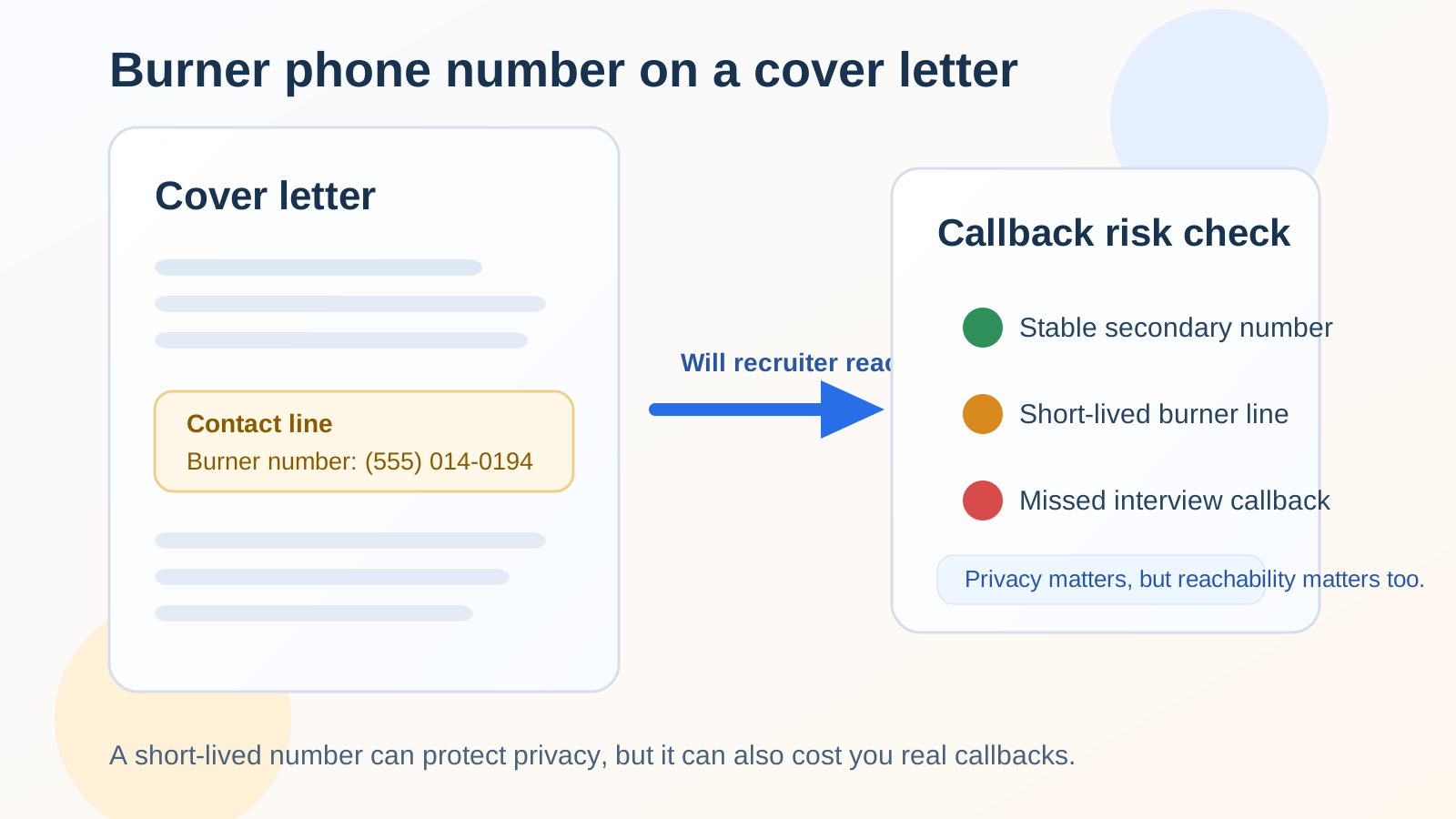
Usually no — a burner phone number on a cover letter creates more follow-up risk than privacy benefit unless it stays active, stable, and reachable throughout the hiring process.
If you want more privacy, a dedicated long-term job-search number is usually safer than a short-lived burner because recruiters need a contact method they can trust for callbacks, scheduling, and last-minute changes.
Why this question matters
A cover letter is not just a writing sample. It is also a contact document. When an employer opens it, the phone number you list becomes part of how reachable and dependable you look. That is why a burner number can be trickier here than it first appears.
A burner number may feel appealing if you want to avoid spam calls, hide your personal line, or keep job-search activity away from your everyday life. Those are all fair concerns. But a cover letter is often saved, printed, forwarded internally, or revisited weeks later. If the number expires, stops working, or goes unanswered, the privacy win can turn into a missed opportunity.
Short answer: privacy is good, instability is not
The real issue is not whether the number is technically “burner.” The issue is whether it behaves like a stable professional contact method.
If a burner number works like a normal secondary line, stays active long enough, accepts calls and voicemail reliably, and is checked regularly, it may be usable. But if it is disposable in the literal sense — temporary, easy to abandon, or likely to expire before the hiring process ends — it is usually the wrong fit for a cover letter.
Why people consider using a burner phone number
- Spam prevention: job boards and recruiter databases can lead to robocalls and low-quality outreach.
- Privacy: you may not want your main personal number circulating widely.
- Boundary setting: some job seekers want applications separated from family, friends, and daily life.
- Scam filtering: a secondary number can make it easier to identify who got your contact details from where.
Those are practical reasons. The mistake is assuming that every privacy tool works equally well for every stage of a job search. Cover letters are closer to formal professional communication than to anonymous signups or one-time verifications.
What can go wrong with a burner number on a cover letter?
1. You miss legitimate recruiter callbacks
Hiring managers do not always follow a neat timeline. A company might call the same day, or after two weeks, or after another candidate drops out. If your number is no longer active, you may never know they tried.
2. Voicemail and SMS can be unreliable
Some short-term number services are fine for basic verification but poor for real back-and-forth communication. Delayed texts, weak voicemail handling, or call-forwarding issues matter a lot more when the missed message is an interview invitation.
3. Your contact info can look inconsistent
If the phone number on the cover letter differs from the one on the resume, application form, or LinkedIn profile, employers may hesitate or assume there was an error. Consistency matters more than many job seekers realize.
4. You may create more work for yourself
Managing a throwaway number, checking it constantly, and remembering when it expires can be more stressful than simply using a dedicated long-term line.
What recruiters usually care about
Most recruiters do not care whether a number is technically personal, virtual, secondary, or app-based. They care whether they can reach you quickly and whether the contact information looks deliberate and professional.
If a number rings, accepts voicemail, and belongs to a candidate who responds promptly, it usually does its job. If it feels temporary or unreliable, that is when problems start. A recruiter is not grading your privacy strategy. They are trying to schedule a screen, confirm interview times, or clarify next steps.
Burner number vs separate long-term number
This is the most useful distinction.
- Burner number: better for short-term privacy, but risky if it is disposable, limited, or easy to miss.
- Separate long-term number: better for real job-search communication because it protects your main line without sacrificing reliability.
- Main personal number: simplest option, but it gives up more privacy and can attract long-term spam.
If your goal is to protect your personal line without looking hard to reach, a stable secondary number is usually the better compromise.
When a burner number might still work
There are a few situations where it can work reasonably well:
- the number will stay active for the full job search and beyond;
- you check calls, texts, and voicemail every day;
- the same number appears consistently across your resume, cover letter, and application forms;
- the service handles voice calls and voicemail reliably, not just one-time codes;
- you are using it more like a dedicated job-search line than a true throwaway.
At that point, though, you are basically using a secondary professional number — not a disposable burner in the sloppy sense. That is why many people are better served by choosing a stable virtual or separate number from the start.
Better alternatives to a burner number on a cover letter
Use a dedicated job-search number
A separate long-term number gives you most of the privacy benefits people want from a burner line, but with far less risk. You can screen unknown calls, set up a professional voicemail, and retire the number later if it becomes noisy.
Keep your email strategy separate too
Phone privacy works best when paired with clean email habits. If you want to limit inbox clutter while testing job boards, resume tools, or early-stage services, a tool like Anonibox can help keep those first signups away from your main address. For actual employer communication, though, just like with phone numbers, stability matters. A separate inbox or reliable alias is usually better than something that may vanish too soon.
Use one contact identity across all materials
Whatever number you choose, keep it consistent across the cover letter, resume, application portal, and any follow-up messages. That reduces confusion and makes you easier to reach.
Practical checklist before you use any secondary number
- Can it receive real voice calls, not just verification texts?
- Does voicemail work properly?
- Will the number still be active in a month or two?
- Will you actually answer or return calls from it quickly?
- Is the same number shown everywhere in your application package?
If you answer “no” to any of those, the setup is probably too fragile for a cover letter.
A simple example
Imagine you apply for ten jobs in one week. One company sends email-only follow-up, but another calls from an unrecognized local number to schedule an interview. If your burner line has already expired or you stopped checking it because you thought no one would call, that opportunity is gone. The employer may not retry, and they may never tell you what happened.
Now imagine the same search with a dedicated job-search number you keep active for the entire process. You still protect your personal line, but you do not lose reachability. That is the safer version of the same privacy instinct.
Final answer
A burner phone number on a cover letter is usually not the best idea unless it functions like a stable, well-managed secondary number for the full hiring cycle. The privacy benefit is real, but so is the risk of missed callbacks, broken voicemail, and inconsistent contact information.
If you want to protect your personal number, the smarter move is usually a dedicated long-term job-search number plus a clean email strategy. That gives you privacy without making it harder for an employer to reach you when it actually matters.