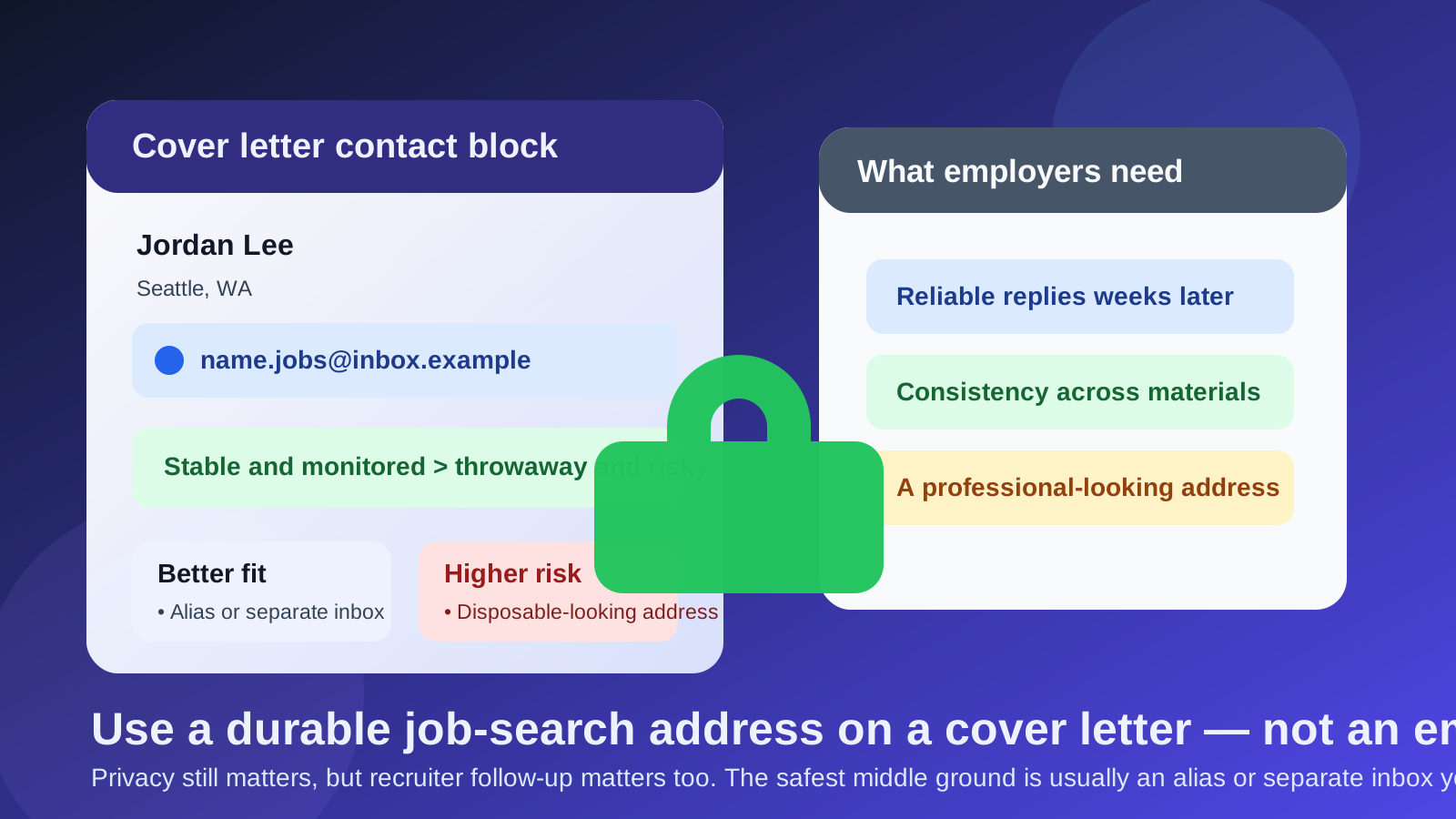
Usually no — an obviously burner email on a cover letter is not the best address to give employers. If you want more privacy, a stable email alias or separate job-search inbox is usually safer, more professional, and less likely to cost you a legitimate reply.
That said, the answer changes a little if “burner email” really means a secondary address you control long term. A durable, professional-looking inbox can work fine on a cover letter. A short-lived or disposable-looking address usually cannot.
Why this question comes up in the first place
People worry about cover-letter contact details for a good reason. A cover letter can be uploaded to job boards, attached to emails, saved as a PDF, forwarded between recruiters and hiring managers, and reopened weeks later after the first application rush has passed. That means the address printed on it is not just a formatting detail. It is part of your privacy footprint and part of whether someone can still reach you later.
The concern is even stronger for job seekers who are applying widely, testing unfamiliar platforms, or trying to avoid spam. If you already know your search may generate a lot of low-quality outreach, using your oldest personal inbox everywhere can feel unnecessary. So the instinct to create distance is reasonable. The real issue is choosing the right tool for the right stage of the process.
Short answer: a burner email is usually the wrong cover-letter choice
For most serious applications, a visible burner-style address is not ideal on a cover letter. Employers do not need your deepest personal inbox, but they do need an address that looks stable, professional, and easy to trust. A cover letter is supposed to reduce friction, not create doubts about whether you can be reached next week.
If the address looks disposable, contains awkward wording, or might expire during a long hiring cycle, it works against the whole point of the document. A separate inbox or alias can protect your privacy without creating that problem.
What people mean by “burner email” is important
Not all burner emails are the same. Some people mean a truly temporary inbox used for one-off signups and quick verification. Others mean a secondary address used only for job-search traffic. Those are very different tools.
A temporary or disposable inbox
This is useful when you want to test a site, unlock a download, register for a webinar, or see whether a platform starts spamming you. It can be great for low-trust, early-stage activity. It is usually a poor fit for documents that may keep circulating for weeks.
A separate but durable job-search inbox
This is much safer. If the address is professional, actively monitored, and likely to remain available for the full hiring process, it is closer to a privacy-friendly job-search inbox than a true throwaway. That type of “burner” can work, but the success comes from its stability, not from its throwaway nature.
Why a burner email can hurt you on a cover letter
1. It can look disposable or evasive
Most employers will not run a deep forensic analysis of your email address, but they do notice when contact information feels odd. If your address looks obviously temporary, overly anonymous, or built for a short-term stunt, it can signal that you may be harder to reach or less serious than other applicants.
2. You may miss delayed follow-up
Hiring rarely moves on your timeline. Recruiters may respond after a holiday, after another candidate drops out, or after a department finally gets approval to interview more people. If your address disappears, gets buried, or stops forwarding, the privacy win turns into a missed opportunity.
3. It creates inconsistency across your application packet
If your cover letter shows one address, your resume shows another, and the application portal stores a third, you are increasing the chance of confusion. Recruiters are busy. Anything that makes them wonder which address they should use is friction you do not need.
4. A cover letter often does not need that much contact experimentation
In many application workflows, your email is already captured in the form itself and probably also appears on your resume. The cover letter is not usually the best place to test a marginal contact setup. If you want privacy separation, it is better to build a solid search-wide email system than to improvise at the document level.
When it can still make sense
There are cases where a so-called burner email on a cover letter is acceptable, but only if it behaves like a normal long-term address.
- You use one stable job-search inbox across your cover letter, resume, and application forms.
- The address looks professional and name-based rather than obviously disposable.
- You monitor it closely and can reply from it consistently.
- You are applying through noisier channels and want stronger separation from your everyday personal inbox.
In that scenario, the “burner” is not really helping because it is temporary. It is helping because it is compartmentalized. That is an important distinction.
Better alternatives than a burner email on a cover letter
Email alias
An email alias is often the cleanest middle ground. It gives you a separate public-facing address while still routing into an inbox you already control. That means less exposure for your main address without the trust problems of something that looks disposable.
Separate job-search inbox
If you want stronger separation, a dedicated mailbox for applications can work even better. This is especially useful if you expect lots of recruiter outreach, assessment emails, scheduling links, and job-board noise. It keeps your search organized and can stay active for as long as you need it.
Temporary inboxes only around the edges
Temporary email still has a place. It is useful for resume-builder trials, gated downloads, newsletter-heavy career tools, talent-network experiments, and low-trust job-platform signups. That is the stage where a tool like Anonibox makes the most sense: protecting your main inbox before you decide which services deserve a real long-term address.
Once you are attaching a cover letter to an application you actually care about, durability matters more than short-term inbox protection.
How to choose the right email for a cover letter
A good cover-letter address should do three things well: it should look normal, stay reachable, and match the rest of your application materials.
Use a simple format
Name-based addresses are usually safest. They are readable, easy to repeat aloud, and unlikely to raise eyebrows.
- Better: firstname.lastname@email.com
- Better: first.last.jobs@email.com
- Better: yourname.careers@domain.com
- Riskier: stealthhire2026@…
- Riskier: burnerboxapply@…
- Riskier: anything that screams “throwaway”
Keep it consistent everywhere
If the address appears on the cover letter, it should normally be the same one on your resume and in the application form. That consistency makes you look organized and reduces the chance of missed communication.
Test replies before you apply
Send yourself a message, reply from the same address, and confirm that the visible sender looks correct. If the inbox forwards somewhere strange, lands in spam, or replies from a different-looking underlying account, fix that before you start applying.
When a cover letter does not need an email at all
In some modern application flows, the email address is already stored in the portal and shown on the resume. In those cases, repeating the address on the cover letter can be optional. If leaving it off helps you keep the letter cleaner and your main contact details already appear elsewhere, omission is not automatically a problem.
But if you do include an address on the cover letter, it should still be one you trust for real employer follow-up. That is why the quality of the inbox matters more than the label you attach to it.
Red flags that mean you should protect your inbox more carefully
- The “job” came from an unclear listing or suspicious recruiter message.
- The employer wants to move you to WhatsApp, Telegram, or text immediately.
- The role seems designed to collect leads more than hire candidates.
- You are being pushed to give unnecessary personal details early.
- You are testing job-search tools you do not yet trust with your long-term address.
Those are situations where temporary email or heavier compartmentalization may be smart. They are not strong reasons to put a fragile throwaway address directly on a polished cover letter for a role you genuinely want.
A quick checklist before you send the letter
- Will this address still work if a recruiter replies in three weeks?
- Does it look professional at a glance?
- Is it the same address used on my resume and application form?
- Do I actually monitor it every day?
- Am I using temporary email only where temporary access is truly enough?
If you can answer yes to those questions, your cover-letter email setup is probably in good shape.
Final answer
So, should you use a burner email on a cover letter? Usually no — not if “burner” means temporary, disposable, or visibly short-lived. That kind of address creates more risk than benefit once real employers may need to contact you later.
If what you really want is privacy and separation, the better answer is usually a stable alias or dedicated job-search inbox. Save true temporary email for the noisy edges of the search, and use a durable professional address on application materials that matter. That way you protect your inbox without making yourself harder to hire.