Usually no. One clear phone number — or no public number at all — is better on LinkedIn than listing two.
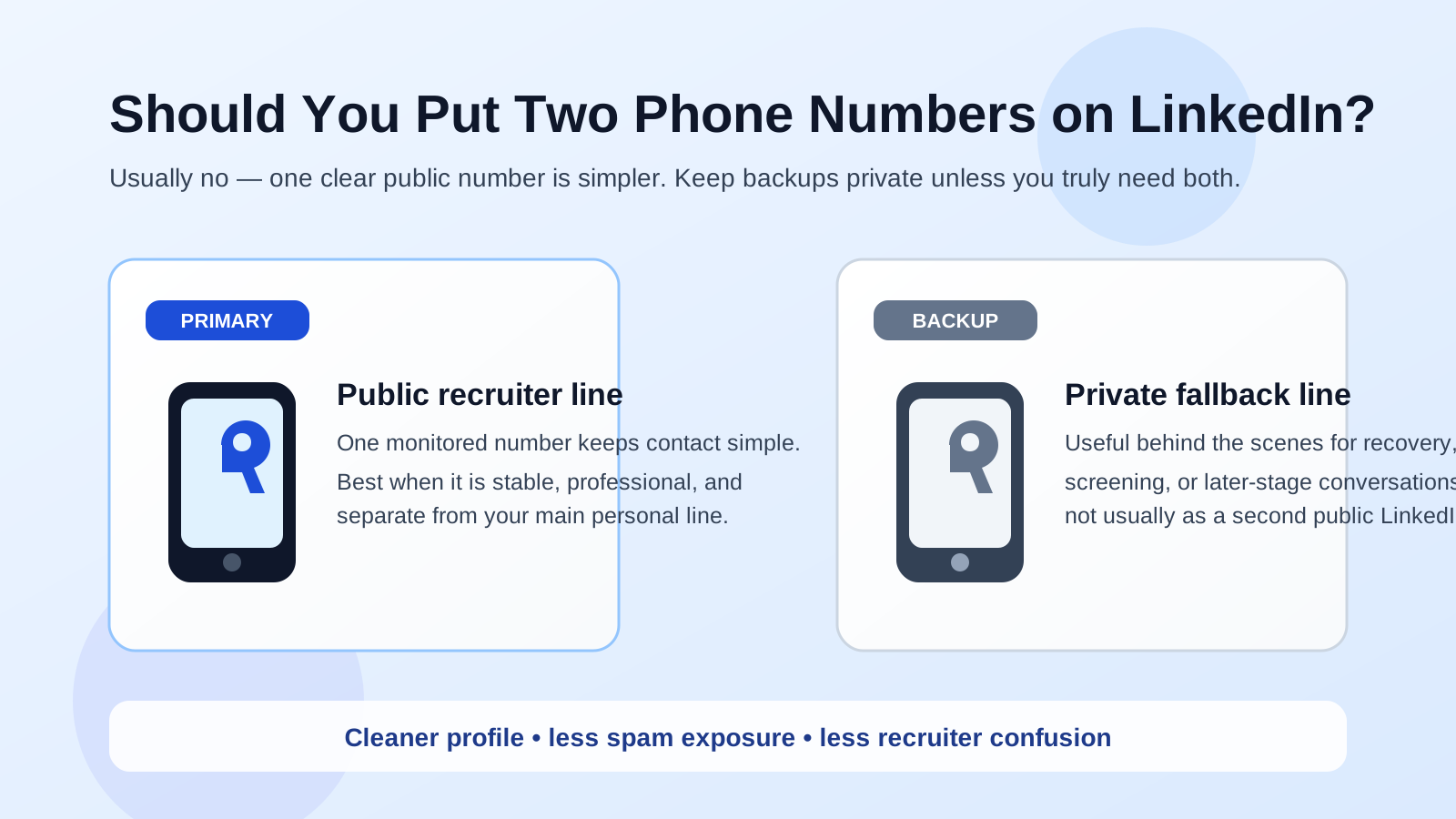
If you want backup, use one stable primary number and keep the second private for account recovery, call screening, or later-stage recruiter conversations instead of making both public-facing.
It is easy to see why people ask this. LinkedIn sits somewhere between a public profile, a networking platform, and a job-search tool. You may want to look reachable without giving up too much privacy. Maybe you have a personal number and a separate recruiter line. Maybe you want one number for calls and another for texts. Maybe you are worried about missing an opportunity if one number has filtering issues.
Those concerns are reasonable. But on LinkedIn, two visible phone numbers usually create more friction than protection. In most cases, one monitored number is cleaner, easier for recruiters to use, and safer for you long term.
Short answer: one number is usually better than two
If you are going to share a phone number through LinkedIn at all, the best default is one number that you actually monitor and expect to keep for a while. That number might be your main personal line, but for many job seekers it is smarter to use a separate job-search number that keeps recruiter traffic away from family, banking, and day-to-day life.
What usually does not help is giving people two different numbers and making them guess which one to use. LinkedIn works best when your contact information is simple, stable, and obvious.
Why people consider listing two phone numbers on LinkedIn
Most people who think about two numbers are trying to solve a real problem, not create clutter. Common reasons include:
- Privacy separation: one number for personal life and another for recruiters.
- Backup access: a second number in case one line has voicemail issues or you miss a call.
- Different use cases: one number for calls, another for text-heavy scheduling.
- Transition periods: moving from a school-managed or work-managed number to a personal one.
- Regional or travel needs: keeping one everyday number and one line that works better for temporary professional use.
All of that makes sense in theory. The problem is that LinkedIn is not a form where someone can study your preferences before contacting you. Most recruiters, former coworkers, and networking contacts want one clear next step. If you present two numbers, you often shift the decision burden onto them.
Why two phone numbers on LinkedIn usually hurt more than they help
1. They create choice friction
If someone sees two numbers, they have to decide which one is the “real” one. Should they call the first? Text the second? Use the number that looks more personal? Guessing is a bad first-contact experience. A lot of people will just default to the first number they see, which means your second number may not solve the problem you hoped it would.
2. They increase your exposure
Every contact detail attached to a public or semi-public professional profile expands your surface area for spam, cold outreach, and scam attempts. Two numbers are not automatically twice as risky, but they do create more places for your information to spread into recruiter notes, third-party databases, browser extensions, and copied contact lists.
3. They can make you look disorganized
Two numbers do not necessarily look unprofessional, but they can look needlessly complicated. LinkedIn is not the place where most people expect to decode your communication system. One number feels intentional. Two numbers can feel like unfinished setup unless there is an extremely clear reason.
4. They split your follow-up
Even if both numbers belong to you, using two lines can fragment your job-search workflow. One recruiter leaves a voicemail on one number, another texts the other, and a referral tries to call the line you almost never check. The result is not better reachability. It is more places for messages to hide.
5. LinkedIn already gives people a first-contact channel
Most legitimate recruiters do not need your phone number immediately. LinkedIn Messages already give them a simple way to introduce themselves, identify the role, and let you decide whether the opportunity looks real before you share more personal contact information.
When two numbers might be reasonable
There are narrow cases where two numbers are not automatically a bad idea.
- You run a business and intentionally separate public inquiries from direct client calls.
- You are in a field where one line goes to a scheduler or assistant and another goes to you personally.
- You are in a short transition period and need to keep an older number alive while switching to a new stable one.
- You have a very specific public-facing role where multiple contact paths are expected.
Even then, LinkedIn may not be the best place to show both. Many people are better off keeping one primary number on their profile and saving the second for direct conversations, email signatures, or their own private workflow.
Better alternatives than listing two phone numbers
Use one separate job-search number
If your real goal is privacy, a separate recruiter number is usually the cleanest solution. It gives you most of the benefits people want from a second number without adding confusion. You can monitor it closely, set a professional voicemail, and retire or repurpose it later if it starts attracting junk.
This is the phone equivalent of using a cleaner email workflow. If you already use Anonibox to keep noisy signups and one-off email exposure away from your main inbox, the same privacy mindset applies here: keep early-stage contact manageable without turning your core personal channels into a magnet for spam.
Use LinkedIn Messages for first contact
A recruiter who finds you on LinkedIn can message you there first. That gives you context before you hand over more personal information. You can verify the company, review the role, and decide whether the conversation deserves a phone call.
Keep the second number private
There is nothing wrong with having two numbers. The issue is whether both need to be visible or publicly shared. In many cases, the second number works better as a private backup for account recovery, call screening, or later-stage conversations rather than as a second public contact point.
Share the second number only later
If there is a real reason someone should have both numbers, you can always provide the second one after contact begins. That approach keeps your profile clean while still giving you flexibility when a legitimate opportunity becomes active.
If you absolutely want to use two numbers, do it carefully
If you decide that two numbers are necessary, make the setup extremely clear.
- Label the primary number mentally as the default recruiter contact.
- Use the second only if it solves a real problem, not just because you have it.
- Make sure both lines have voicemail and are monitored.
- Avoid temporary or disposable numbers that may disappear while your profile stays live.
- Do not mix a work-controlled line into a profile you want to keep independent long term.
If you cannot explain in one sentence why both numbers are there, that is a good sign you probably do not need both on LinkedIn.
What kind of number works best on LinkedIn?
If you share a number at all, the best choice is usually a line that is:
- stable: you expect to keep it for the full hiring cycle and beyond
- monitored: you actually check calls, texts, and voicemail
- professional: the voicemail greeting is clear and simple
- separate when needed: it does not expose your most personal line more broadly than necessary
The worst fit is usually a fragile number that may expire, a work-controlled number you could lose, or a random extra line you rarely check.
Red flags to watch for if you share any phone number on LinkedIn
- Someone pushes you to move from LinkedIn Messages to text immediately without giving real context.
- You get vague calls or texts about a job you never discussed.
- The person contacting you refuses to identify the company clearly.
- You are asked to click login links, share documents too early, or provide verification codes.
- The outreach becomes urgent the moment you ask normal verification questions.
Those problems can happen whether you share one number or two, but extra visible numbers increase the chances that low-quality outreach reaches you in the first place.
A quick decision checklist
- Do I actually want people to call me from LinkedIn, or would LinkedIn Messages be enough for first contact?
- If I need phone access, would one separate recruiter number solve the problem better than two visible numbers?
- Will I reliably monitor both lines, including voicemail and texts?
- Am I making this setup clearer for recruiters or just more complicated?
- Could the second number stay private until a real conversation starts?
If your answers point toward simplicity, that is a sign to keep one number public or none at all.
Final answer
Usually no, you should not put two phone numbers on LinkedIn. One clear number is easier for recruiters to use, simpler for you to manage, and better for privacy than giving people multiple contact paths on a long-lived public profile.
If you want flexibility, the smarter move is usually one stable recruiter-friendly number plus a private backup behind the scenes. That keeps your profile clean, your follow-up organized, and your personal exposure lower without making you harder to reach.