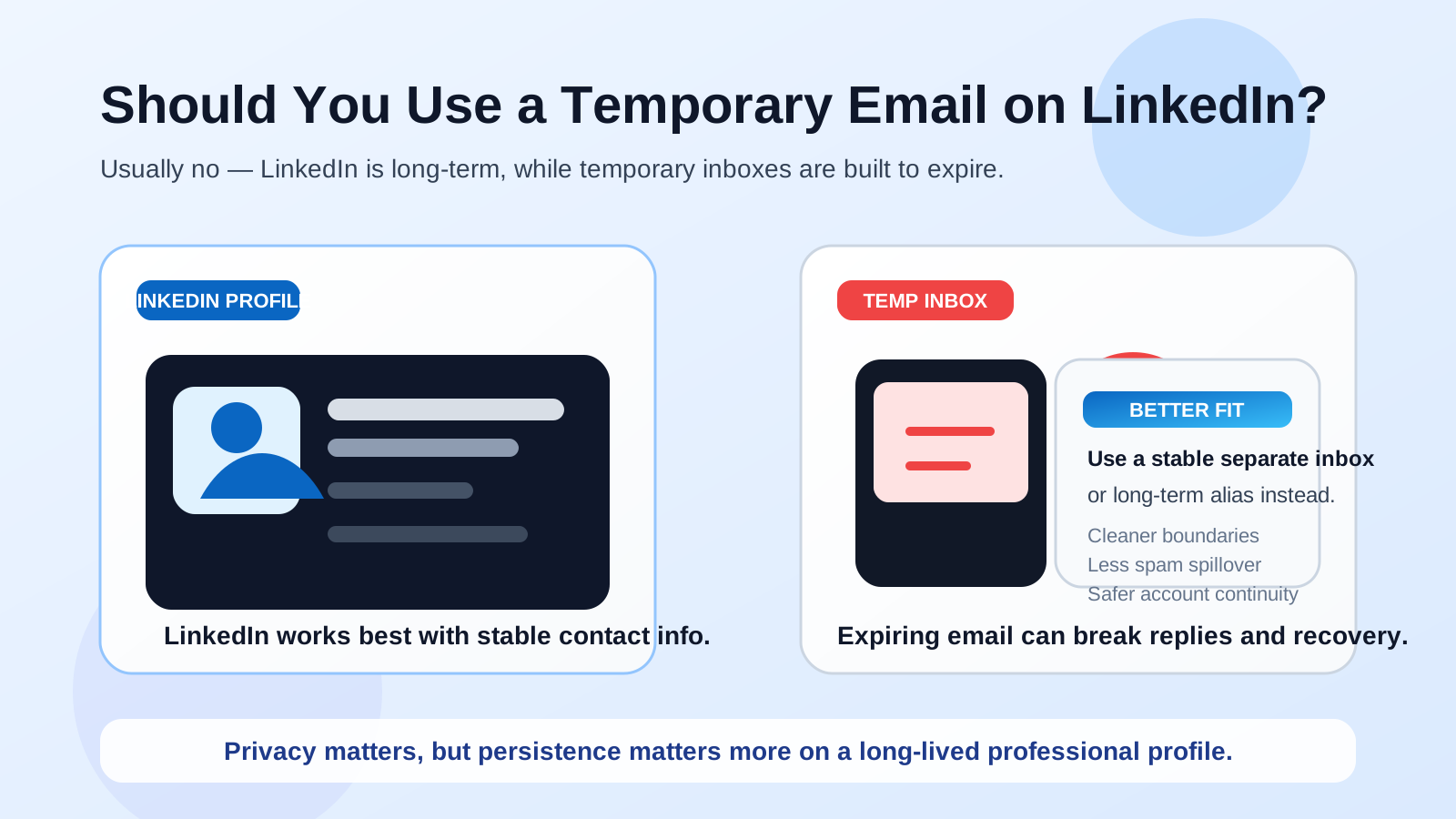
Usually no. A temporary email is a poor fit for LinkedIn because LinkedIn accounts, recruiter replies, and recovery steps may need to stay reachable for years, not hours or days.
If you want privacy on LinkedIn, a stable separate inbox or long-term alias is usually a much better choice than a disposable address that may expire, stop forwarding, or vanish when you need it most.
People ask this for a good reason. LinkedIn can attract recruiter outreach, cold sales messages, newsletters, event invitations, and all kinds of follow-up you may not want in your main inbox. If you are privacy-conscious, using a temporary email can sound like a clean solution. You keep your real address hidden, reduce clutter, and limit what one platform can do to your everyday inbox.
The instinct is reasonable. The problem is that LinkedIn is not a throwaway signup. It is a long-lived professional identity. A profile you build today may still matter months or years later when a recruiter follows up, an old connection reaches back out, or you need to recover access after changing jobs, phones, or devices. That makes temporary email a risky match for the job.
Why people consider a temporary email for LinkedIn
Most people are not trying to be sneaky. They are trying to stay organized and protect their privacy. Common reasons include:
- Spam control: they do not want recruiter blasts and cold pitches in their main inbox.
- Data exposure worries: they do not want their personal address copied into random contact databases.
- Job-search separation: they want LinkedIn activity away from family, banking, shopping, or everyday mail.
- Low trust in platforms: they want a layer between their real identity and a public-facing profile.
- Testing the platform: they are not sure how much they will actually use LinkedIn.
Those goals all make sense. The issue is not the privacy motivation. The issue is whether a temporary email can support a profile that may outlive the temporary address by a very wide margin.
The biggest problem: LinkedIn is long-term, temporary inboxes are not
A true temporary email works best for short-lived situations: one-off signups, low-stakes downloads, trial flows, or forms you do not expect to revisit. LinkedIn is different. Your account may hold networking history, saved jobs, profile changes, message threads, recommendations, and contact pathways that matter later.
If the email tied to that account expires or becomes inaccessible, several things can break at once:
- You may miss recruiter replies or connection-related notifications.
- You may lose a clean recovery path if you forget a password or trigger a security check.
- You may create confusion when old contacts try to reach you through a dead address.
- You may end up rushing to swap emails after the account is already active and connected to other workflows.
That does not mean every temporary inbox fails immediately. It means the downside appears exactly when your LinkedIn profile starts becoming useful.
What can go wrong if you use a temporary email on LinkedIn
1. You miss important messages
LinkedIn itself offers messaging, but email still matters. Recruiters may follow up outside the platform. LinkedIn sends security notices, alerts, and account-related messages. If your temporary inbox stops working, you may not notice until something important already slipped past you.
2. Account recovery gets harder
A long-term professional profile should be easy for you to recover, not just easy to create. If your email is gone when you need a password reset or identity check, you have created a problem where a stable email would have prevented one.
3. Your setup becomes fragile during a live job search
Early-stage privacy decisions feel abstract until the moment a hiring conversation gets real. Then you want continuity. If you are actively job hunting, networking, or publishing on LinkedIn, you do not want your contact channel to feel temporary while opportunities are time-sensitive.
4. You may look less reliable if you have to keep changing contact details
You do not need your email address to be flashy, but it should be stable. Swapping addresses too often can make your professional workflow feel improvised. A LinkedIn account works best when the underlying contact layer stays boring and dependable.
5. You solve one privacy problem by creating a continuity problem
This is the core trade-off. A temporary email reduces exposure, but it can also remove persistence. On LinkedIn, persistence matters more than it does on many other sites.
Temporary email vs burner email vs separate email: not the same thing
People often lump these together, but they serve different purposes.
- Temporary email: usually short-lived and best for low-stakes, disposable interactions.
- Burner email: may be disposable in spirit, but often still treated as a separate address for short-term use.
- Separate email: a real inbox you control long term, just not your main everyday address.
- Email alias: a forwarding or masked address attached to an inbox you already control, depending on the provider and setup.
For LinkedIn, the best options are usually the last two. If your goal is to keep recruiter noise, cold outreach, and profile exposure away from your primary inbox, a separate long-term address or a durable alias gives you privacy without sacrificing continuity.
When could a temporary email make sense?
Very rarely as the core email for your actual LinkedIn account.
The only narrow case where people think about it is when they are just testing the platform and do not plan to build a meaningful profile, network, or job-search workflow there. Even then, it is easy for a “just testing” account to become a real one later. Once the account starts collecting connections, messages, alerts, or reputation, the temporary setup stops being convenient.
A more realistic use for temporary email is around adjacent low-stakes activity, not the account itself. For example, you might want extra separation when downloading a gated resource linked from a post, checking a promotional offer, or touching a signup flow that is not central to your LinkedIn identity. That is different from tying the actual LinkedIn account to a disposable address.
What is a better email strategy for LinkedIn?
Use a stable separate inbox
This is the best default for many privacy-conscious people. A separate inbox lets you keep LinkedIn activity away from your main personal email while still preserving the account long term. It is especially useful if you are open to recruiter outreach but do not want it mixed into your everyday life.
Use a durable alias if your setup supports it well
An alias can work if it forwards reliably and you understand how replies, recovery, and long-term management work in your system. The point is not just hiding the address. The point is keeping the address manageable for years.
Avoid school or work addresses you might lose
A temporary email is not the only fragile option. School-managed and employer-managed addresses can create similar continuity problems. If the institution controls the mailbox, you may not control it forever.
Keep the inbox monitored
The best privacy setup is still a bad setup if you never check it. Whichever email you choose for LinkedIn should be monitored, recoverable, and professional enough for the kind of opportunities you want.
How Anonibox fits naturally into this decision
If you like the privacy logic behind temporary email, that instinct is not wrong. The smarter move is to aim that instinct at the right places. A disposable or tightly separated inbox can be useful for one-off signups and low-trust situations. But LinkedIn itself usually deserves a more durable address because your profile, messages, and network may matter later.
That is where the broader Anonibox mindset is useful: separate what should be separate, but do not confuse privacy with fragility. The goal is to reduce spam and exposure while still keeping important professional channels dependable.
Signs your LinkedIn email choice is a good one
- You expect to keep the address for the full life of your LinkedIn account.
- You can receive replies, alerts, and recovery messages without scrambling.
- The address keeps LinkedIn noise away from your most personal inbox.
- You actually monitor it and can respond when a real opportunity shows up.
- You would still be comfortable using it six months or two years from now.
A quick checklist before you commit
- Am I trying to solve spam, privacy, organization, or all three?
- Will this email still exist when a recruiter follows up later?
- Can I recover my LinkedIn account easily if something changes?
- Would a separate long-term inbox solve the same problem better?
- Am I building a durable professional profile or treating LinkedIn like a throwaway signup?
If your answers point toward durability, that is your answer. LinkedIn usually needs persistence more than disposability.
Final answer
So, should you use a temporary email on LinkedIn? Usually no. A temporary inbox may reduce exposure in the short term, but it is a weak fit for a profile that can become part of your long-term professional identity.
If you want privacy, the better move is usually a stable separate inbox or a durable alias you control long term. That gives you cleaner boundaries without risking missed replies, awkward recovery problems, or a contact channel that disappears just when LinkedIn starts being useful.