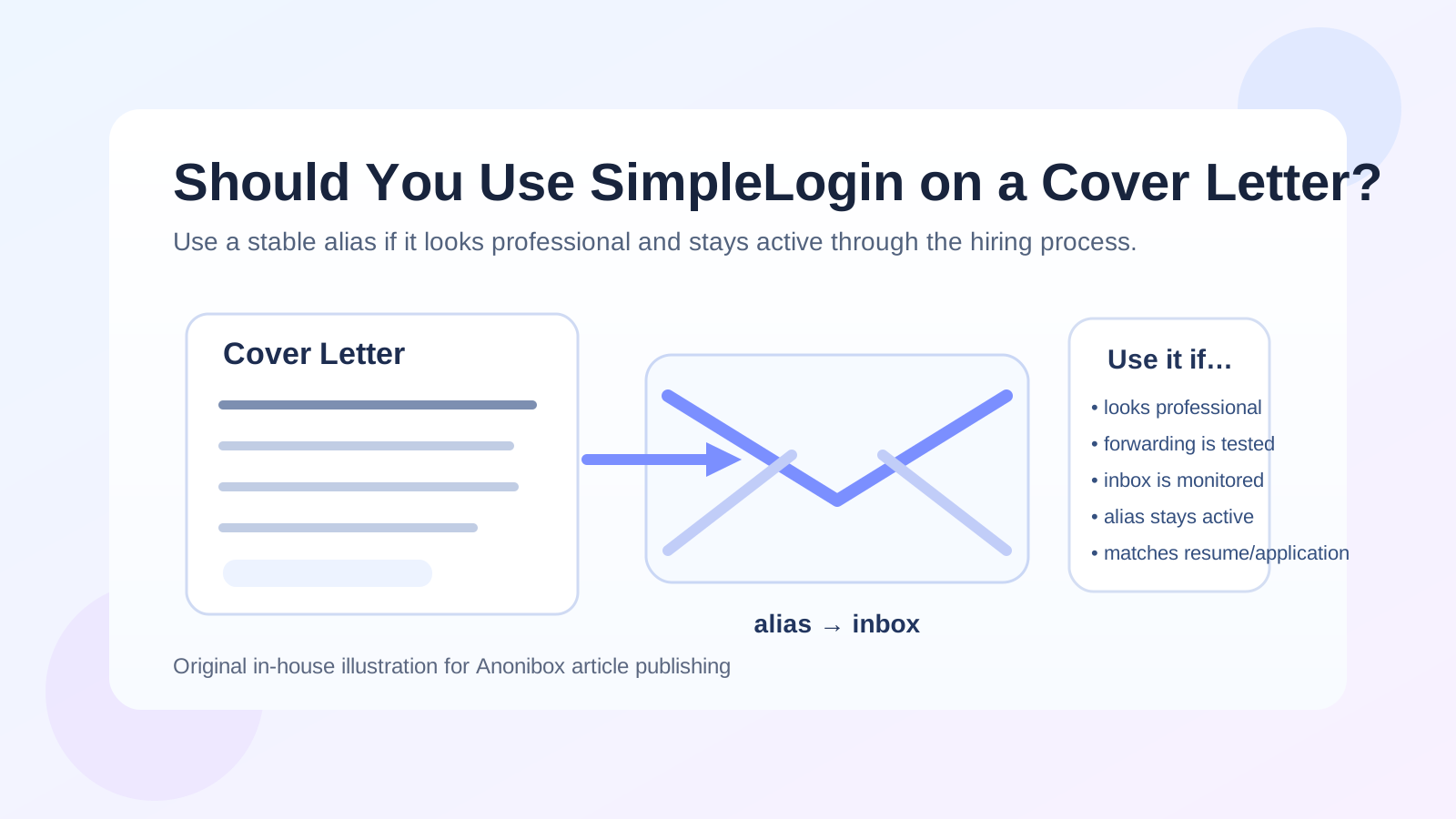
Yes — you can use SimpleLogin on a cover letter if the alias looks professional, forwards reliably, and stays active for the full hiring process. It is a sensible privacy layer when you want inbox separation, but it is a bad choice if the alias looks disposable, random, or easy to lose track of.
A cover letter is a formal contact document, not a throwaway signup form. The real question is not whether SimpleLogin is private enough. It is whether your alias is stable, clear, and consistent enough that a recruiter can reply without friction weeks later.
Why this question matters
People reach for SimpleLogin for good reasons. A job search can spread your email address far beyond the employer you meant to contact. Your resume might move through applicant tracking systems, staffing firms, internal forwarding chains, AI screening tools, and recruiter spreadsheets. Even when the company is legitimate, your contact details can end up in more places than you expected.
SimpleLogin helps by putting an alias between your real inbox and the outside world. That can reduce exposure, keep recruiter mail organized, and make it easier to shut down a noisy contact path later. Those are real benefits. But a cover letter has a higher reliability bar than a newsletter signup, gated download, or random trial tool.
If a hiring manager likes your application, the email on the cover letter may become part of an ongoing chain for screening calls, interview scheduling, portfolio requests, assignments, references, and even offer follow-up. Privacy helps only if it does not get in the way of being reachable.
Short answer: SimpleLogin is fine if the alias feels durable and professional
If you already use SimpleLogin comfortably, monitor the destination inbox daily, and plan to keep the alias active until the hiring process is truly over, using it on a cover letter can be perfectly reasonable.
If you are experimenting, rotating aliases constantly, or using a string that looks obviously machine-generated, it is the wrong fit. Cover letters benefit from boring reliability more than clever setup.
What SimpleLogin is actually solving on a cover letter
On a cover letter, SimpleLogin is not mainly about hiding from employers. It is about controlling exposure and keeping your job-search communication organized.
- Inbox separation: recruiter mail does not have to land in the same inbox as shopping receipts, family threads, and years of old signups.
- Alias tracking: if a message arrives through the cover-letter alias, you instantly know where it came from.
- Reduced long-term exposure: your underlying email address is not printed directly on a document that may be forwarded internally.
- Cleaner cleanup later: if the search ends and the alias starts attracting noise, you have more control than you would with a permanently exposed primary address.
Those are legitimate advantages. The mistake is treating them like permission to use a flimsy setup. Privacy is only useful if it preserves trust and continuity.
When SimpleLogin works well on a cover letter
1. The alias looks like a real professional contact address
Presentation matters. An alias such as firstname.lastname.jobs@yourdomain.com or another clean naming pattern feels very different from something like letters-7q2m@aliasdomain.example. Recruiters do not need your underlying inbox, but they do need something that feels readable, intentional, and easy to trust.
2. You use the same address across your application materials
Consistency is especially important on cover letters. If the resume shows one email, the application form shows another, and the cover letter shows a third alias, you create unnecessary confusion. A SimpleLogin address is much safer when it matches the resume and the main application contact field for that role.
3. You plan to keep it active for months, not days
Hiring timelines drag. A company may go quiet and then return three weeks later with an interview request. If you are comfortable leaving the alias active through delays, re-reviews, referrals, and follow-up rounds, SimpleLogin becomes far more defensible.
4. You have already tested forwarding and replies
Before you put any alias on a cover letter, test it from multiple accounts. Make sure inbound messages arrive, replies send correctly, and nothing gets buried in spam or filtered into a folder you never open. Small delivery mistakes are the kind that cost real opportunities.
5. You want a dedicated job-search contact lane
A separate job-search workflow is often smart. If your destination inbox is clean and well managed, the alias becomes a front door for recruiter communication instead of one more moving part. Used that way, SimpleLogin can be more professional than an old personal inbox full of clutter.
When SimpleLogin is the wrong fit
1. You are using it like a disposable inbox
A cover letter should not point to something you may abandon next week. If you want to protect yourself during low-trust signups, a temporary inbox can be useful earlier in the funnel. For example, a service like Anonibox is better suited to sketchy job boards, gated downloads, or one-off research than to the main contact address on a formal application document.
Once an email appears on a cover letter, the priority shifts from experimentation to dependable follow-up.
2. The alias looks odd, random, or overly technical
Many recruiters will not care what service sits behind the address, but they do notice whether an email looks normal. If the alias looks autogenerated or hard to read over the phone, it adds friction for no real benefit.
3. You do not consistently monitor the destination inbox
An alias is only as good as the inbox behind it. If cover-letter mail forwards into an account you rarely check, the privacy setup is hurting you instead of helping you.
4. You are likely to change providers or disable the alias mid-search
If you are still tweaking your setup, switching forwarding targets, or deciding whether you even want to keep the alias, wait. Your cover-letter email should be stable before you send it anywhere.
5. Your cover letter is the only place the alias appears
That mismatch can create unnecessary doubt. Employers should not have to wonder whether the email on your cover letter is different from the one on your resume because of a typo, an outdated file, or a separate person. SimpleLogin works best when it is part of a coherent contact strategy, not a one-off experiment.
Cover-letter-specific risk: contact consistency matters more than people think
A resume and a cover letter often get separated, reattached, converted, or pasted into different systems. That makes consistency more important than many applicants realize. If you choose to use SimpleLogin, make it the same address the employer sees everywhere relevant for that application.
- Resume email
- Application form email
- Cover letter email
- Portfolio contact page, if you include one
That does not mean you have to use the alias on every platform forever. It means each specific application packet should present one clean, stable contact route.
How to use SimpleLogin safely if you decide to use it
- Create one clear alias for job search use. Avoid random strings if you can.
- Forward it to an inbox you already trust and check often.
- Test inbound and outbound mail before sending applications.
- Use the same address across the resume, cover letter, and application form.
- Keep the alias active through the full hiring cycle. Do not disable it just because the first week went quiet.
- Archive messages carefully. A dedicated label or folder helps you avoid missing replies.
If you do those things, SimpleLogin can be a practical privacy layer rather than a risky gimmick.
Better alternatives if you want privacy but less complexity
Use a dedicated long-term job-search inbox
This is often the cleanest answer. A separate Gmail, Outlook, Fastmail, or Proton Mail account created specifically for job searching gives you most of the organizational benefits without an extra relay step.
Use a custom domain alias you control fully
If you want stronger privacy and a polished appearance, a custom domain email or alias can look more professional than a generic relay address. It gives you separation while still feeling like a normal business-style contact point.
Use temporary addresses earlier, not later
Disposable or short-lived inboxes still have a place. They are useful when you are testing a sketchy site, downloading a guide, or comparing tools before deciding whether you want ongoing contact. They are usually not the best choice for the address printed on a cover letter.
A quick checklist before you put a SimpleLogin alias on a cover letter
- Does the alias look readable and professional?
- Does it match the resume and the application form?
- Have you tested forwarding and replies?
- Will you keep it active for at least a few months?
- Do you check the destination inbox every day?
- If a recruiter calls or emails in two weeks, will you immediately know this is the address they used?
If the answer to most of those is yes, SimpleLogin can be a reasonable cover-letter choice. If several answers are no, use a more direct address.
Final answer
Yes — SimpleLogin can work on a cover letter, but only when you treat it like a stable professional contact route rather than a disposable privacy trick. The alias should look normal, forward reliably, stay active long enough for real hiring timelines, and match the rest of your application materials.
If you want privacy with minimal risk, a dedicated long-term job-search inbox is usually the safer default. If you want the extra control of an alias, SimpleLogin is fine as long as reliability comes first. On a cover letter, the best email setup is not the cleverest one. It is the one that protects your inbox and makes it easy for the right employer to reach you without confusion.