Usually no. For networking events, one professional email address is cleaner, easier to remember, and less likely to confuse the person you just met.
A second address only makes sense when you have a specific privacy reason, such as separating low-trust event signups from real one-to-one follow-up, and even then you should present one clear primary address.
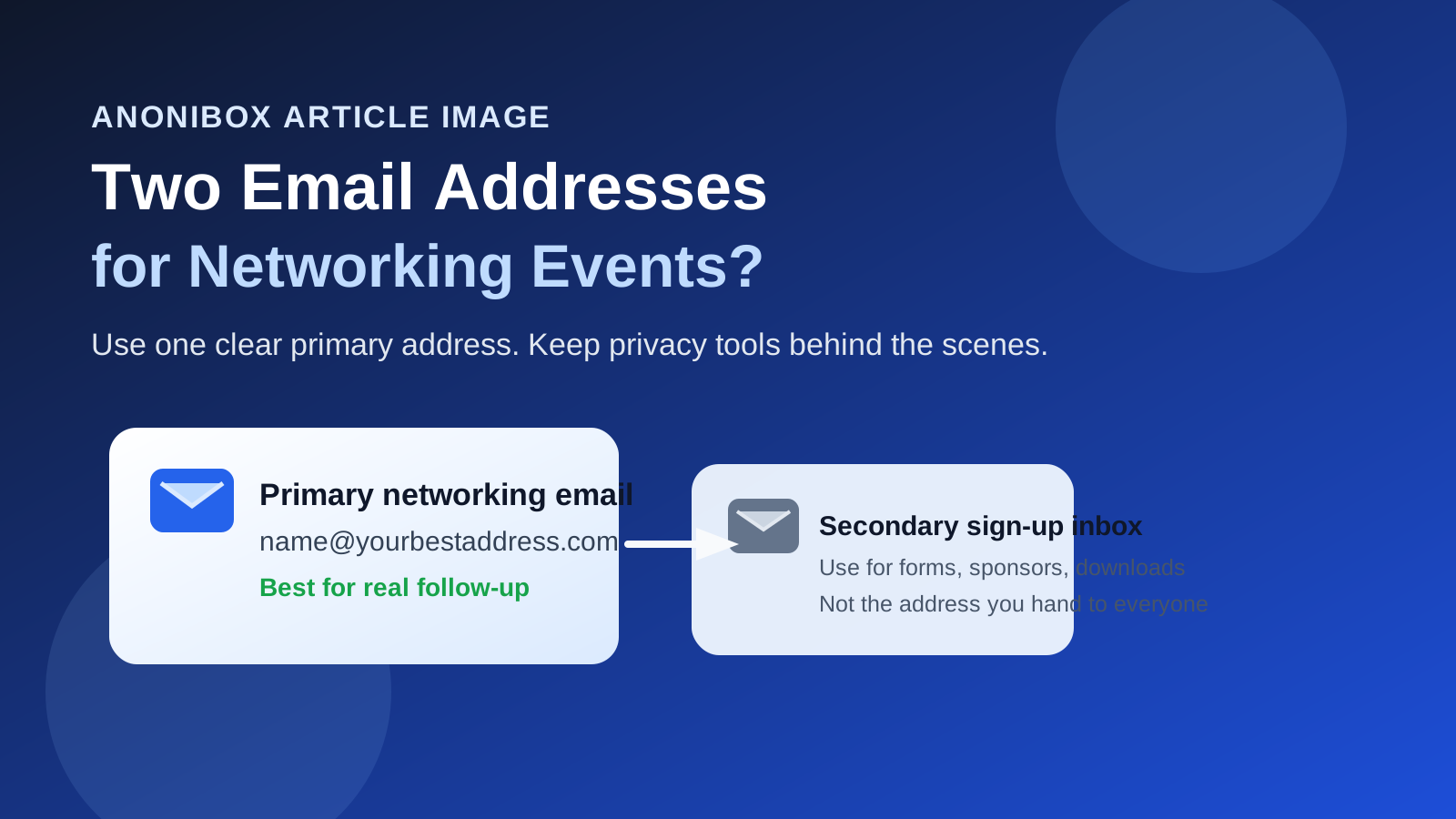
People think about using two email addresses at networking events for understandable reasons. You may want one address for public event forms and another for serious conversations. You may want to protect your main inbox from spam, or you may want to keep job-search follow-up separate from your everyday email. Those are valid concerns. The problem is that giving two addresses to a new contact often creates more friction than protection.
Most networking follow-up succeeds because it is simple. Someone meets you, remembers your name, searches their notes, and sends one message. If they have to wonder which address they should use, whether both are monitored, or whether one is only temporary, you have added a tiny decision point that can quietly reduce follow-through. At networking events, tiny bits of friction matter.
The short answer
If you are exchanging contact information with people at networking events, use one primary email address most of the time. It should be an address you check regularly, can keep active for months, and feel comfortable sharing in professional contexts.
If privacy is your concern, the better move is usually not to hand out two separate inboxes. It is to use one networking-specific address, one alias, or one forwarding setup that still looks like a single reliable contact point to other people.
Why people consider using two email addresses
The idea usually comes from one of four concerns:
- Spam risk: event registrations, sponsor lists, and casual contacts can create a lot of inbox clutter.
- Privacy: you may not want your main personal address spread across attendee sheets, badge systems, or vendor forms.
- Organization: you want one inbox for warm professional leads and another for bulk event traffic.
- Career separation: you may want to keep job-search networking separate from your current work or personal life.
Those goals are reasonable. The question is whether sharing two addresses directly is the best way to solve them. In most cases, it is not.
Why two email addresses usually backfire at networking events
1. It creates choice when you want clarity
The person you met for thirty seconds is unlikely to remember your contact preferences in detail. If your business card, LinkedIn message, or follow-up note includes two addresses, they may guess. Sometimes they guess wrong. Sometimes they delay because they are not sure which one is best. Sometimes they never follow up at all.
2. It can look improvised
Two addresses are not inherently unprofessional, but they can look messy if there is no clear explanation. In a networking context, clean signals matter. One name, one role, one best contact method is usually easier for other people to trust and use.
3. It makes your own follow-up harder
If replies are scattered across two inboxes, you can miss warm leads, delayed responses, or calendar invites. Networking conversations often pick up days later, not instantly. A fragmented inbox makes it easier to lose momentum.
4. It solves the wrong layer of the problem
If the real issue is spam or data exposure, handing out two addresses still means you are handing out multiple real contact points. A better fix is to control what happens behind one public-facing address, not to make the other person manage your internal email strategy.
When a second address can make sense
There are situations where a second address is useful, but they are narrower than most people think.
- One address for event logistics, one for direct follow-up: for example, you use one address for registration platforms, vendor downloads, or attendee-list access, but a different stable address for people you actually want to hear from.
- One address is temporary by design: you are attending a public event with lots of sponsors, giveaways, or form submissions and want to reduce future marketing clutter.
- You are testing trust first: you may give a lower-risk address to event infrastructure, then share your long-term address only after a real conversation develops.
Notice the pattern: the second address is usually for your back-end workflow, not something you need to present equally to every person you meet.
A better approach: one primary address, with privacy behind the scenes
The strongest setup for most people is this:
- Create one professional networking email address that you are comfortable sharing publicly.
- Use aliases, forwarding, or a separate inbox strategy behind it for lower-trust forms, sponsor downloads, and event tools.
- Give real people one clear address so follow-up stays easy.
This preserves simplicity for the other person while giving you more control. If you want extra separation, you can use a dedicated networking inbox instead of your everyday personal or work address. If you want more privacy for event signups, a tool like Anonibox can help you create more disposable or lower-exposure addresses for forms and list-building moments without turning your human follow-up into a two-address puzzle.
How to decide what your primary networking email should be
Your primary address for networking events should meet a few basic standards:
- You check it regularly.
- You can keep it active long enough for slow follow-up.
- It looks normal and professional at a glance.
- It is not tied to an employer if you do not want employer visibility.
- It is not so temporary that a useful contact will bounce a month later.
That last point matters. Networking is not the same as one-time coupon signup traffic. A good contact might reach back out weeks or months later. If your address is too disposable, you lose one of the main benefits of networking in the first place.
Practical examples
Scenario 1: Large conference with lots of sponsor booths
Use one lower-risk address for booth scans, whitepaper downloads, and giveaway forms. But when you meet an actual hiring manager, founder, recruiter, or peer you want to stay connected with, give them one primary follow-up address. Do not hand them a pair and ask them to choose.
Scenario 2: Local professional meetup
A single stable address is almost always best. The relationship is the point, not the registration platform. Simplicity wins.
Scenario 3: Job-search networking while currently employed
Do not use your employer-issued email if you want privacy. Instead, create one separate professional address for networking. That gives you separation without the confusion of distributing two different inboxes.
Scenario 4: High-volume public-facing events
If you expect a lot of list adds or cold follow-up, separate the event infrastructure from the relationship channel. Use one address for event systems and one for your own internal routing, but still present one clear contact address in person unless there is a real reason not to.
What to put on your card, profile, or follow-up note
If you use a business card, digital card, QR page, or LinkedIn follow-up message, the cleanest version is usually:
- One name
- One role or short descriptor
- One primary email
- Optional LinkedIn or portfolio link
If you truly need two addresses, label them clearly. For example: Event registrations only versus Best address for follow-up. Without labels, two addresses look like indecision. With labels, at least the other person knows what you want. Even then, one clearly preferred address is better.
Common mistakes to avoid
- Giving both addresses without context: this makes the other person do the sorting.
- Using an address you rarely check: protection is pointless if you miss the reply you wanted.
- Using an employer address for private networking: that can create visibility and boundary problems.
- Using a disposable address for serious long-term contacts: networking often pays off later, not instantly.
- Overengineering the system: if your setup is hard for you to manage, it will fail when follow-up gets busy.
A simple decision rule
If the goal is meeting people and getting replies, use one clear primary address.
If the goal is protecting your inbox from public event infrastructure, use aliases, temporary sign-up addresses, or a separate event inbox behind the scenes.
If you find yourself wanting to give two addresses to every new contact, step back and ask whether you are solving a contact-management problem with the wrong tool.
Conclusion
So, should you use two email addresses for networking events? Usually no. One reliable professional address makes follow-up easier, looks cleaner, and reduces the chance that a good contact disappears because they were not sure where to write.
If privacy is the real issue, solve it with structure rather than clutter: keep one primary contact address for people, and use temporary addresses, aliases, or a separate networking inbox for the messy parts happening in the background. That gives you the best of both worlds — clearer follow-up for others and better control for you.