Usually no. For networking events, one clear primary phone number is easier for people to use and easier for you to manage than handing out two numbers at once.
A second number only helps when it serves a specific privacy or logistics purpose, is clearly labeled, and still reaches you reliably when a real contact follows up.
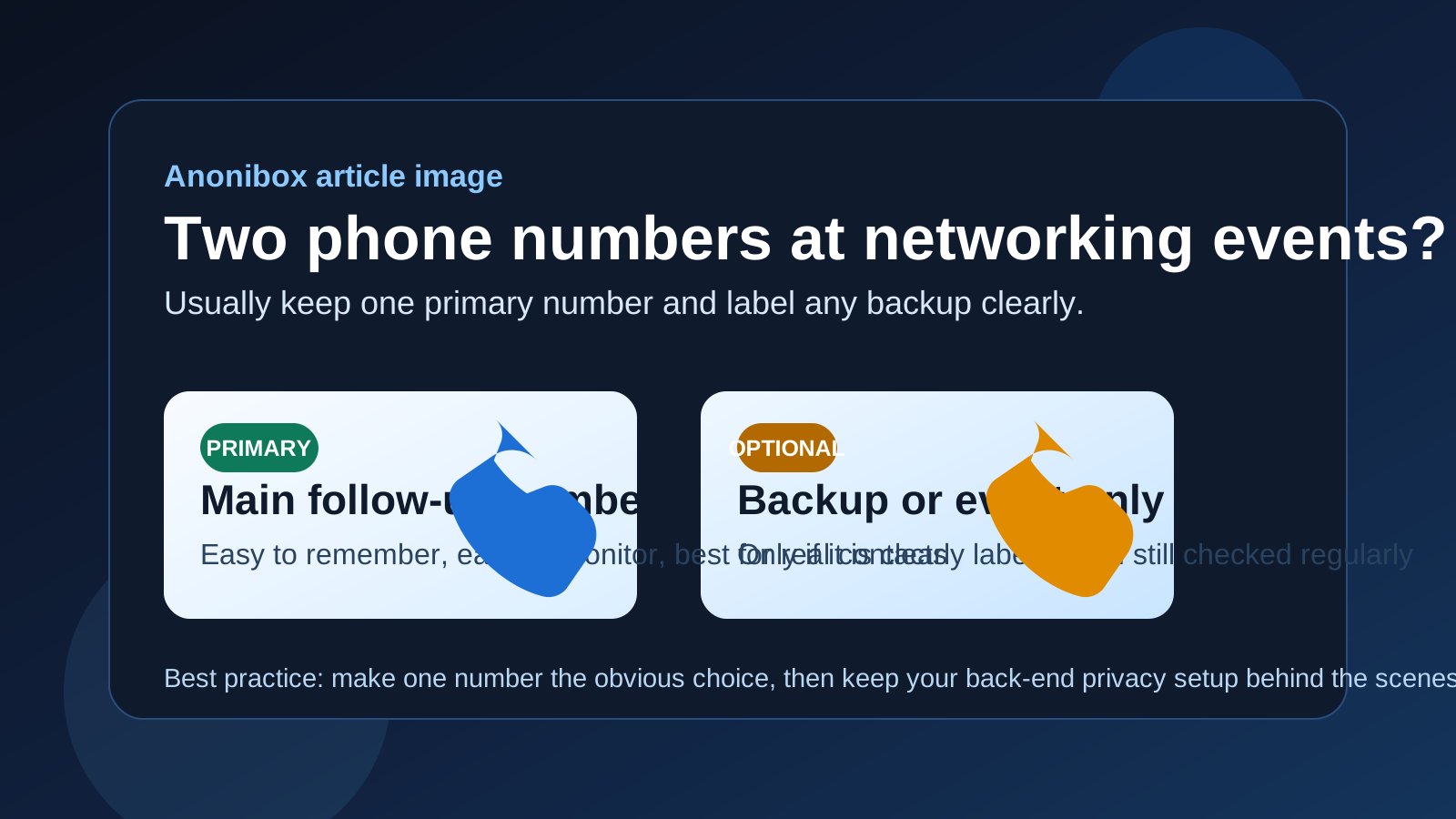
That is the real answer behind searches for two phone numbers for networking events. The urge makes sense. Networking events can put your contact details in front of recruiters, founders, speakers, vendors, alumni, community organizers, and people you may never talk to again. You may want one number for broad exposure and another for serious follow-up. You may want to protect your personal line from spam. You may also want a cleaner way to separate event-related contact from your day-to-day life.
Those are valid concerns. But most of the time, giving two numbers creates more friction than protection. The better move is usually to choose one primary number for human follow-up and handle privacy behind the scenes with a separate line, virtual number, or event-only workflow that the other person does not have to decode.
The short answer
For most networking events, use one phone number when you share contact details. It should be a number you can answer, check, or return messages from consistently.
If you want extra privacy, keep your setup simple on the outside. One public-facing number is cleaner than two. If you genuinely need a second line, make one number the obvious primary contact and label the other only when there is a real reason.
Why people think about using two phone numbers
The idea usually comes from four practical worries:
- Spam risk: event registrations, badge scans, sponsor lists, and follow-up lists can spread your number farther than you expect.
- Boundary control: you may not want new contacts, vendors, and recruiters all reaching the same personal line.
- Organization: one line for casual networking, another for serious career follow-up can sound tidy in theory.
- Current-employer privacy: if you are networking while employed, you may want stronger separation between personal, work, and job-search communication.
All of that is reasonable. The mistake is assuming the solution must be visible to everyone you meet. In practice, most people do better with one clear number plus a back-end privacy strategy they control themselves.
Why two phone numbers usually create friction
1. It makes the other person choose
Networking follow-up works best when it is easy. Someone glances at your badge, business card, QR page, or LinkedIn message and reaches out. If they see two numbers, they have to decide which one is right. That tiny pause can reduce follow-through, especially when the contact is warm but not urgent.
2. It can look messy without context
Two numbers are not automatically unprofessional, but they can look improvised if they are unlabeled. A clean contact card usually wins: one name, one role, one best number, one email, maybe one profile link.
3. It increases your own chance of missing replies
If texts and calls land in different places, you have to monitor both consistently. Networking messages do not always arrive the same day. Someone might call after the event, text a week later, or leave a voicemail after normal working hours. If one number is your “backup” but you rarely check it, that setup quietly breaks.
4. It solves the wrong layer of the problem
If the real issue is exposure, the answer is not usually “give everyone two direct lines.” The better answer is to choose the right single line for public sharing and protect your private line by keeping it out of casual circulation.
When a second number actually makes sense
There are situations where a second number helps, but they are narrower than most people expect.
- One number is a clearly labeled main contact, the other is a backup: for example, a primary mobile number and a desk line for a specific event role.
- You are juggling public event logistics and private follow-up: maybe a registration-facing number gets shared more widely, while your real networking number stays more controlled.
- You are representing both yourself and a formal organization: one personal follow-up number and one public team line can make sense if the distinction is obvious.
- You have a real accessibility or travel reason: for example, one number is easier for calls, the other is better for text during the event, and both are monitored.
Even in those cases, clarity matters more than quantity. If you use two numbers, label them in plain English. Do not make the other person guess.
What usually works better than handing out two numbers
Use one dedicated networking number
For many people, the best compromise is one separate number just for networking, recruiting, and other lower-trust professional exposure. That keeps your main personal number more private while still giving every new contact one clear path to reach you.
Use a stable virtual number if appropriate
A virtual line can work well when you want screening, voicemail separation, or easier control over event-related calls and texts. The key is stability. A number that becomes unreachable too quickly is a bad fit for networking, because useful follow-up often comes later than you expect.
Keep your number strategy simple and your email strategy flexible
Phone numbers are only part of the picture. Many privacy-conscious people do better by keeping one clear phone number and using more flexibility on the email side. If you use Anonibox or another separate-inbox strategy for event signups, sponsor downloads, or lower-trust forms, you can reduce inbox clutter without creating confusion in your direct human follow-up.
Best practices if you do use two numbers
If you decide a second number is worth it, treat it like a communication design problem, not just a privacy workaround.
Make one number primary
The person you met should never have to wonder which number you actually prefer. Put the main one first, label it clearly, and use the same one in most follow-up contexts.
Label the second number in plain language
“Primary mobile” and “event line” are useful labels. Two unlabeled phone numbers are not.
Monitor both numbers consistently
If one line goes to an old voicemail box or a muted app you forget to check, it is not a real contact channel. Drop it.
Keep your voicemail professional
A simple greeting with your name is enough. If someone calls after the event, they should feel confident they reached a real person who will listen to the message.
Use the same number across your follow-up materials when possible
If your QR page shows one number, your LinkedIn note shows another, and your card shows two more, you create avoidable friction. Consistency matters.
Practical examples
Scenario 1: Large conference with sponsors and booth scans
Use one dedicated networking number for broad event exposure if you want privacy. You probably do not need to hand out two numbers to attendees. Give people one clear line and keep the separation in your own workflow.
Scenario 2: Local meetup or alumni mixer
One number is almost always enough. The community is smaller, the context is simpler, and too many contact options just make follow-up clumsier.
Scenario 3: You are networking while currently employed
Avoid using your work number for casual networking if it creates employer-visibility concerns. A separate personal or networking-specific line is usually better than listing both work and personal numbers together.
Scenario 4: You also want to protect your inbox
Keep the phone side simple and handle more of the flexibility through email. For example, one stable networking phone number plus one event-specific email workflow is often cleaner than multiple phone numbers plus multiple inboxes.
Common mistakes to avoid
- Listing two numbers with no explanation
- Giving a temporary or semi-abandoned second line that you barely monitor
- Using a work number when you do not want employer visibility
- Making people choose between call, text, personal, and backup numbers without guidance
- Trying to solve spam by exposing even more direct contact paths
A simple decision checklist
Before you hand out two numbers, ask yourself:
- Would one clear number do the job just as well?
- Is the second number solving a real problem or just making me feel safer without improving the experience?
- Can I reliably monitor both numbers for the next few weeks or months?
- Have I labeled the numbers clearly enough that nobody has to guess?
- Would a separate networking number or email setup solve the issue more cleanly?
If your answers are fuzzy, one number is probably the better choice.
Final answer
Usually no: you generally should not use two phone numbers for networking events unless there is a specific reason and one number is clearly primary. One reliable number keeps follow-up easier, looks cleaner, and reduces the chance that a good contact gets lost.
If privacy is your concern, the smarter move is usually to choose the right single number for event sharing and support it with a separate line, virtual number, or event-specific email workflow behind the scenes. That way you stay reachable for real opportunities without turning every new contact into a routing problem.