Usually no. For job interviews, one stable phone number is better than listing two, because two numbers can confuse recruiters, split calls and texts, and make last-minute schedule changes easier to miss.
A second number can still help behind the scenes if it forwards into one line or acts as a private backup, but employers should usually see one clear primary number.
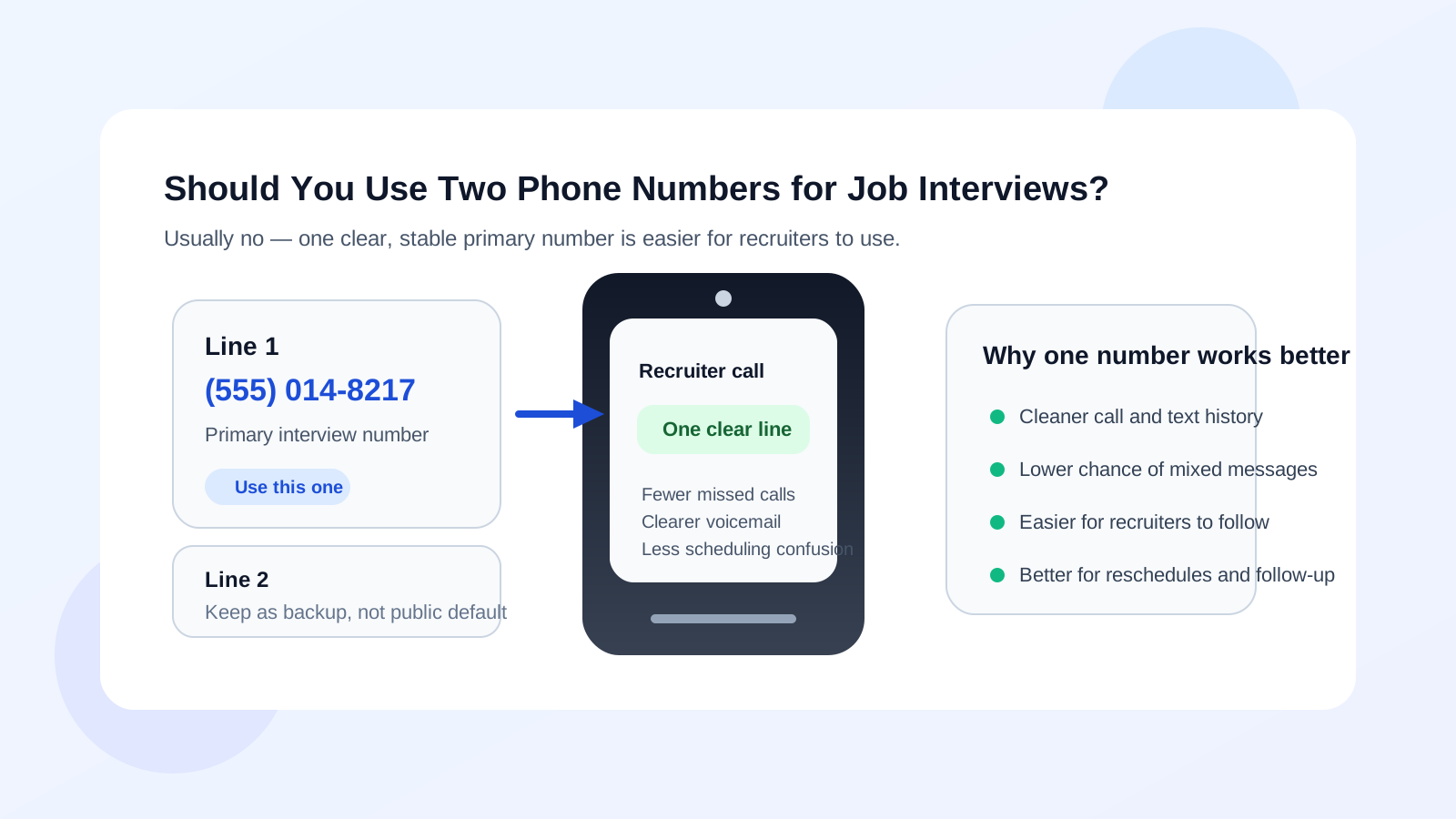
That answer is different from early-stage job applications, where privacy filtering matters more than speed. Once you are in interviews, the goal shifts. You are no longer trying to avoid every piece of outreach. You are trying to make it easy for real recruiters, coordinators, and hiring managers to reach you quickly and consistently.
That is why two phone numbers often create more friction than protection. You may think you are giving employers options, but in practice you may be giving them an extra chance to call the wrong line, text a number you do not check as often, or leave voicemail in the inbox you forgot to monitor that day.
Why people think about using two phone numbers
The idea is not irrational. Job seekers often want one number for privacy and another for reliability. Maybe you already use a separate line for job-board signups, a different line for family and friends, or a number that keeps recruiter traffic off your main phone. If you are talking with several employers at once, it can feel safer to spread things out.
The problem is that interviews are not a broad top-of-funnel activity anymore. They are a coordination activity. The more interview rounds you have, the more your communication starts to include moving parts like screening calls, technical interviews, panel reschedules, travel details, building instructions, video-call backup plans, and same-day changes. In that kind of workflow, simplicity usually wins.
Why listing two numbers often backfires
1. Recruiters usually choose one and ignore the other
Most recruiters will not maintain a careful strategy for your two numbers. They will use the first one they saw, the one already stored in the applicant tracking system, or the one copied into their notes. If you hoped they would use one line for calls and the other for texts, that is usually not how real communication works.
2. Calls, texts, and voicemail can get split
This is the biggest practical problem. One recruiter may call your first number and leave a voicemail. A coordinator may text the second number with a revised time. Another interviewer may call back the number attached to your résumé rather than the one in an email signature. Suddenly one interview process is scattered across two places, and you are the one responsible for catching every thread.
3. It can create avoidable confusion
Two numbers do not automatically look suspicious, but they do raise basic questions: which one is primary, which one should the recruiter save, and what happens if one goes unanswered? During an interview process, clarity helps. Hiring teams are not grading you on privacy cleverness. They just want a contact method that works.
4. It makes missed-call recovery harder
With one number, a missed call is simple. You check recent calls, voicemail, and texts in one place. With two numbers, you have to ask which line they used, whether voicemail landed on the right one, whether text sync is working, and whether you accidentally returned the call from the wrong number. That is small friction, but small friction matters when scheduling is time-sensitive.
5. It can make you look less organized than you are
This is not about being judged harshly for having two numbers. It is about reducing ambiguity. A lot of interview logistics already involve time zones, calendar links, and coordinator handoffs. Giving employers one clear number makes you look easier to work with, which is never a bad thing at the interview stage.
What works better than listing two numbers
If your real goal is privacy, you usually do not need two public phone numbers. You need one better phone-number strategy.
Use one dedicated interview number
If you do not want to use your everyday personal number, the best alternative is usually one separate line that you control for the full search. That gives you privacy, cleaner boundaries, and a way to retire the line later if it starts attracting spam. The important part is that employers still see one reliable primary number.
Use forwarding behind the scenes
If you really want a backup line, keep it in your own setup rather than on your résumé or interview correspondence. A second number can still be useful if it forwards into the one you actively monitor, stores voicemail in the same place, or exists purely as failover. The employer does not need to manage that complexity with you.
Pair the phone strategy with a clean email strategy
A lot of job seekers already do this on the inbox side. They may use a separate job-search address, an alias, or a privacy-focused workflow during applications so their main inbox does not become a permanent recruiting funnel. If you used Anonibox or another temporary-email approach earlier in your search, the interview-stage lesson is similar: by the time communication gets serious, one stable contact path is usually better than multiple public ones.
When a second number can make sense
There are a few cases where two numbers are understandable, but even then you should usually present one as clearly primary.
- You are traveling internationally: you may have one number that works locally and another that remains stable for voicemail or app-based calling.
- You are transitioning away from an old number: if one number is still on older applications, you may need both active temporarily while you move everything to one line.
- You had repeated delivery issues on the primary line: if a recruiter already struggled to reach you, offering an alternate number later in the process can be reasonable.
- You are coordinating unusual interview logistics: for example, a travel day or remote setup that makes one line more reliable than another at a specific moment.
Notice the pattern: these are exceptions, not the default. Even in these cases, you should not casually list two equal numbers and hope the other side figures it out. You should label the primary line clearly and explain the backup only when it is actually useful.
If you must share two numbers, do it carefully
Sometimes you may decide the second number is worth giving. If so, reduce the confusion as much as possible.
- Label the primary number first. Make it obvious which line should be used by default.
- Explain the second line briefly. For example, note that it is a backup only for travel or urgent same-day issues.
- Monitor both closely. If you share two numbers, you lose the right to treat one casually.
- Keep voicemail professional on both. A backup number is still part of your interview presence if you shared it.
- Do not mix personal and work-owned numbers. If one of the numbers belongs to your current employer, that is usually a bad trade.
In other words, if you create complexity, you are responsible for managing it well enough that the employer never feels it.
Common bad combinations
Personal number plus work number
This is one of the worst setups. Work phones can expose call timing, voicemail, synced contacts, or other signals that you do not want tied to an active job search. A work-controlled line should not be your interview backup unless you truly have no better option.
Stable number plus throwaway number
A disposable or lightly monitored line may sound useful for privacy, but it becomes a liability during interviews. If a text lands there, a voicemail expires, or you stop checking it for a day, you can miss something that mattered.
One number for calls and one for texts
This sounds tidy in theory and messy in practice. Recruiters will not always remember your preferred channel map, especially when several people inside one company are contacting you. A single number that handles both is much easier.
A simple decision rule
If you are asking whether to list two numbers publicly, use this rule: if one number can handle the full interview process reliably, list one number. Keep any extra complexity inside your own setup, not in the employer’s workflow.
You should also ask yourself:
- Which number do I actually answer fastest?
- Which number has the best voicemail and text reliability?
- Would I trust both numbers equally for a same-day interview change?
- Am I listing two numbers because it truly helps, or because I have not chosen a primary line yet?
If you cannot answer those questions confidently, that is usually a sign that one number is the better move.
Practical examples
Good setup: one separate job-search number that you check constantly, with professional voicemail and solid texting. That gives you privacy and clarity.
Also good: one personal number you trust, especially if you are only interviewing with a few legitimate employers and do not expect heavy outreach volume.
Risky setup: two public numbers on your résumé or email signature with no explanation. Recruiters pick one at random, messages split, and you create unnecessary friction.
Worst setup: a personal line plus a current employer’s phone, or a stable line plus an expiring throwaway line.
Final answer
Usually no: for job interviews, two phone numbers are more likely to create confusion than help. One stable, well-monitored number is usually the cleanest choice for recruiters, coordinators, and hiring managers.
If you want more privacy, the better move is not to list two equal numbers. It is to choose one dedicated interview number, keep any backup setup behind the scenes, and make sure the number you share is reliable for calls, texts, voicemail, and last-minute changes. That gives you the privacy benefits without making interview communication harder than it needs to be.