Usually no. A burner email is the wrong primary inbox for salary negotiations if it can expire, break the thread, or make you miss a compensation detail.
If you want privacy, use a separate long-term inbox or forwarding alias you control instead of a truly disposable mailbox. Salary negotiations need continuity more than they need disposability.
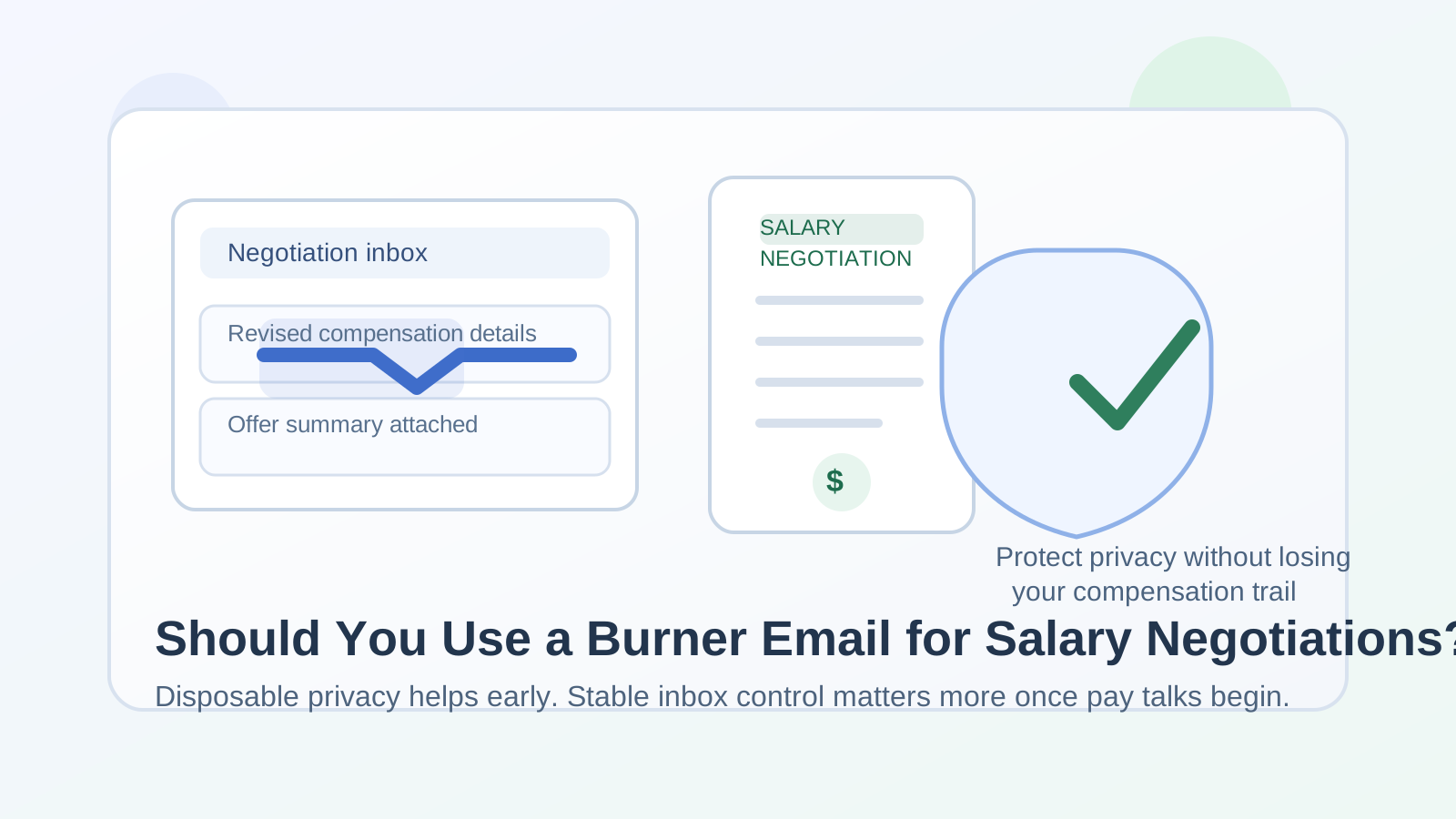
That answer sounds simple, but the phrase burner email means different things to different people. Some mean a truly disposable address they plan to abandon. Others mean a second account created only for job-search use. Those are not the same risk level, and the difference matters a lot once compensation talks begin.
At the negotiation stage, email is no longer just a verification channel. It becomes the written record for salary numbers, revised offers, bonus details, benefits explanations, deadlines, and next steps. That is why the safest choice is usually not a throwaway inbox. It is a stable inbox you own, can search later, and will still have access to after the negotiation is over.
Why people think about burner email in the first place
The instinct is reasonable. Job seekers often want to:
- keep recruiter traffic out of their main personal inbox
- avoid months of follow-up from companies they do not choose
- limit how widely their long-term email address spreads
- separate job-search activity from everyday life
- reduce spam after signing up for job boards, recruiting platforms, and career portals
Those are real benefits, and they are part of why privacy-first tools are useful earlier in a search. If you are still testing platforms, joining talent pools, or dealing with low-trust signups, a temporary address can be perfectly sensible. But salary negotiations are later-stage, higher-stakes communication. The decision changes because the downside of missing one message gets much bigger.
What counts as a burner email?
Before deciding whether to use one, separate the three most common meanings:
1. A true disposable inbox
This is the classic throwaway mailbox: quick to create, useful for one-off verification, and easy to abandon. It may expire, it may not be monitored closely, and it is not built for long-term recordkeeping.
2. A secondary account you keep long term
This is an email account you deliberately use for job searching, but you still control it, check it often, and plan to keep it active for months. People sometimes call this a burner, but in practice it behaves more like a dedicated professional inbox.
3. A forwarding alias backed by a real inbox
An alias gives you separation without losing continuity. Messages go through an address you can retire later, but the real record still lands in a mailbox you own and monitor every day.
When people ask whether they should use a burner email for salary negotiations, the answer depends heavily on which of those they mean. A true disposable inbox is usually a bad fit. A stable second inbox or alias can be a very good fit.
Why a true burner email is usually the wrong choice for salary negotiations
You need a reliable written record
Negotiations often include more than one number and more than one promise. You may get an initial range, then a revised base salary, then clarification on bonus timing, equity, relocation, signing incentives, start date, or remote-work terms. If the thread lives in a fragile inbox, you are increasing the chance that important details become harder to find later.
Negotiations can stretch over several days
Disposable inboxes are fine for one-time confirmation links. They are not ideal when the conversation may pause for a weekend, continue after an internal approval cycle, or split across recruiter and HR messages. A mailbox that feels convenient for an hour can become risky over a week.
Attachments and links matter
Compensation discussions often lead to benefits PDFs, offer summaries, scheduling links, e-signature requests, portal invites, and follow-up notes after a call. You do not want those trapped in an inbox you may stop checking or lose access to.
Deadlines are easy to miss
Employers sometimes ask for a response by a specific date, or they send a revised number and expect a reply before the next internal meeting. Missing that message can slow things down or make you look disorganized. That is not a risk worth taking just to keep a recruiter out of your long-term inbox.
It can create unnecessary friction
Most employers will not reject you for using an unusual email address, but late-stage communication works best when the setup feels calm and dependable. If an address looks random, inconsistent, or disposable, you are adding avoidable ambiguity during a stage that already requires trust and precision.
When privacy still matters during negotiations
Saying “usually no” does not mean privacy stops mattering. It still does. In fact, salary negotiations are exactly when you may want more control over where messages land. You might be dealing with a third-party recruiter, comparing multiple opportunities, or trying to keep compensation threads out of a crowded personal inbox.
The key is to choose controlled privacy, not fragile privacy.
A good negotiation inbox should be:
- stable enough to keep for the full hiring cycle
- easy to search later
- checked frequently
- separate enough to reduce clutter
- professional enough that it does not distract from the conversation
A true burner email usually fails at least two or three of those tests. A dedicated job-search inbox or alias usually passes all of them.
Better alternatives to a burner email
Use a separate long-term job-search inbox
This is often the best answer for privacy-conscious candidates. You still separate recruiter traffic from your everyday email, but you keep the thread in an account you actually control long term. That gives you the benefits people want from a burner without the biggest downside.
Use a forwarding alias
An alias can be even cleaner. It lets you give recruiters a distinct address while the real messages still arrive in your main organized mailbox. If the process ends and the address starts attracting spam later, you can retire the alias without losing the negotiation record.
Use folders, filters, or labels
Sometimes the problem is not privacy so much as chaos. A dedicated folder for each company, a salary-negotiation label, or a filter for recruiter messages can make a stable inbox feel much more controlled without introducing disposal risk.
Move off the disposable address before negotiations deepen
If you already used a temporary or burner-style address earlier, the practical move is not to panic. It is to switch at the right time. Once the discussion becomes real and compensation-specific, move the thread to a dependable inbox and keep everything there from that point forward.
A practical handoff plan if you started with a burner
- Create the stable inbox first. Do not wait until an offer letter is already on the way.
- Reply from the new address early. A short note explaining that you want to keep negotiation and offer paperwork in your preferred inbox is enough.
- Ask them to resend the most important details. Especially if numbers, attachments, or deadlines were already discussed.
- Save the key thread in one place. Use labels or folders so nothing gets buried.
- Stop switching addresses after that. Consistency matters more than having the perfect setup.
If you handle the switch cleanly, most recruiters will not care. They care that you respond, keep the thread organized, and do not lose important documents.
What about using Anonibox?
Anonibox makes the most sense earlier in the job-search funnel: low-trust signups, one-off registrations, job boards you are testing, or any stage where inbox protection matters more than long-term continuity. That is a real use case.
Salary negotiations are different. By the time you are discussing compensation, the better move is usually to graduate from a disposable workflow to a stable one. Anonibox can still help you protect your primary inbox at the top of the funnel, but the negotiation itself should usually live in an account or alias you can keep and search reliably.
Red flags where a privacy-first posture is still smart
There are cases where caution makes even more sense:
- the recruiter will not clearly identify the employer
- the compensation conversation started suspiciously early
- you are being pushed toward off-platform chats without a solid reason
- the role is vague, inconsistent, or clearly recycled from another listing
- you are asked for sensitive documents before the process feels legitimate
In those cases, do protect your identity and slow things down. But even then, once you decide the opportunity is real enough to continue, a stable separate inbox is usually safer than a disposable one. Privacy and continuity do not have to fight each other.
Quick checklist: should you use a burner email here?
- If it can expire: no.
- If you do not check it often: no.
- If it is really a stable second inbox you control: probably yes.
- If you need a full written record of pay details and deadlines: use a stable account or alias.
- If you are only protecting against long-term spam: choose a persistent job-search inbox, not a throwaway one.
Final answer
No, you should not usually use a true burner email for salary negotiations. Compensation discussions are too important to keep in a mailbox that may be temporary, lightly monitored, or hard to search when you need the exact details later.
If you want privacy, the better option is a separate long-term inbox or a forwarding alias you control. That gives you the separation people want from a burner email without risking missed salary numbers, attachments, or deadlines. In other words: protect your inbox, but do it with stability, not fragility.