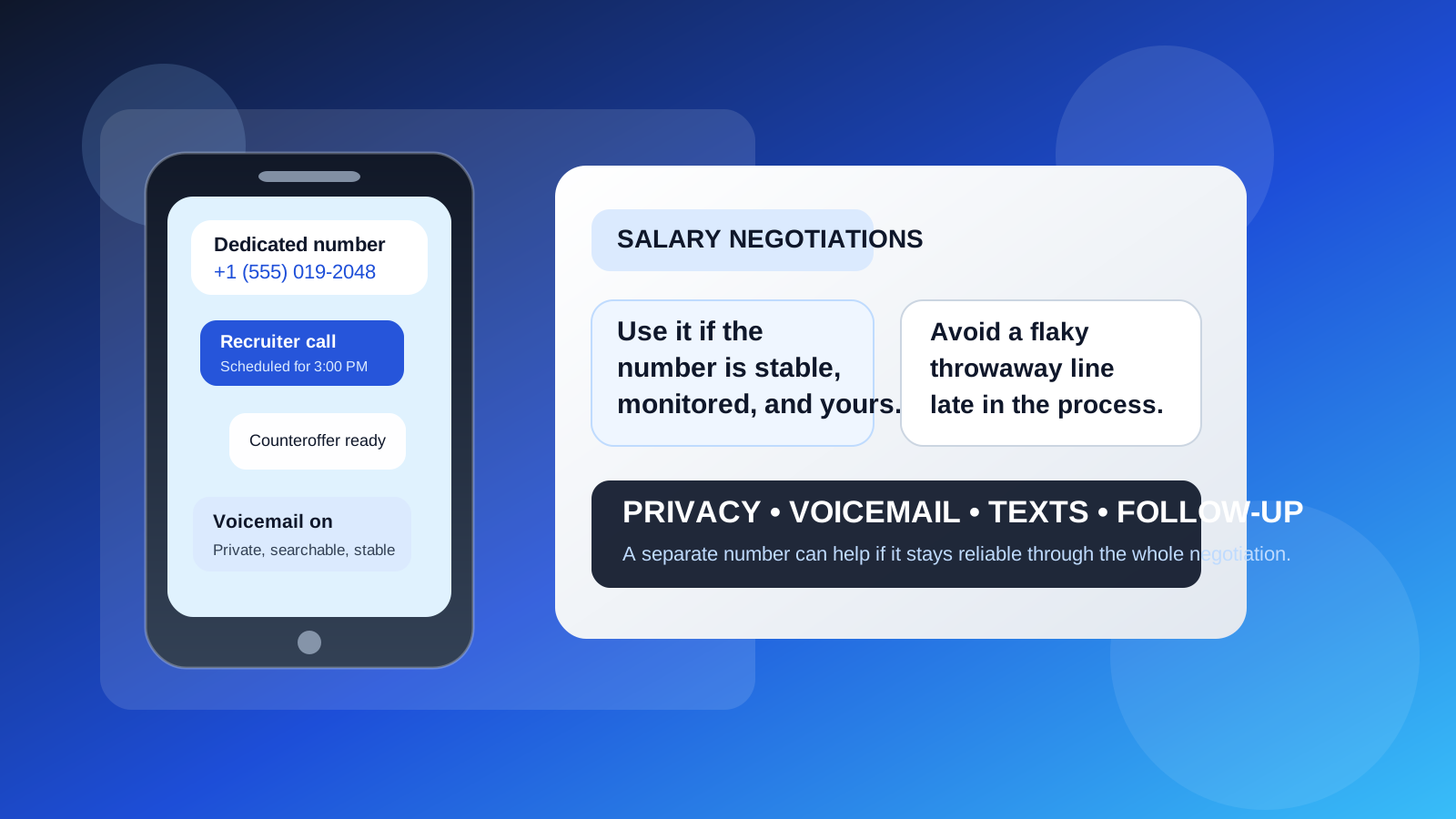
Yes, a virtual phone number can work well for salary negotiations if it is stable, monitored, and fully under your control. No, it should not be a flaky throwaway line you might lose while discussing compensation, deadlines, or revised offer terms.
If you want more privacy than your main personal number gives you, a dedicated virtual number is often a smarter choice than handing your primary line to every recruiter or hiring manager. The key is to treat it like a real communication channel, not a disposable shortcut.
Why people consider a virtual phone number for salary negotiations
By the time salary negotiations start, the hiring process feels different. You are no longer spraying applications across job boards or testing whether a recruiter is even worth answering. You are dealing with a live conversation about pay, benefits, timing, flexibility, equity, or other terms that can shape your next move. That makes privacy feel more important, but it also makes reliability more important.
A lot of job seekers want some separation at this stage for understandable reasons:
- They do not want recruiters or third-party agencies using their main personal number forever.
- They want to keep job-search activity separate from family, friends, and everyday calls.
- They are already using a separate inbox and want a matching phone setup.
- They have had spam calls, scam texts, or random follow-up from old applications before.
- They want more control over voicemail, call screening, and availability.
That is where a virtual number starts to make sense. It gives you a dedicated line for the negotiation without automatically exposing the number you use for everything else.
Short answer: use one if it is stable, not if it is disposable
The most important distinction is not virtual versus non-virtual. It is stable versus unstable.
A well-managed virtual number can be perfectly reasonable for salary negotiations. It can receive calls, texts, voicemail, and follow-up just like any other job-search contact line. But a low-quality number you barely check, might lose access to, or only opened for a few hours is a bad fit for compensation conversations.
Negotiations often involve short response windows, rescheduling, written summaries, and occasional pressure. You do not want to miss a recruiter callback because the app logged you out, the forwarding setup was confusing, or you forgot which temporary number you used.
When a virtual number is a good idea
A virtual number can be a smart choice when you want privacy without losing professionalism. It tends to work well in situations like these:
- You are working with outside recruiters: especially if you do not want your main number living in multiple databases.
- You are comparing several late-stage opportunities: a dedicated line keeps the process easier to track.
- You want controlled voicemail and call screening: that helps when unknown numbers start calling during work hours.
- You already use a separate email for job search activity: pairing a separate number with that workflow keeps the whole process cleaner.
- You expect text-based scheduling: many recruiters now confirm calls and send reminders by text.
If you are already using Anonibox or another separate-email workflow to keep negotiation messages out of your everyday inbox, a dedicated phone number is the natural companion. It creates one contained lane for the process instead of scattering it across your personal devices and accounts.
Why salary negotiations are different from early-stage applications
People sometimes make the mistake of treating salary negotiations like an earlier screening step. They are not the same. Earlier in a job search, a missed message can be annoying. During negotiations, a missed message can change timing, leverage, or clarity.
At this stage, you may receive:
- requests to schedule a compensation call,
- follow-up after a verbal offer,
- clarification questions about your expectations,
- deadline reminders,
- counteroffer discussions,
- updates after internal approval.
That means your number needs to feel boring in the best possible way. It should simply work. The more serious the conversation becomes, the less tolerance you have for anything fragile.
Benefits of using a virtual number well
1. Better privacy boundaries
A separate number limits how widely your main personal line spreads. That matters if you have dealt with recruiting spam before or you simply want more control over who can reach you later.
2. Cleaner call management
You can create a job-search voicemail, keep negotiation calls separate from everyday calls, and review messages without mixing them into your normal life.
3. Easier screening of unknown callers
Salary discussions often happen with numbers you do not recognize right away. A dedicated number makes it easier to answer or return those calls without wondering whether every unknown caller is connected to your current search.
4. A more organized record of the process
Even when most details still live in email, call logs and voicemail history can help you remember who called, when they followed up, and how quickly the process is moving.
When a virtual number is the wrong choice
A virtual number is a poor fit when it behaves more like a disposable experiment than a dependable contact method. Be cautious if:
- you rarely check the app or dashboard tied to the number,
- you are not confident it can reliably receive calls and texts,
- you do not plan to keep the number through the full hiring cycle,
- you are using a free or temporary line you might abandon quickly,
- the setup creates enough friction that you hesitate to answer or return calls.
If any of those describe your situation, your main number may actually be safer than a badly managed secondary one. Privacy is helpful, but missed communication is expensive during negotiations.
Virtual number versus burner number
These are not always the same thing, and the difference matters. A burner-style setup can be useful for low-trust situations, but many burner tools are designed for short-term isolation, not steady late-stage communication.
Salary negotiations usually call for something more durable:
- Burner or throwaway line: best for short-lived privacy, not ideal for a week or two of important follow-up.
- Stable virtual number: better for ongoing scheduling, voicemail, callbacks, and documented continuity.
If you want a privacy layer at this stage, choose the version you can keep, monitor, and trust for the whole conversation.
What a good salary-negotiation phone setup looks like
If you decide to use a virtual number, aim for a setup that feels professional and low-friction:
- Use a clear voicemail greeting with your name.
- Make sure call notifications are turned on and easy to notice.
- Confirm that texts arrive normally, not just calls.
- Keep the number active until the process is fully over.
- Save recruiter and hiring-manager names in your contacts once the conversation is real.
- Test the number before you rely on it.
That last point matters more than people think. Before you use the number in a real negotiation, call it, leave yourself a voicemail, and send a test text if the service supports texting. Do not assume it works the way you expect just because the dashboard looks fine.
Practical workflow: how to use a virtual number without creating new problems
1. Start with a dedicated line early enough
If you already sense a process is moving toward final rounds or compensation talks, it is better to switch before the most important messages arrive. Mid-negotiation is not the ideal time to remember that your current setup is messy.
2. Keep email and phone strategy aligned
Use a stable inbox for negotiation emails and a stable number for calls and texts. If you use a separate email address for privacy, make sure it is just as reliable as the phone line attached to the conversation.
3. Tell people the best channel clearly
If you prefer text for scheduling and email for detailed questions, that is fine. If you prefer phone calls only for planned conversations, that is also fine. Clear boundaries make you easier to work with.
4. Save important follow-up in writing
Salary details should not live only in voicemail or verbal conversation. If a recruiter calls with a number, follow up by email to confirm the details. A virtual number helps with access, but written confirmation still matters.
5. Do not disappear behind privacy tools
The goal is control, not distance. A dedicated number should make you more organized, not harder to reach. If the setup makes you look evasive or consistently slows down replies, fix the workflow.
Red flags and caution points
A separate number does not solve every problem. Keep your guard up if:
- someone wants to move the whole conversation to text immediately,
- the recruiter refuses to confirm details in writing,
- you receive vague or pushy calls from unknown agencies,
- the role changes every time they call,
- the process suddenly shifts to suspicious channels or asks for sensitive information.
A virtual number can reduce exposure to spam and nuisance follow-up, but it does not magically guarantee that every caller is legitimate. You still need the normal job-search habits: verify who is contacting you, keep written records, and slow down if anything feels off.
Should you switch back to your main number later?
Sometimes yes, but there is no rule that says you must. If the virtual number is working smoothly, there may be no reason to switch during negotiations or even through onboarding. The deciding factor is not whether the number is virtual. It is whether it remains reliable enough for the relationship you are building.
If you do want to move important long-term contacts to a primary line later, do it deliberately rather than halfway through a time-sensitive negotiation.
Final answer
Yes, a virtual phone number can be a smart choice for salary negotiations. It gives you better privacy, cleaner call handling, and more control over who gets your main personal number.
Just make sure it is a real working channel you can keep through the full process. For compensation talks, a stable dedicated number is helpful. A disposable or poorly monitored one is not. If you want privacy without losing professionalism, the best move is a virtual number that feels dependable enough to carry an important conversation from first callback to final terms.