Yes — an email alias can work well for employment verification if it forwards into one stable inbox you control and check regularly.
It is the wrong choice if the alias is temporary, hard to monitor, or tied to a forwarding setup you do not fully trust. Employment verification needs continuity more than cleverness.
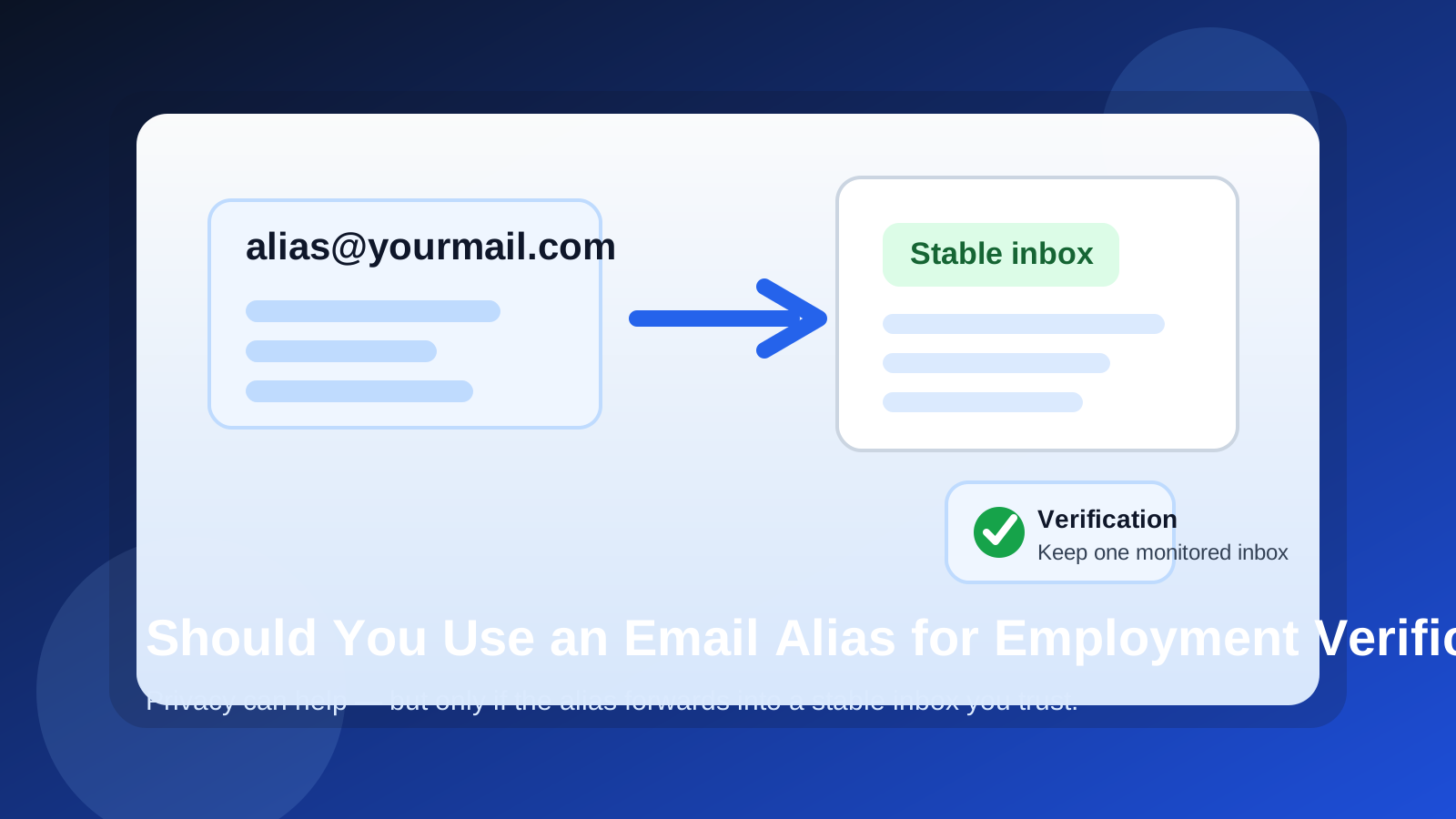
That is the real answer behind the question should you use an email alias for employment verification? In many cases, an alias is actually a smart middle ground. It gives you more privacy than handing out your oldest personal address everywhere, but it can still be dependable enough for HR teams, background-check vendors, payroll coordinators, and hiring managers — as long as every message ends up in one inbox you will still be watching weeks later.
The important distinction is that an alias is not the same thing as a throwaway inbox. A good alias is just another front door to a mailbox you already trust. A bad alias is one more moving part that can break at exactly the wrong moment.
Why employment verification is different from early job-search signups
Early in a job search, people often care most about noise. They want fewer recruiter blasts, fewer vendor emails, and less clutter from job boards or career-fair forms. That is where temporary addresses, separate job-search inboxes, and tools like Anonibox can be useful.
Employment verification is later and more serious. By then, the messages are not casual marketing or first-contact outreach. They may include consent forms, identity checks, clarification requests, start-date follow-ups, reminders to complete paperwork, or notices that a document is missing. The goal is no longer just privacy. The goal is privacy without breaking communication.
That is why an alias can be a better fit than a disposable inbox. It can keep the workflow organized without forcing you to gamble on a mailbox that may expire or go unchecked.
What an email alias actually does here
An email alias is usually a second address that forwards into your real inbox. To the sender, it looks like a normal email address. On your side, it lets you separate job-search traffic from your primary public identity without splitting your attention across multiple accounts.
For employment verification, that can be useful because it lets you:
- keep hiring-related messages easier to spot,
- avoid exposing your oldest personal address more widely than necessary,
- retire or filter the alias later if it starts attracting spam, and
- maintain one actual mailbox for search, archives, and replies.
The last point matters most. If the alias helps everything flow into one reliable inbox, it is probably helping. If it creates a second place to miss messages, it is probably hurting.
When an email alias is a good fit for employment verification
An alias is usually a solid choice when all of these are true:
- The alias forwards into one mailbox you already monitor. You are not relying on a half-tested chain of rules and forwarding hops.
- You can reply consistently. The sender should see clean, normal responses, not confusing “sent on behalf of” behavior or mismatched From addresses that look broken.
- The underlying inbox is long-term. Employment verification can stretch longer than expected. Your inbox should still be there when follow-up arrives.
- The alias looks professional enough. It does not need to be fancy, but it should feel like a normal contact address, not a joke or burner.
- You want separation without complexity. That is where aliases shine.
If that describes your setup, an alias can be one of the cleanest options available. It gives you privacy and organization without the fragility of a disposable inbox.
Why an alias can be better than your main personal address
Some people are happy to use their primary personal email for everything. That is fine if the address is stable, easy to search, and not already buried under years of noise. But many people want a little more control during a hiring process.
An alias can help because it creates a clear lane for messages related to verification, onboarding, and follow-up. If a screening company emails you, you know exactly why that message arrived. If payroll or HR writes with another request, it is easier to find. And if the alias later starts receiving unrelated outreach, you can filter or retire it without changing the mailbox that actually stores your important records.
That is the core benefit: not anonymity, but controlled exposure.
Why an alias can be better than a temporary email
A temporary inbox is attractive when you are testing a site, downloading something low-stakes, or avoiding immediate spam. Employment verification is not low-stakes. You may need to retrieve messages days or weeks later, resend forms, or confirm a thread of earlier instructions.
That is why a true temporary address is usually a poor fit here. An alias keeps the privacy logic of a separate address, but it sits on top of a real inbox with continuity. That makes it far more practical once the hiring process becomes more sensitive.
If you used a temporary inbox earlier in your search, employment verification is usually the point where you should graduate to a stable alias or a real dedicated mailbox.
When an email alias is a bad idea
An alias is not automatically the right answer. It becomes risky when the setup is fragile or confusing.
1. You barely monitor the destination inbox
If the alias forwards to a mailbox you forget to check, the privacy benefit does not matter. Verification messages are only useful if you actually see them in time.
2. Your forwarding setup is unreliable
Some aliases work flawlessly. Others quietly fail, land in spam, or break after a provider change. If you are not confident in the setup, employment verification is the wrong time to test it live.
3. The alias looks too disposable
An alias does not need to look corporate, but it should still feel like a real contact point. If it looks random, overly cryptic, or obviously throwaway, you may create unnecessary hesitation.
4. You are juggling too many contact paths
If you already have multiple email addresses, plus job-board messages, plus text-based follow-up, adding one more layer may create more confusion than protection. Simpler is usually better at this stage.
How to use an email alias safely for employment verification
Send a test message before you rely on it
Test both delivery and replies. Make sure mail reaches the destination inbox quickly, attachments arrive cleanly, and replies come back in a way that looks normal to the recipient.
Use one stable destination inbox
The whole point of an alias is that you do not need to check five places. Everything should land in one mailbox you trust.
Keep your display name consistent
If your application, interview scheduling, and verification emails all use the same name, you reduce friction. The alias can differ from your main address, but your identity should still look coherent.
Check spam and filters during active verification
Background-check and HR systems sometimes send automated messages that look less personal than a recruiter email. During an active verification window, check spam, promotions, and filter folders more often than usual.
Do not switch addresses mid-process unless you have to
If an alias is working, keep using it through the end of the verification flow. Changing addresses after forms are already in motion can create avoidable confusion.
What employers and screening vendors actually care about
Most employers do not care whether you use a main inbox, a dedicated job-search address, or an alias. They care whether the address works. They want messages to arrive, replies to come back, and identity details to stay consistent across the process.
That means the best employment-verification email setup is the one that is:
- stable enough to stay active through the whole process,
- monitored often enough that you do not miss deadlines,
- clear enough not to confuse the sender, and
- private enough to avoid unnecessary exposure.
A well-managed alias can check all four boxes.
Best alternatives if an alias feels too fragile
If you do not trust your alias setup, use one dedicated long-term inbox instead. A separate mailbox that you control directly is still a very good option for employment verification. In fact, it is often better than an alias if you want maximum simplicity.
Your main personal email can also work perfectly well if it is stable and easy to monitor. The worst option is usually not a mainstream inbox. It is a clever system you only half maintain.
Quick checklist before you use an alias
- Does the alias forward into one inbox I check every day?
- Have I tested sending and receiving recently?
- Will this setup still work next month if verification drags on?
- Does the alias look professional and easy to recognize?
- Would a dedicated mailbox be simpler?
If the answers are strong, an alias is probably fine. If several answers feel shaky, choose the simpler route.
So, should you use an email alias for employment verification?
Yes, often — as long as the alias points to one stable inbox you control and monitor closely. It can be an excellent way to keep employment-verification traffic organized without exposing your primary address more broadly than necessary.
Just do not treat an alias like a disposable shortcut. At the verification stage, reliability matters more than novelty. If the alias is stable, searchable, and easy to manage, it is a smart privacy-friendly choice. If it adds uncertainty, use one real inbox instead.