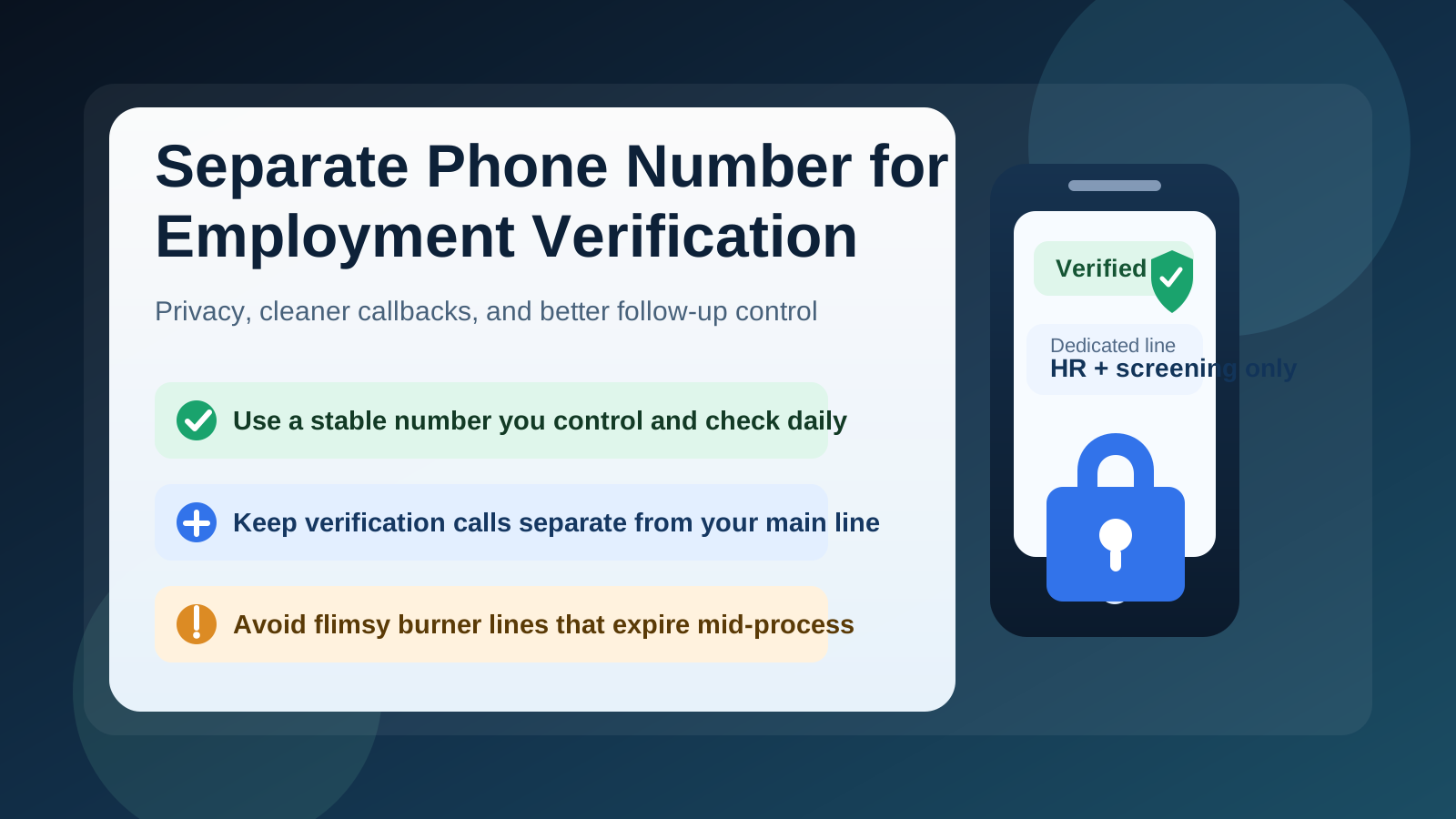
Usually yes — a separate phone number is often a smart choice for employment verification if you want privacy without sacrificing reachability. The key is to use a stable number you control and actually monitor, not a disposable line you might lose halfway through the process.
Employment verification is not the same as tossing an email into a random signup form. It can involve HR teams, recruiters, background-check vendors, payroll portals, missed-call callbacks, deadline reminders, and follow-up questions about dates, titles, or prior employers. That is exactly why your contact number matters more than people expect.
If you are deciding whether to use a separate phone number for employment verification, the short version is simple: for many people, it is the best middle ground. It gives you more privacy than your main personal number, more stability than a burner line, and more control than a current work number. It is not mandatory for everyone, but it is often a very practical setup.
Why employment verification is different from earlier job-search stages
Early in a job search, a lot of people focus on spam prevention. They want fewer recruiter calls, fewer form submissions tied to their main identity, and less inbox clutter. Employment verification is later-stage and higher-stakes. At this point, the conversation is not just about reducing noise. It is about making sure an employer or screening partner can reliably reach you if something needs clarification.
That can include:
- follow-up calls from HR or a background-check vendor
- questions about start dates, titles, or reporting lines
- requests to confirm whether a previous employer can be contacted
- coordination when a verification portal or email was missed
- last-minute outreach if a file cannot be cleared without your response
In other words, this is one of the few parts of the hiring process where you need both privacy and continuity. A separate phone number can work well because it gives you both, as long as you choose the right kind of number.
What a separate phone number actually solves
1. It keeps employment-verification calls away from your daily personal line
Your main personal number is usually connected to family, friends, healthcare, banking, delivery alerts, two-factor codes, and everything else in your life. Some people are fine using that same number for hiring. Others would rather keep screening calls, voicemail threads, and text updates in a separate lane. A dedicated number gives you cleaner boundaries.
2. It lowers the visibility risk if you are still employed
If you are job searching discreetly, a separate number is safer than a work line and often feels safer than mixing everything into the same personal stream you use around other people. A verification callback at the wrong moment is not always catastrophic, but many people would rather control where those calls land and how they appear.
3. It gives you a clearer paper trail
Employment verification often creates a small but important record: missed calls, voicemail, confirmation texts, callback attempts, and support follow-ups. A separate number keeps that trail easier to review. If someone says they tried to reach you, you know exactly where to check.
4. It makes call screening easier without going invisible
Screening vendors and employer contacts do not always call from a number you recognize. If every unknown call hits your main phone, it becomes tempting to ignore all of them. A separate job-search number gives you a better filter. When that number rings, you already know the call is likely related to hiring, verification, or follow-up.
When using a separate number makes the most sense
A separate phone number is especially helpful in a few common situations.
You are still working and want more privacy
If you do not want hiring-related calls showing up alongside your normal daily communication, a separate number gives you a layer of separation. That matters even more if you are handling verification while still employed somewhere else.
A third-party screening company is involved
Employment verification often goes through outside vendors. That means more than one person or system may touch your contact information. Using a separate number can limit how widely your main personal number gets circulated while still keeping you reachable.
You are juggling multiple late-stage processes
Some people reach verification stage with more than one employer around the same time. A dedicated number can keep those conversations organized instead of spreading them across personal calls, random voicemails, and multiple devices.
You already separate other job-search channels
If you already use a dedicated inbox for applications or sensitive hiring conversations, a separate phone number follows the same logic. For example, Anonibox makes sense for the earlier privacy-heavy parts of a search when you want to avoid long-term inbox clutter. Later, when employment verification requires more stability, a dedicated long-term phone number can provide the same kind of organization on the calling side.
When your normal personal number is probably fine
You do not need to overcomplicate this if the process is straightforward. Your regular personal number is often good enough when:
- you are dealing with one legitimate employer
- you are comfortable sharing your existing mobile number
- you already answer unknown calls reliably
- you do not expect much recruiter or vendor spillover later
If that describes you, using your everyday number is not automatically a mistake. A separate number is useful because it creates more control, not because your personal number is inherently wrong.
What kind of separate phone number works best?
The best separate phone number for employment verification is not the most secret option. It is the most dependable option.
Look for a number that is:
- stable: you can keep it active for the full hiring and onboarding timeline
- monitored: you check calls, voicemail, and texts regularly
- under your control: it is not tied to an employer device or account you might lose access to
- professional enough: the voicemail greeting and general setup sound normal and easy to trust
- easy to keep later if needed: verification can stretch longer than expected
For many people, that could mean a second SIM, a dedicated long-term virtual number, or another lawful secondary line that you plan to keep for a while. The specific tool matters less than the underlying idea: do not build an important verification step around a number that is flimsy, temporary, or hard to manage.
What to avoid
A truly disposable or short-lived number
A throwaway number may sound privacy-friendly, but employment verification is one of the worst times to become unreachable. If a screener calls back in a week and the number is gone, you have created a problem for yourself.
Your current work phone number
A work phone may feel convenient, but it usually creates more risk than benefit. You may not fully control the line, the voicemail, the device policy, or the long-term access. It is also the wrong place to route sensitive job-transition activity if you care about privacy.
A number you never check
A separate number only helps if you actually use it. If it becomes a parking lot for missed calls you never return, it is worse than just using your main phone well.
No voicemail setup
Many verification issues are solved by one missed call and one quick callback. If your dedicated number has a broken or generic voicemail setup, you make yourself look harder to reach than you really are.
A practical setup checklist
If you want to use a separate phone number for employment verification, keep the setup simple:
- Choose a stable number you expect to keep active beyond one week.
- Turn on voicemail and record a normal greeting with your name.
- Check it every day while verification is active.
- Keep text access enabled if the provider supports it, since some coordinators follow up by SMS.
- Save hiring contacts clearly so you can recognize callbacks quickly.
- Do not mix it with your work line or any employer-managed device unless you fully understand the trade-offs.
Should you use the same separate number for email and phone workflows?
You do not need a perfectly isolated digital bunker to handle employment verification well. But matching your communication setup can help. A dedicated phone number plus a stable hiring inbox can make the whole process easier to manage. The important part is choosing tools that fit the stage.
For example, disposable email is often useful during noisy top-of-funnel signups, but employment verification usually calls for a durable inbox instead. The same logic applies to phone numbers. A long-term separate number is often helpful. A short-lived burner is usually not.
Red flags to keep in mind
A separate number is a privacy tool, not a license to ignore warning signs. Slow down if a supposed employer or screening vendor:
- pushes you to share sensitive personal information by text
- cannot clearly explain who they are or what company they represent
- uses pressure tactics around urgent verification without normal context
- asks for unusual payments, gift cards, or account credentials
- switches between channels in a way that feels inconsistent or evasive
Good contact hygiene helps, but it does not replace basic scam awareness.
Final answer
Yes, usually. A separate phone number is often a smart choice for employment verification because it gives you more privacy and better organization without making you hard to reach. For many job seekers, it is the cleanest middle ground between exposing a main personal number everywhere and relying on a work line or disposable number that may fail when follow-up matters most.
If you use one, make sure it is stable, monitored, and fully under your control. That is what turns a second number from a clever idea into a genuinely useful part of a privacy-conscious job search.