Usually no — for employment verification, two phone numbers usually create more confusion than benefit, so one stable number you actually answer is almost always the better choice.
If you want more privacy, use one dedicated number you control rather than listing both a personal line and a backup, work, or temporary number.
Employment verification is one of those late-stage hiring steps where small contact mistakes can turn into real delays. HR teams, recruiters, and third-party screening vendors may need to confirm dates, titles, previous employers, or permission to contact someone. If they cannot tell which number you actually use, the process can get messier than it needs to be.
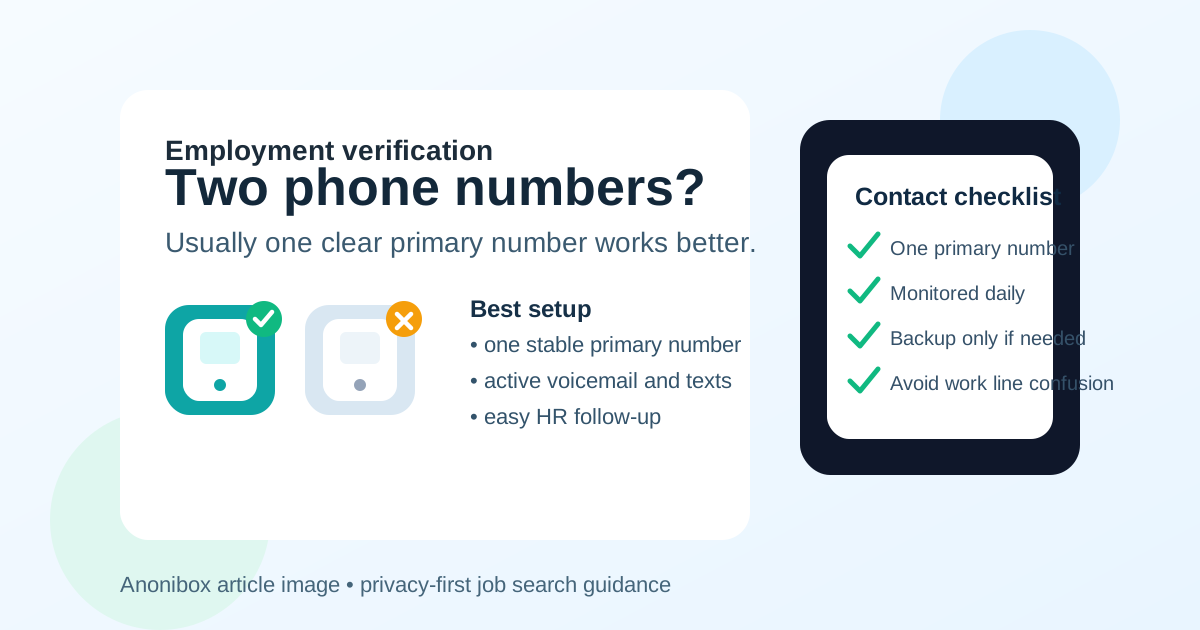
That is why the answer is different from early-stage job searching. During job-board signups or broad networking, people often think in terms of privacy and spam control first. Employment verification is more specific. At this stage, you need to be reachable, consistent, and easy to confirm. In most cases, that means one clear primary number is better than two numbers that create uncertainty.
Why people consider using two phone numbers
There are understandable reasons someone might think two numbers are safer. Maybe you want one line for privacy and another for everyday use. Maybe you have a personal mobile number plus a secondary number for job-search activity. Maybe you travel often, work in places with poor reception, or worry about missing an important callback.
Those concerns are real. The problem is that employment verification is not improved by extra moving parts unless you have a very specific reason. A verifier does not want to decide whether they should call your mobile, your backup line, your old number, your office number, or your app-based number. They want one dependable path.
Why two phone numbers can create problems during employment verification
1. It creates uncertainty about which number matters
If a form or recruiter sees two numbers, they may guess which one is primary instead of using the one you intended. One person may call the first number listed, another may call the second, and a third may text the one that cannot receive texts properly. That inconsistency can slow down a process that is usually supposed to be straightforward.
2. It increases the chance of missed messages
Two numbers only help if both are stable, monitored, and checked often. In practice, many people pay close attention to one line and only occasionally review the other. A missed voicemail on a backup number can turn into a delayed start date, a stalled background-screening file, or unnecessary follow-up from HR.
3. It can make you look less organized
Using two numbers is not inherently suspicious, but it can raise unnecessary questions. A hiring team might wonder whether one number is old, whether one is temporary, or whether they need to keep trying both. Most employers will not overthink it, but the clearer and simpler your contact setup is, the smoother this stage tends to go.
4. It can expose more of your personal footprint than you intended
If your goal is privacy, listing two numbers may do the opposite of what you want. Instead of limiting exposure, you are giving more than one contact path to recruiters, HR staff, screening vendors, and possibly external systems. If one of those numbers is your long-term personal line and the other is just a job-search line, you may be widening your exposure instead of narrowing it.
5. It can backfire if one number is temporary
Employment verification sometimes stretches longer than expected. A call can come a week later, or after an internal handoff, or from a screening vendor you were not expecting. If your second number is something short-lived, you may become harder to reach right when the process becomes more important.
When two phone numbers might make sense
There are a few cases where a second number can be reasonable, but they are more the exception than the rule.
- You have a true primary mobile number and a clearly labeled backup line because your reception is unreliable.
- You split domestic and international availability and need a better number for a specific time window.
- You use accessibility or forwarding tools that genuinely require an alternate contact path.
- A specific employer explicitly asks for a secondary number for emergency or scheduling reasons.
Even then, the rule should stay the same: make the primary number obvious. If you include a second number, label it clearly as backup only, and make sure both numbers reach you reliably. Two unlabeled numbers are where confusion starts.
What usually works better: one dedicated, stable number
If privacy is your real concern, the better solution is usually not two numbers. It is one dedicated number that you control and actually monitor. That gives you separation without confusion.
A dedicated number can help you:
- keep verification calls away from your everyday personal line
- avoid using a current work number tied to your employer
- track hiring-related voicemails and texts more cleanly
- shut down future spam more easily if the process becomes noisy later
This is the same general logic many privacy-conscious job seekers already use with email. If you use Anonibox or another separate workflow for earlier job-search signups, you are already thinking in terms of reducing unnecessary exposure. Employment verification needs a more durable version of that idea: one dependable number, not multiple numbers that create ambiguity.
Should you ever use your work number as the second number?
Usually not. A work number is rarely a good backup for employment verification. It may be monitored, tied to company systems, visible in ways you do not control, or simply inappropriate if you are job searching discreetly. It also creates a strange signal: if you are trying to move jobs, why make an employer or screening vendor rely on a number connected to your current employer?
If you want a backup, it should be something you own and control directly. In most cases, though, you are still better off choosing one strong primary number and sticking with it.
What if a form asks for two numbers?
If an application or verification form explicitly asks for both a primary and secondary number, then you can provide both — but do it intentionally.
- List the number you answer most reliably as primary.
- Only add a second number if it truly improves reachability.
- Do not use a temporary line that may disappear mid-process.
- Make sure voicemail is set up on both lines if both may receive calls.
- If one line should not receive texts, do not assume the verifier will know that.
In other words, two numbers are acceptable when the system specifically supports a primary/secondary structure. They are less helpful when you are adding them informally and hoping the other side interprets them correctly.
Best practices if you want privacy without missing follow-up
Choose one number for the whole verification window
Do not switch numbers halfway through unless you absolutely have to. Consistency matters more than cleverness here.
Use a professional voicemail greeting
A plain greeting with your name is enough. If a verifier misses you, they should be able to leave a message without wondering whether they reached the right person.
Check missed calls and texts daily
Verification follow-up is often time-sensitive. If you use a separate line, treat it like an active workstream until the process is done.
Keep your contact details aligned across channels
If your resume, application record, and verification forms all show different numbers, you make identity matching harder than necessary. That does not mean every document must list a number, but the number you do provide should stay consistent.
Do not over-share
Providing one clear number is enough. You do not need to offer every possible way to reach you just to look cooperative.
Red flags to watch for
A question about phone numbers can also be a good reminder to stay alert. Slow down if a supposed employer or screening partner:
- pushes you to move the conversation to random messaging apps immediately
- asks for sensitive information over text without clear verification
- cannot explain which company they represent or why they are calling
- uses urgency to pressure you into sharing more than basic contact details
- keeps changing numbers or channels in a way that feels inconsistent
One stable number helps you stay organized, but it does not replace basic scam awareness. If the process feels off, verify the company independently before giving more information.
A simple decision rule
If you are unsure, use this rule: one well-managed number beats two loosely managed numbers. Employment verification is about clarity, continuity, and quick resolution. Most of the time, the safest practical choice is one stable number that you control, answer, and trust for the full timeline.
If you need privacy, make that one number a dedicated hiring line rather than multiplying contact paths. If a form truly requires a backup number, provide one only if it is real, monitored, and clearly secondary.
Final answer
Usually no. For employment verification, two phone numbers usually create more confusion than benefit. One stable number you actually answer is the better default because it reduces missed calls, avoids mixed signals, and keeps the process easier for everyone involved.
If privacy matters, the smarter move is not to list two numbers. It is to choose one dedicated number you control, keep it active for the whole verification process, and use it consistently. That gives you better boundaries without making yourself harder to reach when the follow-up really matters.