Usually yes — an email alias can be a smart choice for reference checks if it forwards reliably to an inbox you control and you can reply without confusion. It gives you privacy and cleaner organization without the instability of a throwaway inbox, which matters because reference checks often happen late in the hiring process and can move quickly.
The important catch is reliability. If the alias is hard to reply from, expires too soon, or makes your messages look strange, it can create friction at exactly the wrong moment. For reference checks, the best setup is a stable alias that points to a professional inbox you monitor closely, not a disposable address you might lose or forget.
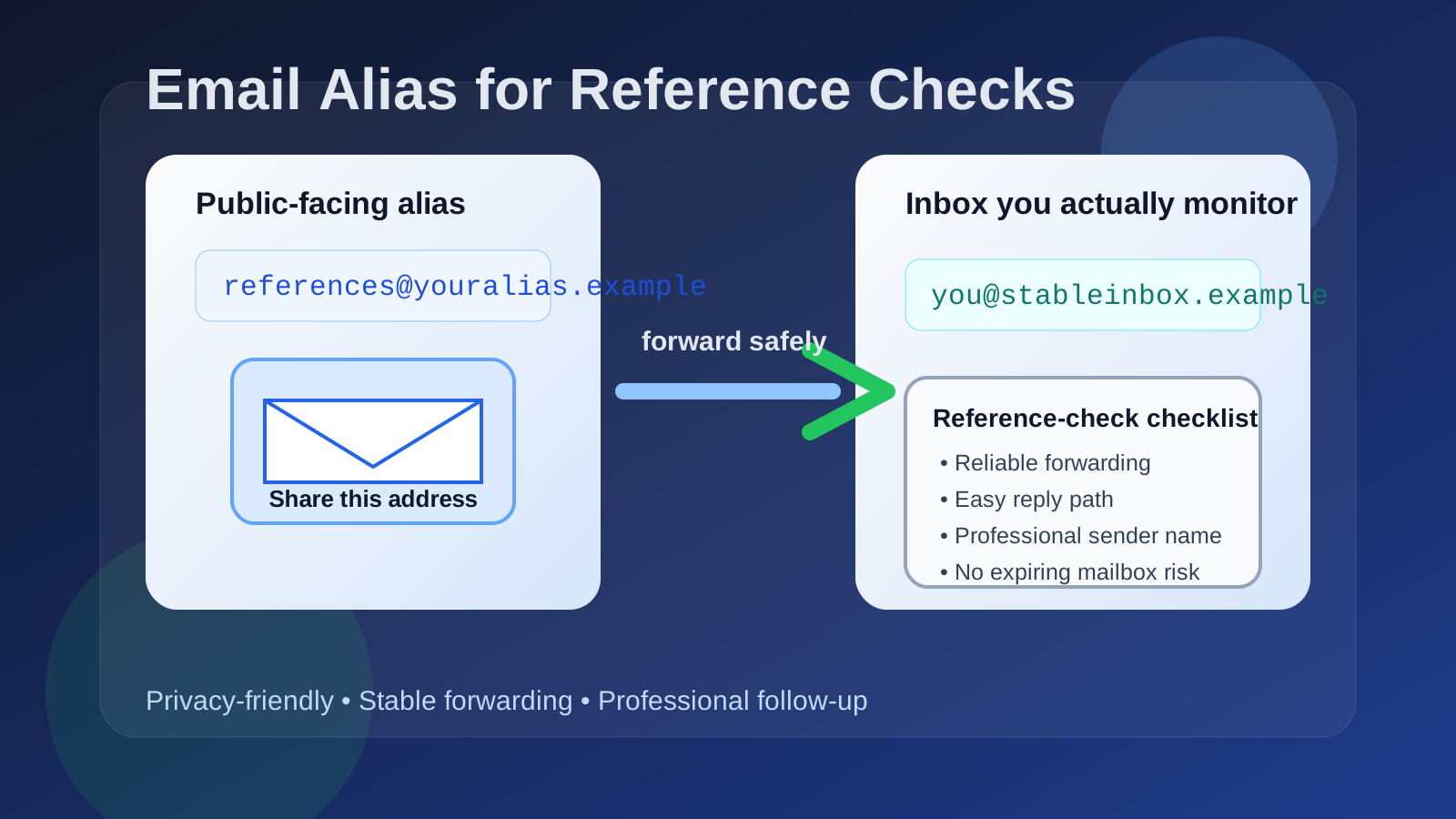
Why reference checks are different from early job-search signups
Reference checks usually happen near the serious end of the hiring process. At that stage, an employer may already be narrowing finalists, confirming work history, or using a third-party system to collect forms, reference details, or quick approvals. That means timing matters more than it does when you are casually browsing jobs or testing a recruiter’s interest.
Because the stakes are higher, your contact method has to do two things at once: protect your privacy and stay dependable. That is why the answer to Should You Use an Email Alias for Reference Checks? is not the same as the answer to using a temporary inbox for low-stakes job-board signups. An alias can be excellent here, but only if it behaves like a stable contact layer rather than a disappearing one.
What an email alias actually is
An email alias is not always a separate mailbox. In many setups, it is simply another address that forwards to your real inbox or sends through the same account under a different address. For example, you might have one main inbox but use a dedicated alias just for job-search activity.
That distinction matters. A good alias can give you separation without forcing you to manage yet another mailbox. It can also make filtering easier, help you spot who shared your address, and keep your primary personal email out of more databases than necessary.
For reference checks, that middle ground is often ideal. You get more control than using your main address everywhere, but more stability than relying on a fully temporary inbox that could expire before the hiring team or reference-check vendor is finished.
When using an email alias for reference checks makes sense
1. You want privacy without looking unreachable
Many people do not want to hand out the same personal email address to every employer, recruiter, and third-party screening platform they encounter. That is reasonable. A dedicated alias lets you limit exposure while still looking organized and professional.
If the alias forwards to an inbox you check often, you stay reachable without broadcasting your primary address more widely than necessary. That can reduce long-tail spam and make it easier to spot which hiring process is generating follow-up.
2. You want cleaner job-search organization
Reference checks can trigger a surprising number of emails: scheduling notes, portal invitations, reminder messages, identity-verification instructions, and occasional follow-up from employers or screening vendors. Keeping that traffic on a dedicated alias helps you separate late-stage hiring messages from everything else in your life.
This is especially helpful if you are interviewing with more than one company or if your personal inbox is already busy. A neat job-search alias reduces the odds that an important message gets buried under receipts, newsletters, or unrelated personal mail.
3. You want a safer alternative to a temporary inbox
A temporary email tool can be useful in earlier stages when you want to test a signup or protect yourself from obvious spam. But reference checks are usually too important for an expiring mailbox. An alias is often the better privacy-first compromise because it protects your main address without risking sudden loss of access.
That is where the distinction matters most: a temporary inbox is good for short-term exposure control, while an alias is better when you need continuity. If you have used Anonibox or a similar workflow earlier in the job search, reference checks are often the point where it makes sense to move to a stable alias or a dedicated long-term inbox.
When an email alias is a bad idea
1. The alias is difficult to reply from
Some aliases are fine for receiving messages but awkward for sending them. If a hiring team emails the alias and your reply comes back from a totally different address, that can create confusion. It is not always a deal-breaker, but it is unnecessary friction when the process is already time-sensitive.
Before you use an alias for reference checks, make sure replies are simple and predictable. If your setup makes you hunt through settings every time you answer, use something more straightforward.
2. The alias might disappear
Reference checks do not always finish in one day. Employers pause, references answer slowly, third-party vendors send reminders, and final approval can stretch longer than expected. If your alias depends on a short-term service or a domain/account you may not keep, it is the wrong tool for this stage.
Late-stage hiring communication should be boringly reliable. If there is any real chance the address will stop working, choose a more permanent option.
3. The alias looks too disposable or confusing
A professional-looking alias is usually fine. An awkward or suspicious-looking one is less helpful. If the address feels random, overly anonymous, or obviously temporary, it may cause hesitation when an employer or screening vendor reviews it.
You do not need to overthink branding, but you do want clarity. An address that looks normal and readable tends to work better than one that signals “throwaway account.”
Best practices for using an email alias for reference checks
Choose a stable destination inbox
The alias should forward to an inbox you control long term and actually monitor. If you are going to miss the message anyway, the alias did not solve the real problem.
Use a professional alias name
Keep it simple and boring. A variation of your name is usually better than a joke, a nickname, or a privacy gimmick. Reference checks are not the place to get clever.
Test the full workflow first
Send yourself a message to the alias. Then reply. Then confirm the reply path is clean, readable, and easy. If a screening vendor sends a portal link or a time-sensitive form, you do not want to discover technical quirks in the middle of the process.
Keep one alias for one search cycle
If you create a new alias for every tiny interaction, you may overcomplicate your own system. A better approach is one stable alias for your broader job search or one alias per active campaign if you have a clear reason to separate them.
Keep your references informed
Your references do not necessarily need to know all the technical details, but they should know which name and email address the employer may use. That reduces confusion if they are checking for a message from a screening vendor or hiring manager.
Email alias vs separate inbox vs temporary email
Email alias
Best when you want privacy, filtering, and a cleaner contact layer without managing another full mailbox. Strong option for reference checks if it is stable and reply-friendly.
Separate inbox
Best when you want maximum clarity and do not mind managing a dedicated mailbox. Also an excellent option for reference checks, especially if you prefer simple, direct send-and-receive behavior.
Temporary email
Best for early-stage privacy and low-trust signups, not for the serious end of a hiring process. Riskier for reference checks because timing and continuity matter more than they do at earlier stages.
In practice, an alias and a separate inbox are both solid options. The better choice depends on how comfortable you are with your setup. If the alias works smoothly, it is often the more efficient solution. If it feels complicated, a dedicated inbox may be safer.
Common risks to watch for
- Missed forwarding: if forwarding breaks, you may never see a portal invitation or follow-up reminder.
- Reply mismatch: if your response comes from an unrelated address, the thread may get confusing.
- Spam filtering surprises: screening emails sometimes land in spam or promotions, especially when automated portals are involved.
- Over-anonymizing: privacy matters, but late-stage hiring still requires a communication method that feels stable and real.
These are manageable risks. The point is not to avoid aliases entirely. It is to use them intentionally and test them before you depend on them.
A practical setup that works well
For most job seekers, the safest practical setup is simple: use a professional alias that forwards to a stable personal or job-search inbox, monitor that inbox closely, and make sure replies either come from the same alias or clearly from the address you want tied to the conversation.
If you are still early in the search and mainly trying to reduce exposure, a privacy tool like Anonibox can help you avoid stuffing your main inbox with low-value follow-up. But once an employer is actually checking references, move to the contact method you trust most to stay live, organized, and easy to reply from. Privacy is important, but missed messages cost more at this stage than a little extra inbox noise.
Quick checklist before you use an alias for reference checks
- Does the alias forward reliably to an inbox you monitor?
- Can you reply cleanly without confusing the recipient?
- Will the alias still work for the full hiring timeline?
- Does the address look professional and readable?
- Have you tested it before sharing it with an employer or screening vendor?
If the answer to those questions is yes, an alias is usually a solid option.
Final answer
So, should you use an email alias for reference checks? Usually yes — provided the alias is stable, professional, and easy to use. It can give you better privacy and cleaner organization than your main personal inbox, while still being much more dependable than a temporary address.
The goal is not to look hidden. The goal is to stay in control. A good alias lets you do exactly that: protect your primary inbox, keep hiring communication tidy, and remain easy to reach during one of the most important steps in the job-search process.