Yes, you can use SimpleLogin for employment verification if the alias forwards to a stable inbox you control and you keep it active long enough to catch every follow-up. It is a smart privacy layer when you want separation, but it is the wrong tool if you might disable the alias early, miss forwarded mail, or need a long-term address that feels permanent to HR and third-party screeners.
Employment verification is late-stage, document-heavy, and time-sensitive, so reliability matters more than novelty. A SimpleLogin alias can reduce inbox exposure and spam, but only if you treat it like a durable forwarding address rather than a throwaway experiment.
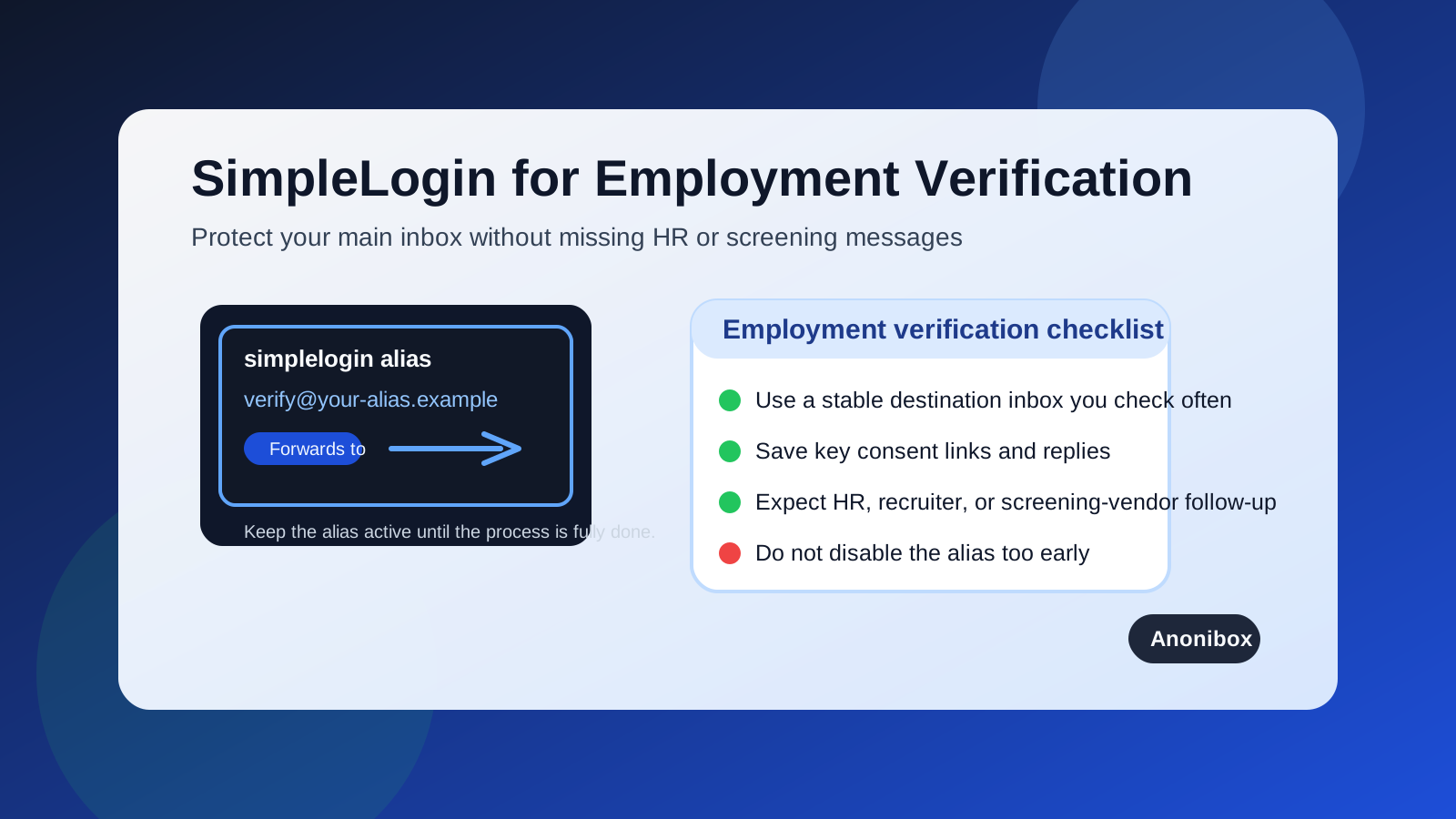
Why this question matters during employment verification
Employment verification usually happens after you have already invested real time in a role. At that point, the process often involves an employer, an HR team, a recruiter, or a background-screening vendor confirming dates, titles, salary history where lawful, or authorization details. Even if the messages themselves are simple, they can be sensitive. They also tend to arrive on a deadline.
That changes the risk calculation. Early in a job search, a temporary or alias-based address is mostly about reducing spam and keeping your main inbox clean. During employment verification, you also have to think about continuity. If a verifier follows up three days later, asks you to sign a consent form, or needs clarification on an employment date, you do not want the message disappearing into an alias you forgot about.
Short answer: usually yes, but only if you value reliability over cleverness
SimpleLogin can work well for employment verification when you use it as a forwarding layer into a real mailbox you monitor closely. That gives you privacy benefits without forcing the sender to learn your main address.
Where people get into trouble is treating an alias like a disposable inbox. Employment verification is not the best place for an address you may rotate, disable, or stop checking. If you use SimpleLogin here, it needs to behave like a stable communication channel from the sender’s point of view.
What SimpleLogin helps with
1. It keeps your primary address less exposed
Verification requests can involve multiple parties: the employer, a recruiter, a screening vendor, and sometimes an automated portal. A SimpleLogin alias lets you hand out a unique address without adding another public trail pointing straight to your main mailbox.
2. It makes hiring-related messages easier to separate
One alias for one employer or one verification process can make your inbox easier to manage. Instead of mixing job-search follow-ups with personal email, receipts, newsletters, and everything else, you get a clean lane for one sensitive workflow.
3. It can reduce long-term spam and list creep
Not every hiring workflow ends cleanly. Sometimes a recruiter keeps your information. Sometimes a third-party vendor sends future notices you did not expect. With a SimpleLogin alias, you have more control if that address starts attracting noise later.
Where SimpleLogin can create friction
Alias stability matters more than usual
If you disable, rename, or stop watching the alias before the verification process is truly over, you can miss the one message that matters. That is the biggest practical risk. Employment verification is often quiet until it is suddenly urgent.
Reply behavior needs to be understood in advance
Some people assume that any alias setup is automatically seamless for back-and-forth communication. In practice, you should know exactly how your forwarding and reply workflow works before using it for something time-sensitive. If the initial message is easy to receive but replying feels confusing, you may create avoidable friction with HR or a verifier.
It can look unusual if the rest of your process uses a different identity
If you applied from one address, interviewed from another, and suddenly answer verification emails from a third identity, you may create unnecessary confusion. That does not mean an alias is wrong. It means consistency matters. The contact path should still make sense to the people handling your case.
When SimpleLogin is a good fit for employment verification
- You already use a stable personal mailbox as the destination inbox behind the alias.
- You want a layer of privacy without relying on a short-lived disposable address.
- You are comfortable keeping the alias active until the role is finalized and any post-offer paperwork is done.
- You want to separate one employer’s verification traffic from the rest of your job search.
- You have already tested the alias workflow and know you can receive and respond reliably.
In those cases, SimpleLogin is less like a burner address and more like a privacy-forward routing tool. That can be a perfectly reasonable choice.
When a normal long-term email address is probably better
- You are near the finish line and want the lowest-friction communication path possible.
- You expect document-heavy exchanges, repeated follow-ups, or several weeks of back-and-forth.
- You are worried you will forget which alias points where.
- You are already using multiple layers such as a separate phone number, a separate browser profile, and a job-search-only inbox, and another layer would just add confusion.
- You need a mailbox that will still feel obviously yours months later if a payroll or HR question resurfaces.
Sometimes the cleanest solution is not the most private-looking one. It is the one that keeps the process simple and dependable.
Best practices if you decide to use SimpleLogin
Use one alias per employer or verifier
This makes tracking easier and avoids mixing multiple late-stage processes together. If one company’s verification vendor emails you, you immediately know which employer the message belongs to.
Forward to an inbox you already trust
The alias should point to a mailbox you check throughout the day. Employment verification is not a good use case for an inbox you only glance at occasionally.
Save important emails outside the alias flow
Download or archive anything that matters: consent forms, instructions, case numbers, and confirmation messages. If you ever change alias settings later, you still have the important records.
Keep the alias active until everything is fully closed
Do not turn it off just because you signed an offer. Verification delays, payroll setup questions, and follow-up requests can arrive after you think the process is done.
Stay consistent with the rest of your job-search identity
If possible, make your communication flow feel coherent. If you used one address for applications and another for sensitive verification traffic, be prepared to explain that briefly and clearly if someone asks.
How this differs from using a temporary email
This is where the distinction really matters. A forwarding alias such as SimpleLogin can be suitable for employment verification because it can remain stable while shielding your main address. A truly disposable inbox is often a worse fit because you may lose access or forget about it before the workflow is over.
That is also where Anonibox fits naturally. If you want to protect your real inbox during earlier-stage signups, cold recruiter outreach, or low-trust job-board experiments, a temporary address can be useful. But by the time you reach employment verification, you usually want something more durable than a throwaway inbox. Privacy still matters, just not at the cost of reliability.
Red flags to watch for regardless of which email you use
- The sender cannot explain which employer or role the verification relates to.
- You are pushed to hand over sensitive identity documents through a suspicious link.
- The message creates urgency without giving you a credible company domain, case number, or clear explanation.
- You are asked for payment to complete a verification step.
- The workflow keeps shifting between unrelated email addresses, messaging apps, and informal channels.
An alias can help with privacy, but it does not replace basic caution. Always verify the sender and the workflow itself.
Quick checklist before you use SimpleLogin for employment verification
- Will the alias stay active for the full verification timeline?
- Does it forward to an inbox you check often?
- Have you already tested that you can receive and reply without confusion?
- Will using the alias make the employer’s communication path clearer or more complicated?
- Would a dedicated long-term job-search mailbox be a better fit for this stage?
Final answer
Yes, SimpleLogin can be a good choice for employment verification, but only when you use it as a stable forwarding layer rather than a disposable trick. The privacy benefit is real: you reduce exposure of your main address, keep verification traffic organized, and preserve more control if the process turns noisy later.
The catch is that employment verification rewards reliability. If there is any chance you will miss replies, shut the alias off too early, or confuse yourself with too many moving parts, use a straightforward long-term mailbox instead. The best setup is the one that keeps you reachable, organized, and in control from the first verification email to the final confirmation.