Yes—SimpleLogin can work for background checks if the alias stays active, forwarding is dependable, and you monitor the destination inbox closely.
It is usually safer than a throwaway inbox, but it is not the best choice if the process is time-sensitive, your reply workflow is shaky, or you want the fewest moving parts possible.
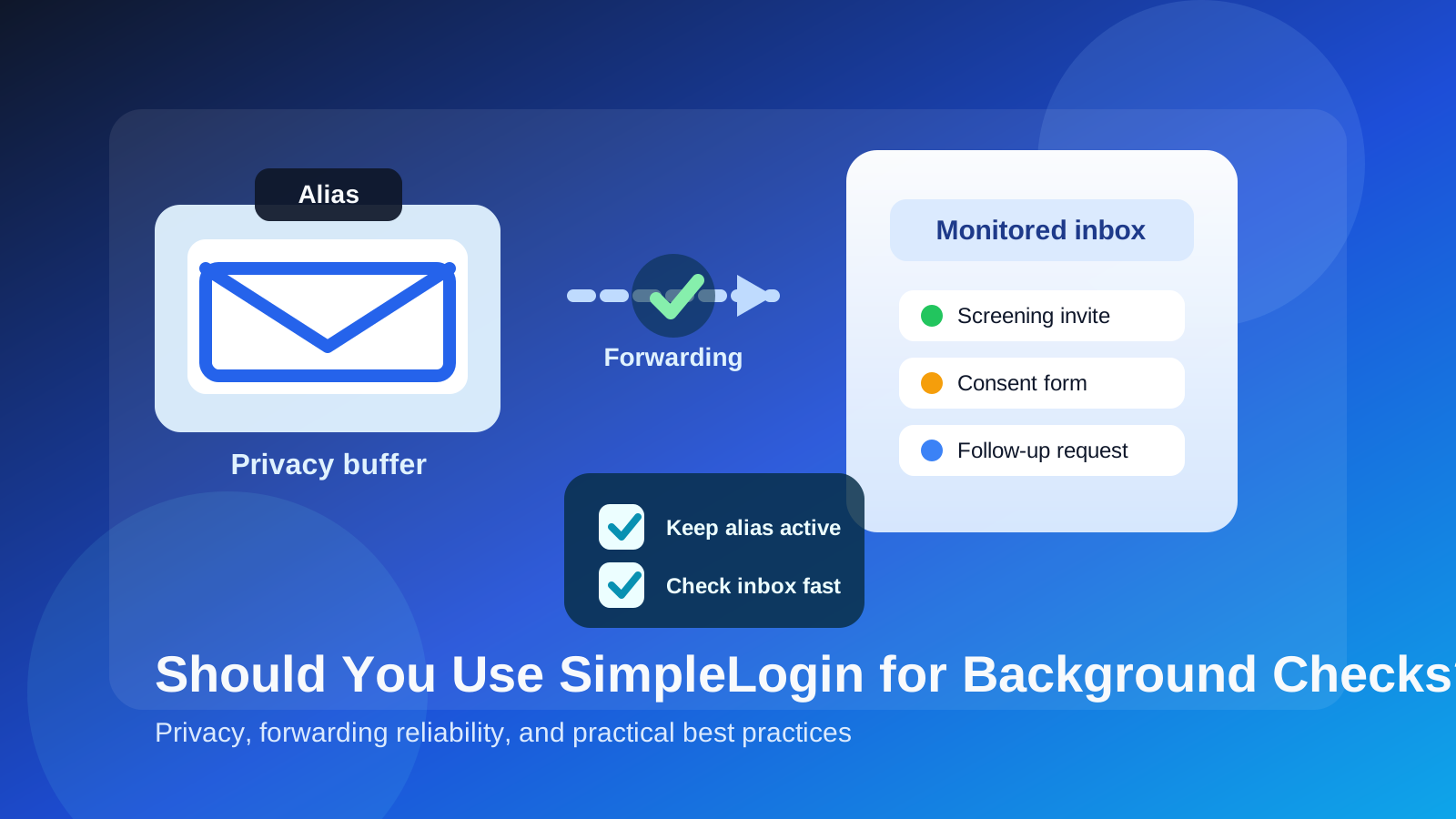
Background checks are one of the moments in a job search where privacy and reliability pull in opposite directions. You may not want every employer, recruiter, or screening vendor to have your main long-term email address, especially if you have been applying widely. At the same time, background checks are rarely casual. They often involve consent forms, identity questions, reminders, portal links, and follow-up emails that can delay your start date if you miss them.
That is why SimpleLogin sits in an interesting middle ground. It is more stable than a temporary inbox because messages forward into a mailbox you already control. But it still adds an extra layer between the sender and your real inbox, and extra layers only help when they are well managed. If you use it intentionally, it can be a smart privacy buffer. If you use it carelessly, it can add confusion right when the process matters most.
What makes background checks different from earlier job-search emails?
People often use the same contact strategy for everything from job boards to interview scheduling to final paperwork. In practice, those stages are not equal.
- Early-stage applications are often wide, noisy, and uncertain. Privacy filters help a lot there.
- Late-stage background checks are narrower, more legitimate, and more time-sensitive. Reliability matters more.
A background check email may include a screening link that expires, a request to confirm dates of employment, a consent packet, or a message from a third-party vendor that the recruiter expects you to answer quickly. That is not the same as signing up for a newsletter, downloading a hiring guide, or testing whether a recruiter ever writes back. The stakes are higher, so the tolerance for missed messages is lower.
Why SimpleLogin can be a good fit
SimpleLogin appeals to privacy-conscious job seekers because it is not a public disposable inbox and it is not your permanent personal address either. It gives you a forwarding alias that you control.
That can be useful for background checks for a few reasons:
- You limit exposure of your main inbox. If the screening vendor, recruiter, or employer keeps your contact information longer than you want, your primary address is not what you shared directly.
- You get better organization. A dedicated alias makes it easier to spot which employer or screening process a message belongs to.
- You keep continuity. Unlike a fully disposable mailbox, a forwarding alias can stay active as long as you need it.
- You can control the alias later. If the process ends and follow-up mail keeps arriving, you have cleaner options for filtering or disabling that route.
Those are real benefits. For someone who already uses alias-based privacy tools confidently, they may be enough to justify SimpleLogin during a background check.
Where SimpleLogin can create friction
The problem is not that SimpleLogin is unreliable by definition. The problem is that background checks punish small mistakes.
1. You still depend on the destination inbox
The alias is only the front door. The real system is the inbox behind it. If that destination mailbox is cluttered, poorly filtered, rarely checked, or already overloaded, SimpleLogin does not fix the underlying issue. It only gives it a cleaner label.
2. Reply behavior needs to be familiar
Many people are comfortable receiving forwarded mail but less confident about replying through an alias or keeping the thread consistent. If you have not tested that workflow, a live background check is not the ideal time to experiment.
3. Timelines can get tighter than expected
You may think the process will be one invitation email and one consent form, then discover there are portal reminders, resend requests, ID clarifications, or recruiter follow-ups. The more moving parts appear, the more valuable a simple direct inbox becomes.
4. Mid-process identity changes can confuse people
If you applied with one address, interviewed with another, and now introduce a third, some employers will not care. Others may need a moment to confirm that everything still belongs to the same candidate. That is not a disaster, but it is still friction you should create only when the privacy benefit is worth it.
When using SimpleLogin for background checks makes sense
SimpleLogin is a strong option when most of the following are true:
- You already use SimpleLogin and understand exactly how your aliases behave.
- You plan to keep the alias active for the full screening timeline, not just the first message.
- The destination inbox is stable, monitored on mobile and desktop, and checked several times a day.
- You want to compartmentalize a real hiring process without exposing your long-term primary address.
- You are comfortable switching to a direct address later if the process becomes more complex.
In other words, SimpleLogin works best when it is part of an intentional system, not a last-minute privacy trick.
When a dedicated direct inbox is the better choice
Sometimes the smartest move is to be boring.
A dedicated job-search inbox or screening inbox is often better than SimpleLogin if:
- the employer is clearly legitimate and already deep into the process
- you expect several rounds of follow-up from recruiters or third-party screeners
- you are worried about missing a deadline or portal reminder
- you are not completely confident in your alias reply path
- you want the cleanest possible thread history with the fewest dependencies
That does not mean privacy stopped mattering. It means the cost of a missed message is now higher than the cost of sharing one carefully managed inbox.
SimpleLogin vs a temporary inbox
This distinction matters because people often bundle all privacy email tools together.
SimpleLogin is a forwarding alias. It is designed for ongoing use, inbox separation, and control.
A temporary inbox is better for one-off or low-trust situations where you mainly need a verification message and do not expect an important long-running thread.
That is why a temporary inbox from a service like Anonibox can make sense for early-stage signups, gated downloads, or noisy trial forms, while a live background check usually calls for something more stable. If there is any meaningful chance you will need several days of back-and-forth, a disposable mailbox is usually too fragile. SimpleLogin is the more appropriate privacy tool in that comparison—but only if you treat it like a durable communication channel.
Best practices if you decide to use SimpleLogin anyway
Use one alias per employer or screening process
Do not recycle a random old alias. A dedicated alias makes it obvious which process the messages belong to, and it is easier to disable later if you want to close that route.
Test forwarding before you need it
Send yourself a few test emails. Make sure they arrive quickly, land where you expect, and are easy to find. If you can reply through the workflow, test that too.
Monitor the destination inbox aggressively
Turn on notifications. Check spam or junk folders. Review the inbox at least a few times each day while the background check is active. Background checks can stall over small delays.
Keep the alias active longer than you think you need to
Do not disable it the moment you complete a consent form. Employers pause, vendors resend links, and start dates shift. Keep the alias alive until you are confident the screening process and its follow-up window are truly over.
Keep your other details consistent
Your name, work history, dates, and contact expectations should remain clear and consistent. An alias should add privacy, not ambiguity.
Have a backup plan
If the process starts to feel messy—multiple contacts, time-sensitive reminders, portal issues, or reply confusion—switch to a dedicated direct inbox. That is not a failure. It is good judgment.
A quick checklist before you decide
- Do I already trust my SimpleLogin setup in real conversations?
- Will this alias forward into an inbox I check constantly?
- Can I keep the alias active until every screening-related email is finished?
- Would a direct dedicated inbox remove more risk than it adds?
- Am I solving a real privacy problem, or just adding complexity because the tool sounds safer?
If your answers lean toward reliability and control, SimpleLogin can be a solid choice. If your answers lean toward uncertainty or time pressure, simplify.
Final verdict
Yes, you can use SimpleLogin for background checks, and for some job seekers it is a smart privacy layer. It is far more appropriate than a throwaway inbox because it can preserve continuity while still keeping your main address less exposed.
But background checks reward boring reliability. Use SimpleLogin only when the alias is stable, the forwarding path is tested, and the destination inbox is watched closely. If the process becomes urgent, multi-step, or stressful, a dedicated long-term inbox is often the safer and more professional choice.