Yes, usually — StartMail can be a good choice for salary negotiations if it is a real inbox you control, check often, and plan to keep active through the full offer stage.
It is usually a better choice than temporary email once compensation details, deadlines, and revised offer terms start moving back and forth, because salary negotiations need continuity more than they need throwaway anonymity.
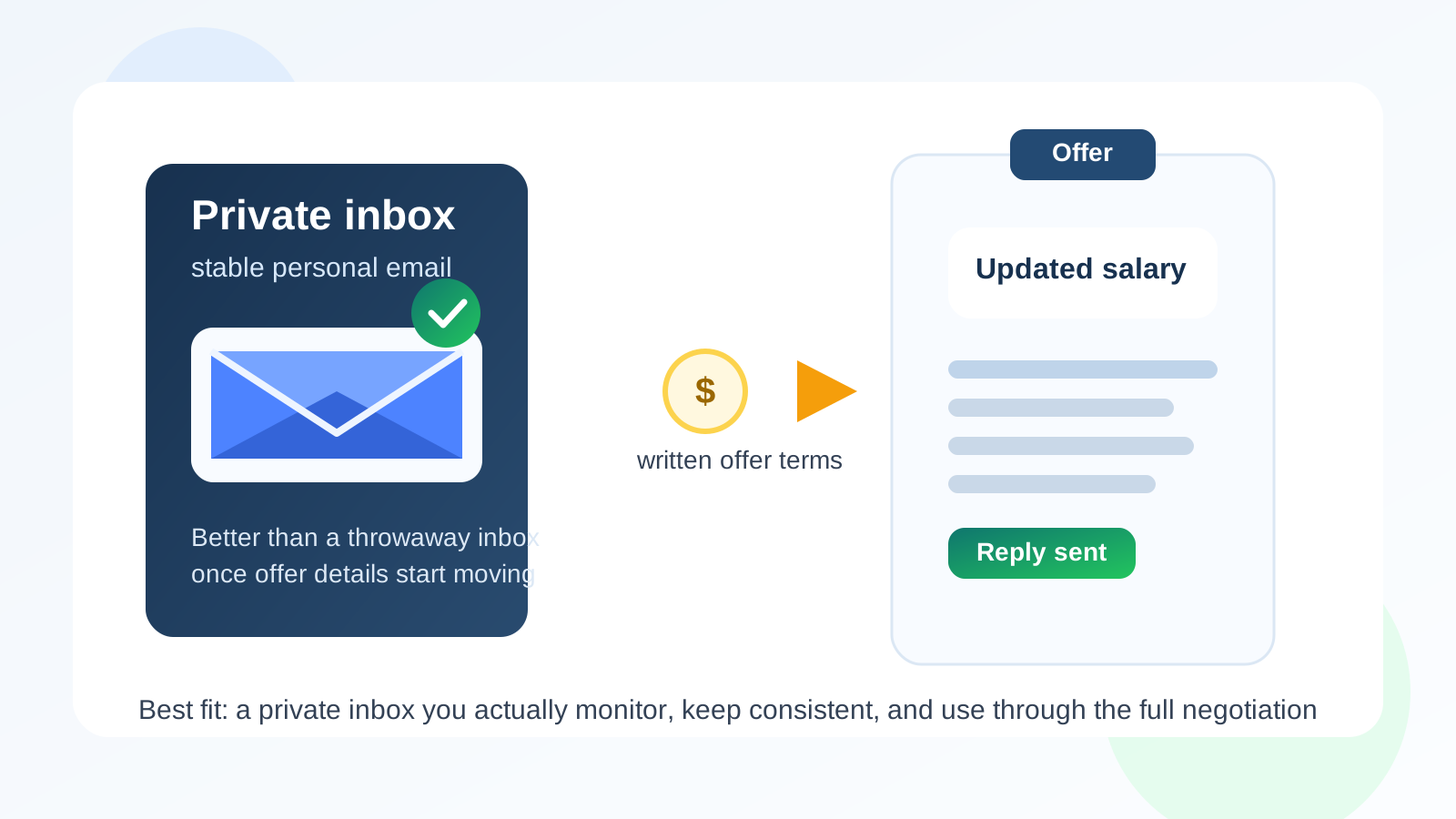
Why this question matters once compensation talks start
Early in a job search, email often feels transactional. You use it to submit an application, receive a recruiter message, confirm an interview slot, or download a take-home exercise. Salary negotiations are different. At that point, the thread becomes part of the record for base salary, bonus details, equity explanations, start-date options, relocation support, benefit clarifications, and deadlines for your reply.
That is why your inbox matters more than it did at the top of the funnel. You do not just need a mailbox that can receive one verification email. You need a stable place where important messages are easy to find, attachments are easy to save, and the conversation stays consistent from the first offer through the final decision.
For privacy-conscious job seekers, that often raises a natural question: should you use StartMail for salary negotiations, or is a more mainstream mailbox safer? In most cases, StartMail is perfectly workable. Recruiters usually care far more about whether they can reach you reliably than about the specific personal email brand you choose.
Short answer: StartMail is usually a strong fit
If StartMail is already a personal inbox you use seriously, the practical answer is yes. It gives you a private, personal contact point that is separate from your current employer, separate from a cluttered old inbox, and far more dependable than a disposable address.
The real issue is not whether StartMail is “allowed.” It is whether you use it in a way that supports a fast-moving negotiation. If the account is active, monitored, and used consistently, it can work very well. If you barely check it, use a confusing address, or jump between multiple inboxes mid-thread, you create friction for yourself regardless of provider.
Why StartMail can work well for salary negotiations
1. It gives you separation from employer-owned systems
One of the clearest reasons to use a personal inbox during salary negotiations is that compensation discussions should not live inside a current employer’s email system. Even if your work mailbox feels convenient, it is still infrastructure that does not belong to you. A personal inbox is the safer and more appropriate place for messages about outside opportunities.
StartMail can help here because it gives you a separate contact point that is yours. That separation matters when a negotiation becomes sensitive, document-heavy, or likely to continue over several days.
2. It is more stable than temporary email for late-stage hiring
This is especially important for Anonibox readers. Temporary email is useful earlier in the process when you want to avoid spam from job boards, low-trust lead forms, or broad recruiter funnels. But once a company is discussing compensation, the tradeoff changes. You need persistence, not just insulation.
A salary negotiation thread may include revised terms, written summaries after calls, attached compensation documents, and follow-ups that continue into formal offer or onboarding steps. That is not disposable-email territory. A real inbox like StartMail is better suited to that kind of continuity.
3. It can keep compensation messages cleaner and easier to track
Many people have one old personal inbox that receives everything: newsletters, shopping receipts, family mail, travel confirmations, account alerts, and random marketing. In that kind of environment, important offer details can get buried surprisingly fast.
If StartMail is your cleaner job-search or personal-admin inbox, it may actually make negotiations easier to manage. A clearer thread helps when you need to compare an initial offer against a revised one, confirm which benefits were described in writing, or check a promised timeline for a response.
4. Most recruiters will not care about the provider
There is a tendency to overthink the brand of email provider and underthink the basics. In most real hiring situations, recruiters and HR teams are not making decisions based on whether you use Gmail, Outlook, Fastmail, Proton Mail, or StartMail. They are asking a much simpler question: does this person respond reliably and keep communication easy to follow?
If your StartMail address looks normal, stays consistent, and you reply on time, it is usually fine. A stable inbox with a calm communication style matters more than the logo behind it.
What employers actually care about during salary negotiations
The provider itself is usually less important than a handful of practical signals:
- Can they reach you without messages disappearing into a neglected inbox?
- Do you reply within a reasonable time while negotiations are active?
- Does your email address stay consistent across the thread?
- Can you receive attachments and keep track of revised terms?
- Does the address appear readable and professional rather than chaotic or temporary?
If StartMail meets those standards in your workflow, it is doing the job.
When StartMail is an especially good choice
StartMail makes particular sense for salary negotiations when one or more of these situations applies:
- You already used it for interviews or recruiter follow-up. Continuity is helpful. There is no reason to create a second switch if the first inbox is already working.
- You want stronger separation from your everyday inbox. A dedicated personal inbox can keep negotiation messages from disappearing into unrelated clutter.
- You are comparing multiple opportunities. A cleaner mailbox makes it easier to track separate offer timelines and compare details calmly.
- You previously used Anonibox or another temporary inbox earlier in the search. Moving into a stable personal inbox at the offer stage is usually the sensible progression.
- You want long-term access to the thread. Negotiation emails can matter later if you need to confirm what was discussed before signing.
Where StartMail can still create friction
StartMail can be a strong option, but it is not magic. The biggest risks come from how you use the account rather than from the provider itself.
You rarely check the inbox
A private personal mailbox is not helpful if you do not actively monitor it. Negotiations can move quickly when a hiring team is trying to close a candidate, line up approvals, or finalize a start date. If you only open the account once every few days, you may miss a revised offer or a soft deadline.
Your address name looks distracting
A clean address matters more than people think. It does not have to be fancy, but it should look readable and adult. A simple variation of your name is usually better than an old username, a string of random characters, or something joke-like. The provider is rarely the problem; the presentation can be.
You keep switching inboxes during the process
If your application used one address, interviews used another, and salary negotiations suddenly move to a third, you add unnecessary confusion. Most recruiters can adapt, but every switch increases the chance that someone replies to an older thread or misses the handoff. If you choose StartMail for late-stage communication, commit to it for the rest of that employer’s process unless there is a strong reason not to.
You treat it like a temporary account
StartMail works best here when you treat it like a real long-term inbox. If you create it in a rush, never set notifications, and plan to abandon it the moment the bargaining ends, you bring temporary-email habits into a phase that depends on persistence.
StartMail versus temporary email for salary negotiations
This is the most useful comparison for Anonibox readers. Temporary email and StartMail solve different problems, and mixing them up can lead to bad decisions.
- Temporary email is useful for low-trust signups, quick verification links, gated resources, or early experiments where spam control matters more than long-term access.
- StartMail is better for a serious conversation that may continue for days or weeks and may include revised numbers, documents, deadlines, and follow-up after verbal agreement.
Once salary negotiations begin, you are no longer just trying to protect your inbox from clutter. You are managing written details that affect pay and timing. That is where a stable personal mailbox wins.
StartMail versus a mainstream personal inbox
What if you also have Gmail, Outlook, or iCloud Mail? In many cases, any stable personal inbox can work. The question is less about prestige and more about control and routine.
StartMail may be the better choice when it is the cleaner inbox, when it is the one you use specifically for private personal matters, or when it gives you stronger separation from old mailing-list baggage. A mainstream mailbox may be the better choice if that is the account you check more often and already use reliably every day.
Do not choose the more private-looking option if it is not also the more dependable option. A slightly noisier inbox you monitor closely is better than a theoretically elegant inbox you forget to check.
Best practices if you use StartMail for salary negotiations
Use a clean, recognizable address
If possible, use an address based on your real name or a simple professional variation. You are not trying to impress anyone with creativity. You are trying to remove distractions.
Turn on notifications and build a checking routine
When negotiations are active, you should know when an important email lands. That does not mean replying instantly at every hour, but it does mean avoiding long accidental gaps caused by a mailbox you do not monitor.
Keep the thread consistent
Reply in the same conversation whenever possible. A single clean thread makes it easier for both sides to track changes, compare wording, and avoid misunderstandings about what was offered and when.
Save the documents that matter
Offer summaries, compensation breakdowns, benefits PDFs, and any revised written terms should be saved locally in an organized folder. Your inbox is important, but it should not be your only record.
Do not negotiate from a work account
If your alternative is your current employer’s email address, StartMail is almost certainly the better choice. Compensation discussions for a new role belong in a personal inbox you control.
Keep the account active through the full handoff
Even after you agree in principle, the thread may continue with formal offer documents, clarifications, onboarding steps, or scheduling notes. Do not retire the inbox too early.
If you started the process in another inbox
You do not need to panic if the first recruiter contact happened elsewhere. People switch into a cleaner inbox all the time. The important part is to do it carefully:
- Choose the inbox you want to use for the rest of the process.
- Tell the recruiter or HR contact before the thread gets more document-heavy.
- Make sure the new inbox is actively monitored.
- Save earlier messages so you do not lose context.
- Once you switch, stop bouncing between addresses.
Most legitimate employers will not mind the change as long as it makes communication clearer rather than more confusing.
A quick decision checklist
- Is StartMail a real inbox you plan to keep, not a short-lived experiment?
- Will you check it often enough while negotiations are active?
- Does the address look clean and professional?
- Can you keep the full compensation thread, attachments, and follow-up in one place?
- Are you using it instead of a temporary address or current work mailbox?
If the answer is yes, StartMail is usually a smart choice.
Conclusion
Yes, in most cases you should use StartMail for salary negotiations if it is a stable personal inbox you control and monitor closely. It is usually a better fit than temporary email once real compensation details are on the table, and it creates a healthier boundary than a work-managed account.
The key is not just privacy. It is reliability. If the inbox is active, the address is clean, and you keep the thread consistent from negotiation through offer, StartMail can support a serious compensation conversation without adding unnecessary friction.