Usually no — not as your default. You can use your college email for recruiter outreach when being a current student genuinely helps, but a stable inbox you control after graduation is usually the safer long-term choice.
The best setup is simple: keep real recruiter conversations in a professional email address you will still own after school, use your college inbox only when it gives you a clear student-specific advantage, and use a temporary inbox for low-trust signups or downloads that might create spam.
That answer surprises some students because a college email can look credible at first glance. It shows that you are enrolled, connected to a known institution, and actively in the student-to-career pipeline. In certain situations, that can absolutely help. But recruiter outreach is not just about making a first impression. It is also about reliability, follow-up, privacy, and whether the address will still work when the conversation matters most.
If you are reaching out to recruiters on LinkedIn, by email, after a career fair, or through alumni and internship channels, you need an inbox that is easy to monitor, easy to organize, and still yours months later. That is where college email starts to look less ideal.
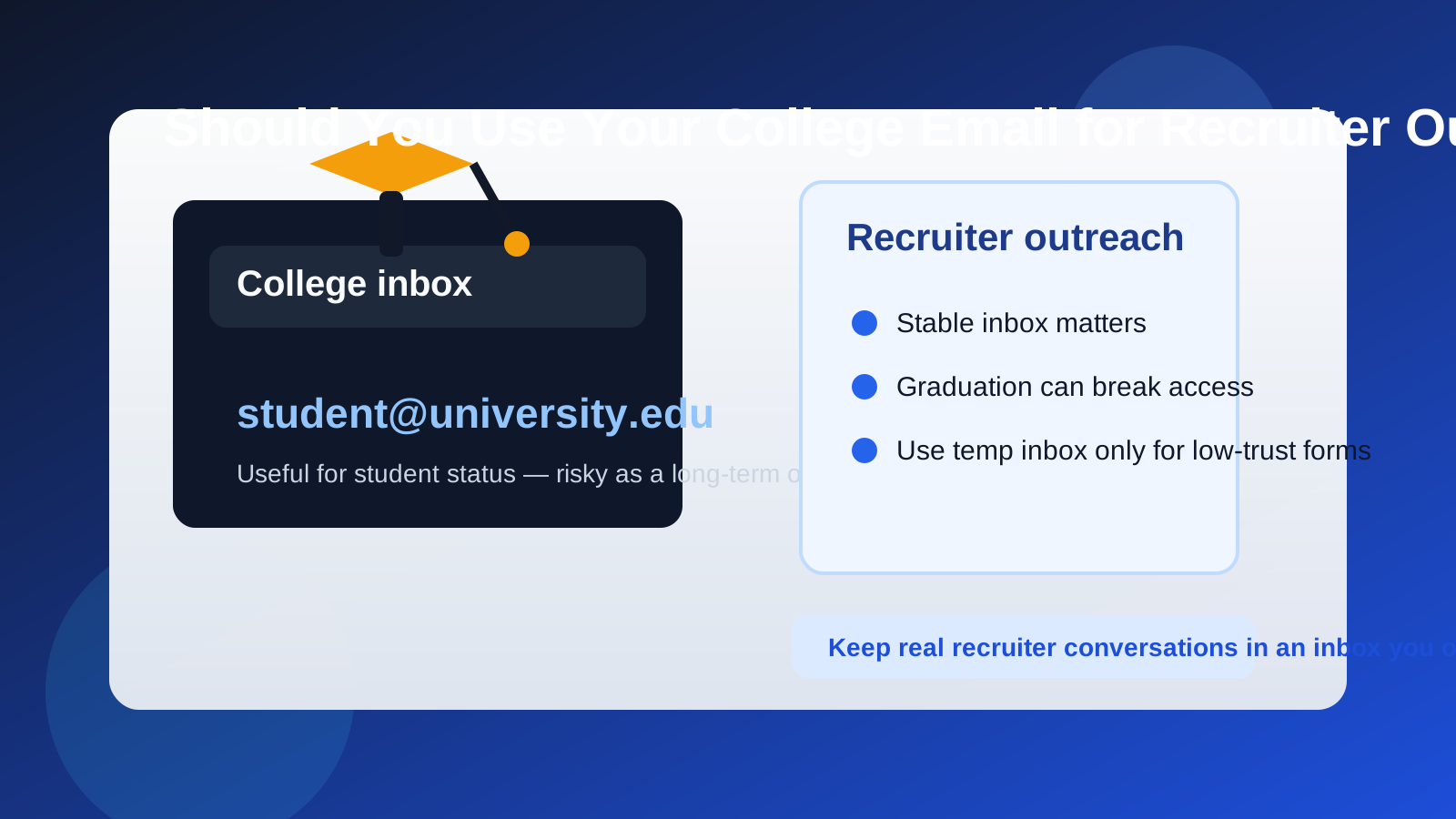
Why this question matters for recruiter outreach
Recruiter outreach is different from filling out a single job application. When you apply to a role, you usually submit one form and wait for a response. When you reach out to recruiters, the process is looser and often longer. You may send an introduction, follow up a week later, join a talent network, exchange messages about timing, and circle back months later for another opening.
That longer timeline is exactly why your email choice matters. A recruiter might not respond the same day. They may save your note and reach out later. They may move you toward another team, invite you to apply to a different role, or reconnect after you graduate. If that conversation is tied to an inbox you stop checking or lose access to, you can miss real opportunities for reasons that have nothing to do with your qualifications.
When a college email can help
A college email is not automatically a mistake. There are situations where it can be genuinely useful.
- You are contacting campus recruiters for internships or new-grad programs. A student address can reinforce that you are part of the audience they want.
- You are using a university-specific recruiting system. Some career-center portals, employer events, and student programs expect or prefer a school address.
- You want to signal current enrollment quickly. For some student-focused outreach, that can reduce back-and-forth.
- You are contacting alumni who prefer to help current students. In a few cases, the school domain can provide useful context immediately.
In other words, a college address can be useful as a context signal. The problem is when it becomes your main long-term contact point for recruiter conversations that may continue far beyond the semester.
Why a college email is usually the wrong default
1. Graduation can break the relationship at the worst time
This is the biggest issue. Not every school treats alumni email the same way. Some colleges keep accounts active for years. Others limit storage, restrict forwarding, or cut access sooner than students expect. Recruiters do not care about your school’s email-retention policy, and they often move on their own timeline.
A recruiter you message in March might reply in May. An internship lead from summer could turn into a full-time role after graduation. If the follow-up lands in a mailbox you no longer check, cannot access, or rarely monitor, you may lose momentum without even realizing it.
2. You do not fully control the inbox
Your college email may feel official, but it is still managed by an institution. The school controls account rules, forwarding behavior, spam filtering, storage limits, and account lifecycle. That matters less for class announcements and more for career communication you may want to preserve, search, label, and keep for years.
Professional outreach works best when the contact method belongs to you, not to an organization you will eventually leave.
3. School mailboxes are often crowded
Student inboxes are noisy. Class updates, financial-aid notices, club announcements, system alerts, event marketing, professor messages, and campus newsletters all compete for attention. Adding recruiter outreach to that mix increases the chance that a useful reply gets buried.
When you are job hunting, organization matters. A dedicated long-term inbox makes it much easier to find outreach threads, schedule follow-ups, and track who answered.
4. A student address can make you look temporary
This is subtle, but it matters. A college email does not usually look unprofessional, especially for students. But for recruiter outreach, it can signal that you are still in a narrow phase of your career and may not be the right fit for roles outside student or campus pipelines.
That is not always bad. If you are explicitly pursuing internships or new-grad roles, it may help. But for broader networking, off-cycle outreach, or roles where you want to present yourself as a longer-term professional, a stable personal job-search inbox often creates a cleaner impression.
5. Privacy and lead-capture spillover are real
Recruiter outreach does not always stay one-to-one. Sometimes you end up in talent communities, employer newsletters, event reminders, or follow-up campaigns you did not really want. A college inbox can become another channel where your contact information spreads farther than expected.
That does not mean recruiters are doing anything sinister. It just means a student mailbox can quietly turn into a mixed stream of career communication and marketing noise. If you want better control, separation helps.
What is usually better than a college email?
For most students and recent grads, the best default is a separate professional inbox you personally control. It does not need to be fancy. It just needs to be stable, easy to monitor, and professional enough that you would feel comfortable saying it out loud to a recruiter.
A dedicated recruiter-outreach inbox gives you several advantages:
- Long-term ownership: you keep it after graduation, after changing schools, and after changing jobs.
- Better organization: recruiter messages are not buried inside coursework and campus notices.
- Cleaner boundaries: you can separate your job search from the rest of your personal life.
- More flexibility: if the inbox starts attracting too much recruiter spam later, you can filter or retire it without disrupting everything else.
This is the same logic many privacy-conscious job seekers use for other contact details. One channel can be for serious conversations. Another can be for lower-trust signups. You do not need to use the same inbox for every stage of the process.
A practical three-layer approach
If you want a simple system that works, think in layers of trust.
Layer 1: use your college email when student status is the point
If a recruiter program, internship pipeline, campus portal, or student-only event clearly benefits from your school identity, using the college address can make sense. It quickly shows why you belong in that conversation.
Layer 2: use a stable personal job-search inbox for real outreach
If you are introducing yourself to recruiters, following up after an event, sending your resume, or trying to build a longer-term professional relationship, this should usually be your main channel. It is the inbox you will still have after finals, after graduation, and after the recruiting season shifts.
Layer 3: use a temporary inbox for low-trust forms and marketing-heavy signups
Not every career-related interaction deserves your long-term email address. Resume tool downloads, webinar signups, recruiter lead forms you do not trust yet, sponsor giveaways, and random career resources can all create noise. That is where a temporary inbox can help.
A service like Anonibox is useful in that lighter layer: not for serious recruiter conversations that require ongoing follow-up, but for protecting your main inbox when you mainly need to unlock a signup or test whether a source is worth deeper engagement.
When using your college email is still reasonable
You do not have to avoid your college address in every situation. It is usually reasonable when:
- you are still actively enrolled and check the inbox daily,
- the recruiter relationship is clearly tied to a student or campus program,
- you know your school preserves email access well beyond graduation,
- you are using it for a short, specific interaction rather than your whole search, or
- you plan to move the conversation to a long-term inbox once the discussion becomes serious.
If those points are true, the risk is lower. The issue is not that a college email is inherently bad. The issue is whether it is the most durable and practical address for the kind of outreach you are doing.
Signs you should switch away from it
- You are approaching graduation or are unsure how long the account stays active.
- You already miss important messages in your school inbox.
- You are reaching out beyond student-only recruiting channels.
- You want a more polished, long-term professional identity.
- You are seeing too much event spam, employer marketing, or recruiter clutter.
If several of those apply, your college email is probably no longer the right default for recruiter outreach.
How to move from a college inbox to a better setup
- Create a dedicated job-search email you own personally. Keep it simple and professional.
- Update your LinkedIn, resume, and outreach templates. Use one stable address consistently for real conversations.
- Keep your college email for student-specific access only. That preserves the benefits without making it your whole strategy.
- Use temporary email selectively. Save it for low-trust signups, one-off resources, and spam-prone forms rather than active recruiter threads.
- Check all three channels intentionally. If you are still in transition, make sure nothing important is stranded in the old inbox.
Quick decision checklist
Before you message a recruiter from your college email, ask yourself:
- Will I still control this inbox after graduation?
- Do I check it reliably every day?
- Is this outreach specifically student-focused?
- Would a stable personal job-search inbox make follow-up easier?
- Am I giving this address to a real recruiter, or just another lead-capture form?
If the inbox is temporary, crowded, or only useful because you are still a student today, it is probably not the best long-term outreach address.
Final answer
So, should you use your college email for recruiter outreach? Usually no — at least not as your main default. It can help in student-focused situations where enrollment status matters, but it is rarely the best long-term channel for professional follow-up.
A recruiter-outreach inbox should be stable, easy to monitor, and fully under your control. For most students, that means using a separate professional email you will still own after graduation, keeping the college address for campus-specific use, and using temporary email only where spam protection matters more than long-term continuity.
That approach gives you the upside of student identity when it helps, without tying real career opportunities to an inbox that may not last.