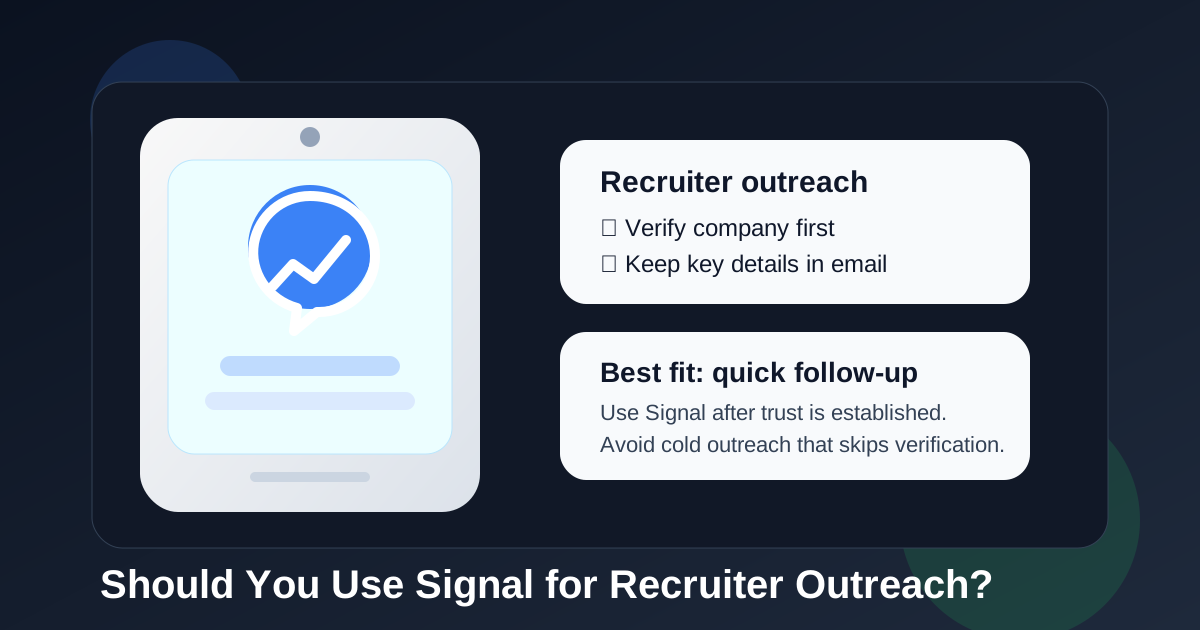
Usually not as your default. Signal can work for recruiter outreach when you already trust the recruiter and both sides want a more private, faster messaging channel, but email is usually the safer first choice for professionalism, record-keeping, and lower scam risk.
If a recruiter is legitimate, starting with email and moving to Signal only when it actually helps is the best balance. You protect your privacy without making first contact harder to verify or easier to misunderstand.
Why people consider Signal for recruiter outreach
Signal has a strong privacy reputation, end-to-end encryption, and a cleaner feel than mainstream texting apps. If you are trying to avoid spam, reduce exposure of your main communication habits, or keep job-search conversations separate from everyday messages, it makes sense to wonder whether Signal is a smart channel for recruiter outreach.
That instinct is not wrong. Recruiter outreach sits in an awkward middle zone: it is more personal than applying through a formal company portal, but it is still an early hiring step where trust may not be fully established. That means you need to think about two things at once:
- privacy: how much personal contact information are you exposing and on what timeline?
- legitimacy: how easy is it to confirm who you are talking to and keep a reliable written record?
Signal helps with the first problem better than the second. That is why it is rarely the best starting channel, even for privacy-conscious job seekers.
Short answer: good for controlled follow-up, weaker for cold first contact
If a recruiter first reaches out through LinkedIn, a company email address, or a known employer workflow, moving to Signal later can be reasonable for scheduling and light follow-up. If someone wants to begin the entire conversation on Signal with little context, you should slow down.
In plain terms:
- Better use: confirmed recruiter, known company, quick scheduling, privacy-sensitive follow-up.
- Worse use: unknown recruiter, vague role, rushed outreach, pressure to leave email or LinkedIn immediately.
What Signal does well in a job-search context
1. It limits casual inbox clutter
Email can become noisy during a job search, especially if you are talking to multiple recruiters, signing up for job alerts, or testing different privacy workflows. Signal creates a separate lane for short messages instead of dropping everything into the same inbox.
2. It feels more private than SMS
Many people trust Signal more than standard text messaging. That matters if you are sharing scheduling updates, interview availability, or other routine details and you do not want everything riding on plain SMS habits.
3. It can reduce some phone-number exposure downstream
Signal still ties to a phone number, so it is not anonymous, but it can be part of a more controlled communication setup if you are already using a separate job-search number. That is cleaner than mixing recruiter conversations directly into the same number you use everywhere else.
4. It is fast for logistics
For simple follow-up like “Can you do 2 PM instead of 3 PM?” or “Here is the updated meeting link,” Signal can be more convenient than long email threads.
Why Signal is not usually the best first-contact channel
1. It is harder to verify legitimacy at the start
Email from a company domain, a traceable LinkedIn profile, or an official applicant tracking system gives you more context than a chat invite alone. When recruiter outreach begins on Signal, you lose some of the professional signals that help you decide whether the opportunity is real.
That does not make Signal suspicious by itself. It just means the burden of verification shifts more heavily onto you.
2. It can feel too informal too early
Recruiter outreach is not the same as chatting with a coworker you already know. In the earliest stage, a more formal channel helps both sides keep details straight. Role title, location, compensation range, next steps, and screening expectations are usually easier to review in email than in a fast-moving messenger thread.
3. It increases scam pressure if used badly
Scammers like channels that feel personal and urgent. If someone says they are a recruiter but refuses to email from a company domain, avoids LinkedIn, and pushes you onto Signal immediately, that is not a privacy perk. It is a warning sign.
4. Searchability and forwarding are weaker for hiring records
Job-search communication often needs a paper trail. You may want to refer back to compensation ranges, job descriptions, interview dates, portfolio links, or recruiter promises. Email is usually easier to archive, label, forward, and revisit across devices without friction.
Signal vs email for recruiter outreach
If you care about both privacy and control, email still wins most first-contact situations.
- Email is better for: introductions, role details, document sharing, searchable history, and confirming who you are dealing with.
- Signal is better for: short scheduling updates, quick follow-ups, and later-stage conversation when trust is already established.
That is why many privacy-aware job seekers use a layered setup instead of betting everything on one channel. A separate job-search inbox handles first contact and documentation. A separate phone number or private messaging app can be added later if the conversation becomes real enough to justify it.
Where Anonibox fits naturally
Anonibox makes the most sense before or alongside recruiter outreach, not instead of a stable hiring record. If you are signing up for job boards, exploring lower-trust listings, or trying to keep early outreach away from your main personal inbox, a separate inbox strategy can help you stay organized without feeding long-term spam into your everyday email.
Once a real recruiter conversation starts, you usually want communication to become more stable, not more disposable. That often means keeping core details in a reliable inbox and using Signal only for quick coordination if it adds value.
When Signal is a reasonable choice
Signal can be a smart option if most of these are true:
- the recruiter first contacted you through a verifiable channel
- you have independently confirmed the company and role
- the conversation is already moving forward, not just fishing for your attention
- you want a faster way to handle scheduling or simple updates
- you are using a separate number or already feel comfortable sharing the number tied to Signal
In those cases, Signal is not unprofessional. It is just a secondary channel. The important distinction is that it should follow verification, not replace it.
When you should avoid it
You should be cautious if any of these show up:
- the recruiter will not email you from a company domain
- the role description is vague or oddly generic
- you are asked to move to Signal immediately after a cold message
- there is pressure to respond quickly before you can verify details
- the recruiter avoids simple questions about company, team, location, or reporting line
- the conversation shifts fast toward personal data, verification codes, or off-platform document requests
Those are not small issues. They are the exact situations where a private messenger can make a bad interaction feel more intimate and more urgent than it deserves.
Best practices if you do use Signal for recruiter outreach
Confirm identity first
Before switching channels, make sure you know who the recruiter is. Check the company website, LinkedIn profile, and whether the role actually exists. If possible, ask the recruiter to send a short confirmation from their company email first.
Keep important decisions in email
Even if you use Signal for convenience, move anything material back into email. Interview dates, compensation details, take-home assignments, portal links, and formal next steps are easier to manage in a searchable inbox.
Use a separate number if privacy matters
Signal requires a phone number, so think about what that number reveals. If you are trying to reduce exposure, a separate job-search number gives you more control than handing out your main personal line everywhere.
Do not overshare in chat
Messaging apps make it easy to answer quickly, but that can work against you. Avoid sending sensitive documents, home address details, government IDs, or financial information through casual recruiter chat unless you have fully verified the process and know exactly why the information is needed.
Watch the tone of the interaction
A legitimate recruiter may use informal language, but the conversation should still be coherent and professional. If the thread feels chaotic, evasive, or oddly pushy, trust that signal too.
A practical decision framework
When a recruiter wants to use Signal, ask yourself:
- Do I know who this is? If not, verify before moving anywhere.
- Why use Signal instead of email? A good answer is speed or convenience. A weak answer is vague pressure.
- Am I exposing a number I actually want to share? If not, pause.
- Would I lose useful record-keeping by moving this chat off email? If yes, keep the important parts in your inbox.
- Does this make the process easier, or just more urgent? Those are not the same thing.
If the move helps with logistics after trust is established, fine. If the move mainly helps the other person avoid scrutiny, that is a bad trade.
Example scenarios
Reasonable use case
A recruiter messages you on LinkedIn, shares the company, role, and team, and follows up from a real company email address. After you agree to a screening call, they ask whether Signal or text is easiest for same-day scheduling updates. That is a normal, low-drama use of Signal.
Bad use case
An unknown person says they saw your résumé, offers a surprisingly high salary, and wants you to continue only on Signal without sending company details first. That is exactly the kind of conversation you should slow down, verify, or walk away from entirely.
Final answer
Signal can be useful for recruiter outreach, but usually not as your default starting point. It is best as a secondary channel for quick coordination after you have already confirmed the recruiter, the company, and the opportunity through a more verifiable path.
For most job seekers, the strongest setup is simple: use a separate, well-managed inbox for first contact and record-keeping, keep privacy tools like Anonibox focused on early exposure control, and use Signal only when it genuinely improves convenience without weakening your ability to verify who you are dealing with.