Yes — using a temporary email generator for credit monitoring free trials is a practical way to compare alerts, dashboards, and trial terms without turning your main inbox into a long-term marketing list.
Use the temporary address for signup, verification, and early testing, then switch to a permanent inbox only if a service proves useful enough for ongoing monitoring.
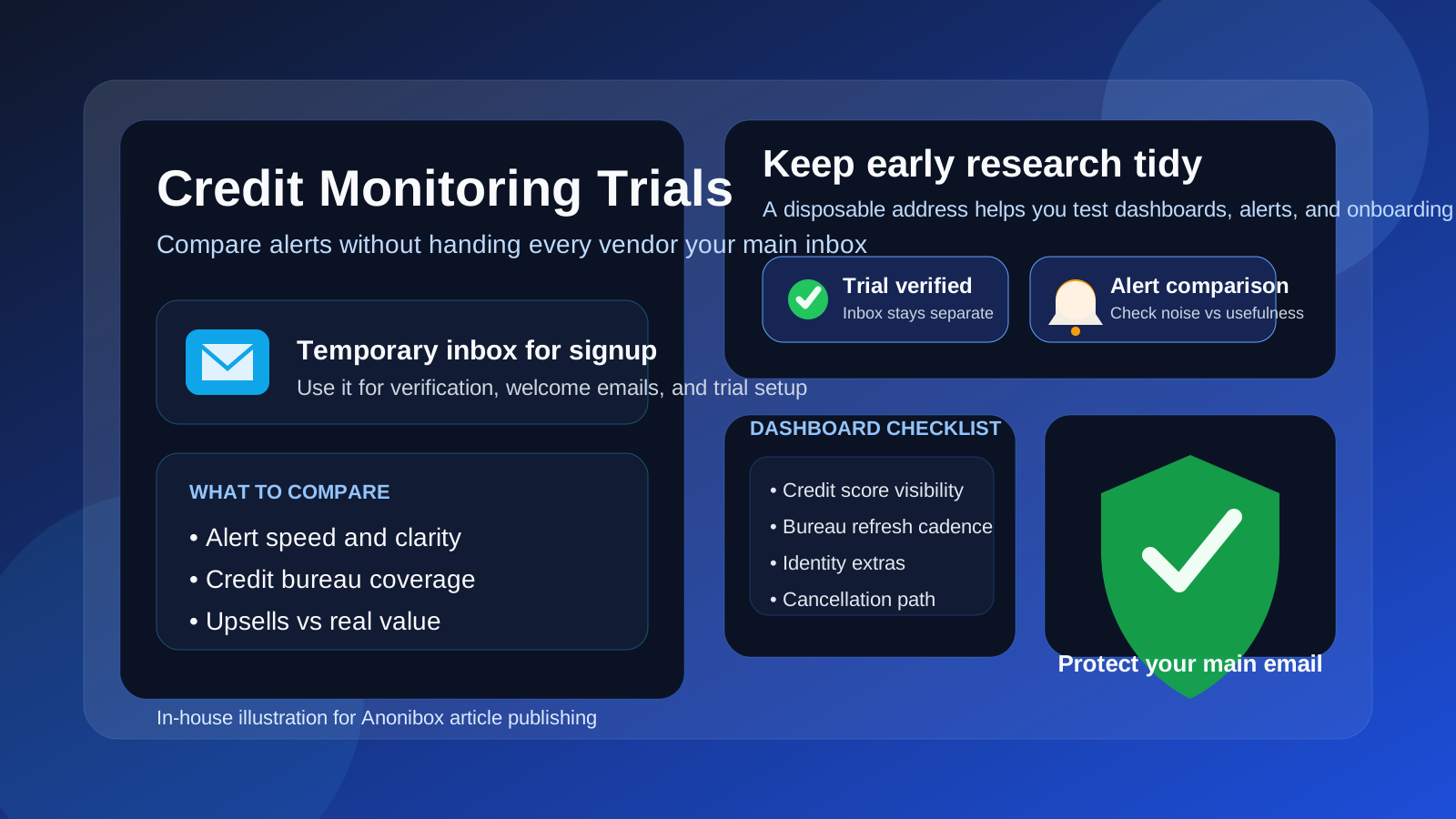
Why this use case makes sense
Credit monitoring services often want your email before they show much of the product. That usually means welcome emails, alert explanations, feature tours, upgrade prompts, plan comparisons, and reminder sequences all start as soon as you create an account. If you compare several services in a short window, the inbox noise builds fast.
A temporary inbox gives you a cleaner first step. You can verify the account, review the setup flow, and see how the service communicates before deciding whether it deserves a real long-term contact address. That matters because credit monitoring is not like testing a lightweight browser extension. If you eventually keep a service, you may rely on it for ongoing alerts and account recovery. During the research phase, though, you do not need every vendor to have permanent access to the inbox you use every day.
What credit monitoring free trials usually involve
Different providers structure trials differently, but the early evaluation phase often includes a few common elements:
- email verification before you can access the dashboard
- welcome and onboarding emails explaining what the service monitors
- alert samples, product tours, or feature summaries
- upsell messages about paid plans, family coverage, or extra identity features
- trial-ending reminders or renewal nudges
Some services may ask for more than an email address depending on how deep the monitoring goes. That is exactly why a temporary inbox is most useful at the comparison stage. It helps you separate “I am evaluating this” from “I trust this enough to connect it to my main personal setup.”
When a temporary inbox helps most
A temporary address is especially useful when you are still narrowing the field. Good examples include:
- comparing several credit monitoring services in the same week
- testing dashboard quality before committing to a long-term account
- reviewing which providers flood you with marketing versus useful alerts
- checking cancellation friction before you hand over your primary email
- keeping research separate from your banking, work, or family inbox
If your goal is simply to see which service feels credible, clear, and manageable, a temporary inbox is a smart filter. It gives you room to evaluate without creating an inbox mess that lasts long after the trial ends.
When you should switch to a real address
A disposable inbox is best for early evaluation, not for permanent account ownership. Once a provider becomes a serious candidate, move the account to the mailbox you actually want tied to long-term alerts and recovery. That switch matters because useful monitoring only helps if you can reliably receive the messages later.
In other words, use the temporary inbox to answer the first question: Is this service worth considering? Use your permanent email only after you can answer the second question: Do I trust this provider enough for ongoing monitoring?
How to use a temporary email generator for credit monitoring free trials
1. Create the temporary inbox before visiting trial pages
Start with the inbox, not the signup form. That keeps your evaluation organized from the first click. A tool like Anonibox can help you isolate trial verification emails and welcome sequences from the inbox you use for everyday life.
2. Use the temporary address for the first signup only
Register, verify the email, and save the first important messages. At this stage you are not committing to a provider forever. You are just opening the door far enough to inspect the product.
3. Record what each service sends
Within the first few hours, pay attention to the email behavior itself. Is the provider sending one clear onboarding sequence or five aggressive promotions? Do the messages explain the product well, or do they push upgrades before you understand the basics? This is part of the evaluation, not a side detail.
4. Compare the dashboard, not just the promises
Many services sound similar on landing pages. The real differences show up in the product experience. Look at how clearly the dashboard explains what is being monitored, how alerts are presented, and whether the interface helps you act on what you see.
5. Move finalists to a permanent inbox
If a service looks trustworthy, useful, and worth keeping, update the contact email before relying on it long term. That way your permanent address only goes to the services that actually earned it.
What to compare during the trial
The best free-trial comparison is not just “which service exists.” It is “which service communicates clearly and gives me confidence without creating unnecessary friction.” Focus on points like these:
Alert quality
Are alerts easy to understand? Do they explain what happened, why it matters, and what you should do next? A monitoring service that generates vague or noisy alerts will get ignored quickly.
Dashboard clarity
The interface should make it obvious what is being monitored and where you stand. If you have to dig through upsells to find the useful information, that is a bad sign.
Signal versus marketing
Some providers are better at education and onboarding. Others mainly use the trial to feed a sales funnel. The difference matters. If the email stream feels more like pressure than product value, you have learned something important before handing over your real address.
Upgrade pressure
It is normal for a free trial to mention paid plans. It is less helpful if every message pushes urgency before you have even had a chance to evaluate the service. You want a provider that helps you understand the product, not one that treats the trial as a countdown clock.
Cancellation and account cleanup
Early friction often predicts later friction. If it is hard to understand what happens at the end of the trial, or how to stop renewal and notifications, that is worth noting before the provider gets your primary contact details.
Benefits of using a temporary inbox here
- Less inbox clutter: you avoid months of follow-up from services you never planned to keep.
- Cleaner side-by-side comparison: each trial starts from the same privacy baseline.
- Better boundary setting: vendors only get your permanent address after they earn it.
- Faster trial cleanup: when you reject a service, you are not stuck unsubscribing forever.
Limitations to keep in mind
A temporary inbox is not a magic privacy shield. It helps with early inbox control, but it does not replace careful judgment about the service itself. If a provider asks for additional personal details to enable deeper monitoring features, you still need to decide whether the company is trustworthy enough for that step.
It is also important not to leave a disposable address attached to an account you genuinely plan to rely on. Ongoing monitoring only helps if you can access important messages consistently. Once you choose a provider, move to a permanent inbox you control and check regularly.
Mistakes to avoid
- using the same permanent inbox for every trial before you know which service is worth keeping
- forgetting to save the verification or onboarding email before the temporary inbox expires
- treating a free trial as proof that the service is good enough for long-term use
- keeping a disposable address attached after a provider becomes your actual monitoring choice
- ignoring the difference between useful alerts and pure marketing volume
A practical evaluation checklist
If you want a simple workflow, use this checklist during the trial:
- Create a temporary inbox.
- Sign up and verify the service.
- Save the most important onboarding email.
- Review how many emails arrive in the first 24 hours.
- Check whether the dashboard is clear and trustworthy.
- Compare plan pressure, feature transparency, and cancellation clarity.
- Promote only the best candidate to your permanent email address.
That workflow keeps your research organized and stops every trial from becoming a permanent inbox resident by default.
Final takeaway
A temporary email generator for credit monitoring free trials is most useful during the first phase of comparison, when you want to inspect dashboards, onboarding, and alert quality without inviting every provider into your main inbox forever.
Use a temporary address for early evaluation, then switch to a permanent one only after a service proves it is worth trusting with long-term monitoring. That approach keeps your research practical, your inbox cleaner, and your privacy posture a little more deliberate from the start.