Usually not as a first-contact default. Slack can work for recruiter outreach when you already share a workspace or community, but email or LinkedIn is usually safer for privacy, professionalism, and follow-up.
If you do use Slack, treat it as a secondary channel, protect your workspace identity, and move serious hiring conversations to email or scheduled calls once interest is real.
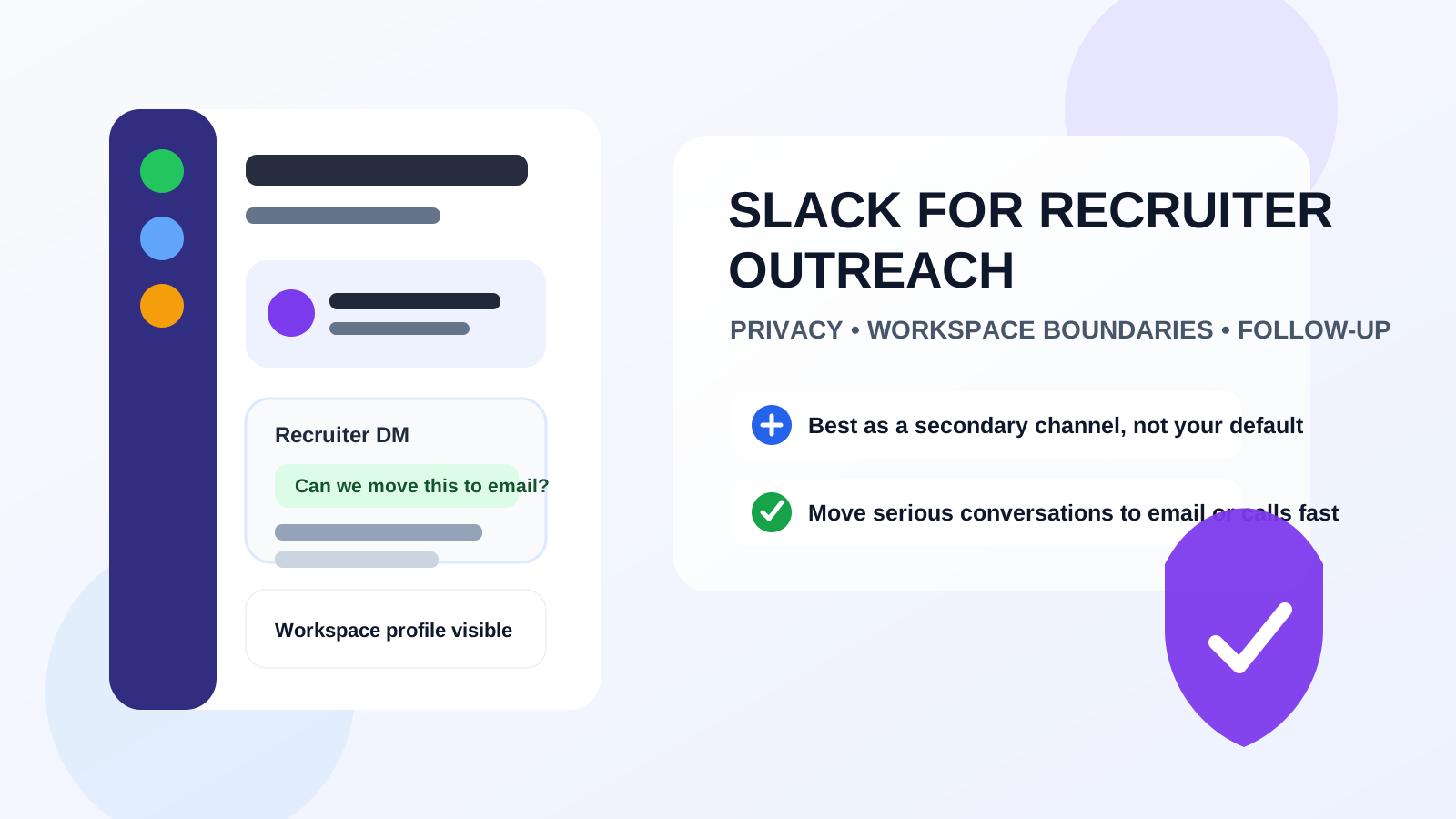
Slack feels easy because it is fast, informal, and already open on a lot of people’s screens all day. That convenience can make recruiter outreach seem harmless. In practice, though, Slack changes the privacy and professionalism equation in ways many job seekers do not think about until after a conversation has already started.
Unlike email, Slack often happens inside a shared workspace with its own norms, visible profile details, and mixed personal or professional context. A recruiter message there can reveal more about your employer, communities, status, timezone, or day-to-day availability than you intended. It can also blur the line between a serious hiring conversation and a casual chat that gets buried under normal workspace noise.
That does not mean Slack is always a bad choice. It just means it works best in limited situations: when the connection is already warm, the workspace is relevant, and you are intentional about what you share. For cold recruiter outreach, email is usually the safer and cleaner default.
Why Slack comes up in recruiter outreach at all
Recruiters increasingly spend time in professional communities, startup groups, founder networks, technical workspaces, alumni spaces, and event-based Slack communities. If you are active in those spaces, a recruiter may see your posts, notice your profile, or respond to a conversation where your expertise is visible. In that context, a Slack message can feel more natural than a cold email.
Slack is also sometimes used after an event, a webinar, a niche hiring community session, or a shared introduction. When both people are already in the same space, sending a quick DM may be the fastest way to start contact.
The problem is that fast and easy are not always the same thing as wise. The very features that make Slack convenient can also make it a messy place to handle privacy-sensitive job-search conversations.
When Slack can work for recruiter outreach
1. You already share a relevant professional community
If the recruiter found you in a legitimate industry Slack community tied to your field, a short initial message can be reasonable. The shared context matters. It is less random, easier to verify, and usually less invasive than a completely out-of-nowhere contact attempt.
2. The message is just a lightweight opener
Slack is most useful when it is only the bridge, not the whole process. A brief message like “I saw your post in this workspace—would you be open to continuing by email?” is much cleaner than trying to run the entire hiring conversation inside direct messages.
3. You can verify who the person is
If the recruiter has a clear identity, a company domain, an established presence in the workspace, and a profile that matches public information elsewhere, Slack becomes less risky. Verification is still necessary, but the context is stronger than with a random unknown account.
4. The workspace itself is meant for career networking
Some communities are explicitly built for jobs, referrals, founder hiring, or niche technical recruiting. In those environments, recruiter outreach is less surprising and the social norms are clearer.
Why Slack is usually not the best primary channel
Workspace visibility can expose more than you expect
Depending on the workspace, other people may see your display name, title, profile photo, local time, status, shared channels, message history context, and sometimes clues about where you work or what teams you spend time with. Even when none of that is individually sensitive, together it can reveal more context than you intended to share with a recruiter you barely know.
It can blur personal, community, and employer boundaries
A message in the wrong workspace can create awkwardness. If the recruiter is contacting you through a company Slack, a vendor Slack, or a community where your current employer is visible, the outreach may create unnecessary exposure. Even in a neutral community, mixing job-search conversations into the same place where you collaborate, learn, or socialize can feel noisy fast.
Slack is easy to miss
Email may be slower, but it is usually easier to search, archive, and revisit later. Slack messages, by contrast, can get buried under daily workspace activity, muted notifications, or channel chatter. That is not great when a recruiter is trying to schedule a call, send role details, or follow up after a promising conversation.
It can look too casual too early
That does not mean Slack is unprofessional in itself. Plenty of serious teams rely on it every day. The issue is tone. A casual chat interface can encourage rushed messages, half-context introductions, and vague role descriptions. For early recruiter outreach, that often makes the conversation feel less grounded than an email with a proper signature, clear subject, and record you can keep.
Privacy risks to think about before replying
Employer and identity leakage
If your profile or workspace membership points back to your current employer, contractor status, school, or client environment, replying on Slack may reveal more about your circumstances than you want. Passive candidates often care about that a lot.
Profile-data oversharing
Your photo, pronouns, title, status text, timezone, and bio may be helpful in normal collaboration but unnecessary for a first recruiter interaction. Slack often exposes those details more naturally than email does.
Pressure to stay in chat mode
Once a conversation starts in Slack, some recruiters may keep the whole exchange there out of convenience. That can lead to role details, scheduling, compensation hints, or document requests moving through a channel that is harder for you to manage cleanly.
Weak separation from your main job-search system
If you are trying to keep recruiter conversations organized, Slack usually does not work well as the long-term system of record. A dedicated inbox is still better for preserving details, forwarding information, and staying consistent. That is one reason some privacy-conscious job seekers pair a separate recruiting email workflow with tools like Anonibox for early-stage lead capture or community signups, then keep more serious conversations in a stable inbox they check carefully.
When you should move the conversation off Slack
In most cases, quickly. Once a recruiter seems legitimate and the opportunity is worth exploring, email is usually the better next step. It gives you a cleaner paper trail, makes documents easier to handle, and reduces the chance that the conversation disappears into workspace clutter.
A good transition looks simple:
- Thank them for reaching out
- Ask for the job description or summary by email
- Offer an email address you monitor consistently
- If needed, suggest a scheduled call instead of ongoing Slack chat
That keeps the opener friendly while putting the serious part of the process into a more stable channel.
Best practices if you do use Slack for recruiter outreach
Keep the first exchange short
Do not turn the first DM into a long interview. Confirm who they are, why they are reaching out, and whether the opportunity is relevant. Then move the conversation somewhere easier to manage.
Review your visible profile details
Before responding, look at what the recruiter can likely see in that workspace: display name, profile photo, title, status, timezone, and any obvious employer or identity clues. If the workspace is not one where you want job-search contact happening openly, be careful.
Verify the recruiter independently
A Slack profile alone is not enough. Check the company site, LinkedIn presence, and whether the recruiter can continue from a legitimate company email address. Real recruiters should be able to do that easily.
Do not share sensitive documents in Slack DMs early
A resume may be fine if the conversation is clearly legitimate, but be more cautious with anything beyond that. Avoid sending personal identifiers, references, compensation documents, or verification material through a casual chat channel unless trust is already established and you know why it is necessary.
Use Slack as a bridge, not a home base
The strongest Slack workflow is simple: brief message, quick verification, then move to email or a call. That preserves convenience without letting the whole process live in a noisy interface.
Red flags that make Slack outreach a bad idea
- The recruiter refuses to move to email from a company domain
- The role description is vague, rushed, or oddly secretive
- The person wants personal information before basic verification
- The message pressures you to respond urgently without context
- The workspace connection feels unrelated to the claimed role
- The recruiter pushes attachments, links, or off-platform contact immediately
If any of those appear, slow down. Slack lowers friction, which also makes it easier for weak or opportunistic outreach to look normal for a few minutes.
Slack vs email for recruiter outreach
Email usually wins on professionalism, organization, searchability, and long-term follow-up. Slack wins on immediacy and warm-community context. That is really the tradeoff.
If you are dealing with a real recruiter and a role you may actually pursue, email is the stronger default. If the recruiter found you through a relevant community and the message is only meant to open the door, Slack can be fine as the first nudge.
The mistake is treating those two roles as interchangeable. They are not. Slack is good at lightweight contact. Email is better for the actual process.
A practical rule of thumb
If you would be uncomfortable with the conversation being tied to that workspace identity, do not use Slack. If you cannot quickly verify the recruiter, do not use Slack. If the role is potentially real but early, acknowledge the message and shift the discussion to email.
That gives you the upside of being reachable without letting a casual chat platform take over a conversation that may involve your privacy, career timing, or future opportunities.
Bottom line
Slack can work for recruiter outreach, but usually only as a secondary channel in a shared professional context. For cold outreach, email or LinkedIn is usually safer, cleaner, and easier to manage well.
If you do reply on Slack, keep it brief, verify who you are talking to, and move anything serious to email or a scheduled call quickly. That approach gives you the convenience of Slack without giving up control over your privacy, workspace boundaries, and job-search organization.