Yes — using a temporary email generator for insider risk management software free trials is a practical way to verify a trial, collect setup emails, and keep long-term vendor follow-up out of your main inbox while you compare platforms. It works best during early evaluation, then you should switch to a permanent work address once a product becomes a serious finalist.
That matters because insider risk platforms often trigger analyst outreach, onboarding sequences, demo invitations, and follow-up emails the moment you register. A temporary inbox helps you focus on the product itself instead of turning one round of research into months of sales traffic.
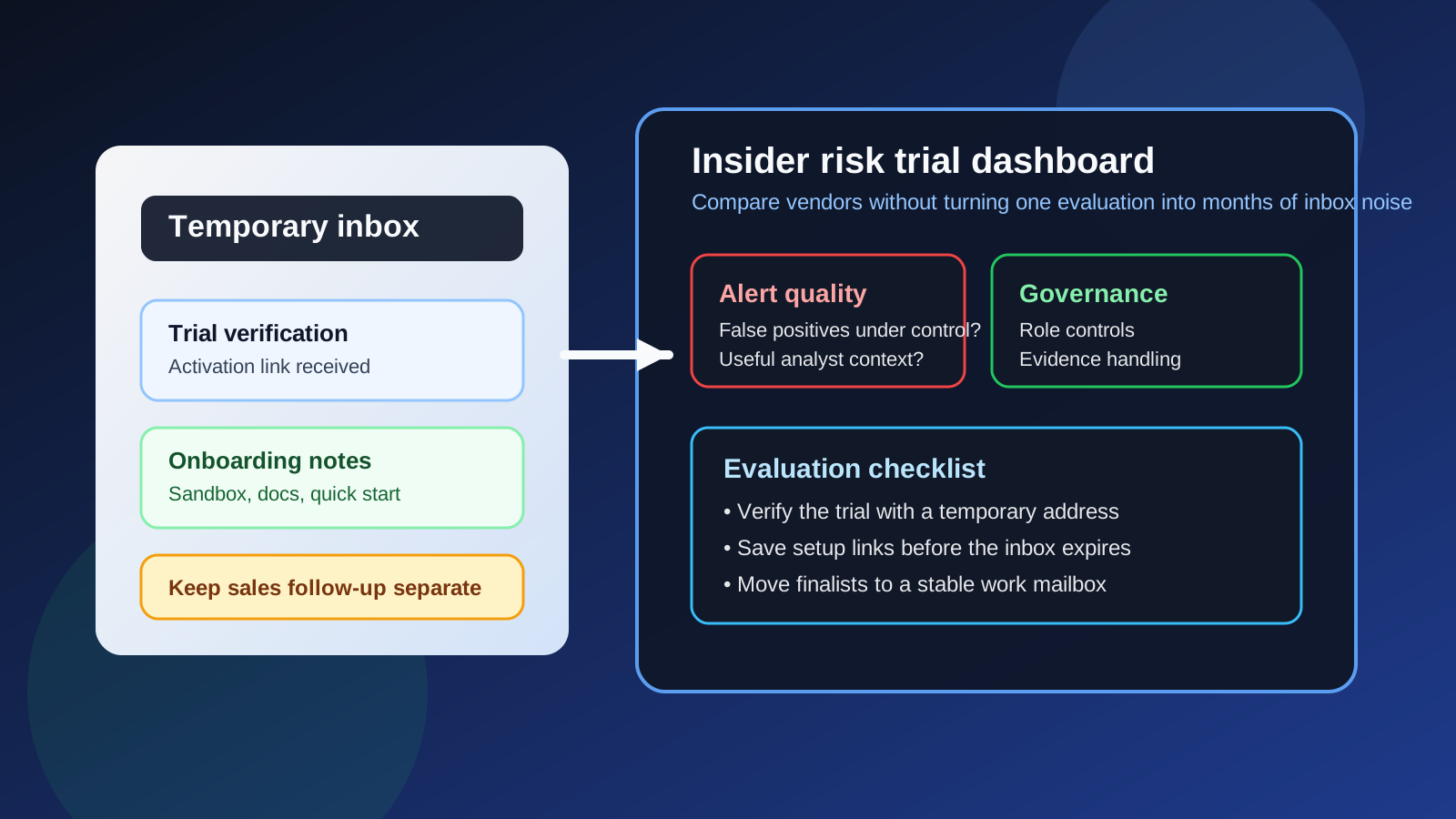
Why insider risk trials can clutter your inbox fast
Insider risk management software sits in a sensitive part of the security stack. Teams looking at these tools are usually evaluating user-behavior alerts, policy violations, data exfiltration risks, privileged misuse, investigation workflows, and handoffs across security, compliance, legal, and HR. Because the category is high stakes, vendors often work hard to stay in front of evaluators once a trial starts.
That usually means more than a single verification email. You may get a welcome message, sandbox instructions, product-tour links, analyst check-in emails, benchmark content, webinar invites, and repeated prompts to schedule a demo. If you are comparing several vendors at once, that stream becomes noise fast. A temporary inbox lets you isolate that early research from the mailbox your team uses for long-term vendor relationships.
When a temporary inbox makes sense
- Early comparison work: you want to test two or three insider risk platforms before deciding which one deserves a deeper proof of concept.
- Pre-procurement research: you need access to the trial, but you are not ready to attach every exploratory signup to the team’s long-term procurement or security mailbox.
- Cleaner internal organization: you want early-stage vendor messages separated from the address that later handles contracts, admin ownership, and renewals.
- Spam control: you expect heavy follow-up from vendors that may never make the shortlist.
When it is the wrong choice
A temporary inbox is useful for screening and shortlisting, not for permanent account ownership. Once an insider risk platform becomes a real contender, you usually want a stable work address tied to the account. That matters for password recovery, shared ownership, auditability, and any long-running proof-of-value work.
- Do not use it for production administration.
- Do not rely on it for contracts, legal handoffs, or formal procurement records.
- Do not keep it attached if the environment will later hold real policies, connectors, or investigation data.
- Do not assume a temporary inbox creates any legal, compliance, or security guarantee by itself.
How to use a temporary email generator for insider risk management software free trials
1. Generate the address before you visit vendor signup forms
Create the temporary inbox first so the entire trial stays segmented from the beginning. That is easier than starting with your main address and trying to unwind the follow-up later.
2. Use it for verification and early onboarding only
The temporary address is ideal for the confirmation email, welcome note, setup checklist, and sandbox activation link. If the product becomes a serious candidate, move the account to a controlled work mailbox before the evaluation gets deeper.
3. Save the messages that actually matter
Most trials only send a few emails worth keeping: the verification link, activation instructions, documentation links, maybe a trial-expiration reminder, and sometimes an architecture guide. Save those details somewhere durable so you are not dependent on the inbox lasting forever.
4. Evaluate the product, not the nurture sequence
A polished onboarding email campaign does not mean the platform is a good fit. Use the same comparison checklist for every vendor so you judge product usefulness instead of marketing polish.
What to evaluate inside the trial
Signal quality and false positives
Can the tool surface meaningful risky behavior without drowning analysts in noise? Insider risk tools are easy to oversell and easy to misconfigure. A useful trial should show how detections are prioritized, tuned, and explained.
Investigation context
An alert is only useful if you can tell what happened and why it matters. Look for surrounding context such as the user role, activity sequence, data touched, policy triggered, and suggested next steps. Thin, context-free alerts make every workflow slower.
Privacy and governance controls
This category can become invasive fast if the product is careless. Review role-based access, case visibility, evidence retention, approval boundaries, and how defensible the workflow feels if legal or HR becomes involved. A platform that claims to reduce insider risk should not create a governance problem of its own.
Deployment realism
Some free trials make the dashboard look polished while hiding the difficult parts of real deployment. Ask which connectors matter, how much setup effort is required, which environments are supported, and whether value appears before a long onboarding project.
Cross-functional usability
Security rarely handles insider risk in isolation. Compliance, legal, HR, and leadership may all care about different parts of the workflow. A strong platform makes those handoffs manageable instead of forcing every stakeholder into a security-only view that obscures the decision process.
A practical comparison workflow
If you are actively shortlisting vendors, keep the process simple:
- Create a separate temporary inbox for each vendor or at least each active comparison round.
- Sign up, verify the trial, and save the key links right away.
- Use the first session to judge alert quality, investigation context, governance controls, and deployment clarity.
- Mark obvious non-fits quickly so they do not earn your permanent contact details.
- Move only real finalists to a stable work mailbox for deeper technical validation.
This approach keeps curiosity clicks and serious evaluations separate. That may sound minor, but it saves time once several vendors start sending parallel follow-up.
Questions worth asking during the trial
- How easy is it to tune noisy detections without weakening the program?
- Can different teams see only the cases and evidence they should see?
- Does the product explain alerts clearly enough for a non-specialist stakeholder?
- What data sources actually produce the most value in practice?
- How much work is required before the tool becomes genuinely useful?
Those questions matter more than whether the vendor sends a slick welcome email. The goal is to understand operational fit, not just surface-level presentation.
Benefits of using a temporary inbox for these trials
- Less long-term inbox clutter: exploratory trials do not automatically turn into months of follow-up mail.
- Cleaner vendor comparisons: it is easier to keep messages organized when early-stage testing is segmented.
- Better privacy hygiene: the mailbox used for research stays separate from the one used for ownership and procurement.
- Faster elimination: if a platform is clearly not a fit, you can move on without leaving your primary address behind.
Common mistakes to avoid
- Using one temporary inbox for every vendor and losing track of which messages belong to which trial.
- Forgetting to save the important setup email before the inbox expires.
- Keeping the temporary address attached after the platform becomes a serious finalist.
- Ignoring the vendor’s own privacy posture while evaluating an insider risk product.
- Letting sales follow-up shape the shortlist more than the actual product workflow.
Where Anonibox fits naturally
If you are using Anonibox, the fit is straightforward: it helps you handle the verification and early email stage without immediately exposing the mailbox your team uses for deeper vendor relationships. That is especially useful when you are comparing several insider threat or insider risk vendors in a short time window and want to keep the early noise contained.
The important point is to treat that temporary inbox as a screening layer, not as a permanent admin identity. Once a trial turns into a real proof of concept, switch to a durable work address so recovery, ownership, and internal review all stay under the right control.
Final takeaway
A temporary email generator for insider risk management software free trials is a sensible way to verify an account, collect setup links, and compare insider threat platforms without pushing every early-stage vendor message into your main inbox. It keeps the research phase cleaner and makes it easier to walk away from tools that never earn a real second look.
Used that way, a temporary inbox gives you a cleaner trial process without pretending to solve every privacy or governance issue around the category. It simply helps you keep early evaluation separate from long-term vendor relationships, which is often exactly what you need.