Usually no — using your work phone number for recruiter outreach is a bad default because the number may be visible to your employer, tied to company systems, or hard to separate from your current job.
A personal or dedicated job-search number is usually safer. Use a work number only if you truly control it, understand what your employer can see, and are comfortable with the boundary trade-offs.
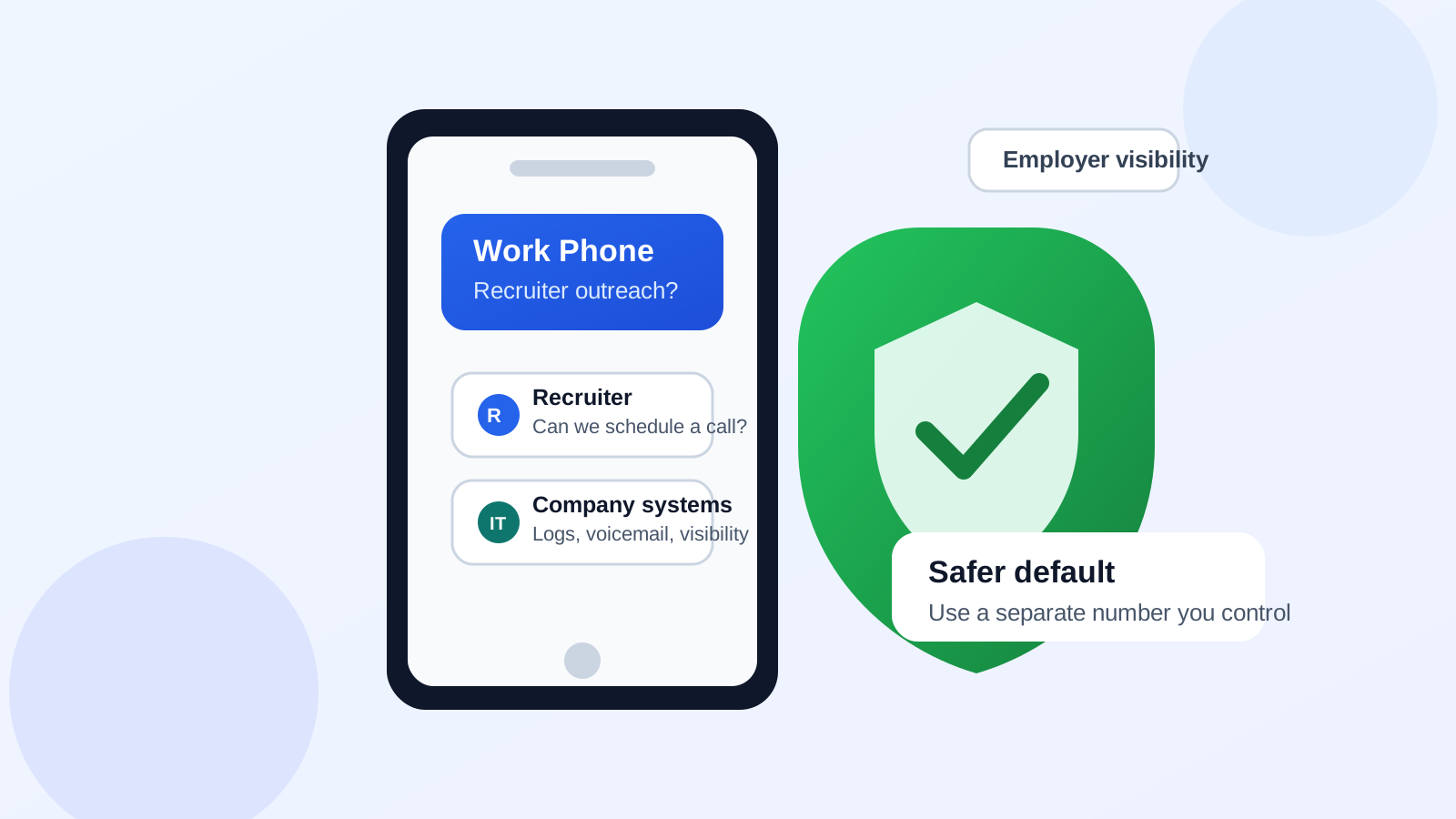
If you are reaching out to recruiters while still employed, the instinct to use a work phone number can seem reasonable. It is active, professional-looking, and always nearby. But convenience is not the same thing as privacy. In many workplaces, a phone number provided by your employer sits inside a larger system of carrier billing, device management, call forwarding, voicemail access, company directories, or communications records that you do not fully control.
That does not mean every work number is automatically unsafe. Some people use a personally owned mobile line for work and simply receive a stipend. Others are self-employed or operate under a business number they control themselves. The real question is not whether the label says “work phone.” The real question is who owns the number, who can access the records around it, and what happens if recruiter outreach starts showing up where you do not want it.
Why some job seekers consider using a work phone number
There are understandable reasons people think about it:
- It feels professional: a work line can seem more polished than a casual personal number.
- It is already monitored: if you keep that phone close during the day, you are less likely to miss a recruiter call.
- It keeps your personal line private: at first glance, using the work number can look like a way to shield your private life.
- It may already be on your LinkedIn profile or email signature: some people assume it is easier to keep using what is already public.
The problem is that a work number often protects the wrong thing. It may reduce exposure of your personal number while increasing exposure of your job search inside your current employer’s ecosystem.
The biggest privacy and practical risks
1. Your employer may own more than the phone
If the company pays for the line, manages the device, or routes calls through a business platform, your employer may have some visibility into call metadata, voicemail configuration, directory listings, or forwarding rules. The exact level varies a lot by company and region, so do not assume total surveillance — but do not assume total privacy either.
That uncertainty alone is a good reason to be cautious. Recruiter outreach is one of those things you usually want to keep intentionally separate from employer-owned systems.
2. Boundaries get messy fast
A recruiter call landing on your work phone at 2:15 PM while you are in the office is awkward. So is a follow-up text arriving during a screen share, a staff meeting, or a company offsite. Even if nobody is actively monitoring you, work devices and work contact habits make it easier for a job search to spill into the wrong setting at the wrong time.
That is not just a privacy issue. It is also a focus issue. Good recruiter outreach works better when you can choose when and where to respond.
3. You may lose the number when you need continuity most
If recruiter conversations start progressing, the last thing you want is to change numbers mid-process because you switched employers, returned a company device, or lost access to a company-managed line. A phone number tied to your current job is not a stable long-term identifier for a multi-week hiring process.
4. Caller ID and voicemail can reveal more than you think
Your work number may connect to a voicemail greeting, company name, team inbox, shared receptionist flow, or corporate caller ID setup that signals your current employer. That can be harmless in some situations, but in others it undermines the separation you wanted in the first place. It may also make cold outreach feel less personal if recruiters sense they are contacting you through a line built for another role.
5. Shared tools create accidental exposure
In some companies, communications tools are integrated with CRM systems, Microsoft 365, Google Workspace, help desks, UCaaS platforms, or mobile-device-management setups. Again, the details vary. But if you are not certain how your work number is administered, it is safer to assume that you do not fully control the environment around it.
When using a work phone number might be acceptable
There are exceptions. A work-related number may be fine if one of these is true:
- You personally own the number and only use it for work by choice.
- You are self-employed, freelance, or consulting and the “work” line is really your own business contact.
- You use a reimbursed BYOD setup where the number, carrier account, and voicemail remain under your control.
- You intentionally want recruiters to contact a business-facing line because you are openly networking rather than conducting a private search.
Even then, ask whether it is the best option, not just a possible one. If the answer is “it works, but I would rather keep my search separate,” listen to that instinct.
A better default: use a dedicated job-search number
The cleanest setup for most people is a separate number used only for hiring conversations. That does not have to be dramatic. It can be a second SIM, a secondary mobile line, or another lawful number setup you control. The point is separation.
A dedicated job-search number gives you:
- Clearer privacy boundaries: recruiters do not get direct access to your employer-owned line.
- Better organization: you know that calls and texts on that number relate to your search.
- More control over timing: you can mute it, review messages later, or set a professional voicemail.
- Continuity: the number stays with you even if your employment situation changes.
This is also where email hygiene helps. Many job seekers already separate early-stage signups and lower-trust forms from their primary inbox. Using a tool like Anonibox for temporary inboxes on job boards or exploratory signups can reduce email spam, while a dedicated phone number reduces call and text spillover. The two strategies work well together because they solve different parts of the same privacy problem.
What about using your personal number instead?
Your personal number is usually a better choice than a company-owned work number, especially if you are applying directly to real employers or messaging established recruiters. It is stable, you control it, and it does not depend on your current employer’s systems.
Still, personal does not always mean ideal. If you apply widely, use multiple job boards, or expect a lot of recruiter traffic, your main number can pick up nuisance calls long after the search ends. That is why a separate job-search number is often the most balanced answer: more private than a work line, more controlled than handing out your everyday personal number everywhere.
How to decide in real life
Before you use a work phone number for recruiter outreach, ask yourself these practical questions:
- Who legally owns the number and the device?
- Who can access the voicemail, call logs, forwarding settings, or company directory entry?
- Would I be comfortable if a recruiter text arrived during the workday on this device?
- Could I keep using this number if I left my current job next month?
- Am I using this number because it is genuinely best, or just because it is convenient?
If any answer makes you hesitate, that is a sign to choose a different number.
Best practices if a recruiter already has your work number
If your work number is already public or you have used it before, you do not need to panic. Just tighten the process:
- Move important conversations to a number you control as soon as practical.
- Set expectations politely — for example, “Email is best for scheduling, and this mobile number is better for urgent updates.”
- Avoid long job-search discussions on company devices when you can help it.
- Update public profiles carefully if you want future outreach to land somewhere else.
- Keep voicemail professional and generic if you must continue using the line temporarily.
You do not need a dramatic explanation. Most recruiters are used to candidates preferring a different callback number once conversations become real.
A simple recommendation by scenario
- Company-owned phone and line: usually avoid it for recruiter outreach.
- BYOD phone but employer-owned number: still be cautious; control may be more limited than it feels.
- Personally owned number used for work: acceptable, but a dedicated search number may still be cleaner.
- Self-employed or business owner: using a work-facing line can be reasonable if you fully control it.
- Confidential job search while currently employed: a separate job-search number is the strongest default.
Final answer
For most people, you should not use your work phone number for recruiter outreach. The risks are not only about surveillance in the dramatic sense; they are about ownership, visibility, awkward timing, blurred boundaries, and losing control of the line during an active search.
If you want a clean, low-drama setup, use a personal number you control or, better yet, a dedicated job-search number. Pair that with separate email habits — including temporary inboxes where appropriate — and you get a much safer, more organized outreach workflow without making recruiter communication harder than it needs to be.