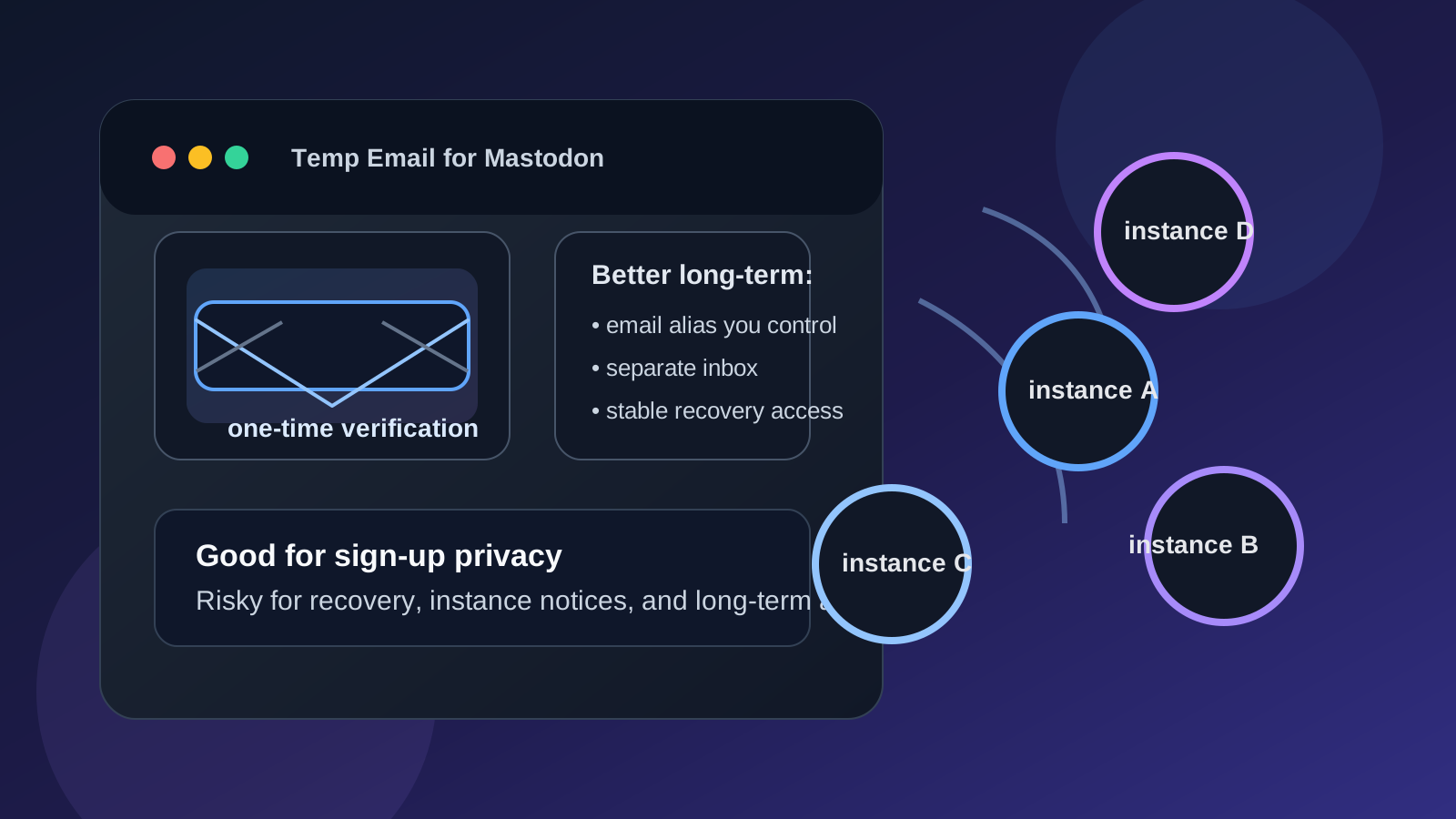
Yes, you can use temp email for Mastodon if you only want short-term sign-up privacy, but it is a weak choice for any account you may want to keep, recover, or rely on later.
If the account might become part of your online identity, an alias or separate inbox you control is usually the safer long-term move.
Mastodon attracts exactly the kind of user who thinks carefully about privacy. That makes sense. People join to explore a different kind of social network, test an instance before committing, or avoid tying every online account directly to a primary personal inbox. On the surface, a temporary inbox looks like a perfect fit: quick verification, less long-term email clutter, and one more layer between you and a platform you are still evaluating.
That logic is fine for low-stakes testing. The problem is that Mastodon accounts often become more valuable than expected. A quick experiment can turn into your main social profile, a place where friends find you, or a handle connected to your writing, work, or community presence. Once that happens, the email behind the account stops being a throwaway detail and starts acting like part of your account recovery plan.
Why people look for temp email for Mastodon
Most people searching for temp email for Mastodon are trying to solve one of three problems:
- They want to sign up on a new instance without giving out their main inbox right away.
- They want to avoid more welcome emails, notifications, and announcements landing in a personal account they already use for important messages.
- They are testing whether Mastodon is worth keeping at all and do not want a permanent commitment on day one.
Those are reasonable goals. A temporary address can help you receive the initial confirmation email without immediately exposing your primary inbox to another service. If your only goal is to look around, follow a few accounts, and decide whether the platform fits you, that can be enough.
Where people get into trouble is assuming the low-stakes setup will stay low stakes forever.
What makes Mastodon different from a lot of sign-up pages
Mastodon is not just one giant centralized account system in the way many mainstream social platforms are. You usually join through a specific server or instance, and that choice can affect community rules, moderation style, culture, and how stable the account feels over time.
That matters because your email is not only about the first confirmation step. It can matter later if you need to reset a password, review security notifications, confirm account changes, or stay reachable if something important changes on the instance you joined. Even if you never think about that at sign-up, you may care a lot a few months later.
Mastodon also tends to attract people who keep accounts longer than they first planned. You might start by reading posts, then begin following people in your field, then gradually use the account for community discussion, writing, projects, or personal updates. A disposable inbox that felt clever for a ten-minute experiment can become the weakest link once the account actually matters.
When temp email makes sense for Mastodon
There are situations where temp email is a practical choice.
1. You are testing an instance before committing
If you want to see whether a server feels active, well-moderated, and relevant to your interests, a temporary inbox can be a fair way to handle the first verification step.
2. The account is truly low stakes
If you do not care much about the handle, followers, or long-term access, a disposable setup is easier to justify. That could be a short experiment, a one-time check, or a niche account you would not mind abandoning.
3. You want short-term inbox separation
Some people simply do not want their main address attached to every platform they test. Using a temporary inbox can reduce clutter and give you a little breathing room while you decide what deserves a permanent place in your digital life.
In those cases, a service like Anonibox can be useful for the initial sign-up step. Just be honest with yourself about whether you are testing a platform or quietly creating an account you may want to keep.
When temp email becomes a bad idea
The downside is not that temporary email never works. The downside is that it works best at the exact moment when you know the least about whether the account will matter later.
1. You may need password resets or security checks later
The most obvious risk is recovery. If you forget your password, change devices, trigger a login warning, or need to confirm an account update, the original email can become important again. A temporary inbox is convenient now but unreliable months later.
2. You may end up caring about the account more than expected
A Mastodon account can become part of your identity quickly. You may build a follower list, keep a valuable username, or use the account for work, hobbies, activism, or professional networking. If that happens, weak email recovery becomes a real liability.
3. Instance-level changes are easier to manage with a real inbox
Servers can change rules, moderation practices, or operational status over time. You do not need to assume disaster to see the value of a recoverable email. If anything important ever needs your attention, it is simply better if account-related messages still reach an inbox you control.
4. Some temporary domains are less reliable
Not every platform treats disposable domains the same way. Even when the signup form accepts the address, verification emails can be delayed or inconsistent. If you find yourself repeatedly retrying the same setup, that is usually a sign to switch to a better long-term address rather than forcing a shaky workflow.
Temp email vs alias vs separate inbox for Mastodon
If you want privacy without making recovery painful, it helps to separate the options clearly.
Temp email
Best for one-time testing and low-stakes exploration. It keeps your main inbox out of the first sign-up flow, but it is the weakest option for long-term control.
Email alias
This is often the best middle ground. An alias hides your primary email from the service, but messages still reach an inbox you actually own. You keep privacy and still have a dependable path for password resets and security notices. If you want a fuller explanation, see Email Alias: What It Is, How It Works, and When to Use It.
Separate mailbox you control
If you want stronger separation, a dedicated secondary inbox is usually the safest long-term answer. It takes a little more setup, but it gives you clean boundaries without sacrificing recovery.
The simple rule: use temp email for experimentation, and use an alias or real second inbox for any Mastodon account you may want to keep.
How to use temp email for Mastodon more safely
If you still want to use a temporary inbox, do it deliberately instead of treating it like the default forever.
- Create the temporary inbox first. Keep it open so you can catch the verification message without guessing later.
- Use it only for the initial sign-up step. Do not assume that because the address worked once, it is good enough for the life of the account.
- Decide quickly whether the account matters. If you like the instance, want to keep the handle, or expect to post regularly, change the account email to a recoverable address while you still have easy access.
- Store your login properly. A password manager is much more reliable than hoping you will remember the exact address and password combination later.
- Check account settings early. If there is an easy way to update the email after signup, do it sooner rather than later if the account stops feeling disposable.
What to do if the Mastodon verification email does not arrive
Sometimes the real issue is not strategy but simple delivery.
- Wait a minute or two before retrying. Email confirmations are not always instant.
- Double-check the address for a typo.
- Keep the temporary inbox page open and active.
- Resend the verification once, not five times in a row.
- Try a fresh temporary address if the first one never receives anything.
- If the instance still does not deliver cleanly, switch to an alias or secondary inbox you control.
At that point, the goal is not to win a fight with the signup form. The goal is to get an account setup that is both practical and recoverable.
A quick checklist before you choose the email
- Am I only testing Mastodon, or do I think I may keep this account?
- Would I care if I lost access to this handle in a few months?
- Do I want privacy from the platform, or do I also want dependable recovery?
- Would an alias give me the same privacy with fewer long-term risks?
- Am I choosing the easiest option now at the cost of a mess later?
If the account is genuinely disposable, temp email can be fine. If the account might become part of your online presence, use something you can still access later.
Final answer
Using temp email for Mastodon is reasonable for short-term sign-up privacy and low-stakes testing, but it is a poor foundation for any account you may want to keep, secure, or recover later.
If you value privacy and long-term control, the better compromise is usually an email alias or a separate inbox you manage yourself. That gives you the separation you want without turning account recovery into a future headache.