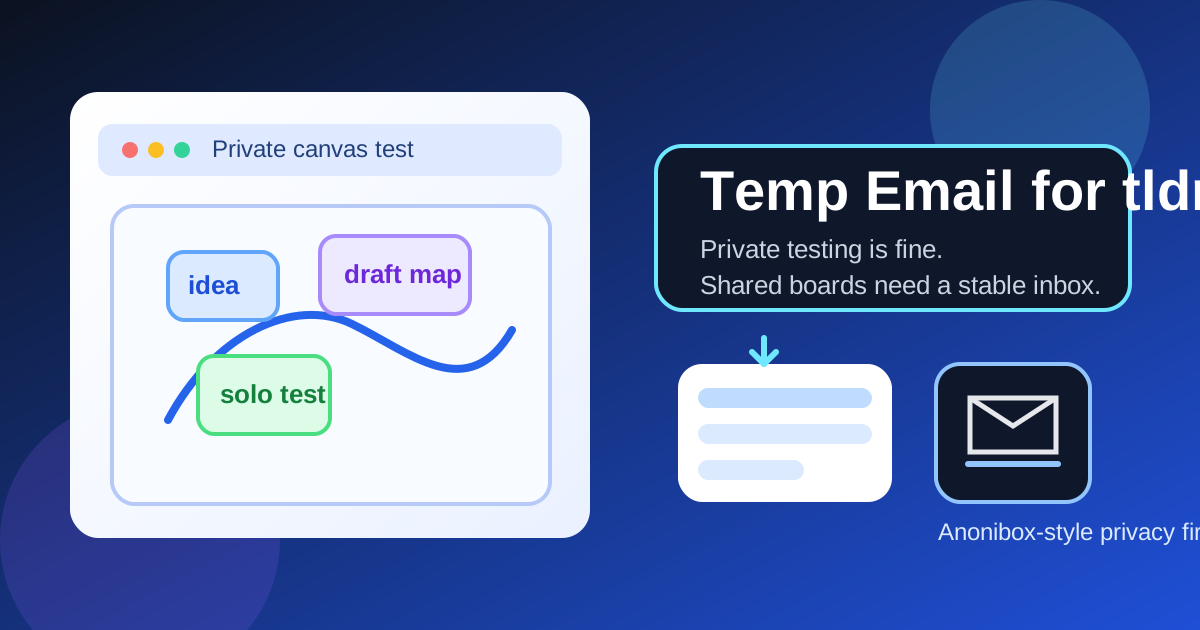
Yes — a temp email for tldraw can make sense if you only want to test the product privately, confirm a signup, and explore the canvas before deciding whether it deserves a place in your real workflow.
It becomes a bad idea once your boards, invites, team access, billing notices, or account recovery start to matter, because a disposable inbox is easy to lose and hard to rely on long term.
Why people look for a temp email for tldraw
tldraw fits a very common temp-email use case: you want to try a creative tool quickly without handing your main inbox to yet another app before you know whether you will keep using it. That is a reasonable instinct. Whiteboard and canvas tools often feel low stakes at first. You want to sketch a flow, mock up an interface, outline a project, or test whether the experience is smoother than the other tools you already know.
In that early phase, privacy matters more than permanence. A temporary inbox lets you complete basic verification, see how the product feels, and avoid adding one more stream of onboarding messages, updates, and product prompts to your everyday address. If all you want is a short solo evaluation, a throwaway inbox can be the cleanest option.
The problem is that a canvas tool stops being “just a test” pretty quickly once other people are involved. The moment a board becomes collaborative, client-facing, or tied to work you care about keeping, email reliability matters a lot more than signup privacy.
Short answer: when a temp email works for tldraw
A temporary email works best when your goal is limited and reversible. In practice, that usually means:
- Trying tldraw for the first time to see whether the interface clicks for you
- Opening a private test account for a short evaluation window
- Comparing it with tools like Excalidraw, FigJam, Miro, Milanote, or Whimsical
- Testing how it feels for personal brainstorming, solo diagrams, or low-stakes drafts
- Keeping your main inbox out of early-stage app trials until you decide what deserves real adoption
If that is your situation, using a temporary inbox from a tool like Anonibox is a sensible way to keep the experiment tidy. You get the verification message you need, but you do not commit your permanent address before the tool has earned it.
When a temp email becomes risky
Using a temp email for tldraw stops being smart when the account starts holding anything you cannot easily recreate. That shift happens earlier than many people expect. A few sketches turn into an active board. A private test becomes a team discussion. A quick mockup becomes a client deliverable. Suddenly the inbox tied to the account matters.
You should switch to a stable email before the account becomes important for any of the following:
- Shared boards or collaborative work: if other people will join the space, you need dependable access.
- Invites and notifications: account-related emails are only useful if you can actually receive them later.
- Longer-term project history: once a board becomes part of real work, losing access is painful.
- Billing or paid features: receipts, plan changes, and account notices should not depend on a disposable inbox.
- Password resets and recovery: if the temp inbox expires, recovering the account can become difficult or impossible.
That is the core trade-off. Disposable email protects your inbox at the start, but it also weakens account continuity later. For a quick experiment that is fine. For ongoing work, it is not.
A practical way to test tldraw without creating future problems
If you want the privacy benefits without the predictable headaches, the best approach is not “use a temp email forever.” It is “use a temp email only for the part of the workflow that is truly temporary.”
1. Decide whether this is a real account or just a trial
Be honest about your intent before you sign up. Are you evaluating the tool for fifteen minutes? Comparing it against alternatives for a personal project? Or quietly starting something that you already know may turn into real collaboration? If the answer is the third one, skip the disposable inbox and use a stable address from the beginning.
2. Use a temporary inbox only for low-stakes first access
If your goal is just early testing, use the temp address for the initial verification step and nothing more. This keeps your main inbox clean while you answer the question that matters: is tldraw actually useful for the way you think and work?
3. Save anything you would hate to lose
Even in a short test, do not assume you will remember every link or be able to recreate every board perfectly. If you make something you may want later, export it, copy the important text, or otherwise preserve the work while you still have access. Temporary email is fine for experimentation, but experimentation should stay easy to discard.
4. Upgrade the email before invites or important boards
If the tool passes the test and you want to keep using it, move the account to a normal address before you invite coworkers, classmates, clients, or collaborators. This is the cleanest cutoff point. After that, the account is no longer disposable even if the first board was.
5. Keep your privacy strategy separate from your recovery strategy
These are not the same thing. A temporary inbox is a privacy tactic. A stable inbox is a recovery tactic. Early evaluation benefits from the first one. Real usage depends on the second one.
What you are really protecting when you use a temp email
People sometimes talk about temp email as if the only goal is avoiding spam. That is part of it, but not the whole story. When you use a disposable inbox for an app trial, you are also reducing small forms of friction that add up over time:
- You keep your main inbox from filling with welcome sequences and repeated prompts.
- You avoid linking every early-stage product test to your long-term personal address.
- You limit how widely your primary inbox gets copied across tools you may never use again.
- You make it easier to separate curiosity from commitment.
That separation is especially useful if you test lots of creative, productivity, or collaboration tools. Without a boundary, every “just checking this out” signup slowly turns into inbox drag.
Where people get burned
The most common mistake is not using a temp email. The most common mistake is forgetting to stop using one after the account becomes important.
That usually happens in one of these ways:
- You create a quick board that later turns into real project documentation.
- You share the board with someone and then need reliable follow-up emails.
- You come back weeks later and cannot access the inbox tied to the account anymore.
- You need a password reset or account notice and realize the recovery path is gone.
- You subscribe, pay, or connect the account to a larger workflow without fixing the email first.
None of those problems are dramatic in theory, but they are annoying in exactly the way people remember. The safe habit is simple: if the work matters, the inbox should matter too.
Should you use a temp email for tldraw at work?
Usually no, or only briefly during a private evaluation. Work contexts raise the stakes immediately. Team ownership, shared access, procurement reviews, security expectations, and continuity all matter more than the slight privacy gain of hiding your everyday inbox for one extra signup.
If you are testing the tool on your own before recommending it internally, a temporary inbox may still be fine for the first pass. But if the evaluation moves beyond curiosity into a serious workplace trial, use an address your team can actually support and recover.
Should students, freelancers, and creators think about this differently?
A little. The right answer depends on how replaceable the work is.
Students can often use a temp email safely for early exploration, especially when they are trying tools for brainstorming or one-off coursework ideas. But once a board is tied to a graded project or group assignment, a real inbox is the safer move.
Freelancers should be more careful. If a client may ever see the work, comment on it, or depend on it, a disposable inbox creates unnecessary risk. Client-facing work deserves stable access from day one or very soon after testing.
Creators and founders sit somewhere in the middle. A temp email is fine for product scouting and private concept work, but once a tool starts supporting deliverables, team discussions, or paid activity, it should graduate to a durable address.
A simple decision checklist
Before you use a temp email for tldraw, ask yourself:
- Am I just testing, or am I starting work I may care about next week?
- Will anyone else need access to this board?
- Would losing this account be mildly annoying or genuinely disruptive?
- Do I expect to need recovery emails, invites, or account notices later?
- Is the privacy benefit worth the continuity trade-off in this specific case?
If your answers point toward short-term private testing, a temp email is fine. If they point toward collaboration, continuity, or accountability, use a stable address instead.
Final verdict
A temp email for tldraw is a smart tool for private evaluation, quick canvas experiments, and low-stakes product testing. It helps you protect your main inbox and keeps casual signups from turning into long-term email clutter.
It is the wrong tool once the account holds shared work, important boards, paid activity, or anything you would not want to lose. Use temporary email to explore, then switch to a durable inbox before the account becomes part of real life. That way you get the privacy upside without creating avoidable recovery problems later.