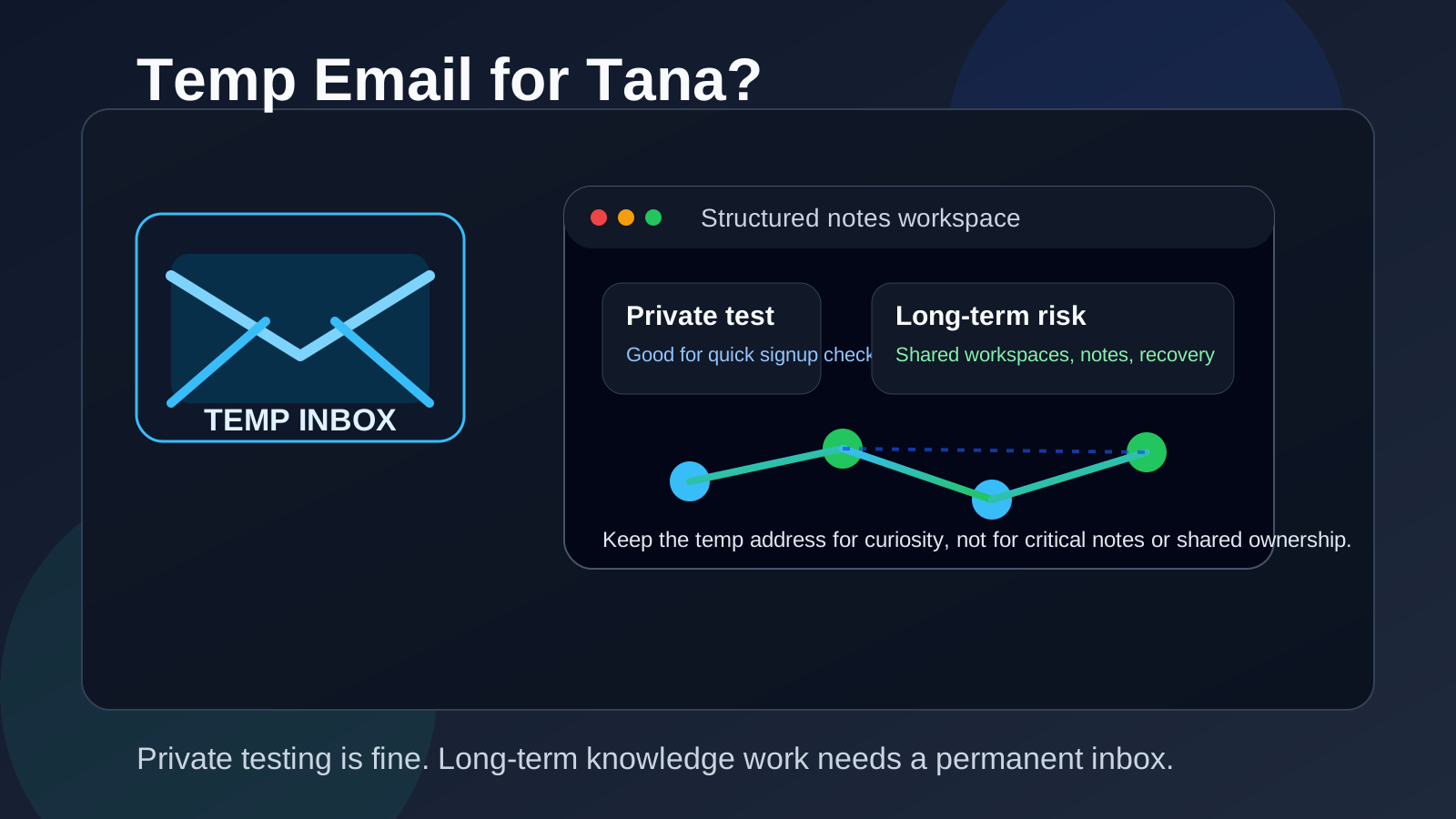
Yes, a temp email for Tana can be fine for a quick private sign-up or short evaluation. It becomes a poor long-term choice once shared workspaces, structured notes, and account recovery start to matter.
If you only want to test Tana without feeding your main inbox another product sequence, a disposable address can help. If you plan to keep important notes, collaborate with other people, or rely on the account over time, switch to a permanent inbox early.
Why people consider a temp email for Tana
Tana sits in the same broad category as other modern note-taking and knowledge-work tools that people often explore before fully committing. You may want to open an account, look around, test the capture flow, create a few notes, and decide whether the product fits your thinking style before giving it a long-term personal or work email address.
That instinct makes sense. Early product testing often creates follow-up mail you may not want in your main inbox yet. Welcome messages, feature announcements, reminders to return, upgrade nudges, and account prompts are normal parts of onboarding. If you are comparing several tools at once, that email noise adds up quickly.
A temporary inbox from a service like Anonibox can keep that first round of exploration separate. You get the verification email you need, but you do not immediately tie the experiment to the inbox you depend on every day.
When a temp email works well for Tana
Using a temp email for Tana is most reasonable when your goal is limited and short-term. That usually means you are still in the “let me see what this feels like” stage rather than the “I am moving real work here” stage.
- Checking whether the sign-up flow is smooth before committing a permanent address
- Comparing Tana with other note, graph, or workspace tools during a short evaluation window
- Keeping promotional or onboarding emails out of your main inbox while you test
- Exploring the interface privately without mixing the account into your long-term personal stack yet
- Running a low-stakes trial where losing the account would not actually hurt you
In that narrow context, a temporary address does exactly what it should do. It helps you verify access, look around, and make an early decision without turning mild curiosity into a permanent email relationship.
Where a temp email starts to break down
The problem is not the sign-up itself. The problem is what happens after the sign-up. Tana becomes more valuable as you put more structure, context, and continuity into it. The more you keep there, the worse a disposable email becomes.
A temp inbox is a bad fit if you are doing any of the following:
- Building notes you care about keeping long term
- Creating structured systems you expect to revisit regularly
- Joining shared workspaces or inviting collaborators
- Depending on email-based recovery or account verification later
- Upgrading from casual testing into a real personal or team workflow
Disposable email is good at one thing: short-lived separation. It is bad at continuity. Knowledge tools, on the other hand, become more important the longer you use them. That is why the setup that feels clever on day one can feel reckless a month later.
The main risks of using a temp email for Tana
1. You can lose recovery access
If you stop controlling the inbox tied to the account, recovery gets messy fast. A tool can be excellent, but if the linked email disappears and you later need a sign-in link, verification message, or account-change confirmation, the value of the account suddenly drops.
This is the biggest reason not to keep a disposable address attached once you know you want to stay. Recovery is boring until the day you need it. Then it becomes the whole story.
2. Collaboration gets harder
Even if your first few notes are private, many people eventually move from solo testing into shared use. The moment you involve another person, account stability matters more. Shared workspaces, comments, invites, and handoffs all work better when the underlying account is tied to an inbox you actually monitor.
A temp email is fine for isolated experimenting. It is not a strong foundation for a workspace other people may depend on.
3. Important messages can vanish with the inbox
Welcome mail is easy to ignore. Recovery mail, security notices, sign-in links, and account-change confirmations are not. If the inbox expires or you stop checking it, you can miss the only message that matters at the wrong time.
4. You may avoid a small annoyance now and create a bigger migration later
Some people use a disposable address for convenience, then decide they like the tool and start saving real work. That usually creates a second task later: changing the email, checking whether the switch worked, making sure the right inbox receives future access mail, and cleaning up a setup that should have been temporary from the start.
That is still fixable, but it is unnecessary friction. If you already know there is a decent chance the tool will stick, use a more durable email setup from the beginning.
A better way to test Tana without exposing your main inbox immediately
You do not have to choose between reckless oversharing and total throwaway behavior. A better approach is to match the email choice to the stage of your evaluation.
- Start with a temporary inbox only if the test is genuinely low stakes. If you are just checking the interface and first-run experience, a disposable address is reasonable.
- Keep the test small. Do not move important notes, long-form thinking, or shared work into the account while it still depends on a throwaway inbox.
- Decide quickly whether the tool is a maybe or a no. If it is a no, walk away and let the temp inbox do its job. If it is a maybe or yes, upgrade the email setup early.
- Switch to a permanent inbox before the account becomes meaningful. That includes before collaboration, before deeper organization, and definitely before you would be upset about losing access.
If privacy matters but you still want continuity, an email alias or dedicated long-term secondary inbox is often smarter than a fully disposable address. It keeps your primary inbox cleaner without turning recovery into a gamble.
What kind of email is best for each stage?
- Temporary email: Best for curiosity, one-off sign-up testing, and short evaluations you can afford to abandon.
- Email alias or forwarding address: Best for privacy-conscious users who want separation but still need long-term control.
- Permanent primary or secondary inbox: Best once the account holds real notes, structure, or collaboration value.
That middle option is the one many people overlook. If your real concern is inbox clutter rather than disappearing access, an alias is usually the better compromise.
Signs it is time to replace the temp email
If any of these are true, the disposable phase should end:
- You are storing notes you would genuinely hate to lose
- You are returning to the account regularly instead of just testing it once
- You are inviting other people or joining shared work
- You are building a personal system you expect to depend on
- You would be annoyed or blocked if you missed a login or recovery email
At that point, keeping the throwaway address attached is no longer privacy strategy. It is just technical debt wearing a privacy costume.
So, should you use a temp email for Tana?
Use a temp email for Tana only when the goal is a quick, low-stakes private trial. It is a sensible choice for a short test, early curiosity, or avoiding a wave of onboarding mail while you compare tools.
Do not keep that setup once the account begins to matter. The moment Tana becomes a real workspace instead of a casual experiment, switch to an inbox you control long term. That gives you better recovery, cleaner collaboration, and less risk of locking yourself out of notes you actually care about.
The simple rule is this: disposable email is for disposable interest. Real knowledge work deserves a durable inbox.