Yes, a temp email for Helpwise is useful if you only want a private sign-up, a quick look at the product, and a way to avoid pushing one more vendor trial into your main inbox too early.
It becomes a poor long-term choice once shared inboxes, team replies, admin notices, or account recovery depend on that temporary address.
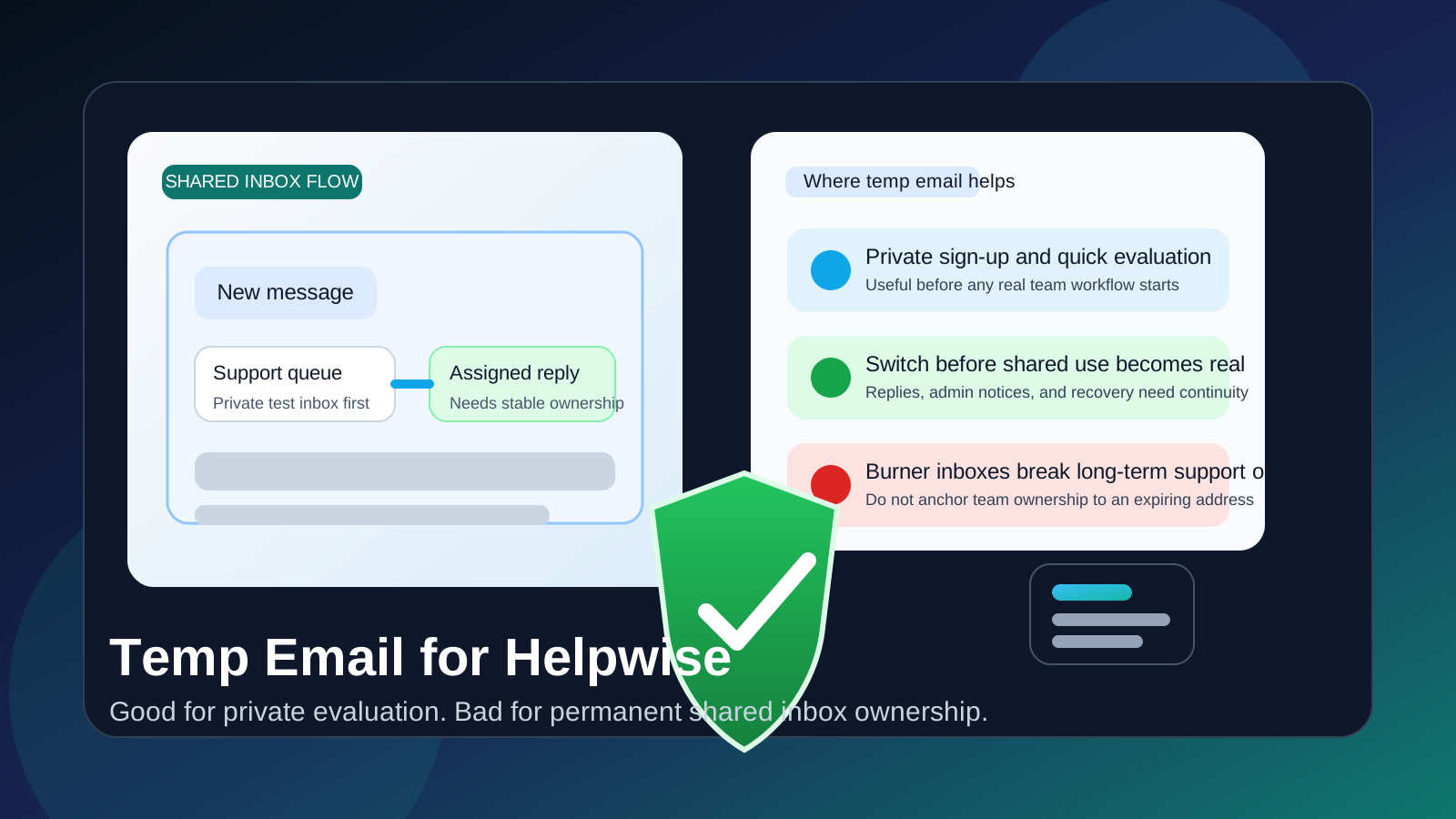
Why someone would use a temp email for Helpwise
Helpwise sits in a category where privacy-minded sign-up habits make practical sense. If you are comparing shared inbox tools, customer support platforms, team mailbox software, or lightweight help-desk workflows, you may not want every product trial tied to your permanent work address from the start. A temporary inbox lets you receive the first verification message, scan the onboarding emails, and decide whether the product deserves deeper evaluation before you hand over an address that will keep collecting follow-up later.
That early privacy buffer is the real appeal. You get into the product, review the layout, and test the general workflow without immediately mixing another vendor sequence into your everyday inbox. If the tool is not a fit, you can walk away without carrying months of unwanted product updates, webinar invites, and sales nudges in your main mailbox.
For a support or shared-inbox product, though, the value of a burner inbox is temporary by design. The moment the account shifts from private testing to actual team workflow, the sign-up address starts to matter much more than it did during the first few minutes.
When a temp email is a reasonable choice
A temp email for Helpwise is most reasonable when the account is still strictly exploratory. You are not routing real customer conversations yet. You are not building live support processes yet. You are just trying to answer the question, “Is this product even worth serious attention?”
- you want to verify the account and look around privately
- you are comparing Helpwise with Help Scout, Kustomer, Hiver, Missive, or similar tools
- you want to keep trial-related messages out of your permanent inbox while shortlisting options
- you expect to abandon the account quickly if the interface or workflow feels wrong
- you do not want early-stage testing tied to your long-term work identity yet
That is the clean use case. A service like Anonibox is helpful here because it gives you the short-lived inbox you need for verification without forcing an early commitment to one more support-tool mailing list.
Why it becomes risky once the tool matters
The problem is not signing up with a temporary inbox. The problem is forgetting to replace it before the product becomes operationally important.
Shared inbox tools need continuity
Helpwise is the kind of product that can move from casual trial to important workflow surprisingly fast. Once conversations, teams, assignments, or support responsibilities start to live inside the platform, continuity matters. A disposable inbox is the opposite of continuity. It is useful precisely because it is temporary, and that is exactly why it becomes fragile later.
Team replies create ownership questions
The moment more than one person relies on the account, the email on file should be stable and monitored. That address may receive ownership notices, security alerts, role changes, password resets, product updates, and support replies. If that mailbox disappears or is no longer watched, the inconvenience is no longer personal. It becomes a team problem.
Support workflow is not a one-time action
Shared inbox software is sticky. Once you begin setting rules, routing messages, assigning threads, or testing team visibility, you are building habits. A burner inbox may be fine for getting through the front door, but it is a weak foundation for anything that might evolve into a real support process.
Account recovery is the quiet failure point
This is usually where people regret leaving the temporary address in place too long. During the first day, you only care about the welcome email. Weeks later, the important message is the one you forgot to plan for: a password reset, a verification prompt, a billing alert, or a security notice. A shared-inbox product is exactly the kind of account where recovery friction becomes expensive fast.
A safer way to use a temporary inbox with Helpwise
You do not need to choose between total exposure and reckless throwaway behavior. The best approach is staged adoption: private sign-up first, durable ownership before real use.
1. Use the temporary inbox only for the first gate
If your goal is to inspect the interface, read the verification email, and understand the basic workflow, a temporary inbox is perfectly reasonable. Keep the scope small and intentional.
2. Evaluate the product quickly
Do not let the account sit in limbo. Open the dashboard, look at the mailbox structure, test conversation assignment, review whatever setup the product encourages, and decide whether Helpwise belongs on your shortlist. A burner inbox works best when the trial period is active and decisive, not vague and drawn out.
3. Switch before inviting anyone or connecting real communication
If the product looks promising, change the account email to a permanent monitored inbox before you depend on it. That should happen before teammates are invited, before important shared addresses are connected, and before live conversations matter.
4. Choose stable long-term ownership
If Helpwise becomes part of real operations, be clear about who owns the account. That could be a responsible team lead, a durable operations inbox, or another monitored address your organization can keep long term. The key point is that the owner address should still exist, still be watched, and still be recoverable months later.
Good use cases versus bad use cases
Usually fine
- private sign-up and verification
- comparing product structure with other shared inbox tools
- reviewing the onboarding flow before exposing your main inbox
- short early-stage evaluation where no real workflow depends on the account
Usually a bad idea
- inviting teammates while the owner account still uses a disposable inbox
- connecting important shared addresses too early
- tying billing, security, or admin recovery to an expiring mailbox
- keeping the burner address in place once real support work or team assignments begin
What to evaluate during the trial instead of obsessing over the sign-up inbox
The temporary-email question matters, but it should not distract you from the real purpose of the trial. Once you are inside Helpwise, the real question is whether the product improves how your team handles shared communication.
Does the shared inbox reduce confusion?
A good shared-inbox tool should make it obvious who is handling what. Look at how visible assignments are, how clearly conversations move between people, and whether the workflow feels lighter or more complicated than your current approach.
Can your team realistically use it every day?
Many tools look polished during a ten-minute test. The better question is whether the workflow still feels natural when you imagine daily use. If your team would fight the tool or bypass it, the sign-up privacy strategy will not matter much because the product will not survive anyway.
Does it fit your support style?
Some teams want minimal structure. Others need tighter coordination and clearer ownership. During the trial, pay attention to whether Helpwise supports the kind of communication rhythm your team already has or the one you are trying to build.
Would you trust the ownership setup later?
If the product looks promising, picture the account six months from now. Who owns it? Who gets recovery notices? Who manages access changes? If those answers are unclear, solve them before rollout rather than after a login problem appears.
Common mistakes to avoid
- Leaving the temporary inbox attached too long: private sign-up is fine; permanent ownership is not.
- Confusing less marketing email with full privacy: the burner inbox reduces one type of exposure, not every risk.
- Inviting teammates before ownership is stable: this turns a personal shortcut into a team liability.
- Forgetting to save useful setup details: keep anything important from the first emails before the temporary inbox disappears.
- Judging the product by sign-up convenience instead of workflow quality: the real value starts after verification.
A simple decision rule
If you are only evaluating Helpwise privately, a temp email is usually fine. If you are about to connect real shared inboxes, involve teammates, or depend on the account for ongoing work, switch to a permanent monitored address first.
That rule keeps the privacy decision simple. Use disposable tools for disposable stages. Use stable ownership details for tools that may become part of real support workflow.
Conclusion
A temp email for Helpwise can be a smart way to protect your privacy during early product evaluation. It keeps sign-up verification and trial clutter separate while you decide whether the platform is worth deeper attention. That is the exact stage where a temporary inbox is most useful.
It stops being a good long-term idea once shared inboxes, team replies, admin notices, or account recovery rely on that address. Start with a privacy-first sign-up if you want the buffer, but switch to a durable monitored inbox before the account becomes operationally important. That way, you keep the upside of privacy without creating a weak point in a tool your team may eventually depend on.